Informative Writing: Step-by-Step Arctic Writing Prompts


- Grades
- Grades 3–5, Elementary
- File type
- Preparation
- Print ready


- Subject
- Creative Arts, Art, ELA, Reading, Reading Comprehension, Grammar, Strategies, Language Development, Spelling, Writing, Science, Life Sciences, Animals
- Topic
- informative writing, early writing
- Resource types
- Writing Prompts, Worksheets & Printables
- Preparation
- Print ready
- Standards
- CCSS.W.3.2 CCSS.W.4.2 +18
About this resource
What's inside this resource
If you need an engaging way to teach informative writing, look no further than this Informative Writing: Step-by-Step Arctic Writing Prompts unit!
Perfect for elementary teachers and homeschoolers alike, this NO PREP resource covers the five steps of informative writing—research and brainstorming; main ideas and supporting details; introduction and conclusion; draft, edit, and revise; and final draft—using a cross-curricular approach and Arctic theme.
Each day's lesson addresses one step. Differentiated graphic organizers—primary lines, regular lines, and no lines—are included to match the student's handwriting skill level.
This Informative Writing: Step-by-Step Arctic Writing Prompts is A GREAT ADDITION TO YOUR:
Arctic unit study
Writing lessons or centers
English language arts (ELA) or science class
Bellringers
Morning work
Emergency sub plans
...or just for fun!
ELEMENTS INCLUDED in this Informative Writing: Step-by-Step Arctic Writing Prompts:
79 PDF pagesTeacher instructions
Interactive online presentation for teaching every step of the informative writing process
Opener and conclusion examples (12 cards)
Roll an informative paragraph or essay
Informative writing prompts (432 combinations)
Descriptive, how-to/sequence, chronological timeline, cause and effect, compare and contrast, and problem and solution research graphic organizers (3 differentiated levels)
Informative writing graphic organizers (3 differentiated levels)
Writing rubrics (teacher and student)
Optional step-by-step student guide and checklist handout
Optional sentence starters and transitions handout
Optional 100 common adjectives, verbs, adverbs, prepositions, and conjunctions handout
BONUS DOWNLOAD: Paragraph elements practice exercises
Help your students become expert informative writers! Whether you're looking for an introduction to informative writing or an assessment of prior knowledge, this resource has something for everyone.
CROSS-CURRICULAR SUBJECTS COVERED:Art (drawing and coloring)
Critical thinking
English language arts
Grammar
Reading
Research
Science
Spelling
Writing
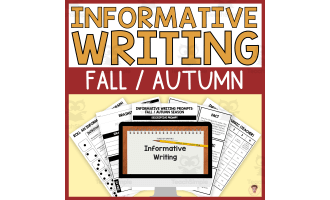
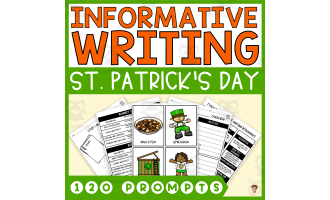
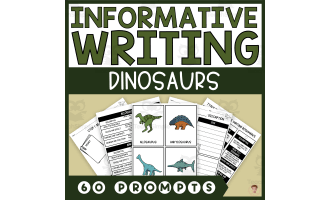
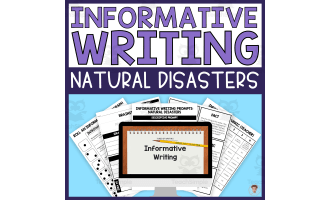
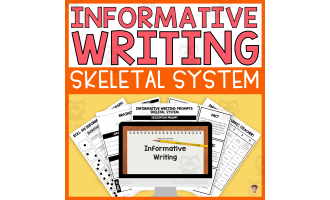
Looking for more step-by-step informative writing units? I have you covered! Check out great themes like sharks, space, dinosaurs, spring flowers, St. Patrick's Day, Earth Day, and more on my contributor page!
Related resources
More resources teachers may find useful
24 related resources were found using this product's title, contributor, categories and tags.
In the classroom
Teaching tips & learning objectives

Learning objectives
- Write an informative paragraph or essay on an Arctic topic
- Choose an opening sentence type, such as a fact or a question

Teaching tips
- Step 1 relies on an online presentation outside the PDF, and the roll page needs dice, so line up both before the first day.

Skills covered
- Writing openers — using the dice roll to select a fact or question opener for a draft

No reviews yet
Downloaded this resource? Tell other teachers how it went.
Curriculum
Standards, concepts & topics
Standards
 Standards
- CCSS.W.3.2 — Write informative/explanatory texts to examine a topic and convey ideas and information clearly. a. Introduce a topic and group related information together; include illustrations when useful to aiding comprehension. b. Develop the topic with facts, definitions, and details. c. Use linking words and phrases (e.g., also, another, and, more, but) to connect ideas within categories of information. d. Provide a concluding statement or section.
- CCSS.W.4.2 — Write informative/explanatory texts to examine a topic and convey ideas and information clearly. a. Introduce a topic clearly and group related information in paragraphs and sections; include formatting (e.g., headings), illustrations, and multimedia when useful to aiding comprehension. b. Develop the topic with facts, definitions, concrete details, quotations, or other information and examples related to the topic. c. Link ideas within categories of information using words and phrases (e.g., another, for example, also, because). d. Use precise language and domain-specific vocabulary to inform about or explain the topic. e. Provide a concluding statement or section related to the information or explanation presented.
- CCSS.W.5.2 — Write informative/explanatory texts to examine a topic and convey ideas and information clearly. a. Introduce a topic clearly, provide a general observation and focus, and group related information logically; include formatting (e.g., headings), illustrations, and multimedia when useful to aiding comprehension. b. Develop the topic with facts, definitions, concrete details, quotations, or other information and examples related to the topic. c. Link ideas within and across categories of information using words, phrases, and clauses (e.g., in contrast, especially). d. Use precise language and domain-specific vocabulary to inform about or explain the topic. e. Provide a concluding statement or section related to the information or explanation presented.
- CCSS.W.3.4 — With guidance and support from adults, produce writing in which the development and organization are appropriate to task and purpose. (Grade-specific expectations for writing types are defined in standards 1–3 above.)
- CCSS.W.3.5 — With guidance and support from peers and adults, develop and strengthen writing as needed by planning, revising, and editing. (Editing for conventions should demonstrate command of Language standards 1–3 up to and including grade 3 on page 29.)
- CCSS.W.4.4 — Produce clear and coherent writing in which the development and organization are appropriate to task, purpose, and audience. (Grade-specific expectations for writing types are defined in standards 1–3 above.)
- CCSS.W.4.5 — With guidance and support from peers and adults, develop and strengthen writing as needed by planning, revising, and editing. (Editing for conventions should demonstrate command of Language standards 1–3 up to and including grade 4 on page 29.)
- CCSS.W.5.4 — Produce clear and coherent writing in which the development and organization are appropriate to task, purpose, and audience. (Grade-specific expectations for writing types are defined in standards 1–3 above.)
- CCSS.W.5.5 — With guidance and support from peers and adults, develop and strengthen writing as needed by planning, revising, editing, rewriting, or trying a new approach. (Editing for conventions should demonstrate command of Language standards 1–3 up to and including grade 5 on page 29.)
- CCSS.W.3.7 — Conduct short research projects that build knowledge about a topic.
- CCSS.W.3.8 — Recall information from experiences or gather information from print and digital sources; take brief notes on sources and sort evidence into provided categories.
- CCSS.L.3.1 — Demonstrate command of the conventions of standard English grammar and usage when writing or speaking. a. Explain the function of nouns, pronouns, verbs, adjectives, and adverbs in general and their functions in particular sentences. b. Form and use regular and irregular plural nouns. c. Use abstract nouns (e.g., childhood). d. Form and use regular and irregular verbs. e. Form and use the simple (e.g., I walked; I walk; I will walk) verb tenses. f. Ensure subject-verb and pronoun-antecedent agreement.* g. Form and use comparative and superlative adjectives and adverbs, and choose between them depending on what is to be modified. h. Use coordinating and subordinating conjunctions. i. Produce simple, compound, and complex sentences.
- CCSS.L.3.2 — Demonstrate command of the conventions of standard English capitalization, punctuation, and spelling when writing. a. Capitalize appropriate words in titles. b. Use commas in addresses. c. Use commas and quotation marks in dialogue. d. Form and use possessives. e. Use conventional spelling for high-frequency and other studied words and for adding suffixes to base words (e.g., sitting, smiled, cries, happiness). f. Use spelling patterns and generalizations (e.g., word families, position-based spellings, syllable patterns, ending rules, meaningful word parts) in writing words. g. Consult reference materials, including beginning dictionaries, as needed to check and correct spellings.
- CCSS.L.4.1 — Demonstrate command of the conventions of standard English grammar and usage when writing or speaking. a. Use relative pronouns (who, whose, whom, which, that) and relative adverbs (where, when, why). b. Form and use the progressive (e.g., I was walking; I am walking; I will be walking) verb tenses. c. Use modal auxiliaries (e.g., can, may, must) to convey various conditions. d. Order adjectives within sentences according to conventional patterns (e.g., a small red bag rather than a red small bag). e. Form and use prepositional phrases. f. Produce complete sentences, recognizing and correcting inappropriate fragments and run-ons.* g. Correctly use frequently confused words (e.g., to, too, two; there, their).*
- CCSS.L.4.2 — Demonstrate command of the conventions of standard English grammar and usage when writing or speaking. a. Use relative pronouns (who, whose, whom, which, that) and relative adverbs (where, when, why). b. Form and use the progressive (e.g., I was walking; I am walking; I will be walking) verb tenses. c. Use modal auxiliaries (e.g., can, may, must) to convey various conditions. d. Order adjectives within sentences according to conventional patterns (e.g., a small red bag rather than a red small bag). e. Form and use prepositional phrases. f. Produce complete sentences, recognizing and correcting inappropriate fragments and run-ons.* g. Correctly use frequently confused words (e.g., to, too, two; there, their).*
- CCSS.L.5.1 — Demonstrate command of the conventions of standard English grammar and usage when writing or speaking. a. Explain the function of conjunctions, prepositions, and interjections in general and their function in particular sentences. b. Form and use the perfect (e.g., I had walked; I have walked; I will have walked) verb tenses. c. Use verb tense to convey various times, sequences, states, and conditions. d. Recognize and correct inappropriate shifts in verb tense.* e. Use correlative conjunctions (e.g., either/or, neither/nor).
- CCSS.L.5.2 — Demonstrate command of the conventions of standard English capitalization, punctuation, and spelling when writing. a. Use punctuation to separate items in a series.* b. Use a comma to separate an introductory element from the rest of the sentence. c. Use a comma to set off the words yes and no (e.g., Yes, thank you), to set off a tag question from the rest of the sentence (e.g., It’s true, isn’t it?), and to indicate direct address (e.g., Is that you, Steve?). d. Use underlining, quotation marks, or italics to indicate titles of works. e. Spell grade-appropriate words correctly, consulting references as needed.
- CCSS.L.3.3 — Use knowledge of language and its conventions when writing, speaking, reading, or listening. a. Choose words and phrases for effect.* b. Recognize and observe differences between the conventions of spoken and written standard English.
- CCSS.L.4.3 — Use knowledge of language and its conventions when writing, speaking, reading, or listening. a. Choose words and phrases to convey ideas precisely.* b. Choose punctuation for effect.* c. Differentiate between contexts that call for formal English (e.g., presenting ideas) and situations where informal discourse is appropriate (e.g., small-group discussion).
- CCSS.L.5.3 — Use knowledge of language and its conventions when writing, speaking, reading, or listening. a. Expand, combine, and reduce sentences for meaning, reader/listener interest, and style. b. Compare and contrast the varieties of English (e.g., dialects, registers) used in stories, dramas, or poems.
Core concepts
 Core concepts
- Informative writing
- Writing process
- Openers and conclusions
- Arctic
 Topics
Explore more
Categories this resource belongs to
Explore related searches
More to explore
You may also like