Landforms Reading Packet
- Grades
- Grades 2–3, Elementary
- File type
- Preparation
- Print ready


- Subject
- Social Studies, Geography
- Topic
- geography, social studies
- Resource types
- Worksheets & Printables, Worksheets
- Preparation
- Print ready
About this resource
What's inside this resource
Related resources
More resources teachers may find useful
24 related resources were found using this product's title, contributor, categories and tags.



In the classroom
Teaching tips & learning objectives

Learning objectives
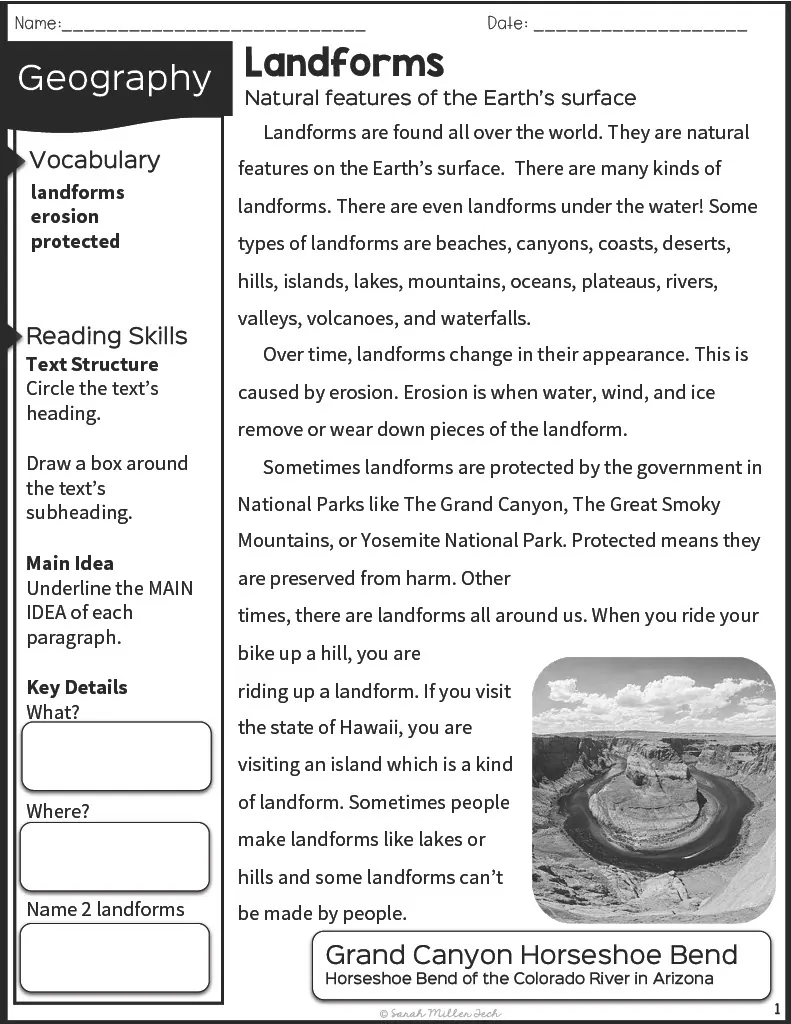
Define the vocabulary terms landforms, erosion, and protected using context from the reading passage.
Explain how wind, water, and ice cause erosion to change a landform's appearance over time.
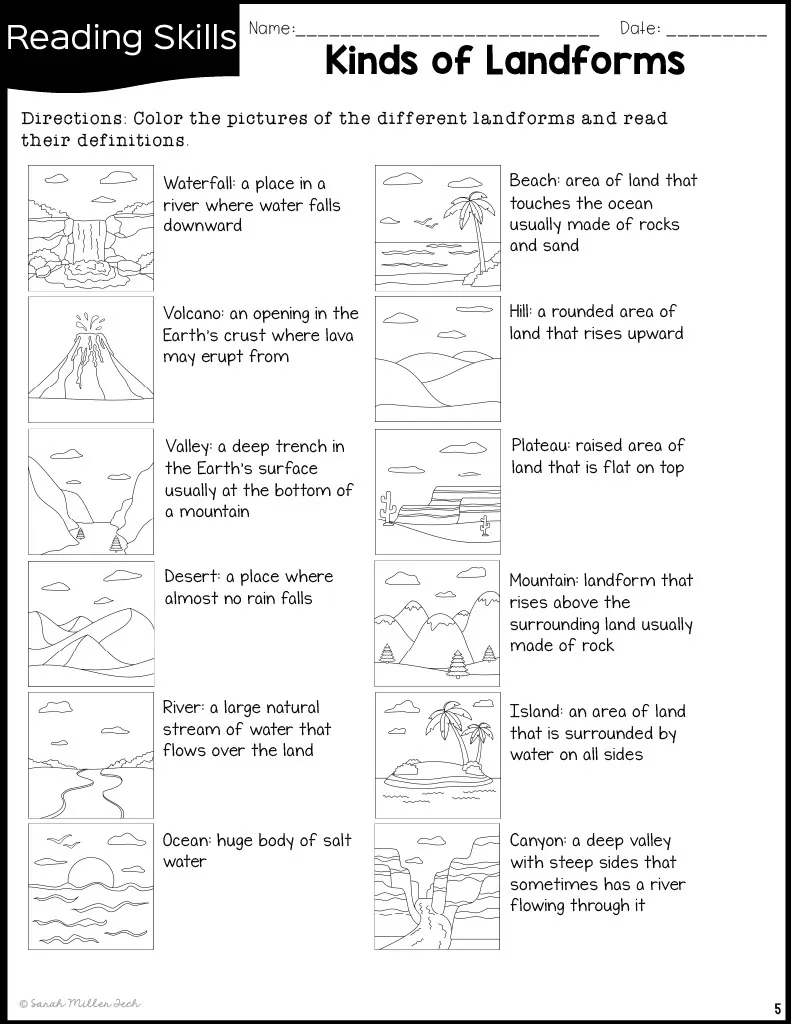
Match at least eight landform names to their correct definitions and illustrations.

Teaching tips
Read the landforms and erosion passage aloud together and model circling the text's heading before students work independently.
Use the illustrated four-page reference spread to preview all twelve landforms by sight before assigning the cut-and-match puzzle, since the puzzle reuses the same pictures and definitions.
Set the cut-and-color puzzle up as a partner or station activity, since it requires scissors and color for each set of loose pieces.

Skills covered
Nonfiction reading comprehension — students read a landforms and erosion passage and answer multiple-choice questions based directly on it.
Vocabulary in context — students define and alphabetize landforms, erosion, and protected, then locate them in a word search.
Term-to-definition and picture matching — students match vocabulary terms to definitions and cut apart, color, and match landform illustrations to their definitions.
Good to know
Questions teachers ask about this resource
Does the cut-and-match puzzle reuse the same landform pictures as the earlier reference pages?
Yes — the three-page puzzle uses the identical illustrations and definitions from the four-page reference spread, now separated into loose pieces that students color, cut out, and match by hand.
What's different about the KEY-labeled pages near the end of the packet?
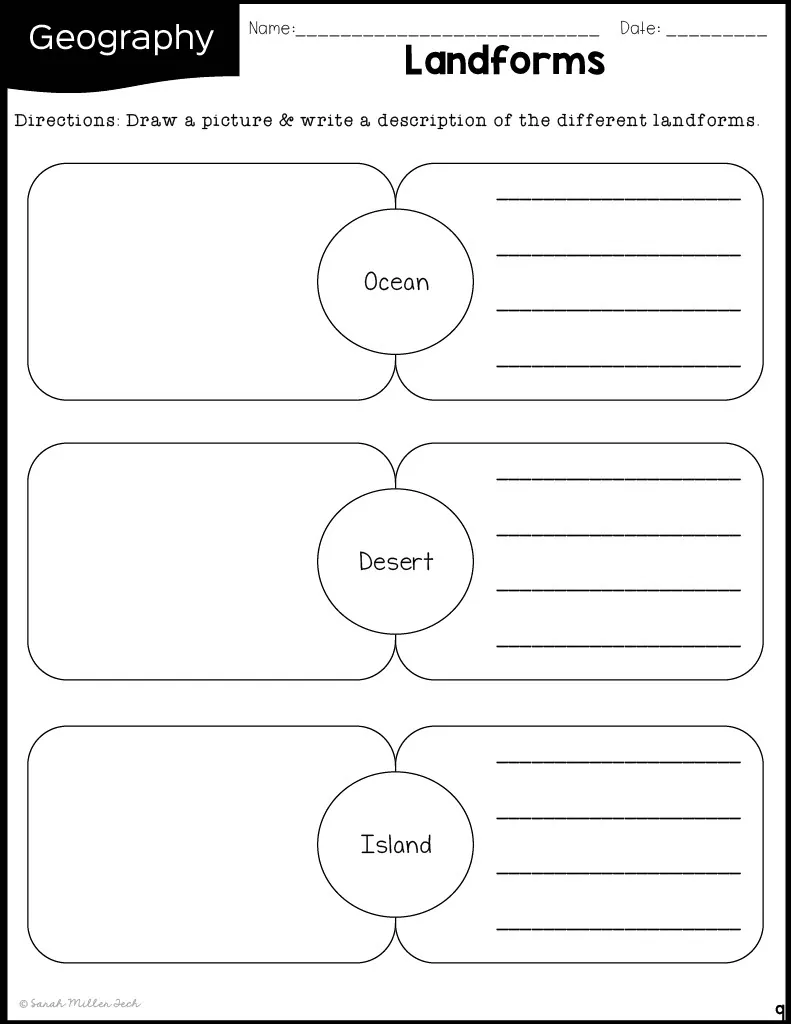
Pages 17 through 24 repeat the vocabulary, matching/quiz, and draw-and-describe pages with the correct responses already filled in, so a teacher can grade or check student work quickly.

No reviews yet
Downloaded this resource? Tell other teachers how it went.
Resource details
Concepts & topics
Core concepts
 Core concepts
landforms
erosion
reading comprehension
vocabulary
 Topics
Explore more
Categories this resource belongs to
Explore related searches
More to explore
You may also like