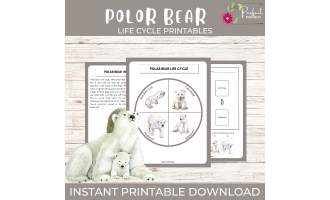
Life Cycle of a Panda Worksheet - Animal Science Unit Study & Fun Fact


- Grades
- Preschool–3, Elementary
- Pages
- 6
- File type
- Preparation
- Print ready


- Subject
- Montessori, Biology, Life Sciences, Science, Animals, Environmental Science, Earth and Environmental Sciences
- Topic
- panda life cycle, life cycle of a panda
- Resource types
- Bulletin Boards, Classroom Decor, Posters, Flashcards, Worksheets & Printables, Coloring Pages, Worksheets
- Preparation
- Print ready
About this resource
What's inside this resource
Have you ever wondered how a tiny, pink baby panda grows into the fluffy black-and-white bear we all love? In this exciting science unit, we will explore the amazing life cycle of a panda and learn fun facts about these gentle giants. Get ready for hands-on activities, cut-and-paste fun, and a special coloring page!
What’s Inside Your Panda Life Cycle Worksheet?
Panda Fun Facts – Discover where pandas live, what they eat, and why they are unique!
Life Cycle Diagram – A clear and simple chart showing each stage of a panda’s life, from newborn to adult.
Cut-and-Paste Activity – Put the life cycle in order by cutting and pasting the stages correctly.
Flashcards – Use these picture cards to remember the different stages of a panda’s journey.
Bonus Coloring Page – Have fun coloring an adorable panda in its bamboo forest!
Why This Worksheet is Perfect for You!
It makes learning about pandas fun and interactive.
You’ll practice sequencing skills with a hands-on cut-and-paste activity.
It helps you understand how pandas grow and why they are important to nature.
You can show your creativity with a special coloring page!
What Will You Learn?
The four stages of a panda’s life—from tiny cub to full-grown adult.
How pandas survive in the wild and why they love bamboo.
Why pandas are endangered and how conservation efforts help protect them.
How to use problem-solving and sequencing skills in a fun way!
Let’s explore the wonderful world of pandas and their life cycle together!
Related resources
More resources teachers may find useful
24 related resources were found using this product's title, contributor, categories and tags.


In the classroom
Teaching tips & learning objectives

Learning objectives
- Identify and sequence the four stages of a panda's life cycle: New Born, Cubhood, Adulthood, and Independence.
- Describe basic panda facts, such as diet, habitat, and endangered status, from the overview passage.
- Sort unlabeled images into the correct life-cycle order using a cut-and-paste activity.

Teaching tips
- Use the labeled life-cycle wheel on page 2 as a reference students can check their cut-and-paste ordering against, since the cutting page itself has no labels.
- Read the "Panda in a Nutshell" passage aloud before the fun-facts page, since several facts, like the special thumb, are introduced first in the overview.
- Laminate the flashcards for a quick life-cycle review or matching game after the main worksheets are complete.

Skills covered
- life cycles
- animal science
- sequencing
Good to know
Questions teachers ask about this resource
Do the cut-and-paste images and the flashcards show the same four life stages?
Yes — New Born, Cubhood, Adulthood, and Independence appear in both the cut-and-paste activity and the flashcard set, though the flashcards are labeled with text and the cut-and-paste images are not.
Do the fun-facts page and the coloring page use the same style of panda art?
No — the fun-facts page uses colorful, semi-realistic panda illustrations, while the coloring page uses a separate, simplified line-art panda design not seen elsewhere in the set.

No reviews yet
Downloaded this resource? Tell other teachers how it went.
Resource details
Concepts & topics
Core concepts
 Core concepts
- panda life cycle
- endangered species
 Topics
Explore more
Categories this resource belongs to
Explore related searches
More to explore
You may also like