


Living & Non-living Terrarium Packet

- Grades
- Grades 3–5, Elementary
- File type
- Preparation
- Print ready


- Subject
- Science, Life Sciences, Biology
- Topic
- terrarium, living things
- Resource types
- Activities
- Preparation
- Print ready
About this resource
What's inside this resource
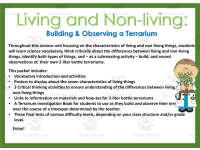
The Living & Non-living Terrarium Packet
An immersive and detailed science unit designed for students in 3rd to 5th grade, this resource focuses on exploring living and non-living things through hands-on tasks such as building and observing a self-created terrarium.
The journey begins with an introduction to relevant science vocabulary and a clear outline of the seven characteristics distinguishing living from non-living entities.
Critical Thinking Activities
- Youths get to test their analytical skills via three targeted critical thinking activities.
- These exercises aim to consolidate student understanding and improve their object identification skills.
Creating a Terrarium
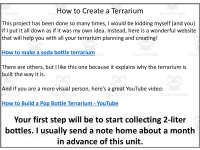
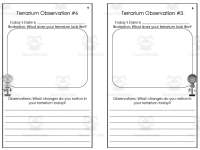
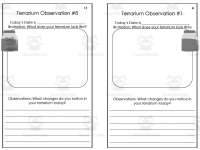
Following successful completion of these tasks, students move on to build their 2-liter bottle terrariums!. They're further encouraged with supporting materials, links providing instructions for terrarium construction. Additionally, they also receive a "Terrarium Investigation Book" which helps them through the process while providing space for recording observations over time
.Evaluation Tests
To effectively evaluate progress at various stages, there are three calibrate final tests based on observed classroom needs or grade levels. Upon successful completion of this unit’s learning cycle learners can take home their very own mini-ecosystem; promoting continued research outside school hours.
Bonus: Flexibility in Learning
- This can be used across whole groups for collective discussion
- This can be used during small-group settings encouraging cooperative social-skills practice
- This can be administered as homework assignments, thereby extending learning beyond traditional space-time limits.
- A Final Word:
This valuable 38-page teaching tool presents itself as a game-like interactive activity. It is not just an educational science unit but also provides enjoyable learning experiences.
Related resources
More resources teachers may find useful
24 related resources were found using this product's title, contributor, categories and tags.


In the classroom
Teaching tips & learning objectives

Learning objectives
- Name the characteristics that separate living from non-living things
- Classify objects as living or non-living
- Record observations of a terrarium over time

Teaching tips
- Terrarium building directions are reached through links, so plan for internet access along with a 2-liter bottle, soil and plants for each terrarium.

Skills covered
- Classification — sorting examples in the critical thinking activities
- Scientific observation — logging terrarium changes in the investigation book
- Vocabulary — completing fill-in-the-blank work with terms such as adapt, reproduce and respond

No reviews yet
Downloaded this resource? Tell other teachers how it went.
Resource details
Concepts & topics
Core concepts
 Core concepts
- Living things
- Non-living things
- Characteristics of living things
- Terrarium
- Ecosystem
 Topics
Explore more
Categories this resource belongs to
Explore related searches
More to explore
You may also like


