Narrative Writing Story Starters Beginnings Sizzling Starts

- Grades
- Grades 3–7, Elementary, Homeschool Resources, Middle School
- Pages
- 30
- File type
- Preparation
- Print ready


- Subject
- ELA, Writing, Creative Writing
- Topic
- narrative writing, story openings
- Resource types
- Classroom Decor, Posters, Anchor Charts
- Preparation
- Print ready
About this resource
What's inside this resource
Let’s be honest—starting a story is tough! How many times have you seen students staring at a blank page or defaulting to “One day…”? That’s where this collection of Narrative Writing Story Starters posters comes in. They’ll transform your classroom into a hub of creativity and confidence, where students feel excited to tackle their narratives.
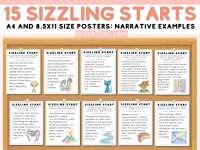
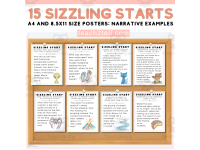
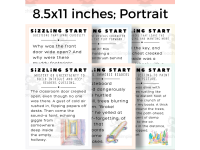
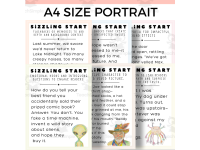
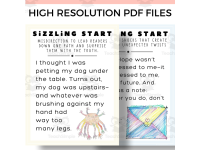
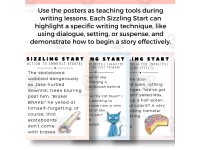
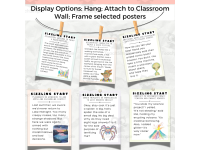
This set of 15 vibrant posters is packed with sizzling techniques that make story beginnings pop! From diving straight into action to crafting cliffhangers that leave readers hanging, these posters offer everything your students need to write leads that hook and engage.
What’s Inside:
15 posters showcasing dynamic techniques like dialogue, mystery, and emotional hooks.
Clear, relatable examples to inspire even the most hesitant writers.
Two PDF sizes: 8.5x11 (US Letter) and A4, so you can print what works best for you.
Why You’ll Love Them:
They’re perfect for classroom walls, writing centers, or even as mini-lesson tools.
They save you time by providing ready-to-use examples of sizzling starts.
They help students learn to create strong, engaging openings that leave their readers wanting more.
Why Your Students Will Love Them:
These examples spark instant creativity—no more blank-page blues!
They make learning how to write strong beginnings simple and fun.
They’ll feel proud of the stories they create using these techniques.
Suitable for Grades 3-7
Number of pages: 30
File Format: 2 pdf files
Related resources
More resources teachers may find useful
24 related resources were found using this product's title, contributor, categories and tags.


In the classroom
Teaching tips & learning objectives

Learning objectives
Name at least three techniques authors use to open a narrative (e.g., action, dialogue, description).
Identify which technique is used in a sample opening paragraph.
Apply a chosen technique (such as a cliffhanger or a sensory description) to draft an original story opening.

Teaching tips
Post the 15 posters as a rotating anchor chart and introduce a new technique each week.
Before a writing workshop, read one poster's example aloud and ask students to identify the technique before revealing its label.
Have students sort their own drafted openings under the poster that matches the technique they used.

Skills covered
Narrative hook identification -- students learn to name and recognize fifteen techniques such as dialogue, onomatopoeia, and cliffhangers from labeled example paragraphs.
Mentor-text analysis -- the poster examples show how each technique appears in a short, complete piece of narrative writing students can study before drafting their own openings.
Good to know
Questions teachers ask about this resource
Which sizzling start technique would suit a mystery story's opening best?
The 'Mystery or uncertainty' poster -- its example describes a classroom door creaking open with no one there and a faint giggle echoing from the hallway, building intrigue without revealing an explanation.

No reviews yet
Downloaded this resource? Tell other teachers how it went.
Resource details
Concepts & topics
Core concepts
 Core concepts
narrative hooks
story openings
craft techniques
 Topics
More to explore
You may also like