Nonfiction Early Reader: Earth Science Articles



About This Product
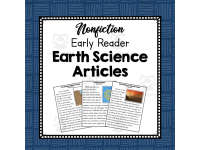
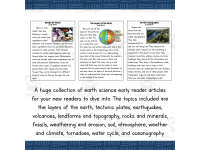
Early reader earth science articles that your students can study and use as reading material, homework, or research for writing science reports. These articles are written at a simplified reading level for your new readers. This set of science articles is a rich resource that can be used in so many good ways! I would estimate that these articles would be good for 1st-3rd graders. I hope you enjoy!
How to Use This:
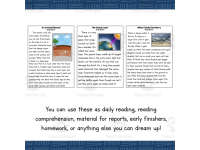
Use these earth science articles in any way you want. Hand them out as reading material or use them as the basis for science research reports. I enjoyed giving my students a highlighter and asking them to highlight the keywords and phrases. Then we shared what we each thought were the most important things from the article. If you go this route, you could have students read articles independently or you may even pair them up to partner read. Having students read the article more than once will solidify their comprehension.
When you are discussing keywords and phrases that they highlighted, you can do so as a whole group. This allows students to hear the thought processes of their classmates. While you are discussing articles out loud, you can ask comprehension questions along the way.
Reading these articles in small groups, as independent work, in pairs, or as homework are all great options. Most teachers love to use these as resources for students to read and then use the information to write little reports or summaries. I hope you can find a good way to use them in your classroom too!
What You Get:
· 29 early reader nonfiction earth science articles
Some of the articles included are:
“The Layers of the Earth”
“The Deepest Hole Ever Dug”
“The Earth is Always Moving”
“What Causes Earthquakes”
“How Landforms Are Made”
What's Included
A 29 page printable PDF
Resource Tags
0 Reviews
Check out these other great products