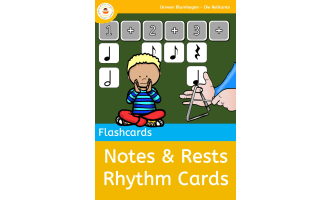
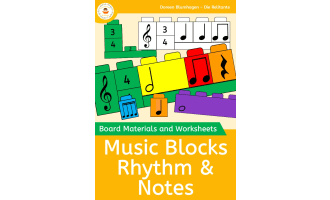
Notes & Rests - Rhythm Flaschcards


About This Product
Why Use Visual Rhythm Cards?
This set provides a simple and visual way to understand, arrange, and play rhythms using notes and rests. The cards are versatile and can be used in music lessons on the board, on the floor, or in group activities.
With the Notes & Rests Cards, you can:
Visually structure rhythms – a clear, easy-to-understand approach instead of complex notation. Rhythm is built like a modular system and can be adjusted.
Play rhythms immediately – students see the rhythm, arrange it, and perform it right away.
Engage students actively – through creative group and partner activities.
Make musical concepts more accessible – by exploring note values and rests in a playful way.
Combine various rhythm instruments flexibly – including body percussion, Boomwhackers, Orff instruments, or simply clapping and speaking.
No long explanations needed – just place the cards, experiment, and start playing!
Set Contents – Included Musical Symbols
Note Values & Rests
•Whole Note / Whole Rest
•Half Note / Half Rest
•Quarter Note / Quarter Rest
•Eighth Note / Eighth Rest
•Sixteenth Note Pair / Sixteenth Rest
Additional Symbols
•Time Signatures (2/4, 3/4, 4/4)
•Repeat Signs
•Counting Beats (1, 2, 3, 4 and "+" for offbeats)
•Dynamic Markings: p (piano), mf (mezzo-forte), f (forte)
•Accents: Crescendo ( < ), Decrescendo ( > )
To combine different instruments, you can find additional rhythm cards in the same style on my author profile, available individually or as a set:
•Body Percussion
•Boomwhacker Colors
•Orff Instruments
•Cup Percussion
How to Use This Material
Print the templates in the desired quantity, laminate them, and cut them into six cards each.
The cards are flexible and can be used in various teaching phases:
On the board – Attach with magnetic tape to display rhythm patterns.
On the floor – Students arrange rhythms independently or in groups and clap them.
With movement – Combine with body percussion or cup percussion for a playful experience.
With instruments – Suitable for Boomwhackers, Orff instruments, Cajón, or voice.
In group or partner work – Students compose their own rhythms, present them, and experiment with variations.
Tip: The different types of cards can be used based on age and skill level:
Beginners start with quarter and half notes.
Advanced learners combine offbeats, dotted notes, and dynamic markings.
Rhythms can be placed individually or combined into larger patterns, which different groups can perform.
Have fun making music!
Die Relitante – Doreen Blumhagen
Resource Tags
0 Reviews
Check out these other great products