


IR Verb Worksheet: Spanish -IR Verbs in the Present Tense
Regular Spanish -ir verbs such as vivir, escribir, abrir and recibir are conjugated in the present across six short activities, from a full chart to a personal answer.


- Grades
- Grades 9–12, High School
- Pages
- 3
- File type
- Answer key
- Included


- Subject
- Foreign Languages, Spanish
- Topic
- conjugation worksheets, verbs printable
- Resource types
- Worksheets & Printables, Worksheets
- Answer key
- Included
About this resource
What's inside this resource
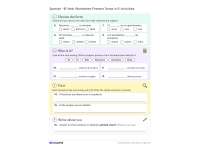
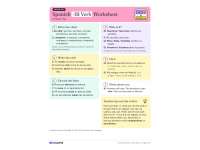
Vivir models the whole pattern in a rule box: drop -ir to find the stem viv-, then add -o, -es, -e, -imos, -ís or -en. A watch-out note shows the only place where -ir and -er endings part ways, nosotros and vosotros (comemos and coméis, but vivimos and vivís). The Part A chart needs every form of escribir and compartir, and Part B needs the right form of recibir, vivir and abrir in three sentences, with tú abres modeled first.
Page 2 continues with four more activities. In Part C, students check the form that matches each subject, with verbs such as asistir and subir. Part D works backward from the verb ending to a subject pronoun chosen from a bank. Part E gives two sentences with one wrong verb each to rewrite, and Part F asks students to answer ¿Dónde vives? in a full Spanish sentence.
The answer key lists all 16 answers with short explanations, and its teacher tip separates regular -ir verbs from the irregular verb ir (voy, vas, va…).
Related resources
More resources teachers may find useful
24 related resources were found using this product's title, contributor, categories and tags.


In the classroom
Teaching tips & learning objectives

Learning objectives
- Find the stem of a regular -ir verb and add the present-tense ending for each subject.
- Conjugate escribir and compartir in all six present-tense forms.
- Identify the subject pronoun that matches an -ir verb ending.

Teaching tips
- Point out that -ir verbs are not the verb ir (to go), which is irregular: voy, vas, va, vamos, vais, van.
- Pedir, dormir and salir also end in -ir but are not regular, so the sheet leaves them out; mention it if students suggest them.
- In Part D, accept any pronoun that matches the ending, such as nosotras for subimos or ustedes for reciben.

Skills covered
- Stem-and-ending conjugation — students build all six forms of escribir and compartir from the vivir model.
- Subject–verb agreement — students choose abrimos, vives, asiste and suben to match their subjects.
- Reading verb endings — students name the subject of subimos, escribes, reciben and abrís from a pronoun bank.
Good to know
Questions teachers ask about this resource
Which verbs does the worksheet practice?
Regular -ir verbs: vivir, escribir, compartir, recibir, abrir, asistir and subir. The irregular verb ir (to go) appears only in the teacher tip, with its six forms, so students can tell the two apart.
Where do -ir endings differ from -er endings?
Only in the nosotros and vosotros forms: -ir verbs use -imos and -ís (vivimos, vivís), while -er verbs use -emos and -éis (comemos, coméis). Part E includes the error escribemos to practice that difference.
Which pronouns are accepted in Part D?
Any pronoun that matches the ending. For subimos, nosotros or nosotras; for reciben, ellos, ellas or ustedes; for abrís, vosotros or vosotras.

No reviews yet
Downloaded this resource? Tell other teachers how it went.
Resource details
Concepts & topics
Core concepts
 Core concepts
- Regular -ir verbs
- Present tense
- Verb stems and endings
- Subject pronouns
Topics
 Topics
Explore more
Categories this resource belongs to
Explore related searches
More to explore
You may also like


