


Ser Worksheet: Who They Are, Where They Are From
Ser practice for Spanish beginners moves from matching soy, eres, es, somos, sois and son to their subjects, to origin with ser de, adjective agreement and a short self-introduction, and ends with a ser sudoku and a crossword.


- Grades
- Grades 9–12, High School
- Pages
- 5
- File type
- Answer key
- Included


- Subject
- Foreign Languages, Spanish
- Topic
- conjugation worksheet, verbs practice
- Resource types
- Worksheets & Printables, Worksheets
- Answer key
- Included
About this resource
What's inside this resource
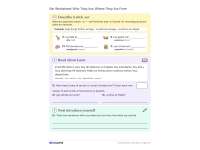
Soy, eres, es, somos, sois and son are matched to their subjects in the first task on page 1, where students write the letter of each form next to yo, tú, él / ella / usted and the rest. Three multiple-choice sentences come next, followed by three ser de sentences about where Diego, nosotras and mis primos are from, each prompted by a flag.
Adjective agreement comes next, on page 2. Students complete four descriptions, making alto, perezoso, inteligente and simpático match a giraffe, cats, a brother and girls. Lucía then introduces herself in a short paragraph, and students count the forms of ser in it, answer ¿De dónde es Lucía? and ¿Cómo es Pablo?, and write two sentences of their own with soy.
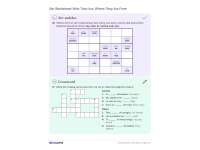
Page 3 holds two puzzles. In a 6 × 6 ser sudoku, each printed form carries its subject label, and students fill the empty boxes so every row, column and thick-lined box has all six forms once. A crossword with four across and four down clues then mixes ser forms with adjectives that must agree.
The key on page 4 covers items 1 to 15 with agreement notes and a ser-versus-estar tip, and page 5 shows the solved sudoku and crossword.
Related resources
More resources teachers may find useful
24 related resources were found using this product's title, contributor, categories and tags.


In the classroom
Teaching tips & learning objectives

Learning objectives
- Match each subject pronoun to its present-tense form of ser.
- Choose the form of ser that agrees with a compound subject such as tú y yo.
- Say where someone is from with ser de + a place.

Teaching tips
- In Part B, point out that tú y yo counts as nosotros before students choose a form.
- Before Part D, go over the rule printed above it: -o becomes -a for feminine, add -s for plural, and an -e ending stays the same.
- In Part E, remind students that Me llamo is not a form of ser before they count.

Skills covered
- Present tense of ser — students pair soy, eres, es, somos, sois and son with their subjects and place all six in the sudoku.
- Expressing origin — students write full ser de sentences about Diego, nosotras and mis primos, following the model Ana es de Chile.
- Adjective agreement — students make alto, perezoso and simpático match their nouns, then supply agreeing adjectives in the crossword.
Good to know
Questions teachers ask about this resource
How does the ser sudoku work?
The 6 × 6 grid is split into six thick-lined boxes of two rows by three columns. Sixteen squares are printed with a form and its subject, such as yo soy or vosotros sois, and students fill the rest so each row, column and box holds soy, eres, es, somos, sois and son once. The puzzle has one solution, shown on page 5.
Does the crossword test anything besides verb forms?
Yes. Five answers are forms of ser and three are adjectives that must match their nouns, zapatos, montañas and casa, as the English hint beside each clue shows.
How does the worksheet handle ser versus estar?
Every task uses ser for identity, origin and lasting traits. Estar is not practiced, but the teacher tip on page 4 gives two estar examples, Estoy en clase and Estoy cansado, for when students ask why location and feelings work differently.
Does Me llamo count as a form of ser in the Lucía question?
No. Me llamo uses the verb llamarse, not ser. The key on page 4 lists each form of ser in the paragraph so students can check their count.

No reviews yet
Downloaded this resource? Tell other teachers how it went.
Resource details
Concepts & topics
Core concepts
 Core concepts
- Ser
- Present tense
- Subject pronouns
- Ser de
- Adjective agreement
Topics
 Topics
Explore more
Categories this resource belongs to
Explore related searches
More to explore
You may also like


