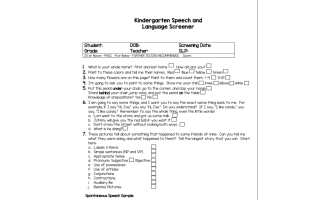
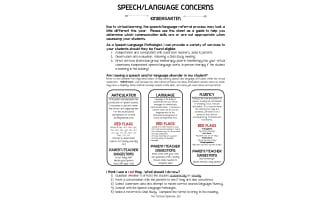
Speech and Language Screener for Elementary Students

- Grades
- Grades 1–5, Elementary
- File type
- Preparation
- Print ready


- Subject
- Special Resources, Speech Therapy, Language Development
- Topic
- Speech Therapy, Oral Communication
- Resource types
- Teacher Tools, Assessments
- Preparation
- Print ready
About this resource
What's inside this resource
Related resources
More resources teachers may find useful
24 related resources were found using this product's title, contributor, categories and tags.


In the classroom
Teaching tips & learning objectives

Teaching tips
Administer the sentence-repetition task first since it requires the least setup, then move into the more open-ended conversation prompts.
For grades 1-2, have the accompanying picture-sequence page ready before starting the retelling task.
Use the observation checklist at the end to record qualitative impressions (vocal quality, fluency, intelligibility) immediately after the session while details are fresh.

Skills covered
Speech and language screening — a clinician elicits and observes a student's articulation, fluency, and language use through structured and conversational tasks.
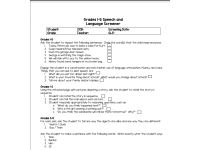
Narrative retelling assessment — grades 1-2 students retell a picture-sequence story and answer reasoning questions to demonstrate sequencing and inferencing.
Sentence-formation assessment — grades 3-5 students produce original sentences using given target words.
Good to know
Questions teachers ask about this resource
Why does the screener use different tasks for grades 1-2 versus grades 3-5 within the same one-page form?
The grades 1-2 section uses a picture-sequence retelling task suited to earlier narrative skills, while the grades 3-5 section shifts to more abstract comparison and sentence-formation tasks, letting one form scale its expectations to the developmental stage of the student being screened.

No reviews yet
Downloaded this resource? Tell other teachers how it went.
Resource details
Concepts & topics
Core concepts
 Core concepts
speech-language screening
articulation
language sampling
Topics
 Topics
More to explore
You may also like