


Spelling Progress Test - Test One - Age 6-7 (KS1)


Attributes
Subject
File
Editable
No
Rating
Add To Collection


About This Product
Spelling Progress Test - Test One - Age 6-7 (KS1)
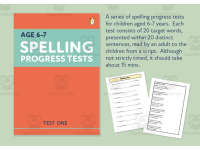
This spelling assessment tests students aged 6-7 on 20 target words presented within distinct sentences. An adult reads each sentence aloud from a script as the student spells the target word. It takes about 15 minutes to administer and covers spellings aligned to the Year 2 SATs and English National Curriculum.
Assessed spelling patterns include digraphs like sh and th, suffixes like -ing and -est, vowel combinations like igh and ough, compound words, homophones, tricky letter patterns like -tch, and common exception words. This test allows teachers to identify student strengths and areas for growth in spelling. It can inform instruction in whole group, small group, or one-on-one settings. Periodic progress monitoring with this assessment helps teachers track the impact of their spelling program.
What's Included
10 pages
Resource Tags
0 Reviews
Explore related searches
you may also like...
Check out these other great products
Tests, Quizzes and Tests, Teacher Tools


Tests, Quizzes and Tests, Teacher Tools
Tests, Quizzes and Tests, Teacher Tools

Tests, Quizzes and Tests, Teacher Tools
Tests, Quizzes and Tests, Teacher Tools

Tests, Quizzes and Tests, Teacher Tools