24 related resources

To Kill A Mockingbird - Literature Kit Gr. 9-12

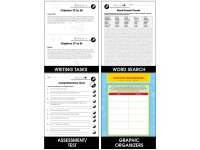
A ten-chapter-grouping study guide for Harper Lee's To Kill a Mockingbird pairs before- and after-reading questions, vocabulary work, and writing tasks with a full answer key and three graphic organizers.
Grades
Grades 9–12, High School
File type
PDF
Preparation
Print ready

Updated Sep 19, 2021

Subject
ELA, Literature
Topic
PDF
Resource types
Novel Studies, Worksheets & Printables
Preparation
Print ready

About this resource

What's inside this resource

To Kill A Mockingbird - Literature Kit Gr. 9-12
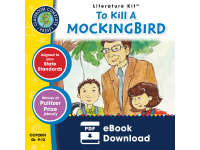
The To Kill A Mockingbird - Literature Kit Gr. 9-12 is a thorough educators' tool for in-depth study of this powerful American classic. It delves into important themes such as prejudice and the experience of life during the Great Depression, while offering vocabulary and comprehension activities suitable for students at varying grade levels.
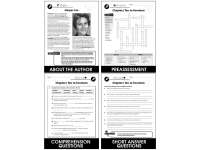
  • This kit encourages cognitive skills as students demonstrate their understanding about the Great Depression.
  • The program guides learners to examine light and dark images portrayed in the novel's key scenes, thereby enhancing their descriptive abilities.
  • Critical thinking is nurtured as students evaluate editorial perspectives introduced by Mr. Underwood's character.

Vocabulary acquisition is reinforced via sentence completion tasks sourced directly from passages within the book, providing a strong basis for context-based learning. This resource bridges literature and language arts effectively by exploring narrative choices such as Scout's first-person point-of-view narration, fostering rich discussions around its potential benefits or drawbacks.

Character Analysis:

This spotlight on Atticus Finch uses a T-chart activity to allow evidence-backed identification of character traits from student reading materials that strengthen reading comprehension skills over time. This resource aligns with your State Standards and Bloom’s Taxonomy taxonomy guidelines ensuring highly effective learning outcomes.

Additional Content:

The literature kit also includes:
  • A crossword puzzle & word search puzzles adding an element of fun while reinforcing vocabulary development progressively rooted around themes derived from the novel making it educational yet enjoyable at its core
  • An multi-choice quiz attached ensures fast efficient student understanding assessment post utilisation.

In Summary:

Designed especially for grades 9 to 12 language arts instruction, this PDF formatted literature companion is optimized for both individual and group lecture scenarios, as well as smaller study group settings. It can be used effectively for homework assignments encouraging self-study, making it a valuable tool in homeschool setups. The included resources are adaptable across diverse academic environments, making this kit a valuable resource for educators globally seeking to boost literary appreciation through learner-centered teaching methods.

In the classroom

Teaching tips & learning objectives

Learning objectives

  • Recall and sequence key story details from To Kill a Mockingbird across each chapter grouping.

  • Determine the meaning of chapter-specific vocabulary from context and match words to their definitions.

  • Analyze how a central character (e.g., Scout, Atticus, Arthur Radley) develops or is revealed across the novel.

  • Connect the novel's trial and racial themes to real historical context through a research-based writing task.

  • Construct and defend an argument through roleplay in a mock-trial activity based on the novel's courtroom scenes.

Teaching tips

  • Use the assessment rubric (teacher guide) to evaluate the writing tasks and graphic organizers with a consistent 4-level scale, since the kit is built around that rubric rather than simple right/wrong marking.

  • Assign the chapter-grouping Before/After sections alongside the reading schedule rather than all at once, since the kit is structured as 10 sequential chapter groupings.

  • Preview the vocabulary list for each chapter grouping before students read, since several groupings introduce a dense set of unfamiliar words (e.g., 20+ terms for Chapters 5-9).

  • Use the mock-trial writing task after the trial chapters are complete, since it asks students to take on juror or courtroom roles based on Atticus's closing argument.

Skills covered

  • Textual comprehension and recall — students answer multiple-choice and short-answer questions tied to specific chapter events for each of the 10 chapter groupings.

  • Vocabulary in context — students match chapter-specific vocabulary (e.g., apothecary, taciturn, contentious) to definitions or use it to complete sentences.

  • Character analysis — a graphic organizer and multiple chapter questions ask students to track how a character such as Scout changes over the novel.

  • Historical research and argumentation — a writing task asks students to research Jim Crow-era segregation laws and connect them to the novel's themes.

  • Persuasive roleplay — the mock-trial writing task has students take juror notes and argue a position based on courtroom scenes in the novel.

Good to know

Questions teachers ask about this resource

How does the kit organize its chapter coverage?

Into 10 chapter groupings that move through the novel sequentially — Chapter 1, Chapters 2-4, 5-9, 10-14, 15-18, 19-20, 21-22, 23-25, 26-27, and 28-31 — each with its own Before You Read and After You Read sections.

What does the mock-trial writing task ask students to do?

Students choose various characters, take on roles including juror, and take notes following a set format based on Atticus's closing remarks and the novel's courtroom scenes.

No reviews yet

Downloaded this resource? Tell other teachers how it went.

Resource details

Concepts & topics

Core concepts

  • Character development

  • Theme analysis

  • Historical context (Jim Crow era)

  • Vocabulary in context

Topics

Explore more

Categories this resource belongs to

Explore related searches

More to explore

You may also like