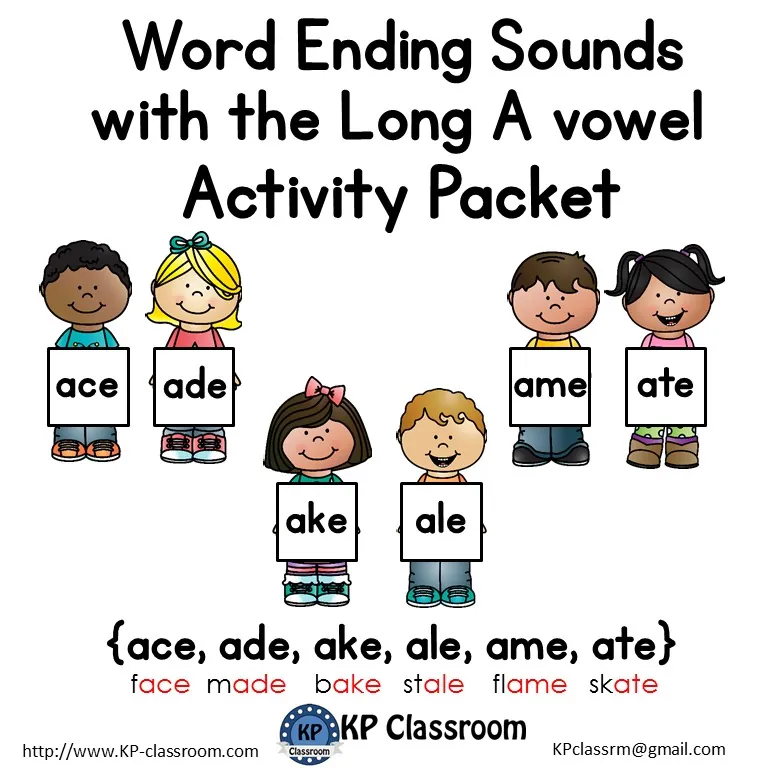
Word Ending Sounds with the Long A Vowel Activity Packet and Worksheets
- Grades
- K–3, Elementary
- Pages
- 87
- File type
- Preparation
- Print ready


- Subject
- ELA, Reading, Phonics, Language Development, Spelling, Vocabulary
- Topic
- Words, Phonics
- Resource types
- Writing Prompts, Worksheets & Printables, Activities
- Preparation
- Print ready
- Standards
- RF.1.3.b
Product description
From the author
Long A Vowel Word Endings Activity Packet teaches students about phonics and spelling patterns in an engaging way. With a focus on words ending in -ace, -ade, -ake, -ale, -ame, and -ate, this packet includes various printable activities to help students in grades K-3 develop critical language arts skills. Through fun and differentiated resources like word sorts, writing prompts, cut and paste worksheets, and more, children will gain exposure to the long A vowel sound and common word endings. Implement these materials in small groups, centers, or even homework to reach learners at multiple levels. This teaching resource aims to improve phonics, reading, writing, and vocabulary in a lively hands-on format.
Related resources
More resources teachers may find useful
24 related resources were found using this product's title, contributor, categories and tags.


In the classroom
Teaching tips & learning objectives

Learning objectives
Read and spell one-syllable and multisyllable words that use the final-e long-A pattern across six ending families
Match long-A words to pictures and reassemble split words, reinforcing sound-symbol correspondence
Alphabetize vocabulary words within each ending family

Teaching tips
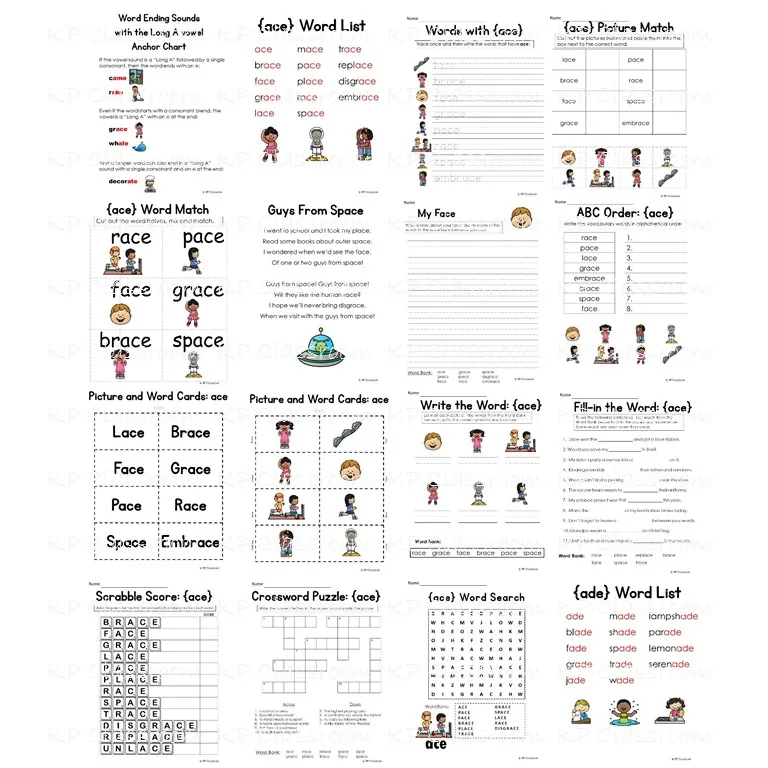
Teach the page-2 anchor chart first — every later activity assumes students know the final-e rule it states
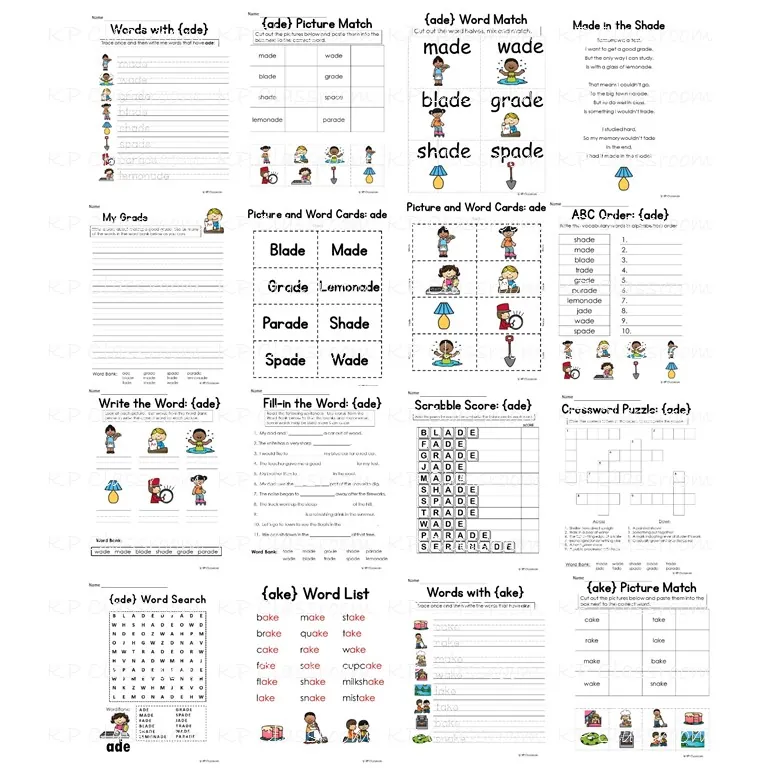
Plan scissors-and-glue time for each family's picture match, word-halves match, and picture-and-word cards; these pages are built for cutting out
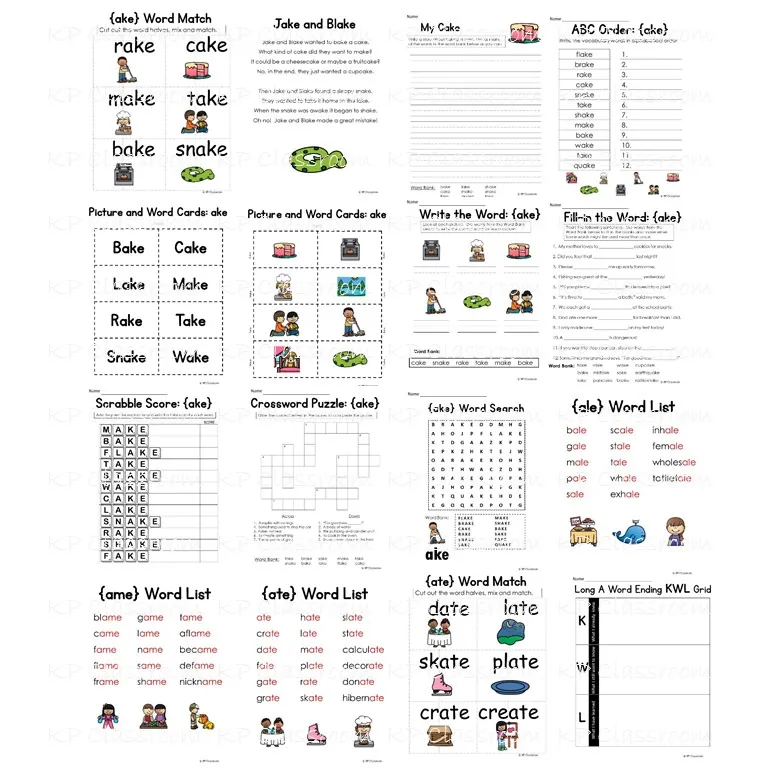
Use the closing KWL grid as a wrap-up after finishing all six families, since it asks what students learned, still want to know, and already knew

Skills covered
Phonics decoding — students read and sort long-A words built on the final-e pattern in six ending families ({ace}, {ade}, {ake}, {ale}, {ame}, {ate}).
Spelling pattern practice — students trace and write words such as lace, parade, milkshake, whale, nickname, and hibernate within their ending families.
Word-bank writing — students write an original story per family using as many listed long-A words as they can.

No reviews yet
Downloaded this resource? Tell other teachers how it went.
Curriculum
Standards, concepts & topics
 Standards
 Core concepts
 Topics
Explore more
Categories this resource belongs to
Explore related searches
More to explore
You may also like