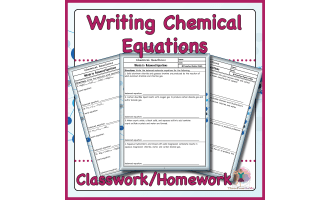
Writing Chemical Equations Scaffolded Notes


About This Product
Writing Chemical Equations Scaffolded Notes
This resource is an ideal tool for educators looking to improve their students' understanding of Chemistry. It's been specifically designed for students between Grade 9 and Grade 12, and is the perfect bridge between theory and practice when it comes to chemical equations.
Teachers can use this guide to help students navigate through the complex process of translating word equations into balanced chemical equations. Concepts such as states, equilibrium, catalyst, and heat are also incorporated into these notes. The content assumes that students already have a basic understanding of how to convert names into formulae nomenclature and how to balance chemical equations.
Usage suggestions:
- In class:The notes can be used during classroom instruction with groups or individual learners during lessons or tutoring sessions.
- Homework aid:The notes serve as a useful tool in reiterating classroom discussions at home.
- Prefatory review: The material can act as study guide before assessments or tests.
The twin benefits of using these scaffolded notes include; simplifying complex topic leading to better conceptual grasp among students while saving educators preparation time by compacting extensive content-creation duties
.All the student pages are neatly organized with an accompanying teacher key providing helpful references whenever required. The contents are easily accessible in a PDF format ensuring compatibility across all digital platforms without issues related software constraints
. Motivational Note: Educators have paved the way for every profession, investing in future innovators with every lecture or lesson imparted. This unparalleled academic resource aids you accomplish precisely that making life easier ensuring our children understand even complex areas like Chemistry effortlessly!What's Included
Student pages and teacher key.
Resource Tags
0 Reviews
Check out these other great products