Label a Diagram


- Year groups
- Years 2–5 (Key Stages 1–2)
- File type
- Preparation
- Print ready


- Subject
- Life Skills
- Topic
- Vocabulary Enrichment, Label a Diagram
- Resource types
- Diagrams, Worksheets
- Preparation
- Print ready
From the author
About this resource
Label a Diagram: A Unique Educational Resource
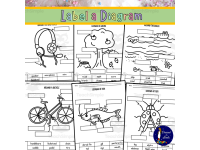
Label a Diagram is an educational tool designed specifically for pre-schoolers and students in Year 1 through the Year 3. It assists in vocabulary enrichment, life skills introduction, and encourages exploration of everyday objects.
This useful aid guides students on an informative journey dissecting objects they frequently come across. This resource provides the perfect blend of education and fun. From understanding that a hinge allows smooth operation of door to labelling overlooked details - Label A Diagram has it all!
Broaden Understanding Through Interactive Learning
- Students dive into studying various elements ranging from micro items like glasses parts to macro perspectives like around a car.
- This tool fits perfectly within individual activities during class time or as homework assignments.
- Ideal for whole group instruction or small group collaborations in classrooms.
- Homeschoolers can incorporate Label a Diagram for hands-on projects intended to boost observational competence or vocabulary building.
Included Resources
Including answer keys these worksheets encourage self-learners' receptivity while enabling comprehension - making them suitable for independent studies too!
The Additional Perk of Mindful Colouring!
Apart from its educational benefits, Label A Diagram also comes with mindful colouring opportunities — adding another layer of engagement alongside enriching their knowledge about their surroundings!
Related resources
More resources teachers may find useful
More resources on the same subject and topic.


In the classroom
Teaching tips & learning objectives

Learning objectives
Identify and name the parts of a familiar object or scene from a word bank.
Match a vocabulary word to its correct location on a labelled diagram.
Build topic-specific vocabulary across everyday, body, animal, and nature themes.

Teaching tips
Introduce each diagram's word bank orally before students label independently, since terms range from simple (ear, nose) to more specific (dorsal fin, elytra).
Use the animal diagrams (dog, fish, ladybug) alongside a related science or nature unit for cross-curricular vocabulary reinforcement.
Rotate a different diagram each day as a quick morning warm-up or centre activity, since each page is self-contained.
Check work against the included answer key rather than needing to pre-solve each diagram.

Skills covered
Vocabulary-to-picture matching — students label parts of everyday objects and animals using a provided word bank.
Spatial part identification — students locate and mark the correct position of a named part on a diagram.
Topic vocabulary building — students learn specific terms across themes including household items, the body, animals, and nature.

No reviews yet
Downloaded this resource? Tell other teachers how it went.
Resource details
Concepts & topics
Core concepts
 Core concepts
Diagram labelling
Vocabulary
Part identification
 Topics
Explore more
Categories this resource belongs to
Explore related searches



More to explore