



Graphic Organizers teaching resources for the United Kingdom


Triangles Reference Chart – Types and Angles
, Not Grade Specific,
Six triangle types — acute, right, obtuse, equilateral, isosceles, and scalene — are each defined by angle or side properties on a reference chart.
Author EduStudio
Rating
Tags Triangles, Geometry, 2D Shapes, Math Reference Chart, Types Of Triangles, Geometry Poster, Math Classroom Decor, Triangle Classification, Geometry Anchor Chart, Math Visual Aid

3D Shape Nets – Identification Practice Worksheet
, Not Grade Specific,
Fourteen 3D solids, from cubes and cones to hexagonal and octagonal prisms, are named from their two-dimensional nets across a grid-style identification worksheet with a matching answer key.
Author EduStudio
Rating
Tags 3D Shapes, Geometry Worksheet, Shape Nets, Solid Figures, Spatial Reasoning, Graphic Organizer, Math Activity, Middle School Geometry, Surface Area, Visual Learning

Animal Adaptations in the Rainforest Habitat
, Not Grade Specific,
A four-part rainforest bundle combines a slideshow, task cards, an animal-matching card game, and an 82-page workbook covering habitats, adaptations, reading, and writing.
Author Quail Trail Products
Rating
Tags Animal Adaptations, Rainforest Habitat, Rainforest Animals, Ecology, Science Education

Animal Classification – Vertebrates + Invertebrates
, Not Grade Specific,
Vertebrates and invertebrates diagram that groups mammals, birds, fish, reptiles and amphibians apart from jointed-leg and legless invertebrates, paired with a chart on each group's traits.
Author educ_project
Rating
Tags Animal Classification, Vertebrates & Invertebrates, Science, Biology, Environement, Insects
B-M-E Graphic Organisers | Fairy Tale Plots
, Not Grade Specific,
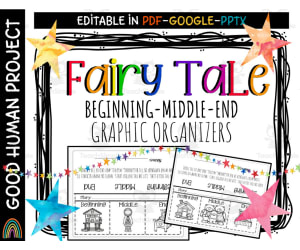
The collection centres on a consistent beginning, middle, and end framework while varying how learners record the sequence. Foldable pages use solid and dotted guides for creating interactive sections, and repeated story fields keep each organiser usable with a teacher-selected tale. Drawing and writing are both explicitly supported, making the same plot structure accessible across early literacy levels. The resource supplies organisation rather than a predetermined story or completed response.
Author Good Human Project
Rating
Tags Sequence Of Events, Fairy Tales, Folk Tales, Story Plot, Graphic Organizers

Beginning, Middle, and End Worksheet
, Not Grade Specific,
The worksheet is designed for a teacher-read narrative rather than a supplied passage. Learners record the story title, recall what happens at each major stage, and retell the events across beginning, middle, and end sections. The three-part structure helps them preserve chronology while selecting only the important actions. Because the source story remains open, teachers can reuse the organiser with different read-alouds and adjust the writing or drawing expectation.
Author Have Fun Teaching
Rating
Tags Sequencing, Summarizing, Begining Middle And End, Middle And End, Kids First Middle End Template, Beginning Middle And End Worksheets

Beginning, Middle, End Worksheet
, Not Grade Specific,
Beginning-Middle-End gives learners a compact structure for recounting narrative development. Students name the story, identify what happens at the start, explain the important middle events, and record how the story ends. Separate problem and solution fields draw attention to the central conflict and its resolution. The chart can be used after reading or listening to a story, and its labels help students distinguish chronological retelling from simply listing favourite details.
Author Have Fun Teaching
Rating
Tags Sequencing, Summarizing

Cause and Effect Graphic Organiser
, Not Grade Specific,
Cause and Effects helps learners map multiple outcomes back to a shared source. The central cause box anchors the organiser, while six labelled effect areas radiate around it. Students can use the structure after a text, science event, historical topic, or classroom discussion to separate what happened from why it happened. The repeated effect spaces are especially useful when one action has several consequences, and the layout makes those parallel relationships visible at a glance.
Author Have Fun Teaching
Rating
Tags Cause And Effect, Cause And Effect Organizers, Cause/effect Graphic Organizer, Cause And Effect Essay Graphic Organizer
Character Analysis Graphic Organisers – STEAL Method
, Not Grade Specific,
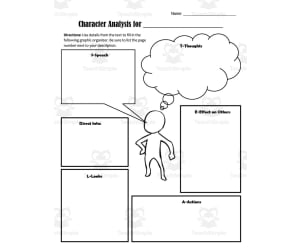
Students fill in a STEAL organiser — speech, thoughts, effect on others, actions and looks — then build an evidence-based character sketch on a second worksheet.
Author Time Thrifty Teacher
Rating
Tags Character, Analysis, Graphic Organizers, Character Traits

CHARACTER: The FIVE Elements of a Story Graphic Organisers
, Not Grade Specific,
Character graphic organisers for any story, from a character map and a trait chart with text evidence to a relationship web, Venn comparison and character sketch.
Author Ibby Resources
Rating
Tags Study, Skills, Character, Literary, Device
Characters, Setting & Big Events Worksheet
, Not Grade Specific,
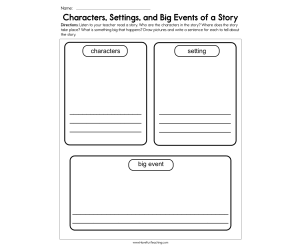
Characters, Settings, and Big Events of a Story Worksheet turns a read-aloud into a three-part story-elements response. Learners identify who appears in the story, where it takes place, and something important that happens, using both a picture and a sentence for each part. The matching character, setting, and big-event sections support a complete response without asking learners to retell every detail.
Author Have Fun Teaching
Rating
Tags Story Elements, Identifying Story Setting Worksheets Pdf

CONFLICT: The FIVE Elements of a Story Graphic Organisers
, Not Grade Specific,
Ten blank graphic organisers guide students through analysing a story's conflict from different angles, from a basic problem/solution chart to a chart classifying conflict as character-versus-nature, -self, -society or -character.
Author Ibby Resources
Rating
Tags Study, Skills, Character, Graphic Organizer, Story Elements
Determining Theme Graphic Organiser Activity
, Not Grade Specific,
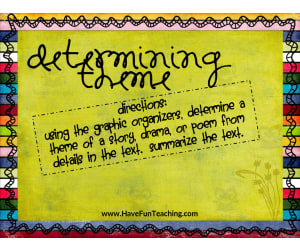
Three blank "Determining Theme" organisers share one seven-box layout — Theme, Characters, Setting, Problem, Solution and Summary — and differ only in the title line at the top, which reads Title of Story on the first, Title of drama on the second and Title of poem on the third.
Author Have Fun Teaching
Rating
Tags Reading Graphic Organizer, Summarizing Worksheet, Summarizing Practice, Story Theme, Poetry, Writing Template, Reading Worksheet, Reading Skills

Digital Graphic Organisers: Argumentative Writing
, Not Grade Specific,
Thirteen argumentative writing graphic organisers cover claim, reasons, evidence, counterclaim and rebuttal, each supplied as a printable page and an editable slide. Eight horizontal and five vertical organisers guide students from claim through reasons and evidence to counterclaim and rebuttal, on paper or as editable slides.
Author Fairways and Chalkboards
Rating
Tags Graphic Organizers, Handouts, Printables, Writing, Argumentative Writing, Free Argumentative Graphic Organizer, Argumentative Essay Outline Graphic Organizer, Argument Graphic Organizer, Argumentative Essay Graphic Organizer, Graphic Organizer Argumentative Essay, Argumentative Graphic Organizer Pdf, Graphic Organizer For Argumentative Essay, Digital Graphic Organizer, Argument Essay Organizer, Writing Graphic Organizers 3rd Grade, Argumentative Essay Organizer, Argumentative Graphic Organizer
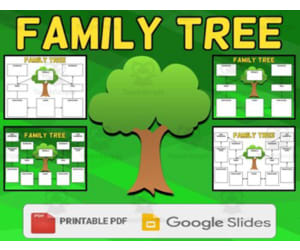
Family Tree Template – Editable Graphic Organiser
, Not Grade Specific,
An editable Google Slides template lets students fill in immediate and extended family-tree graphic organisers in one of two colour themes.
Author Roombop
Rating
Tags Family Tree, Graphic Organizer, Template, Family Tree Google Slide Template, Family Tree Graphic Organizer, Google Slides Graphic Organizer, Editable Graphic Organizers, Family, Google, Google Slides, Relationships, Editable
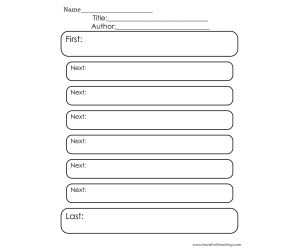
First, Next and Last: Sequence Organiser
, Not Grade Specific,
Record a title and author, then organise a sequence with first, six next steps and last.
Author Have Fun Teaching
Rating
Tags

Fishbone Organiser: Topic, Factors and Details
, Not Grade Specific,
Organise a main topic, four factors and two details for each factor using labelled or blank layouts.
Author Have Fun Teaching
Rating
Tags

Folder Clip Art: Eleven Colours and Line Art
, Not Grade Specific,
Add folder pictures to classroom labels, charts and slides. Twelve PNG files include eleven solid colours and a black-and-white outline.
Author Teacher's Clipart
Rating
Tags

French Revolution: Complete Graphic Organiser
, Not Grade Specific,
A four-section graphic organiser traces the French Revolution from its economic and social causes through the Reign of Terror to Napoleon's rise and fall.
Author EduPal Learning
Rating
Tags Graphic Organizer, World History, European History, Cause And Effect
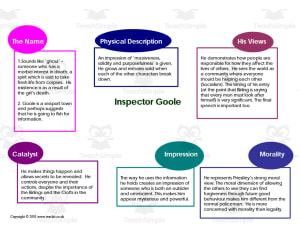
An Inspector Calls – Inspector Goole Analysis Map
, Not Grade Specific,
Inspector Goole Analysis Map organises six dimensions of the character around one central title. Notes connect his physical solidity and controlled speech with the effect he has on the Birlings, then trace responsibility, community, socialism, revelation, audience judgement, and the play's moral warning. The layout is a completed reference map, not a question sheet, so learners can compare how Priestley combines description, action, theme, and dramatic function.
Author Flynn's Educational
Rating
Tags Character, Character Analysis, Literature Handout, Chart, Graphic Organizer, Character Map Literature, An Inspector Calls Characters, Inspector Calls Characters
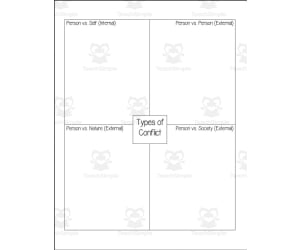
Graphic Organiser: Conflict
, Not Grade Specific,
Four types of literary conflict — Person vs. Self, Person vs. Person, Person vs. Nature, and Person vs. Society — are arranged in a labelled quadrant chart for students to complete.
Author Reading in the Middle Grade
Rating
Tags Graphic Organizer, Conflict, Types Of Conflict, Literature Analysis
Sensory Details Graphic Organiser – Writing Tool
, Not Grade Specific,
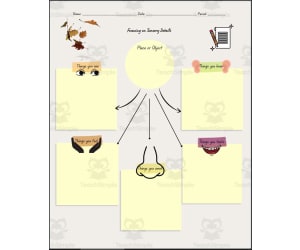
Five sense boxes - see, hear, feel, taste and smell - arranged around a single "Place or Object" field on a frame headed "Focusing on Sensory Details", with Name, Date and Period lines across the top.
Author Reading in the Middle Grade
Rating
Tags Graphic Organizer, Sensory Details, Language Arts, Writing Skills, Outdoor Activity

Personal Identity Chart – Self-Reflection Tool
, Not Grade Specific,
Self-image, relationships, and culture are explored across four quadrants of a "Who Am I?" identity chart graphic organiser.
Author Cogjogger
Rating
Tags Identity Chart, Graphic Organizers, Creative Writing, Identity Diagram, Chart, Self-reflection

Little Red Riding Hood | Story Retelling | Graphic Organisers
, Not Grade Specific,
The set approaches retelling in more than one format. One organiser pairs drawing and writing with temporal prompts from first through last, while another asks children to colour and cut event pictures before gluing them in order. Numbered pages provide space to describe a longer six-part sequence. These options allow learners to move from visual ordering toward written narration while staying focused on the beginning, intervening events, and ending of the same familiar story.
Author Good Human Project
Rating
Tags Reading Station, Story Retell, Graphic Organizers, Little Red Riding Hood, Folk Tales, Retelling Graphic Organizer Grade 2, Little Red Riding Hood Preschool