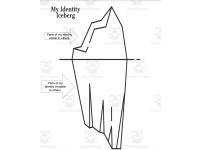
My Identity Iceberg – Visible & Invisible Identity

- Year groups
- Years 7–9 (Key Stage 3)
- File type
- Preparation
- Print ready


- Subject
- Life Skills, Special Resources
- Topic
- Identity, Anti-Racism
- Resource types
- Worksheets
- Preparation
- Print ready
From the author
About this resource
"My Identity Iceberg" is a handout for counseling or advisory groups, lower secondary, and secondary school classes who are working on diversity, affinity groups, or doing other identity work. This sheet can elicit rich conversation from students (and adults) about parts of one's identity that are visible and invisible to others. Trust and providing a safe space to discuss these concepts are essential before implementing this handout.
Related resources
More resources teachers may find useful
More resources on the same subject and topic.


In the classroom
Teaching tips & learning objectives

Learning objectives
Distinguish outwardly visible identity features from less visible ones
Reflect on personal characteristics that others may not immediately know
Organise identity information using an iceberg metaphor

Teaching tips
Explain the waterline metaphor without suggesting which personal traits a learner must disclose.
Begin with neutral visible examples before considering less visible identity features.
Allow learners to leave private sections blank or use general categories rather than personal details.

Skills covered
Identity reflection — learners consider multiple parts of how they understand themselves.
Visible-invisible classification — characteristics are placed above or below the iceberg's waterline.
Graphic organisation — a spatial metaphor structures two kinds of identity information.

No reviews yet
Downloaded this resource? Tell other teachers how it went.
Resource details
Concepts & topics
Core concepts
 Core concepts
Identity
Visible traits
Invisible traits
 Topics
Explore more
Categories this resource belongs to
Explore related searches



More to explore