Geometry: 3D Shapes


- Year levels
- Years 1–4
- File type
- Preparation
- Print ready


- Subject
- Geometry, Maths
- Topic
- Interactive Worksheet, Geometry Instruction
- Resource types
- Activities
- Preparation
- Print ready
- Australian Curriculum content descriptions
- AC9M3SP01 — make, compare and classify objects, identifying key features and explaining why these…
From the author
About this resource
Geometry: 3D Shapes - An Edifying Journey into the World of Shapes
This unit, designed for Years 1 to 4, stands as a fundamental addition to mathematics instruction with its focus on geometry.
The Uniqueness of the Product: Interactive Learning
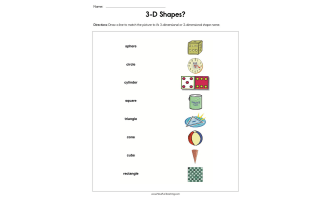
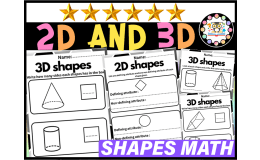
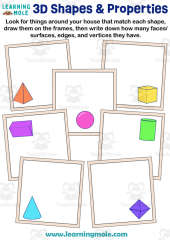
The interactive worksheet included in Geometry: 3D Shapes encourages students to identify, label, and investigate the diverse properties of three-dimensional shapes. It effectively transforms abstract ideas into concrete understanding as learners engage with these shapes in their surroundings.
Properties that students will study range from:
The number of faces, edges and vertices a shape has
If the shape includes curved surfaces
If the shape can roll or stack
Note: Using physical examples would greatly enhance this task, enabling children to better understand these attributes.
A flexible feature is that it can be used fully during group lessons or spread out for small group activities or homework tasks.
Editability Aspect
An exciting part about Geometry: 3D Shapes is its ability to be edited. You can adapt the content according to your particular teaching requirements and your student’s learning speed & abilities. This ensures compatibility across different contexts such as regular school systems or homeschooling circles.
No more worries about marking! Accurate answers are provided inside so you can assess each student's comprehension thoroughly concerning this geometric concept strategies confidently.
A single PDF file condenses all these features under one educational resource – making it easily accessible and electronically storable.
In conclusion, Geometry: 3D Shapes offers a hands-on learning style for educating students about intricate geometric patterns around us every day. This approach provides learners with a deeper understanding and respect for the structural design inherent in our world.
Related resources
More resources teachers may find useful
More resources on the same subject and topic.



In the classroom
Teaching tips & learning objectives

Learning objectives
State the number of faces, corners and edges of common 3D shapes

Teaching tips
Physical models or classroom objects shaped like each solid could help students count edges and corners hidden in a drawing.

Skills covered
Shape attributes — recording faces, corners and edges for each solid

No reviews yet
Downloaded this resource? Tell other teachers how it went.
Australian Curriculum (Version 9.0)
Australian Curriculum content descriptions
Australian Curriculum content descriptions
 Australian Curriculum content descriptions
- AC9M3SP01 — make, compare and classify objects, identifying key features and explaining why these features make them suited to their uses
Core concepts
 Core concepts
3D shapes
Faces
Edges
 Topics
Explore more
Categories this resource belongs to
Explore related searches
More to explore