Crash Course Psychology #20: Adolescence



- Grades
- Grades 7–12
- Pages
- 2
- File type
- Zip


- Subject
- Psychology, History, Social Studies
- Topic
- Adolescence, Crash Course Psychology
- Resource types
- Worksheets
From the author
About this resource
Related resources
More resources teachers may find useful
More resources on the same subject and topic.


In the classroom
Teaching tips & learning objectives

Learning objectives
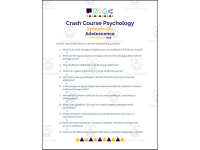
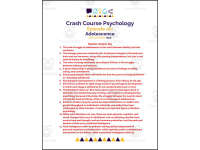
Explain Erik Erikson's identity-versus-role-confusion crisis and how it defines adolescent development.
Distinguish fluid intelligence from crystallized intelligence and describe how each changes with age.
Differentiate normal age-related memory changes from dementia and Alzheimer's disease.

Teaching tips
Pair the answer key with the linked Crash Course episode as a lecture-review guide, since each item gives a full explanatory answer rather than a short phrase.
Use item 8's Breakfast Club connection as a discussion hook before introducing Erikson's identity-versus-role-confusion stage.

Skills covered
Developmental-psychology vocabulary — students connect Erikson's psychosocial stages to concrete life-stage examples such as adolescence, emerging adulthood, and late-life memory change.
Distinguishing related concepts — students separate fluid from crystallized intelligence and normal memory decline from dementia and Alzheimer's disease.

No reviews yet
Downloaded this resource? Tell other teachers how it went.
Resource details
Concepts & topics
Core concepts
 Core concepts
Erikson's psychosocial stages
Identity vs. role confusion
Fluid vs. crystallized intelligence
Dementia and Alzheimer's disease
 Topics
Explore more
Categories this resource belongs to
Explore related searches


More to explore