Complete Sentences or Fragments?
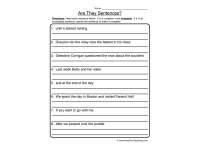
Sort eight examples into complete sentences and unfinished thoughts, then rewrite the fragments with the missing information.

- Grades
- Grades 2–4
- Pages
- 1
- File type


- Subject
- Grammar, ELA
- Resource types
- Worksheets
- Ontario expectations
- B3.1 — identify
From the author
About this resource
This worksheet will help your students learn how to turn their incomplete thoughts into complete sentences. This is a great skill for students to have, as it will help them communicate more effectively.
Related resources
More resources teachers may find useful
More resources on the same subject and topic.

In the classroom
Teaching tips & learning objectives

Learning objectives
- Distinguish a complete sentence from a fragment
- Identify what information a fragment lacks
- Revise an incomplete thought into a full sentence

Teaching tips
- Have learners locate the subject and predicate before classifying each item.
- Compare two different valid rewrites of one fragment to show that completion is not limited to one wording.

Skills covered
- Sentence completeness — independent thoughts are separated from fragments.
- Revision — missing information is added to incomplete language.

No reviews yet
Downloaded this resource? Tell other teachers how it went.
Ontario curriculum
Ontario curriculum expectations
Ontario expectations
 Ontario expectations
- B3.1 — identify and construct simple and compound sentences , including declarative, imperative, interrogative, and exclamatory sentences
Core concepts
 Core concepts
- Complete sentences
- Fragments
- Sentence revision
Explore more
Categories this resource belongs to
Explore related searches


More to explore