Inappropriate Touching Social Story

- Pages
- 18
- File type
- Preparation
- Print ready


- Subject
- Social Skills, Special Resources
- Topic
- Social Story, Autism
- Preparation
- Print ready
From the author
About this resource
Use Should I Touch? as an illustrated prompt for discussing private body boundaries and respect for personal space. The story presents handshakes, high fives and waving as greeting alternatives. When discussing physical greetings, explain that the other person’s agreement matters.
The download includes a 19-page version with adult sharing guidance and two overlapping earlier versions of 13 and 14 pages. Choose one version to read together. The guidance suggests a quiet setting, repetition and positive discussion.
The story can support a teacher- or caregiver-led conversation; the download does not establish guaranteed behavioural or anxiety outcomes. Illustrations are credited to Kari Bolt.
Related resources
More resources teachers may find useful
More resources on the same subject and topic.


In the classroom
Teaching tips & learning objectives

Learning objectives
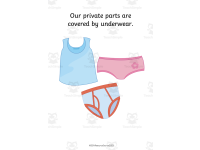
State the rule that private parts, covered by underwear or a swimsuit, are not for touching other people
Identify acceptable alternative touches or greetings, such as a handshake, high five, or wave
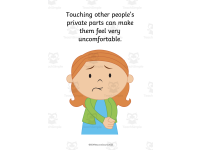
Recognize that touching another person's private parts can make that person feel uncomfortable, upset, or angry

Teaching tips
Read the story through twice at first, then revisit it regularly — the guide notes that reading it only once or twice is a common mistake that undermines its effect.
Read it in a quiet, one-on-one setting with the child, free of distractions, as the guide recommends.
If the story addresses a specific behaviour, read it when that behaviour occurs, but avoid using it as a punishment.
Build the story into the child's daily schedule and pair it with regular praise to keep the experience positive.

Skills covered
Personal-boundary recognition — the child learns which body areas are private and are not for touching other people.
Social-consequence understanding — the child connects touching another person's private parts to that person feeling uncomfortable, upset, or angry.
Appropriate-touch alternatives — the child practices substituting a handshake, high five, or wave for inappropriate touch.
Good to know
Questions teachers ask about this resource
What alternative touches does the story teach in place of inappropriate touch?
A handshake, a high five, or simply waving hello — the story presents these as the OK options right before repeating that touching another person's private areas is never OK.
Does the story explain why the rule matters, or just state it?
Both — after stating the rule, the story explains the effect on the other person, that they might feel uncomfortable, upset, or angry, before moving to acceptable alternatives.

No reviews yet
Downloaded this resource? Tell other teachers how it went.
Resource details
Concepts & topics
Core concepts
 Core concepts
Personal boundaries
Appropriate touch
Body safety
Social story
 Topics
Explore more
Categories this resource belongs to
Explore related searches


More to explore