Eating Your Lunch

- Grades
- Kindergarten, Grades 1–2
- Pages
- 12
- File type
- Preparation
- Print ready


- Subject
- Social Skills, Special Education Needs (SEN), Life Skills, Special Resources
- Topic
- Social Story, Autism
- Preparation
- Print ready
From the author
About this resource
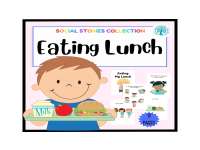
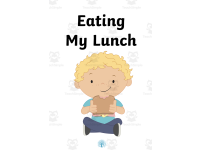
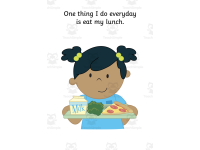
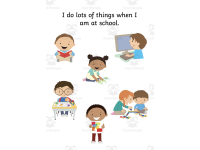
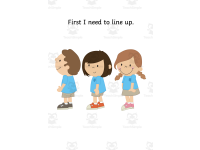
Preview a school-lunch routine with a twelve-page first-person social story. The sequence covers lining up, getting food on a tray, finding a seat, using utensils, eating, drinking water and clearing away.
Read relevant pages before lunch and discuss how the sequence compares with the child’s actual routine. The creator suggests using a display book or laminating and binding the pages for repeated use.
Clipart images courtesy of Kari Bolt Clipart.
Related resources
More resources teachers may find useful
More resources on the same subject and topic.


In the classroom
Teaching tips & learning objectives

Learning objectives
Identify and follow the lunch sequence: lining up, getting food, finding a seat, eating and cleaning up
Use the first-person narrative to anticipate or describe relevant steps in the learner’s lunch routine

Teaching tips
Read the story repeatedly across several days before the actual lunch period, since the twelve short pages are built for repetition rather than a single read-through.
Pair each page with the matching real-world action — pointing to a tray, knife, and fork as they're mentioned — to reinforce the connection between the story and the physical routine.
Use the one-step-per-page structure to review the sequence out of order once students are familiar with it, asking what comes before or after a given step.

Skills covered
Routine sequencing — students follow the ordered steps of the school lunch routine from lining up to cleanup.
Self-narration modelling — the first-person structure gives students first-person language to anticipate and describe their own actions during lunch.

No reviews yet
Downloaded this resource? Tell other teachers how it went.
Resource details
Concepts & topics
Core concepts
 Core concepts
School lunch routine
Sequencing
Social story
 Topics
Explore more
Categories this resource belongs to
Explore related searches


More to explore