


Search results for Literature Analysis
Results use exact search terms from the released Canada inventory.


Character Obituary - For Any Literature (Editable in Google Slides)
, Not Grade Specific,
Character obituary activity for any text in which a character dies: students gather evidence and fill out an Obituary Request Form, then sketch the scene of the incident.
Author Roombop
Rating
Tags Interactive Teaching, Character Analysis, Literature Comprehension, Creative Writing, Obituary Activity, Character Slides

For Substitutes: Dickinson's Poem
, Not Grade Specific,
Substitute-day poetry worksheet on Emily Dickinson's 'The Bustle in a House': students name the poet, define five words from the poem and explain its meaning in writing, with an optional drawing.
Author The Education Lab
Rating
Tags Poetry Analysis, Language Skills, Vocabulary Building, Emily Dickinson, Substitute Lesson
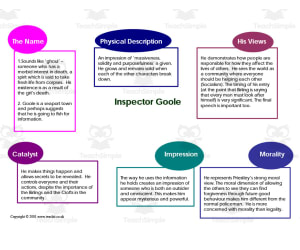
An Inspector Calls – Inspector Goole Analysis Map
, Not Grade Specific,
Inspector Goole Analysis Map organizes six dimensions of the character around one central title. Notes connect his physical solidity and controlled speech with the effect he has on the Birlings, then trace responsibility, community, socialism, revelation, audience judgement, and the play's moral warning. The layout is a completed reference map, not a question sheet, so learners can compare how Priestley combines description, action, theme, and dramatic function.
Author Flynn's Educational
Rating
Tags Character, Character Analysis, Literature Handout, Chart, Graphic Organizer, Character Map Literature, An Inspector Calls Characters, Inspector Calls Characters

Half-Past Two Poem Lesson - U A Fanthorpe
, Not Grade Specific,
U.A. Fanthorpe's poem "Half-Past Two" is analysed stanza by stanza in a GCSE English literature lesson covering context, key devices, and a PETAL paragraph-writing task.
Author Flynn's Educational
Rating
Tags GCSE Poetry, Half-Past Two, U A Fanthorpe, Poetry Analysis, Language Devices

Nettles Poem Lesson - Vernon Scannell
, Not Grade Specific,
An eighteen-slide GCSE poetry lesson on Vernon Scannell's 'Nettles' guides students through tone, language, and structure analysis into a PETAL paragraph-writing task.
Author Flynn's Educational
Rating
Tags GCSE Poetry, Nettles, Vernon Scannell, Parental Protection, Poetry Analysis
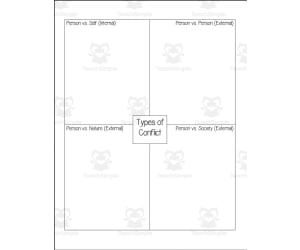
Graphic Organizer: Conflict
, Not Grade Specific,
Four types of literary conflict — Person vs. Self, Person vs. Person, Person vs. Nature, and Person vs. Society — are arranged in a labelled quadrant chart for students to complete.
Author Reading in the Middle Grade
Rating
Tags Graphic Organizer, Conflict, Types Of Conflict, Literature Analysis

How to Determine Theme – Student Handout
, Not Grade Specific,
The one-page visual breaks theme analysis into a staged process. It begins by asking readers to notice major topics, offers a broad bank of recurring literary ideas, and then directs attention to the text's main idea before developing theme. The compact format works as a reference during close reading, a presentation visual, or a scaffold beside a written response. It supports reasoning without supplying a theme for any specific text.
Author Gerald's Gem
Rating
Tags Language Arts, Literary Themes, Teaching Resource, Strategy Development, Literature Analysis

Job Application Characterization - For Any Literature (Editable in Google Slides)
, Not Grade Specific,
Characterization activity for any novel, short story, play or history unit: students fill out a job application in the voice of a character, answering from what that character does in the text.
Author Roombop
Rating
Tags Literature Study, Character Analysis, Job Application, Comprehension Skills, Versatile Tool

Novel Study: Generic Activities
, Not Grade Specific,
Reading-response activity pages in a 19-page PDF are written to pair with any novel a class is currently reading, rather than one specific book.
Author Big Apple Teaching
Rating
Tags Novel Study, Literature Companion, Comprehension Activities, Character Analysis, Creative Project

On Turning Ten by Billy Collins line-by-line chunked poetry analysis Google Doc
, Not Grade Specific,
Billy Collins's coming-of-age poem 'On Turning Ten' is analyzed chunk by chunk in a three-column layout pairing each stanza section with guided questions on tone, symbolism, inference, and theme.
Author The Red-Haired Reader
Rating
Tags Billy Collins, Poetry Analysis, On Turning Ten, Coming Of Age, Google Doc, Language Arts, Close Reading

Othello Act 3, Scene 4 | Double Entry Journals
, Not Grade Specific,
Double entry journal for Othello Act 3, Scene 4: students explain the dramatic irony between Desdemona and Emilia (lines 23-34), contrast how Othello speaks to Desdemona about the handkerchief (lines 35-123), then interpret Desdemona's lines 165-166.
Author ELA Resources
Rating
Tags Othello, Shakespeare, Literary Analysis, Double-entry Journals, Comprehension

Othello Act 4, Scene 1 | Double Entry Journals
, Not Grade Specific,
Four double-entry journal boxes guide students through close reading of specific line ranges in Othello Act 4, Scene 1, asking them to explain a plot event and then cite and explicate the textual evidence for it.
Author ELA Resources
Rating
Tags Double Entry Journals, Writing, Literature, Othello, Act 4 Scene 1 Othello, Analysis, Close Reading

"The Crucible" Booklet Project
, Not Grade Specific,
Foldable booklet project for The Crucible in which students illustrate a character, choose a quote from that character to explain their importance, and respond to analytical mini-essay prompts.
Author The Comprehensive Teacher
Rating
Tags Booklet Project, The Crucible, Symbols, Textual Evidence, Compare And Contrast, Setting, Characters, Quote Analysis, Writing Prompts, The Crucible Activities Worksheets

The Graveyard Book Novel Study Chapter Quizzes & Writing Activities
, Not Grade Specific,
The printable sequence divides the novel into an early-chapter quiz and a later-chapter quiz. Visible items address inference, literary devices, vocabulary in context, symbolism, and comprehension, while a separate journal supports extended written responses. Instructions explain how teachers can copy and adapt digital forms and connect them with the student slideshow.
Author Creatively Gifted
Rating
Tags Neil Gaiman, The Graveyard Book, Comprehension, Essay Questions, Writing Prompts, Chapter Quizzes, Writing, Literary Analysis
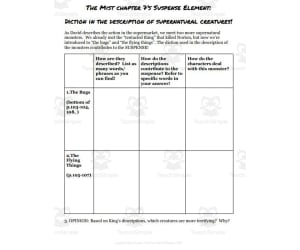
The Mist chapter 7 Suspense Element: Diction in the description of the creatures
, Not Grade Specific,
Diction analysis for chapter 7 of Stephen King's The Mist: students chart the words used to describe the bugs and the flying things, then explain how that language builds suspense.
Author The Red-Haired Reader
Rating
Tags Diction, Suspense, Imagery, Analysis, Close Reading

The Outsiders Powerpoint, Research Projects, & Note-Taking Sheets
, Not Grade Specific,
The research list offers varied inquiry paths connected with the novel’s 1960s setting and continuing social questions. Each topic supplies an objective, guiding questions, and several possible products such as presentations, comparative analyses, visual collections, or annotated playlists. Opening course slides establish setting and major themes before expanding into historical background. Exact novel quotations, personal names, proprietary prompts, and protected passages are intentionally excluded from this record.
Author Homeschool with Big Easy Homeschooling Mom
Rating
Tags The Outsiders PowerPoint Lesson, The Outsiders ELA Unit, The Outsiders Homeschool Curriculum, S.E. Hinton Unit, Character Analysis, Novel Study, The Outsiders Class Activities, Novel Study Bundle, Literature Projects For High School, Critical Thinking Prompts For The Outsiders

Through the Tunnel: Full Lesson Plan w/ PowerPoints & Graphic Organizers
, Not Grade Specific,
The lesson outline estimates two to three instructional hours and identifies theme, characterization, reading fluency, prediction, inference, analysis, and synthesis as goals. Readable learner pages include a three-part prior-knowledge and reflection chart, contextual vocabulary work, comprehension prompts, and a literary-focus section addressing internal conflict, symbolism, and overall theme. A detailed write-pair-share routine offers an engagement structure. Corrupted extraction pages are excluded from content claims.
Author Quality Teaching Products
Rating
Tags Through The Tunnel, Lesson Plan, PowerPoints, Graphic Organizers, Literature Analysis