



2,751 products added recently
Page 679 - Newest Teaching Resources

 Show filters

Caring for a Pet
Special Resources, Life Skills, Science, Basic Science, Grade 1, 2, 3, 4, 5, Worksheets & Printables, Worksheets
Caring for a Pet: A Comprehensive Teaching Resource Aimed at enhancing the learning spectrum of students aged 5 to 11 years, this resource encompasses an invaluable life skill - responsible pet ownership. This aspect teaches empathy, compassion, and duty in an enjoyable and educating manner. Science-Centric Resources Comprising Dozens of Topics Based primarily on science with augmenting resources. The product includes three pages in total; two form an instructive booklet ideal for reading activities. The guide provides elementary science education about caring for pets along with actionable intel about maintaining a pet at home. It covers various topics like feeding schedules and cleanliness routines that can be discussed collectively as a class setup. Diverse Educational Benefits Through Assigned Writing Task Accompanied by the informative booklet is a writing task designed to offer various educational benefits such as: Reinforcing newly acquired concepts, Honing composition skills, Nurturing creativity, Promoting independent thinking among students displayed through written expression understanding. The task could either be given as homework or dissected into smaller group discussions within classrooms. Editability Supports Differentiated Learning Techniques The resource offers full control over its content to teachers due it being fully editable; it can be tailored in order to fit onto your lesson plans or individual needs of learners thereby smoothly incorporating differentiated learning techniques. In Summary: Caring for a Pet plays multiple beneficial roles; from fostering love towards animals comprehended via pivotal life skills, to finesse in writing proficiency elegantly wrapped around Science concepts, it proves itself as a priceless addition to Grade 1 through Grade 5 curriculum planning.
Author Elementary Resources 4 U
Tags Pet Care, Responsible Ownership, Empathy, Compassion, Science

Botany: Parts of Plants
Science, Life Sciences, Nature & Plants, Grade 1, 2, 3, 4, Parts of and Anatomy of, Worksheets & Printables
Botany: Parts of Plants A comprehensive teacher's resource offering an in-depth exploration into the world of plant anatomy and biology. This unique set is thoughtfully crafted for students from grade 1 to grade 4. The contents consist of: Three interrelated worksheets: Each centered around identification and labeling parts of plants. Versatile applications: The distinct nature of these worksheets allows teachers to adapt instructions according to class size or individual student needs. Diversity in options: This flexibility offers opportunities for assessment , reinforcement, or extension activities. In addition to the comprehensive design, each worksheet comes complete with corresponding answers. This eases grading sessions while ensuring quicker feedback for students. This resource is 'ready-for-use', downloadable in zip format - making it a seamless addition into existing lesson plans without requiring additional prep time. Versatility at its best! No matter the teaching method – whole group class activities; small group discussions; homework assignments – Botany: Parts of Plants aids educators whilst promoting curiosity-driven learning among their students. Not only will they grasp basic scientific concepts but also build appreciation towards their local flora! Who knows? You might just be paving way for future scientists! Note: This teaching resource has already been tried and tested within varied classroom settings! Action: Trial Botany: Parts Of Plants today! Experience first-hand how your students' scientific knowledge can bloom!
Author Elementary Resources 4 U
Tags Botany, Plant Anatomy, Biology, Worksheets, Labeling

Science: Hamsters
Science, Life Sciences, Animals, Grade 1, 2, 3, 4, Worksheets & Printables, Worksheets
Science: Hamsters Teaching Resource This is a unique educational package created to engage young learners aged 6-9 years old. It covers the fascinating topic of hamsters and can be integrated within both English and Science lessons. Included in this Science: Hamsters Teaching Resource: A detailed Fact Sheet about hamsters. Two differentiated worksheets to cater for various comprehension skills. Using these resources, teachers can introduce zoology in an engrossing way while simultaneously improving students' reading abilities with non-fiction English material. Versatility of Use: The materials here are incredibly flexible and can be used in a variety of situations, like: In-class group discussions. Small group work. Differentiated homework assignments based on individual capacity. These facilitate effective learning both at school and home. Digital Access: The entire set is shared in PDF format making it readily accessible for teachers. It's compact but instructive! Science: Hamsters has been carefully curated by an experienced teacher who knows what works best for students between 6-9 years. Each component promotes not just learning but also curiosity towards science among children. Combining English reading practice with scientific knowledge, your students will gain valuable insights into wildlife habitats right from the classroom – all thanks to the wonderful world of Science: Hamster!
Author Elementary Resources 4 U
Tags Hamsters, Teaching Resource, Zoology, Non-fiction Content, Interactive
Science: Describing Leaves
Science, Basic Science, Grade 1, 2, 3, 4, Worksheets & Printables, Worksheets
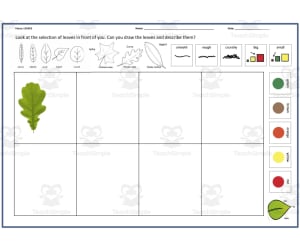
Science: Describing Leaves Science: Describing Leaves is a comprehensive educational resource designed to enhance students' understanding of basic science. Suitable for Grade 1 to Grade 4 classrooms, this product hones focus on the diverse nature of leaf structures and forms. Included Templates The product offers an engaging variety of leaf templates, each exhibiting a unique feature. The collection comprises: Curvy leaves, Jagged leaves, Spiky leaves, and 'Regular' leaf template. Each type has its own page which can easily be modified as required – all pages are fully-editable. Suggested Activities and Exercise: To promote hands-on learning experiences that also hone scientific observation skills; educators are encouraged to gather local leave samples prior to worksheet activities. Students can then sketch out these samples onto the provided sketch areas in each sheet. In addition, they participate in descriptive tasks expertly designed with academic growth in mind. They utilise the key provided on each sheet to capture detailed traits of each drawn leaf sample - color variance, size particulars amongst many other features. Digital format: The worksheets come contained within a Zip file format for easy download and storage across varying digital platforms or devices. Educational Strategies: With Science: Describing Leaves, navigating through diverse teaching strategies is simplified; possible implementation methods include: Larger group activities facilitating teamwork among learners; Focused small group sessions based on group members capabilities; Independent assignments empowering individual problem-solving abilities. Incorporating Science: Describing Leaves into your teaching portfolio ensures not only learning, but truly experiencing basic science in ways most engaging for young learners.
Author Elementary Resources 4 U
Tags Leaves, Science Education, Leaf Structures, Hands-on Learning, Descriptive Tasks
Science: Crickets
Science, Life Sciences, Animals, Grade 1, 2, 3, 4, Worksheets & Printables, Worksheets
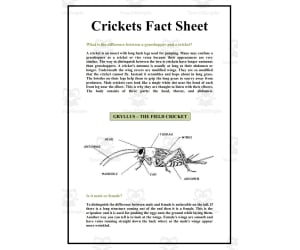
Science: Crickets This is an exciting and informative teaching resource which aims to enrich educators' toolkit by offering ample knowledge about crickets, a fascinating part of Zoology. This easy-to-use, fully editable product is designed to engage and educate children aged from 6 - 11 years. Included Components: Labelling the cricket Worksheet: An engaging worksheet that helps familiarize students with different parts of a cricket. Crickets Facts Sheet: A comprehensive facts sheet brimming with interesting details about crickets. Life Cycle of a Cricket Guide: An easy-to-understand information module explaining the life cycle journey of crickets concisely. Fostering curiosity among young minds, these resources promote active class participation while paving the way for future scientific study. The visually-engaging graphics and diagram included embolden learners to interact beyond mere textual comprehension also! Pedagogical Flexibility: Educators can utilize these resources in a variety of educational settings and modify them as per teaching needs – perfect for whole group instruction or during individual student lessons; they are equally beneficial when presented as homework tasks to reinforce classroom teachings. Great fit into Grades 1-4 Science curriculum especially under zoology sub-theme 'Crickets', this proves beneficial regardless if you're instructing in public schools or leading homeschooling settings. Note: This product download comes as a Zip file for easy access and convenience.
Author Elementary Resources 4 U
Tags Crickets, Zoology, Insect Species, Life Cycle, Teaching Resource
Science: Chameleons
Science, Life Sciences, Animals, Grade 1, 2, 3, 4, Worksheets & Printables, Worksheets
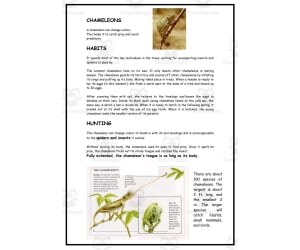
Science: Chameleons A teaching resource crafted to captivate the minds of young learners, ages 5 to 9 years old. This caters appropriately for grade levels from Grade 1 up to Grade 4, creating a learning platform compatible with diverse age groups. Resource Content A Fact Sheet Fill in the missing words activity Creatively engaging word search This three-page resource allows educators the leisure and flexibility of introducing students to chameleons at their convenience while fueling learner interaction. The Fact Sheet: Packed with crucial details about chameleons—perfect for initiating discussions or provoking further exploratory research projects in zoology. Fill in the Missing Words Activity: This component encourages students in understanding application and comprehension level testing assisting significantly in measuring student's progression effectively, yet sans any formal or intensive tone. Interactive Word Search Puzzle: An educative vocab reinforcement tool designed cleverly to make learning fun. It could either be implemented as an engrossing classroom challenge or an enriching homework assignment. Inclusive Learning Model Promotion: Crafted optimally for whole group sessions fostering cooperative teaching-learning models - thus transforming classrooms into dynamic educational ecosystems bustling with curious minds delving enthusiastically into exploration together. Alternatively, these resources are also beneficial during small group interactions allowing educators individual focus on each learner’s specific queries progressing at variable rates catering best suited for them.<\P In Summary, Science: Chameleons, is an ultimate resource depositary for educators seeking interactive yet informative materials emphasizing primarily on the zoology branch of science—a definite addition in every educator’s toolset advocating engaged learning dipped in captivating reptile themes formatted in easy-to-understand manner.
Author Elementary Resources 4 U
Tags Chameleons, Zoology, Interactive Learning, Educational Resource, Reptiles
Science: Investigation Booklet
Science, Basic Science, Not Grade Specific, Activities, Projects
The Science: Investigation Booklet The Science: Investigation Booklet is an invaluable resource suitable for all grade levels, promoting active participation in scientific processes. This wide-ranging tool can assist educators in enhancing their students' comprehension and engagement with scientific investigations, applicable in both public school or homeschooling contexts. Design & Usability This resource encompasses an editable 5-page booklet that can be adjusted to any science experiment. It includes straightforward headings for clean organization, enabling teachers and students to seamlessly comprehend its intentional design. It fits perfectly into whole-class laboratory experiments , small-group investigations, individual projects at home or even extended research tasks. Key Features: Editable 5-page booklet customizable to any science experiment Clean organization with straightforward headings Versatile usage including lab experiments , group investigations & homework projects Reusability & Customization A notable strength of the Science: Investigation Booklet lies within its reusability across unimaginable possibilities—ideal for promoting continuity across different topics within the expansive subject of science. The blank format permits flexibility letting teachers tailor-fit the content appropriate to their lesson plans covering diverse competencies or interests. For instance, biology lessons may vary from chemistry or physics classes—all these achievable via one informative tool! Note: Fully editable feature grants complete autonomy over instruction manual bespoke aligned with personalized strategies. Additional Convenience Feature: Packaging: This package comes as a Zip file - ensuring ease of downloading and storage whilst maintaining high-quality displays during class hours. The Science: Investigation Booklet offers a practical solution that promotes involved learning experiences enhancing critical thinking skills enabling students to delve deep into basic sciences with guided procedures. It simplifies cooperative analysis across settings, turning every lab period into interesting explorations. Avail this versatile educational material today!
Author Elementary Resources 4 U
Tags Science Investigation, Active Participation, Scientific Processes, Teaching Strategies, Critical Thinking

Alphabet Interactive Notebook
ELA, Language Development, Pre-Reading, Kindergarten, Preschool, Activities
These interactive notebook pages for the alphabet work great inside a composition notebook or a spiral notebook. Students will be able to work with letter sounds and identification as well as handwriting practice. What is included for each letter? Each letter has a 1 page template for creating two notebooking pages. I know the letter [letter name] header for page 1. Capital and lowercase letter identification cards. I can find things that start with the letter [letter name] header for page 2 where students will look through magazines or other printed material to find pictures of things that begin with the letter. I can find the letter tab where students look through magazines or other printed material to find examples of the letter. Letter stickers or stamps can also be used in this section. I can write tab where students will practice writing the letter. At the end of the product are writing lines included if you want to write on primary lines. How to Use: To use these notebook pages, students will cut along the dotted lines to separate the different features. The students will glue the "I know the letter" section to the top of the left hand page and will glue the "I can fine things that start with" the letter on the right hand page. The capital letter and lowercase letter cards should go directly under the "I know the letter" header. The "I can find" and "I can write" flaps should go under the capital and lowercase letter cards, making sure to only put glue on the backside where the solid line is located. Students will look through magazines or other printed material to find examples of the letter in print as well as pictures that begin with the letter to glue in the appropriate locations. Skills Assessed: These alphabet interactive notebooks will allow students to practice letter recognition, letter formation and beginning sounds.
Author The Connett Connection
Tags Alphabet Activities, Alphabet Interactive Notebook

US State Capitals: Place Value to Millions Activity
Social Studies, Geography, Math, Numbers, Place Value, Grade 4, 5, 6, Worksheets & Printables, Word Problems, Activities, Worksheets
With this US State Capitals: Place Value to Millions Activity your upper elementary or intermediate students will be able to apply their place value knowledge (to the millions position). Students will find the populations of 11 US State Capitals (Sacramento, Springfield, Jefferson City, Augusta, Montpelier, Phoenix, Boise, Austin, Santa Fe, Honolulu, Frankfort) round each one to the nearest ten thousand work with the numbers: ordering, comparing, identifying specific place value spots, and writing in expanded form Grades to Use With: This lesson is designed for students in grades 4-6 who are learning or reviewing place value concepts (it can be used by American students, of course, but also by students in other countries too!). It could be a great beginning of the year activity as you ease into your math curriculum. It could also be used in high school special education classrooms. How to Use: This activity could be used as an in-class assessment during a place value unit. There is an answer key to easily mark the first two pages out of 50. There are also four extension challenges for early finishers. You can let students work on those independently or in small groups. What's Included: 6 Page PDF: Title Page Chart for 11 US State Capitals Worksheet with 8 Questions Extension sheet with 4 Challenges Answer Key If you enjoy this math application activity, check out others in my store. I am always striving to show students how the math they learn in class is helpful in real life! Pre-Algebra Problem: The Wave Pool: Expressions, Tables, and Graphs Math Project: Create Your Dream Store: Decimal Calculations and Budgeting Geometry Project: Park Design with Area, Perimeter, and Volume (and Budgeting!) Order of Operations in Action: 5 Real-Life Scenarios that Use BEDMAS Volume of Cylinders: Soup Can Savings Winter Holidays: Gingerbread Math: Fractions, Decimals, and Percents Using Tenths
Author Grace Under Pressure
Tags Place Value, Expanded Form, Millions, Population, 4th Grade Math, 5th Grade Math, Rounding, State Capitals, US Geography, Applied Math

Alphabet Beading Center
ELA, Language Development, Pre-Reading, Kindergarten, Preschool, Centers, Activities
This alphabet fine motor beading center will assist students in practicing letter recognition and in building their fine motor skills. This task box alphabet activity will allow students to stay engaged and have fun while learning to recognize letters. What is Inside: This fine motor activity provides letter recognition cards with five capital or lowercase letters on each card. Some letter cards feature letters in alphabetical order while the others have the letters all mixed up. There is also a worksheet where the students, or the teacher, can write their own letter sequences to create with the alphabet beads. How to use: Students will choose one alphabet card. They will then hunt for the beads that are a match to the letters on their card. Afterwards, they will string the beads in the correct order onto their pipe cleaner. Types of Activities Literacy or Fine Motor Center - Place the cards, beads and pipe cleaners inside a center for students to complete. Small Group Activity - These work well for small group activity for students who need extra practice in identifying letters. Morning Tub or Basket - These cards work well as a morning activity as students wait for classmates to arrive to class. This beading center can be used in a variety of different locations inside the classroom. These alphabet cards can be stored in a pencil box to create an easy to set up literacy center. Students will have all they need to complete this activity all in one spot. By using pencil boxes, the students can easily clean up the center and put it away. Skills Assessed: This beading activity helps students practice identifying letters and letter recognition, for both capital letters and lowercase letters. In addition to letter knowledge, students will also practice their fine motor skills by stringing beads on the pipe cleaners.
Author The Connett Connection
Tags Alphabet Beading, Fine Motor Center, Fine Motor Skills, Alphabet Activities, Alphabet Center

Money Management Life Skills: The Value of a Bank Account
Special Resources, Creative Arts, Art, Life Studies, Social Emotional Learning (SEL), Life Skills, Finance, Grade 9, 10, 11, 12, Activities, Worksheets & Printables, Worksheets
The Value of Having a Bank Account is a step-by-step special education life skills activity designed to instruct high school students on utilizing savings accounts, checking accounts, and debit cards. When using this Money Management Life Skills resource, students can actively participate in the following: • Understanding the importance of storing money in a bank account. • Recognizing the diverse functions of checking accounts. • Receiving guidance on how to maintain a balanced checking account. • Learning how to use a checking account to cover daily living expenses. • Discovering the benefits of using a savings account for future purchases. • Appreciating the convenience offered by debit cards for accessing funds. There are a total of 26 reading comprehension questions in this resource! This activity will assist high school students in developing the necessary life skills to become more independent at school, at home, and in their communities. A great place to use this handout is in special education classes or one-to-one settings, such as ABA therapy, speech therapy, occupational therapy, and Registered Behavior Technician (RBT) sessions. High school students working on independent living would benefit significantly from this activity for defining, setting, and measuring IEP goals. In addition to interactive instruction, this resource is ideal for hands-on and community-based learning. Engage your special education class with this highly interactive High School Money Management Life Skills Activity! This activity contains step-by-step instructions, questions, and answers that reinforce learning, age-appropriate graphics, real-world examples, and ideas for implementation. This is the perfect special education activity for grade 10, grade 11, grade 12, and autism life skill centers . This special education life skills handout was designed to assist teens and adults with difficulties developing independent living skills. It's a printable, easy-to-use activity ready to hand out! Related Products for Managing Personal Finances How to Create a Monthly Budget How to Create a Shopping List How Credit Cards Work How to Read a Basic Pay Stub A PDF with 9 unique pages. Color and black-and-white versions of each page are available for this pdf resource.
Author Adulting Life Skills Resources
Tags Life Skills, Special Education, Independent Living Skills, Autism Resource For Parent , IEP Goal Oriented Skills, Life Skills For Autistic Teens And Adults, Adulting On The Spectrum, Social And Emotional Learning, Life Skills For Teens, Life Skills For Adults, Occupational Therapy Money Management Activities, Life Skills Money Management

Money Management Life Skills: How to Create a Monthly Budget
Special Resources, Creative Arts, Art, Life Studies, Social Emotional Learning (SEL), Special Education Needs (SEN), Life Skills, Finance, Grade 10, 11, 12, Activities, Worksheets & Printables, Worksheets
High school students can acquire essential money management skills through this step-by-step special education life skills activity, which teaches them to create a monthly budget. This involves identifying income sources, setting savings goals, and categorizing monthly expenses such as housing, utilities, food, transportation, and entertainment. When using this Money Management Life Skills resource, students can engage in the following: • Learning to forecast monthly expenses, including categories like food, housing, and utilities, using a budget. • Understanding the distinction between actual and projected expenses in a monthly budget. • Managing variable expenses like dining out within the budget. • Defining various sources of income, such as wages, allowances, and occasional gifts. • Recognizing the significance of establishing and managing personal and emergency savings goals. There are a total of 87 reading comprehension questions in this Money Management Life Skills resource! This activity will assist high school students in developing the necessary life skills to become more independent at school, at home, and in their communities. A great place to use this handout is in special education classes or in one-to-one settings, such as ABA therapy, speech therapy, occupational therapy, and Registered Behavior Technician (RBT) sessions. High school students who are working on independent living would benefit significantly from this activity for defining, setting, and measuring IEP goals. In addition to interactive instruction, this resource is ideal for hands-on and community-based learning. Engage your special education class with this highly interactive High School Money Management Life Skills Activity! This activity contains step-by-step instructions, questions, and answers that reinforce learning, age-appropriate graphics, real-world examples, and ideas for implementation. This is the perfect special education activity for grade 10, grade 11, grade 12, and autism life skill centers . This special education life skills handout was designed to assist teens and adults with difficulties developing independent living skills. It's a printable, easy-to-use activity ready to hand out! Related Products for Managing Personal Finances How to Create a Shopping List The Value of a Bank Account How Credit Cards Work How to Read a Basic Pay Stub A PDF with 48 unique pages. Color and black-and-white versions of each page are available for this pdf resource.
Author Adulting Life Skills Resources
Tags Independent Living Skills, IEP Goal-Oriented Skills, Life Skills For Autistic Teens And Adults, Life Skills Money Math , Adulting On The Spectrum, Social And Emotional Learning, Life Skills For Teens, Life Skills For Adults, Autism And Money Skills, Activities Of Daily Living Autism, Money Management Activity Occupational Therapy, Life Skills Budgeting, Money Management Occupational Therapy

Money Management Life Skills: How Credit Cards Work
Special Resources, Creative Arts, Art, Social Emotional Learning (SEL), Special Education Needs (SEN), Life Skills, Grade 10, 11, 12, Activities, Worksheets & Printables, Worksheets
The Money Management Life Skills: How Credit Cards Work is a comprehensive learning resource designed to educate high school students about the crucial features and principles of credit cards. These include: Credit limits Interest rates Available balances Late fees, and Minimum monthly payments. This product provides engaging activities like reading a monthly credit card statement explanation, understanding terms like 'credit history' and 'credit limit', reviewing transactions on a statement, identifying penalties for late payments, as well as practicing how to calculate available credit and monthly balance. The package comprises of 35 reading comprehension questions aimed at reinforcing the knowledge obtained during the program. This activity will assist high school students in developing the necessary life skills to become more independent at school, at home, and in their communities. A great place to use this handout is in special education classes or in one-to-one settings, such as ABA therapy, speech therapy, occupational therapy, and Registered Behavior Technician (RBT) sessions. High school students who are working on independent living would benefit significantly from this activity for defining, setting, and measuring IEP goals. In addition to interactive instruction, this resource is ideal for hands-on and community-based learning. Engage your special education class with this highly interactive High School Money Management Life Skills Activity ! This activity contains step-by-step instructions, questions, and answers that reinforce learning, age-appropriate graphics, real-world examples, and ideas for implementation. This is the perfect special education activity for grade 10, grade 11, grade 12, and autism life skill centers. This special education life skills handout was designed to assist teens and adults with difficulties developing independent living skills. It's a printable, easy-to-use activity ready to hand out! Related Products for Managing Personal Finances How to Create a Shopping List The Value of a Bank Account How Credit Cards Work How to Read a Basic Pay Stub Affordably accessible through any device's PDF reader comes both color and black-and-white versions spread across its 17 unique pages catering to personal predilection – all prepared and ready for printing on demand!
Author Adulting Life Skills Resources
Tags Credit Cards, Money Management, Life Skills, Financial Literacy, Special Education

Vocational Skills Activity: 25 Tips for a Successful First Day
Special Resources, Creative Arts, Art, Special Education Needs (SEN), Life Skills, Grade 10, 11, 12, Activities, Worksheets & Printables, Worksheets
25 Tips for a Successful First Day at Work is a life skills resource aimed at high school students, offering valuable advice for making a positive impression on their first day of work. This Vocational Skills Activity helps students in various ways: • It instructs them on appropriate work attire, punctuality, and introducing themselves to colleagues. • The resource emphasizes the importance of asking questions, active listening, and displaying a willingness to learn. • It teaches individuals to be friendly, respectful, and professional. • The resource provides strategies for overcoming first-day nerves. • It's especially useful for individuals with disabilities, offering additional support and guidance for developing essential life skills. • It instills the confidence necessary for a successful start in a new job. • These activities are tailored to meet the unique needs of high school students, ensuring relevance and effectiveness. There are 26 reading comprehension questions in this Vocational Skills Activity ! This activity will assist high school students in developing the necessary life skills to become more independent at school, at home, and in their communities. A great place to use this handout is in special education classes or one-to-one settings, such as ABA therapy, speech therapy, occupational therapy, and Registered Behavior Technician (RBT) sessions. High school students working on independent living would benefit significantly from this activity for defining, setting, and measuring IEP goals. In addition to interactive instruction, this resource is ideal for hands-on and community-based learning. Engage your special education class with this highly interactive High School Vocational Skills Activity ! This activity contains step-by-step instructions, questions, and answers that reinforce learning, age-appropriate graphics, real-world examples, and ideas for implementation. This is the perfect special education activity for grade 10, grade 11, grade 12, and autism life skill centers. This special education life skills handout was designed to assist teens and adults with difficulties developing independent living skills. It's a printable, easy-to-use activity ready to hand out! Related Products for Developing Independent Living Skills How to Fill Out a Job Application How to Write Your First Resume How to Prepare for a Job Interview How to Read a Basic Pay Stub A PDF with 11 unique pages. Color and black-and-white versions of each page are available for this pdf resource.
Author Adulting Life Skills Resources
Tags Adulting On The Spectrum, Employment Related For High School Students, Career Exploration For High School Students, Vocational Education For Autistic Teens And Adults, Job Skills For Autistic Teens And Adults, Resource For Supported Living Coach , Life Skills For Autistic Teens And Adults, Life Skills For Visual Learners, Reading Comprehension Passages, IEP Goal-Oriented Skills, Vocational Activities For High School Students
Independent Living Skills: How to Create an Emergency Exit Plan
Special Resources, Creative Arts, Art, Life Studies, Social Emotional Learning (SEL), Special Education Needs (SEN), Life Skills, Grade 10, 11, 12, Activities, Worksheets & Printables, Worksheets
This Special Education life skills activity teaches high school students how to create an Emergency Exit Plan by identifying their house's primary and secondary exits, emergency exits, and safe locations outside. The use of this Independent Living Skills resource will allow students to engage in the following: • How to identify the primary, secondary, and emergency exits at home. • Learn when to consider emergency exits instead of main exits • Ways to communicate with family during an emergency • Identifying a safe meeting place in emergencies • Choosing the safest exit in an emergency • Make sure your home has an emergency exit plan There are 16 reading comprehension questions in this Independent Living Skills resource! This activity will assist high school students in developing the necessary life skills to become more independent at school, at home, and in their communities. A great place to use this handout is in special education classes or one-to-one settings, such as ABA therapy, speech therapy, occupational therapy, and Registered Behavior Technician (RBT) sessions. High school students working on independent living would benefit significantly from this activity for defining, setting, and measuring IEP goals. In addition to interactive instruction, this resource is ideal for hands-on and community-based learning. Engage your special education class with this highly interactive High School Independent Living Skills Activity! This activity contains step-by-step instructions, questions, and answers that reinforce learning, age-appropriate graphics, real-world examples, and ideas for implementation. This is the perfect special education activity for grade 10, grade 11, grade 12, and autism life skill centers . This special education life skills handout was designed to assist teens and adults with difficulties developing independent living skills. It's a printable, easy-to-use activity ready to hand out! Related Products for Developing Independent Living Skills How to Read a Basic Pay Stub How to Schedule an Appointment How to Fill Out a Job Application How to Create a Strong Password A PDF with eight unique pages. Color and black-and-white versions of each page are available for this pdf resource.
Author Adulting Life Skills Resources
Tags Special Education, Autism Safety Resources, Interactive Safety Lessons, Independent Living Skills, IEP Goal-Oriented Skills, Life Skills For Autistic Teens And Adults, Adulting On The Spectrum, Social And Emotional Learning, Life Skills For Teens, Life Skills For Adults

Independent Living Skills: How to Create a Shopping List
Special Resources, Creative Arts, Art, Life Studies, Social Emotional Learning (SEL), Special Education Needs (SEN), Social Skills, Life Skills, Finance, Grade 10, 11, 12, Activities, Worksheets & Printables, Worksheets
In this Special Education life skills activity, high school students create a weekly Grocery Shopping List that includes meats, dairy products, fruits, vegetables, desserts, canned goods, personal care items, and household items. The use of this Independent Living Skills resource will allow students to engage in the following: • Creating a budget-based grocery shopping list • Making a shopping list for all essential items • When to spend extra money on non-essential groceries • Here is how to find out how much each item on your shopping list costs • Making grocery shopping easier with an organized list • A blank PDF ready-to-use grocery shopping list There are 16 reading comprehension questions in this Independent Living Skills resource! This activity will assist high school students in developing the necessary life skills to become more independent at school, at home, and in their communities. A great place to use this handout is in special education classes or one-to-one settings, such as ABA therapy, speech therapy, occupational therapy, and Registered Behavior Technician (RBT) sessions. High school students working on independent living would benefit significantly from this activity for defining, setting, and measuring IEP goals. In addition to interactive instruction, this resource is ideal for hands-on and community-based learning. Engage your special education class with this highly interactive High School Independent Living Skills Activity! This activity contains step-by-step instructions, questions, and answers that reinforce learning, age-appropriate graphics, real-world examples, and ideas for implementation. This is the perfect special education activity for grade 10, grade 11, grade 12, and autism life skill centers . This special education life skills handout was designed to assist teens and adults with difficulties developing independent living skills. It's a printable, easy-to-use activity ready to hand out! Related Products for Managing Personal Finances How to Create a Monthly Budget The Value of a Bank Account How Credit Cards Work How to Read a Basic Pay Stub A PDF with 19 unique pages. Color and black-and-white versions of each page are available for this pdf resource.
Author Adulting Life Skills Resources
Tags Independent Living Skills, Life Skills Money Math, IEP Goal-Oriented Skills, Life Skills For Autistic Teens And Adults, Autism Resource For Parent , Adulting On The Spectrum, Social And Emotional Learning, Life Skills For Teens, Life Skills For Adults, Autism And Money Skills

Halloween Reading Comprehension for 3rd and 4th Grades
ELA, Reading, Reading Comprehension, Grade 3, 4, Worksheets & Printables, Worksheets
Students will love these spooky stories! And so will you! Reading Comprehension: Halloween- 3rd and 4th Grades Ignite a love for reading with these thrilling spooky stories, perfect for the Halloween season! Introducing the Reading Comprehension: Halloween- 3rd and 4th Grades, a collection of 7 printable reading passages designed to motivate reluctant readers and boost reading fluency, comprehension, and close reading skills. These engaging scary stories will capture the imagination of kids (and adults too!), making reading and answering comprehension questions less daunting, even for those who find reading challenging. Each reading passage is accompanied by a page of multiple-choice questions, encouraging students to refer back to the text to support their answer choices. This practice is essential for developing strong reading comprehension skills. To assist educators, answer keys are also included. Although designed for 3rd or 4th grade reading levels, the stories are suitable for learners at a 2nd grade reading level and higher. This includes English Language Learners and older students who struggle with reading. The resource is versatile, making it suitable for small groups, literacy centers , independent work, homework, or distance learning. This comprehensive 30-page PDF document also includes a digital component (Google Docs and Forms) for the story "Never Mind the Gummy Bears". This addition enhances the flexibility of the resource, allowing for both printable and digital use. The Reading Comprehension: Halloween- 3rd and 4th Grades resource is a valuable addition to any educator's toolkit. With its captivating spooky stories, it is designed to inspire a love for reading while reinforcing essential reading skills. Suitable for a range of reading levels and versatile in its application, this resource is perfect for use in the classroom, at home, or for distance learning. Equip your students with the tools they need to become confident and proficient readers with this engaging and educational resource. Teachers love these scary stories that will engage students all year round, not just at Halloween. This is what teachers have said about this resource: "My students LOVED the passages." "Fun, low prep activity that kept my students engaged" "These were great! Mr students loved the stories." The Stories The Story of the Jack o’ Lantern Never Mind the Gummy Bears -Digital Resource included The Halloween Skeleton The Green Ribbon Licks from a Little Brown Dog The Hairy Toe The Vinder Viper For similar or other resources, visit my store here!
Author WorksheetsPlus
Tags Reading, Comprehension, Reading Passages, Halloween Stories, Printable, Pdf, Scary Stories, 3rd Grade, 4th Grade, Google App

Vocational Skills Activity: How to Prepare for a Job Interview
Special Resources, Creative Arts, Art, Special Education Needs (SEN), Life Skills, Grade 10, 11, 12, Activities, Worksheets & Printables, Worksheets
Vocational Skills Activity : How to Prepare for a Job Interview The Vocational Skills Activity : How to Prepare for a Job Interview is an important resource designed with the primary goal of helping high school students acquire the essential skills needed for job interview preparation. This tool presents tailored activities to accommodate the specific needs of high school students while focusing on critical life skills. Both teenagers and adults will find this tool beneficial as it covers key vocational areas such as potential employer research, understanding job roles, preparing for probable interview questions, and formulating appropriate answers. These are facilitated through practical exercises and role-play scenarios offering hands-on interview experience. Features Dressing Correctly: Providing tips on appropriate attire along with maintaining excellent personal hygiene for interviews. Presentation Skills: Emphasizing one's unique qualities while staying relevant to the applied job positions - boosting confidence before prospective employers. Inclusivity: Offering assistance in developing essential life skills, making it suitable even for people with disabilities. Versatility: Comprised of numerous comprehension questions usable across different teaching environments like classrooms (large or small groups), special education classes or during one-to-one sessions. This activity will assist high school students in developing the necessary life skills to become more independent at school, at home, and in their communities. A great place to use this handout is in special education classes or in one-to-one settings, such as ABA therapy, speech therapy, occupational therapy, and Registered Behavior Technician (RBT) sessions. High school students who are working on independent living would benefit significantly from this activity for defining, setting, and measuring IEP goals. In addition to interactive instruction, this resource is ideal for hands-on and community-based learning. Engage your special education class with this highly interactive High School Vocational Skills Activity ! This activity contains step-by-step instructions, questions, and answers that reinforce learning, age-appropriate graphics, real-world examples, and ideas for implementation. This is the perfect special education activity for grade 10, grade 11, grade 12, and autism life skill centers. This special education life skills handout was designed to assist teens and adults with difficulties developing independent living skills. It's a printable, easy-to-use activity ready to hand out! Related Products for Developing Independent Living Skills How to Schedule an Appointment How to Fill Out a Job Application How to Create an Emergency Exit Plan How to Create a Strong Password A PDF with 42 unique pages. Color and black-and-white versions of each page are available for this pdf resource.
Author Adulting Life Skills Resources
Tags Job Interview Preparation, Vocational Skills, High School Students, Life Skills, Inclusive Resource

Functional Life Skills: How to Schedule an Appointment
Special Resources, Creative Arts, Art, Life Studies, Social Emotional Learning (SEL), Special Education Needs (SEN), Life Skills, Career, Grade 10, 11, 12, Activities, Worksheets & Printables, Worksheets
Functional Life Skills: How to Schedule an Appointment This resource is a meticulously designed teaching tool crafted to nurture independence among high school students. Its primary goal is to familiarize students with the procedures involved in planning, rescheduling, and canceling personal or professional appointments. Main Framework: An agenda that covers assessing availability through calendar -checking before an in-home appointment. The ability to understand the nuances of scheduling an appliance repair appointment. A focus on necessary safety measures when meeting strangers and skillset required for effectively canceling or rescheduling appointments. Resource Components: This comprehensive bundle comes with a 28-question reading comprehension activity which helps engender essential life skills, fostering increased self-dependency at home and within their community's various learning environments. This activity will assist high school students in developing the necessary life skills to become more independent at school, at home, and in their communities. A great place to use this handout is in special education classes or in one-to-one settings, such as ABA therapy, speech therapy, occupational therapy, and Registered Behavior Technician (RBT) sessions. High school students who are working on independent living would benefit significantly from this activity for defining, setting, and measuring IEP goals. In addition to interactive instruction, this resource is ideal for hands-on and community-based learning. Engage your special education class with this highly interactive High School Vocational Skills Activity! This activity contains step-by-step instructions, questions, and answers that reinforce learning, age-appropriate graphics, real-world examples, and ideas for implementation. This is the perfect special education activity for grade 10, grade 11, grade 12, and autism life skill centers. This special education life skills handout was designed to assist teens and adults with difficulties developing independent living skills. It's a printable, easy-to-use activity ready to hand out! Related Products for Developing Independent Living Skills How to Schedule an Appointment How to Fill Out a Job Application How to Create an Emergency Exit Plan How to Create a Strong Password A PDF with 17 unique pages. Color and black-and-white versions of each page are available for this pdf resource.
Author Adulting Life Skills Resources
Tags Schedule Appointment, Life Skills, Independent Living, High School Students, Special Education
Vocational Skills Activity: How to Fill Out a Job Application
Special Resources, Creative Arts, Art, Life Studies, Social Emotional Learning (SEL), Special Education Needs (SEN), Life Skills, Career, Grade 10, 11, 12, Activities, Worksheets & Printables, Worksheets
This Special Education Vocational Skills activity explains each section of the employment application, including personal information, education, professional references, and previous employment, all required for filling out a standard Job Application. The use of this Vocational Skills Activity will allow students to engage in the following: • Providing personal information on a job application • How to fill out the education section of an application while attending school • Identifying and requesting an excellent professional reference • Documentation of previous employment • Adding volunteer experience to your job application • Researching salary information for a job application There are 131 reading comprehension questions in this Vocational Skills Activity! This activity will assist high school students in developing the necessary life skills to become more independent at school, at home, and in their communities. A great place to use this handout is in special education classes or one-to-one settings, such as ABA therapy, speech therapy, occupational therapy, and Registered Behavior Technician (RBT) sessions. High school students working on independent living would benefit significantly from this activity for defining, setting, and measuring IEP goals. In addition to interactive instruction, this resource is ideal for hands-on and community-based learning. Engage your special education class with this highly interactive High School Vocational Skills Activity! This activity contains step-by-step instructions, questions, and answers that reinforce learning, age-appropriate graphics, real-world examples, and ideas for implementation. This is the perfect special education activity for grade 10, grade 11, grade 12, and autism life skill centers . This special education life skills handout was designed to assist teens and adults with difficulties developing independent living skills. It's a printable, easy-to-use activity ready to hand out! Related Products for Developing Independent Living Skills How to Write Your First Resume How to Prepare for a Job Interview 25 Tips for a Successful First Day at Work How to Read a Basic Pay Stub A PDF with 78 unique pages. Color and black-and-white versions of each page are available for this pdf resource.
Author Adulting Life Skills Resources
Tags Employment Related, Career Exploration, Vocational Education, Job Skills, Independent Living Skills, Life Skills For Autistic Teens And Adults, Adulting On The Spectrum, Social And Emotional Learning, Life Skills For Teens, Life Skills For Adults

Independent Living Skills: How to Create a Medication List
P.E. & Health, Special Resources, Creative Arts, Art, Health, Social Emotional Learning (SEL), Special Education Needs (SEN), Social Skills, Life Skills, Grade 10, 11, 12, Activities, Worksheets & Printables, Worksheets
"In this step-by-step activity tailored for Special Education life skills, high school students will discover how to compile a Medication List. This process helps them gain a better understanding of both prescription medications and over-the-counter drugs." The use of this Independent Living Skills resource will allow students to engage in the following: • Making a List of Your Medications • Keeping Track of Over-the-Counter Meds • Learning to Read Prescription Labels • Recording Why You Take Each Medication There are 28 reading comprehension questions in this Independent Living Skills resource! This activity aims to help high school students acquire essential life skills, enhancing their independence in school, at home, and in their communities. This handout is particularly suitable for use in special education classes or one-on-one settings like ABA therapy, speech therapy, occupational therapy, and Registered Behavior Technician (RBT) sessions. High school students focusing on independent living can greatly benefit from this activity, as it assists in defining, setting, and measuring IEP goals. Beyond interactive teaching, this resource is excellent for hands-on and community-based learning experiences. Engage your special education class with this highly interactive High School Independent Living Skills Activity! This activity contains step-by-step instructions, questions, and answers that reinforce learning, age-appropriate graphics, real-world examples, and ideas for implementation. This is the perfect special education activity for grade 10, grade 11, grade 12, special education schools, adult autism programs, and autism life skill centers . This special education life skills handout was designed to assist teens and adults with difficulties developing independent living skills. It's a printable, easy-to-use activity ready to hand out! Related Products for Developing Independent Living Skills How to Read a Prescription Label How to Create a Supplement List What to do When the Doorbell Rings Understanding and Tracking Allergies A PDF with 21 unique pages. Color and black-and-white versions of each page are available for this pdf resource.
Author Adulting Life Skills Resources
Tags Independent Living Skills, IEP Goal-Oriented Skills, Autism Resource For Parent , Interactive Safety Lessons, Life Skills For Autistic Teens And Adults, Functional Self-Care Resources, Adulting On The Spectrum, Social And Emotional Learning, Life Skills For Teens, Life Skills For Adults

Internet Safety Life Skills: How to Create a Secure Password
Special Resources, Creative Arts, Art, Life Studies, Social Emotional Learning (SEL), Special Education Needs (SEN), Life Skills, Coaching, Grade 10, 11, 12, Activities, Worksheets & Printables, Worksheets
"Creating a Strong Password" is an educational activity designed for high school students in special education. It helps them understand why having a secure password is important for safeguarding their money and personal information. The use of this Internet Safety Life Skills resource will allow students to engage in the following: • Understanding Why Usernames and Passwords Matter • Making Passwords with Descriptive Phrases • Learning How Strong Passwords Keep You Safe • Telling Apart Strong and Weak Passwords • Checking If a Password Is Strong or Weak There are 16 reading comprehension questions in this Internet Safety Life Skills resource! This activity aims to help high school students acquire essential life skills, enhancing their independence in school, at home, and in their communities. This handout is particularly suitable for use in special education classes or one-on-one settings like ABA therapy, speech therapy, occupational therapy, and Registered Behavior Technician (RBT) sessions. High school students focusing on independent living can greatly benefit from this activity, as it assists in defining, setting, and measuring IEP goals. Beyond interactive teaching, this resource is excellent for hands-on and community-based learning experiences. Engage your special education class with this highly interactive High School Internet Safety Life Skills Activity! This activity contains step-by-step instructions, questions, and answers that reinforce learning, age-appropriate graphics, real-world examples, and ideas for implementation. This is the perfect special education activity for grade 10, grade 11, grade 12, and autism life skill centers . This special education life skills handout was designed to assist teens and adults with difficulties developing independent living skills. It's a printable, easy-to-use activity ready to hand out! Related Products for Developing Independent Living Skills How to Read a Basic Pay Stub How to Schedule an Appointment How to Fill Out a Job Application How to Create an Emergency Exit Plan A PDF with seven unique pages. Color and black-and-white versions of each page are available for this pdf resource.
Author Adulting Life Skills Resources
Tags Interactive Safety Lessons, Autism Safety Resources, Internet Safety, Independent Living Skills, IEP Goal-Oriented Skills, Life Skills For Autistic Teens And Adults, Adulting On The Spectrum, Social And Emotional Learning, Life Skills For Teens, Life Skills For Adults
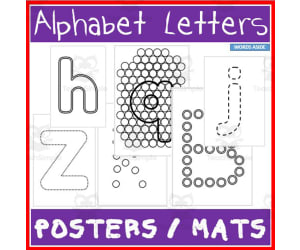
ALPHABET LETTERS POSTERS
Special Resources, ELA, Language Development, ESL, Phonics, Writing, Handwriting, Spelling, Kindergarten, Preschool, Grade 1, Literacy Readers, Teacher Tools
If you are interested in a multipaged core material pdf on alphabet letters to use in your Kindergarten or 1st grade classroom then you probably want this one ! This ink saving educational resource is presented in a clear manner to cover the emerging spelling and writing needs of your young students . It includes 6 sets of lowercase and 7 sets of uppercase letters to : color . cut and paste on . dot the dots . trace between the lines . trace on the lines . You can use these A4 page material as : screen presentations . flash cards . coloring pages . classroom posters . task cards and work mats . flip through books . literacy center and station material . worksheets . craft templates . bulletin board pins . You may use this material in a formal or fun way as it works as a basis to adjust to your teaching style and classroom needs . Custom made colorful poster creations is a great personalised idea that your students will love ! 340 PDF PAGES. For many many more pdf resources like this on emerging literacy, letter handwriting, visual recognition and spelling you cn click on WORDS ASIDE and download what you need !
Author WORDS ASIDE
Tags Letters, Handwriting, Color, Trace, Posters, Centers, Stations, Booklet, Spelling, Words Aside

Paper Helicopter STEM Project: Gr 5-7 Scientific Method Mini Unit
Science, Basic Science, Technology, Engineering, STEM, Grade 5, 6, 7, Activities
Here's a great science mini-unit for the start of the year to help your middle school or intermediate students learn about the scientific method, design, and independent variables in a fun and hands-on way! This is also a great project to complete before a science fair unit! How to Use: Print a booklet (double-sided) for each student with pages 2-9. Print a single page 10 for each student. o Types of Variables: Read through as a class, give students time to identify the mistake, and teach students the three types of variables. o Designing Experiments : Students can work in pairs or small groups to think of how they would design experiments for the following situations. Come back together and share as a class, then ensure students complete the bottom section on their own to assess comprehension. o Paper Helicopter STEM Activity: Carefully go through the instructions. Choose a date in a couple of weeks for Registration Day (students will need at least 3 hours of class time to test models). The class after that can be Finals Day. Next, students use their single sheet (p. 10) to make the initial design and test it several times to see how long it takes to fall. o Helicopter Logbook: Students make at least three new designs. Each time they should only change one variable from the previous design. So, they could first change the wing length. After that, they could change the type of paper, and finally, they could change the size of the model, etc. Each time they explain, predict, make the model, observe 3 trials, and reflect. o Registration Day: Once students have tested at least 3 designs and have their best one, they make a fresh template of that design to hand in. Finals Day: Students have 10 minutes to create their final helicopter from their template. Everyone tests three times, and the class winner can be determined! [Note: The best design usually ends up being a simple, tiny square of paper!] o Reflection: Students complete the three questions and put all their pages together to be marked out of 50.
Author Grace Under Pressure
Tags STEM, Paper Airplane, Paper Helicopter, Scientific Method, Experiments, Independent Variable, Back To School, 6th Grade, Design, Science Project