



2,753 products added recently
Page 963 - Newest Teaching Resources

 Show filters

Forces (Dynamics) - Task Card Activity
Science, Physics, Grade 10, 11, 12, Task Cards, Worksheets & Printables
Forces (Dynamics) - Task Card Activity A creative teaching activity focusing on physics topics such as Newton's Laws, Friction, and Universal Gravity. Target Audience: Suitable for Grade 10 to Grade 12 educators. Purpose: Provides an engaging alternative to traditional methods of review such as worksheets. What's included? This unique teaching resource includes task cards that cover: Problems related to Atwood Machines . Strings) Would be better also assists in the process by providing all Would be better Forces Forces The Forces - Task Card Activity doesn’t just present problems but also assists in the process by providing all answers along with comprehensive teacher answer keys making it simple for teachers to verify student work promptly allowing constructive feedback cycles. Additional materials include simple documents containing all questions and answers which can be distributed post-activity assuring continuous learning at home and reinforcing concepts discussed during class time. Solving Methodology /* * FDrea
Author Teach With Fergy
Tags Force Dynamics, Physics, Task Cards, Problem-solving, Gamification

Biology: Cells and Body Systems Task Cards & Review Activity-Unique and Engaging
Science, Life Sciences, Biology, Grade 9, 10, Task Cards, Worksheets & Printables
This 25 Biology: Cells and Body Systems Task Card resource is unique. It can be utilized in a clue gathering, puzzle solving, highly active and engaging activity and/or as an alternative to worksheet review for High School Biology. I've created a video which shows how this Task Card Activity is used and why it's so simple yet engaging for your students. It can be found here This activity is directly associated with my Biology Unit - Cells and Body Systems Biology: Cells and Body Systems Task Cards and Review Activity - download the preview to see how you can use this resource in your classroom, learn more about this product and sample four task cards. This activity is perfect for review or to diagnose previous knowledge for senior students. What's included: - 25 High School Biology Task Cards - Student worksheet - Teacher answer key - Task Card Review Game Word Chart - Each Task Card Set comes with a complete answer chart for teacher and/or student use Topics include: - function of various cellular organelles - cellular respiration - photosynthesis - mitosis - respiratory system - circulatory system - digestive system - specialized cells and tissues - organs and organ systems - plant cells - cell theory 1) Typical task card review. - You can simply distribute the Task Cards to your class for individual, group or whole class review - The cue cards can be projected on the board for whole class review - The cards work well as cue cards, test review, etc. 2) Task card review game - lots of fun! - Students are placed in groups and have to work their way through the task cards. Each task card answer leads the student to a clue. - Once the group has completed each task card they will have enough clues to solve the puzzle. - Once the group has solved the puzzle, they are the winner. The game is slightly more in-depth but the instructions are clear, detailed and include examples, you wont have a problem. Give it a try, your students will thoroughly review the unit and will love the activity and challenge the game brings. You may also be interested in these other Task Card Activities found here!. Science: Space - The Study of the Universe Biology: Cells and Body Systems Chemistry - Atoms, Compound Naming and Chemical Reactions Ecology and Ecosystems Electricity - Current and Static Forces and Motion High School Mathematics: Polynomials - Binomials and Trinomials System of Linear Equations Measurement of 3D Objects Solving Quadratic Equations Solving Trigonometry Problems Elementary Mathematics: Area and Perimeter of Polygons Word Problems Converting between Decimals, Fractions and Percentages Decimals - Four Basic Operations Multiplication and Division Word Problems Fractions For my thoughts on teaching, learning and everything in between, please visit my blog Teach With Fergy Thanks. Teach With Fergy
Author Teach With Fergy
Tags Biology Task Cards, Biology Printable, Task Card, Review Game, Science Printables
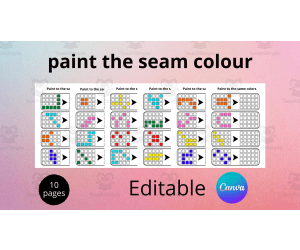
count and color the correct number of objects-coloring pages -squares- coloring sheets.
, Grade 1, Coloring Pages, Worksheets, Worksheets & Printables
Teaching children is an art and a skill that every teacher should master well. Children differ in their performance and abilities, and each teacher must discover the strengths and weaknesses of his students to help them learn properly. Some children hate traditional education. That's why worksheets are designed to help children love learning. Coloring pages help children focus and activate the brain. This package consists of 10 different sheets and can be modified and customized to your liking on Canvas. Worksheets are designed to be print-ready. In the event that you want to modify or duplicate templates, you will find a direct link to modify and duplicate templates as you want. Advantages: - Editable in Canva. - It can be printed and used. - Sheets can be repeated for an infinite number of times. You will get a zip file containing two PDF files. -The first file contains templates ready for printing. -The second file contains a link to the editable template If you are interested in uploading more of my amazing designs, you can visit my profile to see my other designs. You will find a lot of interesting design.
Author successful teachers resource
Tags Count And Color, Count, Color, Count And Color The Correct Number, Coloring Pages, Coloring Sheets., Squares Coloring Page, Objects Colouring Pages, Color Counts Coloring Pages
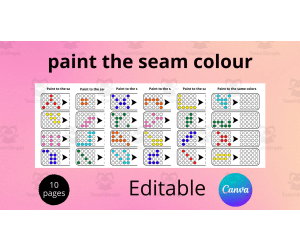
Count And Color Worksheet - coloring pages -circles
, Grade 1, Coloring Pages, Worksheets, Worksheets & Printables
Count and Color Worksheet - Coloring Pages - Circles Bundle The Count and Color Worksheet serves as an exceptional teaching resource for educators. This bundle is specifically designed for first-grade learners and contains innovative, interactive activities that aim to spark their love for education while developing crucial skills. Fun-Filled Learning Environment A captivating learning environment is achieved with these carefully crafted worksheets. The necessity of injecting fun into the educational process is recognized, making this set a perfect tool to keep kids enthused and engaged in their learning journey. Coloring Pages Activity Using Circles The primary feature of these worksheets are coloring pages activity designed meticulously using circles. These simple tools effectively activate minds by capturing attention and aiding learners to focus well – a fundamental aspect of productive learning sessions. This package brings along 10 distinct sheets, each aiming at challenging different aspects of cognitive brain functioning. The variety offered takes away from monotony, keeping the activity engaging for young minds. Easily Editable on Canvas & Ready-To-Print Templates This product stands out due its editability on Canvas. Whether you need to modify templates according to your requirements or usage convenience such as varying difficulty levels or individual capacity – it can be changed without any hassle! Not only that, they are also ready-to-print which offers flexibility in terms of use either in group study environments or alone at home practice sessions. Purchasing Details: You will obtain two PDF files upon purchasing this resourceful bundle, All digital content will be packed inside a zip file – one containing print-ready templates, The other linked directly with editable templates over Canva catering to your specified needs. Conclusion The Count and Color Worksheet is an effective tool for educators, extending beyond the physical classroom. With this resource, teaching can be made easier and more enjoyable for the little learners!
Author successful teachers resource
Tags Counting Circles, Coloring Pages, Interactive Learning, Cognitive Development, Editable Templates

Virtually mix primary colors
Creative Arts, Art, Not Grade Specific, Activities, Crafts
Primary colors are the three primary colors from which other colors are mixed. Red, yellow and blue are the most widely used primaries in painting. Did you know most artists only use these three colors to paint? But how? Let this activity show you how! Everything we see around us is made up of the three primary colors. The secondary color is a color that is created by mixing two other primary colors together. All of the other colors of the rainbow can be created by evenly mixing these three basic hues. Become a virtual artist and explore with colors! An artist works with colors to create a work of art. This Powerpoint allows you to explore primary and secondary colors, as well as mixing colors in different ways. Make art virtually by mixing primary colors to create secondary colors using this Powerpoint presentation! This creative presentation teaches how to make amazing color changing combinations from the primary colors red, yellow, and blue. See how secondary colors (purple, orange, and green) are created from mixing the primary colors, just like a real artist! With the convenience of this Powerpoint slide and interactive tools transform yourself into a virtual artist exploring with color creating. Bring virtual art to your classroom with this fun, easy to use, and engaging Powerpoint slide! How to use: After downloading the Powerpoint , open it and click the primary color paint splotches to the right to move them onto the canvas. The canvas shows three art equations that ask, what color? + what color? = new color. The goal is for learners to create purple, orange, and green from the colors red, yellow, and blue.
Author Primary 206 Mix
Tags Primary Colors, Mixing Colors, Color Theory , Powerpoint, Interactive, Secondary Colors

Environmental Print Reading Game
ELA, Language Development, Pre-Reading, Phonics, Reading, Kindergarten, Preschool, Activities, Games
Environmental print is any words or images that are immediately visible in our environment. It includes things like signs, logos, advertisements and product packaging. You encounter environmental print all the time, but did you know it can also help us learn how to read? Children around the age of 3 years and above begin to recognize environmental print, such as street signs, labels, and advertisements. Environmental print allows them to learn important sight words that are commonly seen in the environment. This reading game provides a way for children to have fun while learning about environmental print. This interactive PowerPoint game is great for boosting reading confidence for emerging readers and is engaging and fun for students to play as well. It includes over 100 environmental print such as logos, characters, places to eat and brands and more! The more students are aware that environmental print surrounds them, the more they will interact with the print around them. Don't be surprised if after using this activity with your students that you get excited announcements from them in the hallways calling out "exit" signs or reading the Crayola crayons around the classroom! To use: Simply download the Powerpoint presentation and get your students ready to call out what they can read as the animated presentation presents environmental print to students in alphabetical order. The teacher can control the speed by clicking to go to the next piece of environmental print or not clicking to pause the screen. This activity is great for whole class, small groups, or individual student intervention. Use it to launch a reading lesson or when you have a few spare minutes in the day to enhance student learning.
Author Primary 206 Mix
Tags Powerpoint, Game, Environmental Print, I Can Read, A-Z, Logos, Pre-reading

Finding Poetry in Primary Source Prose
Social Studies, ELA, Writing, Creative Writing, Literature, Poetry, Grade 5, 6, 7, 8, 9, 10,
The writer, Annie Dillard, has said that turning a text into a poem doubles that poem's context."The original meaning remains intact, but now it swings between two poles." The 35-page packet, Finding Poetry in Primary Source Prose, offers teachers another entry point into analyzing and interpreting primary source documents through creating Found Poetry. This packet can easily be used in Literature classes as well as History classes. Although this lesson is written as a group project for presentation, it is easy to modify it so that individual students can create their own found poems. Many teachers are not exactly comfortable teaching students how to write poetry, and/or they haven’t considered the power that poetry writing can add to a History or Social Studies curriculum or a novel unit or narrative nonfiction unit in Language Arts. Found Poetry is an easy way to engage students in difficult primary sources, enhance their understanding of the text, the event or experience, the time period, etc., and can help them access deeper levels of comprehension, analysis, and creativity. The Found Poems students write, whether in groups or individually, offer unique and often profound interpretations. Learning Targets: I can understand, analyze, and interpret a challenging primary source document. I can write a found poem from a primary source historical document. I can apply the elements of poetry to my found poem by looking for vivid images, interesting ideas, words, phrases, and sentences that evoke strong reactions and feelings I can work collaboratively and cooperatively with my group to create and present our poem. I can reflect on my own experience and my experience of working in a group to analyze a primary source document and create a found poem and present it. Check out my store A Great Good Place for Teachers for other History and Language Arts lessons and resources If you have any questions, please email me at gruenwaldy1@gmail.com
Author Intentional Teaching and Learning
Tags Creative Writing, Poetry, Prose, Primary Source, History, Language Arts, Critical Thinking, Analyzing And Interpreting Text

U.S. History | Great Depression | The New Deal | Student Activities
Social Studies, History, History: USA, Grade 8, 9, 10, 11, 12, Activities
This resource is a U.S. History: Great Depression | The New Deal Student Activities. You can use all of the activities in this product or mix and match….I use these activities after I have already introduced the problems associated with the Great Depression, President Roosevelt and his New Deal. (A GOOGLE and Traditional version included) Included Activities: 1) (A Warm-up) Show your class the New Deal Video (an intro to the New Deal) and have them complete the corresponding worksheet. (QR Code Link included) 2) “The Living New Deal” Student Foldable "web-quest" activity ...students use their phone/ class tablet etc. to access the website which highlights 6 New Deal Programs that still exist today and their significance. (If you do not have internet access you can print out the 6 articles from the website for students to use with a hard copy) 3) Extension Activities: For homework, or the next class period your students can complete the 2 activities on the FDIC (a video and audio activity ) and an activity on the Social Security Act using the INFOGRAPHICS included.... HIGH INTEREST! New Deal Programs Highlighted: FDIC, Social Security, Tennessee Valley Authority, Fair Labor Standards Act, National Housing Act (Fannie Mae), and Security and Exchange Commission. About: Learning is a Passion Store - I have taught 6th-12th grade during my 20 year teaching career. I prefer to use lessons in my teaching practice that allow my students to become facilitators and active participants in their own learning rather than merely an audience of "my show". I love to create hands- on, interactive activities that really engage my students in the learning process.
Author Learning is a Passion
Tags U.S. History, The New Deal, Social Security, Infographics, President Roosevelt, The New Deal Lesson Plans, Great Depression Webquest High School

Propaganda and the Boston Massacre
Social Studies, History, History: USA, Grade 6, 7, 8, 9,
Propaganda and the Boston Massacre This one-week 28-page detailed lesson plan for middle school history students, focuses on propaganda and how it was used to incite the colonists against the British after the Boston Massacre. It follows the Into, Through, and Beyond method of lesson planning and offers many opportunities for students to engage in critical thinking. The detailed lesson plan includes objectives and learning targets that are aligned with Common Core Standards in Reading for HIstory. Resources include background text on the events leading to the Boston Massacre, as well as an analysis of the word propaganda, two primary source documents for students to analyze in small groups with guiding questions, questions on opposing viewpoints, a chart on four types of propaganda (card-stacking, distortion of the truth, fear, pinpointing the enemy and stereotyping) which students will use to analyze Paul Revere's engraving, a writing template for writing a 2-paragraph essay to assess whether students understand how propaganda was used to incite the colonists. Into Lesson: Creating Schema Students will dive deeply into the meaning of propaganda to set the stage for their understanding by using a word exploration chart on propaganda. Through Lesson: Learning the Content Students will read a secondary source overview of the events surrounding the Boston Massacre, a primary source eyewitness letter, and the primary source engraving by Paul Revere. They will answer questions after each document.In addition, they will complete a chart on some of the types of propaganda Revere used in his engraving. Beyond Lesson: Summative Assessment: Argumentative Paragraph Students will write an argumentative two-paragraph essay to prove how Paul Revere used propaganda in his engraving and what its impact was. This essay is scaffolded for English Language Learners, RSP students, and students who struggle with writing. A rubric is included. Check out my store A Great Good Place for Teachers for other U.S. history lessons. If you have any questions, please email me at gruenwaldy1@gmail.com
Author Intentional Teaching and Learning
Tags U.S. History, Critical Thinking, Boston Massacre, Propaganda, Perspective, Primary Source Analysis, Compare And Contrast, Argumentative Writing Assessment, Rubric, How Was The Boston Massacre Used As Propaganda, Paul Revere Propaganda, Boston Massacre Primary Source Documents, Boston Massacre Primary Source Document, Boston Massacre Lesson Plan, Boston Massacre Propaganda
Gratitude Journal For Educators
Special Resources, Social Emotional Learning (SEL), Not Grade Specific,
Gratitude Journal For Educators A timeless teaching resource that encourages mindfulness and a positive outlook. The journal serves to foster daily reflections on the things that spark joy and gratitude in the teaching profession and personal life. Features The journal features thought-provoking prompts for various elements of daily life. Fosters gratitude toward students, colleagues, accomplishments or even the school environment. Aimed at enhancing educators' overall job satisfaction by building consistent habits of positivity. Usage: If integrated within routine, it can be introduced either as a group exercise to start or end the day on a positive note or could be individual homework assignments empowering students to cultivate their own practice. It’s also suitable for educator groups seeking team-building activities ! List includes: Daily Journals Weekly Planners Monthly Reflections Hope Journals * A versatile tool adaptable according to individual user preferences. Miscellaneous Information: The product is compatible with all grade levels across subject interests mainly aligning into 'Special Resources' under broader 'Social Emotional Learning'. It downloadable file type is a PDF>.
Author I Heart Grade 3
Tags Gratitude, Mindfulness, Positive Outlook, Teacher Wellness, Classroom Experience

24 Creative Writing Prompts to Inspire Your Students
ELA, Writing, Grade 6, 7, 8, 9, 10, 11, 12, Writing Prompts, Worksheets & Printables
Are you out of ideas to get your students writing? Or do you need to add to your tool chest of writing prompts? This slideshow, 24 Creative Writing Prompts to Inspire Your Students is the solution!This resource provides 24 creative writing prompts to inspire student writing! These slides are perfect for short writing lessons or creative writing. Your students will enjoy writing to these prompts. The writing prompts focus on: developing characters, settings, conflicts, and mood; using personification, sensory imagery, and descriptive details; writing stories, poems, monologues, or scenes; writing mysteries, realistic fiction, science fiction, fantasy, and poetry; Although the writing prompts are numbered, they can be used in any order. There are two sets that come with directions followed by a slide of pictures. They are labeled slide 1 of 2 and slide 2 of 2. You will get a "Must Haves" and "Can Haves" graphic organizer to discuss elements of a story with your students. There are also slides to discuss dialogue and how to use quotation marks. Prompts included: -Personification -A Leap of Faith -Name on a Box -The Path Up Ahead -Vampire, Sunrise, Flat Tire -Using Photographs of People -Volcano --Sensory Descriptions and Emotions/Feelings --Point of View and Conflict --Using Photographs to write a story or monologue -& so much more!!! I have produced a number of Creative Writing Slide Shows that you might be interested in. Check out my store A Great Good Place for Teachers The Setting Sets the Mood: How to Write Effective Settings 24 Creative Writing Prompts to Inspire Your Students 24 Additional Creative Writing Prompts to Inspire Your Students Flash Fiction: 24 Creative Writing Prompts for Students Characterization: What It Is and How to Develop It Writing with Suspense: A Google Slideshow If you have any questions, please email me at gruenwaldy1@gmail.com
Author Intentional Teaching and Learning
Tags Creative Writing, Writing Prompts, Student Writing, Writing, Inspiration, Dialogue, Personification, Sensory And Descriptive Details, Writing Stories And Poems
The Setting Sets the Mood: Teaching Students How to Write an Effective Setting
ELA, Writing, Creative Writing, Grade 6, 7, 8, 9, Teacher Tools, Lesson Plans
The Setting Sets the Mood: Teaching Students How to Write Effective Settings is a 25-slide resource that provides teachers with a full and engaging lesson to teach your students about writing effective settings! Perfect for 6th to 9th-grade students, this slideshow will help students learn how to write descriptive settings using sensory imagery to create a mood. Students will review topics such as time and place, the mood of the story, and sensory details. There are sample texts that describe the same setting but with different moods so students can analyze how the mood plays a role in the setting. There are multiple opportunities for writing about "the setting sets the mood." The slide show includes the following: --interactive mini-lessons --sample setting paragraphs that were written by the author for students to analyze and discuss the different moods the settings evoke. --writing prompts with both copyright-free photos of settings as well as copyrighted images photographed by the author with suggestions on what students should focus on. --The photos and prompts can be used as practice or as inspiration for students' stories. Teachers can use the whole slideshow or pick and choose which parts of the slideshow they want to use based on how much time they have available. I recommend 2 days. On the first day, you can work through the various examples with time on the second day for writing. This slideshow is appropriate for all students in 6th to 12th grades, including GATE, RSP, and ELL students. I have produced a number of Creative Writing Slide Shows that you might be interested in. Check out my store: A Great Good Place for Teachers --The Setting Sets the Mood: How to Write Effective Settings --24 Creative Writing Prompts to Inspire Your Students --24 Additional Creative Writing Prompts to Inspire Your Students --Flash Fiction: 24 Creative Writing Prompts for Students -- Characterization: What It Is and How to Develop It If you have any questions, please email me at gruenwaldy1@gmail.com
Author Intentional Teaching and Learning
Tags Writing Settings, Story Plots, Setting Of A Story, Reader Emotions, Writing Lesson Plan, Creative Writing, Writing Prompts, Prompts
Book Browse: Teach Your Students How to Choose a Book to Read
ELA, Literature, Reading, Grade 4, 5, 6, 7, 8, 9, Activities
The purpose of this 6-page lesson, Book Browse: Teach Your Students How to Choose a Book to Read is to teach students in grades 4 through 9 how to browse for a book to read. Many of our students are not sure how to choose a book to read. They might not have many books in their homes or they might not go to a library or bookstore. We have to teach our students how to browse a book to see if they might want to read it. I take my students to our school media center /library once every five or six weeks, and we always book browse. Sometimes we browse a specific genre, such as Historical Fiction or Narrative Nonfiction. Other times it might be Newbury Awards or bestsellers. Students enjoy this activity, and over time, they feel very comfortable browsing for books on their own.Every time we go to the library after this first time, students ask if we can do a book browse. Some teachers might think it’s a waste of a period, but I am an avid book browser at the library and in bookstores, and I have found many authors that I wouldn’t have if I hadn’t browsed. The structure that this lesson provides is very useful if you’re doing a genre study or a literature circle. But even if you just want your students to have a book of no particular genre, giving them choices within a somewhat limited framework (rather than having them wander among the shelves looking or pretending to look), helps them make informed choices and gives them some agency at the same time. This activity offers students the opportunity to find books they might enjoy. Although this lesson is specifically designed for a school library, if you have an extensive classroom library, you can easily book browse in your classroom. I have produced a number of book reports that you might be interested in. Check out my store A Great Good Place for Teachers Character Analysis Essay, Gift for a Character Book Report, and Oral Presentation Book into Movie Project: Comparing and Contrasting Poetry Book Report Mini-Reviews Book Report Mystery, Thriller, Horror, and Suspense Book Report Book Jacket Book Report Historical Fiction Book Report Historical Fiction Literature Circle Project If you have any questions, please email me at gruenwaldy1@gmail.com
Author Intentional Teaching and Learning
Tags Book Browse, Book Selection, Genre, Story Elements, Language Arts, Library, Independent Activity, Reading, Activity, Bookbrowse Jobs

Base 10 Place Value Posters
Math, Early Math, Grade 1, 2, 3, Posters, Classroom Decor
Base 10 Place Value Posters Base 10 Place Value Posters come with a lively and effective method of introducing students to the essential concept of place value. These posters are primarily designed for first, second, and third-grade students. Not just adding a splash of color to classrooms, they also aid educators in demystifying Maths simplification. Apart from being ideal for early math curriculum, these tools help explicate number placement range - from ones up to millions. The Power of Visual Aids Pictorial aids have always been instrumental while teaching complex topics. These posters do exactly that by representing numbers in three ways - standard form, word form, and expanded form. This technique converts numerical data into visually digestible information simplifying the learning process immensely. Vibrant Illustrations Equal Engaging Learning The use of dynamic graphics on each poster enables students to visualize better the essence of place values while harnessing their critical thinking skills. This fun approach emphasizes math as being more than formulae! Multiple Usability In-Class Instructional Aid Cue during Small Group Exercises Homeschool Homework Supplement You can choose between different sets according to need - Units/Tens/Hundreds/Thousands or another using 'ones' instead of 'units'. Made by Teachers for Teachers (and Parents too!) About Composed thoughtfully by experienced teachers. A beneficial resource around the globe for school educators or homeschooling parents. Ideal tool teaching math basics in an engaging manner. Packaged conveniently as compatible PDF files. In conclusion, Base 10 Place Value Posters pique young learners' curiosity towards Mathematics, pushing them towards successful academic futures. So don't wait - start employing these vibrant learning materials today!
Author I Heart Grade 3
Tags Place Value, Visual Aids, Math Posters, Number Sense, Instructional Materials

Which Essential Questions About History Are Most Important to You?
Social Studies, History, History: World, History: USA, Grade 7, 8, 9, 10, 11, 12, Activities
This lesson, Which Essential Questions About History are Most Important to You? is set up as an Anticipation Guide and is designed to prompt students to think about what they will be learning in an American history or social studies class, civics class, or government class. The questions allow students to connect to and think deeply about values, concepts, and issues. This is an excellent way to frontload concepts and ideas, especially for ELL and RSP students. This lesson can be used in 7th-12th grade classrooms. It is also designed to get students to talk with an adult and with each other. Anticipation Guides are generally used to help students develop a purpose for their reading, activate schema, or prior knowledge, and develop an interest in the topic. This anticipation guide can be used as an icebreaker at the beginning of the year or can be used at any point. The detailed lesson plan includes objectives and learning targets that are aligned with the Common Core Standards, specifically focusing on speaking and listening. In addition, it includes the anticipation guide, directions for how students will administer the anticipation guide with an adult family member or family friend, or neighbor, a reflection for students, as well as directions for how to share what they think with their classmates. Objectives Students will identify which essential questions about history, government, society, rights, responsibilities, etc. are important to them and reflect on why. They will then ask an adult in their family to identify which questions are important to them and why. Students will practice talking with their peers about their essential questions as an icebreaker to get to know their classmates. Learning Targets I can identify and explain which questions about society, government, and rights are important to me. I can discuss with an adult which questions are important to them and why.. I can discuss with my peers which questions are important to them and why. Standards California CCSS Speaking and Listening Standards for Grade 8: Engage effectively in a range of collaborative discussions with diverse partners on grade 8 topics, texts, and issues, building on others' ideas and expressing their own clearly. California CCSS.ELA-Literacy.RH.6-8.4: Determine the meaning of words and phrases as they are used in a text, including vocabulary specific to domains related to history/social studies. Check out my store, A Great Good Place for Teachers for more History curriculum If you have any questions, please email me at gruenwaldy1@gmail.com
Author Intentional Teaching and Learning
Tags Questions About History, Evaluate Questions, Reading Comprehension, Vocabulary Building, Critical Thinking, Discussion, Anticipation Guide, Essential Questions For History
Characterization: What It Is and How To Develop It | Google Slideshow
ELA, Writing, Creative Writing, Grade 6, 7, 8, 9, Teacher Tools, Lesson Plans
Characterization: What It Is and How To Develop It | Google Slideshow This captivating digital slideshow, intended for students in grades 6 through 9, comprehensively introduces the concept of characterization covering a plethora of significant topics such as: Definition of characterization Physical traits versus personality traits Direct and indirect characterization techniques Distinguishing between round & flat characters, along with dynamic and static characters. This resource is versatile in its application. Teachers can use it in whole group instruction, small groups or even assign it as homework allowing individual paced learning. Besides merely defining the concept for readers and writers alike, this slideshow presents multiple opportunities to apply newfound skills practically. Tasks are framed around creating character attributes or understanding intricate details through examples provided within the slides. Prompts for Character Analysis or Creation: The slideshow is inter-spaced with images that capture human expressions across different age brackets which can promt character descriptions or analysis invovling literary work's characters spread across five choice slides. A Resource Aligned with Common Core Standards: The objectives are consistently aligned with Common Core Standards to ensure teaching effectiveness and clear assessments. A detailed lesson plan accompanies this resource to facilitate better administration of lessons aiding teachers / educators regardless of teaching context. The progress made on various learning targets such as explaining what characterization means, identifying both direct/indirect characterization tactics etc., can be easily tracked using ready-to-display information across 22 PowerPoint slides. The Takeaway: If you're an educator seeking to bolster creative writing skills specifically around character development among your pupils - Look no further! This digital slideshow will be a highly valuable tool at your disposal, enhancing both the teaching and learning experience!
Author Intentional Teaching and Learning
Tags Characterization, Development, Traits, Direct Characterization, Indirect Characterization, How To Teach Characterization

Guided Mindfulness & Meditation Resource | NO PREP Brain Breaks, Social Emotional Learning
P.E. & Health, Health, Not Grade Specific, Activities
Guided Mindfulness & Meditation Resource | NO PREP Brain Breaks, Social Emotional Learning An instant, user-friendly resource that supports classroom mindfulness and meditation integration. This comprehensive slide deck includes a range of exercises designed to fit seamlessly into any existing curriculum. Versatility and Flexibility Providing maximum flexibility for teachers and homeschoolers alike, these exercises can serve to start the day peacefully or bring tranquility during more stressful periods. The resource is ready-to-project with simple instructions - just press play! Appropriate Timing The guided exercises are span from 1-10 minutes, perfect for suiting limited attention spans without disrupting your teaching schedule. Mindfulness Understanding This resource goes beyond simply applying mindfulness; it aids students in understanding key concepts such as thought awareness. This is achieved through grounding techniques guided by the teacher as well as self-leaded meditation offerings. Inclusion of Yoga: With yoga poses intent on fostering inner peace. Breathing Exercises: Box breathing methodology to regulate emotional responses amid stressors. Body Scans: Promoting self-awareness among students. Giving Thanks: Gratitude meditations cultivating positivity among learners. Focusing Concentration: With Sound and Finger-Breathing Practices A core part of our offering includes sound meditation fused alongside finger-breathing practices—an effective way towards harnessing concentration while mitigating distractions prevalent particularly within dynamic learning environments whether classrooms or homeschooled settings—enclosed within a single versatile tool. Provided in an efficient Google Slide format linked via PDF, the tool bridges flexibility with time efficiency—an invaluable combination in education's pursuit of all-round growth for students across different grades.
Author Teaching Reimagined
Tags Mindfulness, Meditation, Brain Breaks, Social-emotional Learning, Classroom Integration

Race, Ethnicity, and Racism Lesson
Social Studies, ELA, Language Development, Vocabulary, Reading, Reading Comprehension, Grade 4, 5, 6, 7, 8, 9, Teacher Tools, Lesson Plans
Race, Ethnicity, and Racism Lesson: A Multimedia-oriented, Comprehensive Teaching Resource This Google Slide-based teaching tool incorporates various means of engagement including photographs, videos, maps, and read-alouds. Given its range, teachers may employ it in: Fostering dialogue during group lessons Fostering thoughtful discussions through smaller-group activities Assigning segments as independent work Including them in stimulating homework assignments. The objective is to guide students through the complex subjects of race and ethnicity while examining the different facets of racism. Further instilling a level of ease as they discuss these sensitive topics. A Gist of Core Material: - 'What Is Race?' Aided by read-aloud book - Let's Talk About Race. - Science Behind Skin Tone Variations Across Races' Educative curriculum on melanin with a fitting video from Bill Nye explaining skin color science. - 'What Is Racism?' Bonus features: ● Vocabulary words highlighted throughout the slides ● Speaker’s notes giving guidance on structured class-related discussions Crafted for Grades 4-9, covering subjects like Social Studies & Language Arts (additional sub-subjects include Vocabulary Comprehension) – teachers can enjoy an immersive lesson plan on a topical subject. Finally, a summary check-in and breathing exercise intends to calm participants, reinforcing the learned concepts in students’ minds.
Author Teaching Reimagined
Tags Race, Ethnicity, Racism, Teaching Resource, Lesson Plan
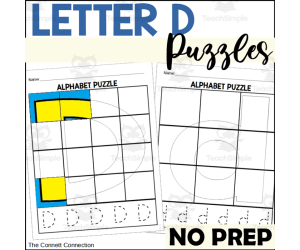
Letter D Puzzles
ELA, Language Development, Phonics, Writing, Handwriting, Kindergarten, Preschool, Worksheets & Printables, Worksheets
Letter D Puzzles Students will have a blast learning letter recognition and formation with these engaging Letter D puzzles. This differentiated resource includes 4 puzzle pages - an uppercase and lowercase letter D with 12 pieces each and an uppercase and lowercase letter D with 9 pieces each. Children will color the letter D scene, cut out the pieces, and glue them onto the puzzle mat to complete the puzzles. Finally, they will practice tracing the letter D. These no-prep printables allow for independent practice of letter ID, fine motor skills, handwriting, and more. Implement them in small groups, centers , morning work, sub plans, and more. For added durability, laminate the puzzles for repeatedly building the letter with classmates. Letter D Puzzles delivers purposeful and playful letter learning for early childhood educators.
Author The Connett Connection
Tags Letter D, Letter D Activities, Letter D Puzzles, Letter Of The Week, Alphabet Activities, Handwriting Practice, Alphabet Puzzles, Letter Recognition, Letter Formation
Creating Independent Readers in your Middle School Classroom
ELA, Reading, Reading Comprehension, Language Development, Pre-Reading, Strategies, Literature, Writing, Grade 7, 8, 9,
Creating Independent Readers in Your Middle School Classroom A comprehensive 95-page teaching resource designed to instill a love for reading and literature in middle school-aged students, particularly those from grades 7 to 9 focusing on Language Arts. Grounded firmly in the principles of comprehension, pre-reading strategies, literature, and writing techniques. Resource Structure The resource is structured into five main sections addressing different aspects of the reading journey: The first part delves into understanding personal reading habits and engaging with active strategies through exercises associated with a poem by Thomas Lux. The second section where it lays out adaptable guidelines to set effective reading requirements for pupils. The third segment discusses how pupils can hold themselves accountable by utilizing handouts that sketch goals for each academic term along with reflections on outcomes achieved. In part four, learning about summary writing is simplified ingeniously as students engage with chart completion exercises and group activities revolving around short stories. The fifth segment forms the backbone of this entire journey nurturing metacognitive skills within learners – they learn how to interpret their thoughts while engaged actively in absorbing written content. Bonus Unit: Setting up an accessible classroom library on a viable budget A bonus unit is also included showing ways of setting up an accessible classroom library on a feasible budget. Crafting Each Unit Each unit incorporates meticulous lesson plans adhering to Common Core Standards making them easy-to-deliver lesson packages. With clearly defined objectives included for every lesson activity and abundant student examples provided throughout its entirety enables hands-on learning opportunities adequately grounded! Ease of Use: The resources are available as easily printable Microsoft Word files catering not only towards whole-class instruction but can comfortably slide into small group discussion or form an interesting choice for homework assignments too! A Promise To Aid Educators This finely crafted curriculum is an outstanding choice as it promises to aid educators in infusing enthusiasm for reading and cherishing literature within their students, ultimately aiding them in making informed learning decisions and tracking their progress effectively!
Author Intentional Teaching and Learning
Tags Independent Reading, Middle School, Comprehension Strategies, Goal Setting, Metacognitive Skills

Summary Writing for Short Stories
ELA, Writing, Grade 7, 8, 9, Teacher Tools, Lesson Plans
“Summary Writing for Short Stories,” is Part 4 in my unit, Creating Independent Readers in your Middle School Classroom . This 19-page lesson, as well as the entire unit, is designed for 6th, 7th, and 8th-grade students. Summary Writing for Short Stories has two parts to it, each with a lesson plan. In the first part, students learn how to summarize. In the second part, they practice summarizing as a group using the picture books of Chris Van Allsburg.It is not necessary to do the second part if you don't have time. By the end of this lesson, students will have written several summaries and will understand how to write a summary. This lesson focuses on fiction summary writing. Summaries are important to teach because writing them helps improve reading comprehension and writing skills. However, many students find fiction and nonfiction summary writing a challenge to write because they have a hard time narrowing down the key points.It is really good practice to have students write summaries regularly. It will improve both their organization and their skill in writing. The lesson plans include objectives and learning targets that are aligned with the Common Core Standards, a Noticings and Wonderings or Evidence and Interpretation Chart , Criteria for Writing a Summary, Different Ways to Begin a Summary, a 5 W and H Chart for Writing a Summary, Sample Charts for “Thank You Ma’am” and “Charles” and Summaries for Each, a Narrative Summary Writing Rubric, a Chris Van Allsburg Summary Writing Group Activity Lesson Plan, and a Collaboration Chart (Looks Like, Sounds Like, Feels Like). In my 95-page complete unit, Creating Independent Readers in your Middle School Classroom , I offer a comprehensive plan for how to establish a successful independent reading program in your classroom. The unit includes the following Part 1: What We Do When We Read: Part 2: Reading Requirements Part 3: Reading Logs, Setting Goals, and Reflection Part 4: Summary Writing for Short Stories Part 5: Metacognitive Logs: Reading Response Part 6: How to Set Up An Amazing Classroom Library Parts 1, 4, and 5 are available as individual lessons. Check out my store at A Great Good Place for Teachers If you have any questions, please email me at gruenwaldy1@gmail.com
Author Intentional Teaching and Learning
Tags Summary Writing, Short Stories, Independent Readers, Reading Unit, Reading Comprehension, Summarization Lesson Plans Middle School, How To Teach Summary

Letter D Pocket Chart Cards
ELA, Language Development, Phonics, Kindergarten, Preschool, Charts, Teacher Tools
This letter D packet contains letter D cards with images of the letter D in different fonts, for both capital and lowercase letters, and it contains picture cards of items that begin with the letter D. The cards are sized to fit most pocket charts, for an easy, fun pocket chart activity for students. This pocket chart activity is suitable for preschool and kindergarten students who are learning to recognize the letter D in its capital and lowercase forms as well as those learning the initial sounds of the letter D. The picture cards in this set include the following letter D images: deer, dinosaur, dog, doll, dolphin, doughnut, door, diamond, dime, duck, dice, donkey How to Use * Pocket Chart Activity * Concentration Game * Memory Game * Matching Game When using the cards with a pocket chart, the following activities can be done: sorting the capital and lowercase letters, identify pictures that begin with the letter D, and memory or concentration games. You can also combine this set with other letters so students can distinguish between beginning sounds. These activities can be done in a variety of locations and ways in the classroom, including those listed below. When to Use * Literacy Center Activity * Morning Tub or Basket Activity * Early Finisher Activity * Small Group Lesson * Whole Group Lesson Skills Assessed * Letter recognition * Beginning Sounds * Distinguishing between capital letters and lowercase letters These letter and picture cards are a low prep activity that provides numerous ways to practice letter recognition and beginning sounds. Students will enjoy using the cards in a variety of different ways.
Author The Connett Connection
Tags Letter D, Letter D Activities, Pocket Chart Activity, Alphabet Activities, Letter Of The Week, Beginning Sounds, Initial Sounds, Initial /d/ Sound, Phonics Activities
Letter D Playdough Mats
ELA, Language Development, Phonics, Kindergarten, Preschool, Activities
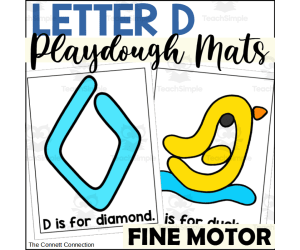
Letter D Playdough Mats allow preschool and kindergarten students to build fine motor skills while learning the letter D. Students use playdough to mold objects that start with the letter D onto activity mats. The 4 mats feature clear images of a duck, diamond, dice, and donut. Children recognize initial letter sounds and match playdough colors to the objects. Teachers can use the mats during literacy centers, small groups, tabletop activities, and more. The no-prep mats target fine motor development, color matching, and phonics. Simply print, laminate if desired, and add playdough. The durable mats are reusable for multiple school years. Students engage in open-ended creation while connecting the letter D to the beginning sounds of words. Fine motor practice helps develop pre-writing abilities.
Author The Connett Connection
Tags Letter D, Letter D Activities, Letter D Playdough Mats, Alphabet Playdough Mats, Playdough Mats, Fine Motor Skills, Fine Motor Activity, Letter Of The Week, Preschool Activities
Letter D Pattern Pages
Math, Patterns, Kindergarten, Preschool, Activities
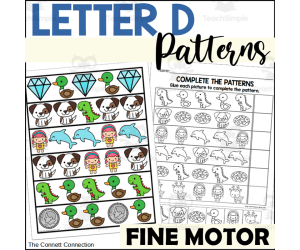
Letter D Pattern Pages: An Interactive Teaching Tool The Letter D Pattern Pages are designed for preschool and kindergarten students. These pages focus mainly on patterns, combining basic math concepts and phonics skills of short 'D' sounds. Main Features: Hands-on experience with continuing patterns using objects beginning with the letter D sound. Tasks suited to various patterns such as AB, AAB, ABB, AABB and ABC. Suitable for independent work or small group sessions. Easily integrated into math centers or homework assignments. Mastering pattern recognition aids in honing critical thinking skills and mathematical reasoning! Adaptability: This resource fits nicely into a file folder activity or can be magnetized onto baking trays - engaging learners in multiple ways! No stone is left unturned when it comes to patterning practice at different levels with materials such as complete-the-pattern worksheet along with continue-the-pattern strips comprising cards included in the pack! Cross-Curricular Learning: The Letter D Pattern Pages offer dual exposure to mathematical concept & phonic skills simultaneously thereby enhancing comprehension rate while making learning enjoyable! Pack Details: Paper Format: PDF File No. of Usable pages: 3 This valuable resource aids in developing students’ abilities in recognizing & completing simple patterns while reinforcing understanding directions - A worth considering addition for every educator’s repertoire!
Author The Connett Connection
Tags Pattern Recognition, Phonics Skills, Math Centers, Interactive Teaching Tool