



2,363 products added recently
Page 58 - 5th Grade Lesson Plans
Prepare your fifth graders for future challenges with lesson plans that promote higher-order thinking and mastery of key concepts. These resources encourage collaboration and in-depth exploration across subjects. Use them to guide your students toward readiness for middle school.

 Show filters


Color By Sum - Valentine's Day Activities
Math, Addition and Subtraction, Addition, Early Math, Basic Operations, Numbers, Kindergarten, Preschool, Grade 1, 2, 3, 4, 5, Worksheets & Printables, Worksheets, Coloring Pages, Teacher Tools, Assessments, Lesson Plans
Love is in the air... and so are math facts! Color By Sum – Valentine’s Day Activities is the perfect blend of learning and creativity, helping students practice addition while having fun. Instead of just solving math problems, students will add, match, and color their way to vibrant Valentine’s Day pictures. Who knew math could be this sweet? Ways to Use: 🎲 Morning Warm-Up: Get those math brains working before the sugar rush kicks in. 🎲 Early Finisher Fun: No more “I’m done! Now what?” moments. 🎲 Math Centers: Engaging, independent practice with no prep for you. 🎲 Homework or Sub Plans: A stress-free, meaningful assignment. 🎲 Valentine’s Day Party Activity: Learning disguised as fun—shhh, don’t tell them! Advantages: ✔ Reinforces Addition Skills – Because 2 + 2 should always equal 4, not 22. ✔ Encourages Attention to Detail – Color in the wrong spot? That heart just turned into a math mystery! ✔ Boosts Creativity – Students will love seeing their hidden picture come to life. ✔ Stress-Free for Teachers – Just print and let the learning (and coloring) begin! Make math magical this Valentine’s Day with Color By Sum—where numbers and creativity go hand in hand! Pdf file includes 2 pages. Enjoy!
Author Ponder Palette Plazza
Tags Addition, Color By Sum, Coloring, Coloring Activity, Math, Valentines Day, Valentine, Valentines Day Activities

Climate Change: Causes: Greenhouse Gases: Synthetic Gases Gr. 5-8
Science, Earth and Environmental Sciences, Environmental Science, Grade 5, 6, 7, 8, Teacher Tools, Lesson Plans
Climate Change: Causes: Greenhouse Gases: Synthetic Gases Gr. 5-8 This resource offers an in-depth exploration of the natural and human-made factors influencing our atmosphere and becoming catalysts for climate change, with a specific focus on synthetic gases, a type of greenhouse gas. A Comprehensive Tool for Science Educators Designed to aid grade 5 - 8 Science educators, it helps students differentiate between myths and factual science regarding this critical topic while strengthening their knowledge in environmental studies. Atmospheric Exploration: Students will examine the different layers of our atmosphere. Radiation Absorption Rate Activities: Engaging hands-on opportunities where students investigate how object colors impact radiation absorption rates. The Carbon Cycle Model: Practical activity where students create a model of the carbon cycle—a component influencing global warming. Oceanic Changes study:: Exploring real-world Climate change implications such as fluctuations in temperature causing oceanic changes. Methane's residence time concept:: An illustrative module on another potent greenhouse gas with suggested measures to counteract climate change effectively. ' Nitrogen-fixing Bacteria & Environmental Conservation Efforts The material covers nitrogen-fixing bacteria's role in replacing nitrogen fertilizers - offering intriguing links between biology and conservation efforts. Synthetic Gases' Discussion And Global Phenomena Perspective Building' An expansive look at synthetic gases—their ban due to harmful atmospheric impacts, along with their persistent presence despite such actions is covered in detail to ignite interest and foster a broader perspective on human activity 's influence on global phenomena like climate change. Aligning With Bloom's Taxonomy & Promoting STEAM Initiatives This tool aligns with Bloom's Taxonomy principles and promotes Science, Technology, Engineering Arts & Math (STEAM) initiatives too. It offers reinforcement tools such as crossword puzzles; word searches alongside comprehension quizzes complete with answer keys for self-evaluation purposes. Flexible Utilisation For Various Learning Environments Suitable for use in-class lectures, small group discussions or assigned as homework. The resource file type is PDF making it easy to distribute digitally or printed if required. 'Climate Change: Causes: Greenhouse Gases: Synthetic Gases Gr. 5-8': A Significant Addition To Science Curriculums This resource promises significant addition to grade level science curriculums focused on fostering environmentally conscious learners armed with scientific facts rather than fallacies.
Author Classroom Complete Press
Tags PDF
I WONDER - What Do Chicken Sounds Mean | Animated Video Lesson
STEM, Animals, Life Sciences, Science, Biology, Grade 1, 2, 3, 4, 5, 6, 7, 8, Lesson Plans, Teacher Tools
Video Introduction Animal kingdoms are full of fascinating wonders to learn. This video is designed for the students to learn more about animals in different countries. I WONDER - What Do Chicken Sounds Mean | Animated Video Lesson Do you like animals? what is your favorite one? Do you own a pet? If yes, tell us more about it, like what its name? And what do you like most about it? What are the animal kingdoms? Can you write down the characteristics of each animal class like mammals, birds, reptiles, amphibian, fish and mollusks. Do you know that some animals can sing, can you name any of them? What is the largest and the smallest mammal in the world? What is the largest and the smallest bird in the world? What is the largest and the smallest fish in the world? I WONDER - What Do Chicken Sounds Mean | Animated Video Lesson The video is perfect for encouraging the researching skills for the students, while learning more about these fantastic animals. I WONDER - What Do Chicken Sounds Mean | Animated Video Lesson This friendly designed video is suitable for students at school, homeschooling, and as a group activity. Format Available in MP4 format.
Author Educational Voice
Tags What Do Chicken Sounds Mean, What Do Chicken Sounds Mean Video, Chicken Sounds, Chicken Sound, Chicken Sound Facts, Chicken Sound Facts For Kids, Chicken Sound Video, Chicken Sound Video For Kids
I WONDER - Do Selkies Have Magical Powers | Animated Video Lesson
History, Social Studies, Common Core, Grade 4, 5, 6, 7, 8, 9, 10, Lesson Plans, Teacher Tools
Video Introduction An amazing video designed for the students to learn more about mythological creatures in different cultures. I WONDER - Do Selkies Have Magical Powers | Animated Video Lesson Mythology is full of wonders and spectacular stories. Ancient civilizations were trying to explore every aspect of life, while they search for new technologies, they wanted to believe in something big and can change the world, so they created mythical creatures and mythical stories. Let's hear about them! What do you know about these creatures? Cyclops, Centaurs, Selkies, Phoenix, Gnomes, Dragons, Gorgons, Orcs, Cerberus, Trolls, Minotaur, Griffins, Mermaids, Elves, Polyphemus, Pegasus, and Ogres. I WONDER - Do Selkies Have Magical Powers | Animated Video Lesson The video is perfect for encouraging the creativity skills for the students, while learning more about this fantastic mythical creature. I WONDER - Do Selkies Have Magical Powers | Animated Video Lesson This friendly designed video is suitable for students at school, homeschooling, and as a group activity. Format Available in MP4 format.
Author Educational Voice
Rating
Tags Do Selkies Have Magical Powers, Do Selkies Have Magical Powers Video, Selkies Magical Powers, Selkies Magical Powers Facts, Selkies Magical Powers Video, Selkies Magical Powers Video For Kids, Selkies Magical Powers Facts For Kids
I WONDER - How Many Games Are On Roblox | Animated Video for Kids
Computer Science, Technology, Science, Grade 4, 5, 6, 7, 8, 9, 10, Lesson Plans, Teacher Tools
Video Introduction An amazing video designed for the students to learn more about STEM. I WONDER - How Many Games Are On Roblox | Animated Video Lesson Plants world is really fascinating! Do you know that some flowers eat insects? Some other plants like to grow on walls can you mention any? Do you know what is the difference between fungicide and pesticide? If yes, Can you tell us more about it? What is nuclear energy? Is it safe to use it? Do you think it is a clean energy? Have you ever read about potential energy? If yes, tell us what it is? Do you think that potential energy can be converted into another form of energy? How it happens? I WONDER - How Many Games Are On Roblox | Animated Video Lesson The video is perfect for encouraging the researching skills for the students, while learning more about this fantastic topic. I WONDER - How Many Games Are On Roblox | Animated Video Lesson This friendly designed video is suitable for students at school, homeschooling, and as a group activity. Format Available in MP4 format.
Author Educational Voice
Rating
Tags How Many Games Are On Roblox, Roblox, Roblox Facts, Roblox Video, Roblox Facts For Kids, Roblox Video For Kids, Roblox Games, Roblox Games Facts, Roblox Games Video, Roblox Games Video For Kids
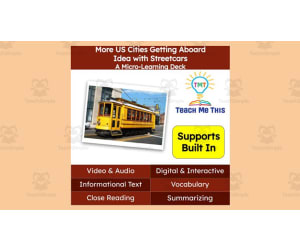
Streetcars | Reading Comprehension Deck | Interactive Lesson
Social Studies, Grade 5, 6, 7, Teacher Tools, Lesson Plans
Transportation Through Time: Streetcars This interactive social studies lesson helps students learn about the history of streetcars. Students will watch an engaging video lesson explaining how streetcars transformed cities in the late 1800s. Next, they will read an informative passage about the rise and fall and rebirth of streetcars across America. The lesson includes reading comprehension questions and a quick write activity to assess understanding. Educators can facilitate whole-class discussion, assign the deck for independent study, or use components like the video and reading passage alone. This well-researched lesson meets key 5th-7th grade social studies standards about transportation and technological innovations over time. Students will gain knowledge and appreciation for an often overlooked part of our nation's transit history through this interactive PowerPoint.
Author Teach Me This
Tags Streetcars, Reading, Comprehension, Interactive Lesson, Transportation

I WONDER - What Is An Iceberg | Animated Video Lesson
Geography, Social Studies, Grade 1, 2, 3, 4, 5, 6, 7, 8, Lesson Plans, Teacher Tools
Video Introduction An amazing video designed for the students to learn more about famous places in different countries. I WONDER - What Is An Iceberg | Animated Video Lesson What do you know about this place? Do you know in which part of the world it is? Have you ever visited this place? If yes, can you tell us more about your adventure, and what do you like the most about this place? Do you like reading about Geography? What is your favorite country in the whole world? If you are going on a trip where it will be? Which country? What you are going to see there? Does this country has a famous place to visit? I WONDER - What Is An Iceberg | Animated Video Lesson The activity is perfect for encouraging the researching skills for the students, while learning more about this fantastic place. I WONDER - What Is An Iceberg | Animated Video Lesson This friendly designed video is suitable for students at school, homeschooling, and as a group activity. Format Available in MP4 format.
Author Educational Voice
Tags What Is An Iceberg, What Is An Iceberg Video, Iceberg, Iceberg Video, Iceberg Facts, Iceberg Facts For Kids, Iceberg Video For Kids, Polar Regions, Polar Regions Facts, Polar Regions Video

I WONDER - How Did The Quetzalcoatlus Eat | Animated Video Lesson
History: Ancient, History, Social Studies, History: World, Animals, Life Sciences, Science, Grade 4, 5, 6, 7, 8, 9, 10, Lesson Plans, Teacher Tools
Video Introduction An amazing video designed for the students to learn more about dinosaurs in different countries. I WONDER - How Did The Quetzalcoatlus Eat | Animated Video Lesson Do you like dinosaurs? what is your favorite one? Do you own a pet? If yes, tell us more about it, like what its name? And what do you like most about it? Do you think that your pet has been evolved from a dinosaur? Can you write down the characteristics of your favourite dinosaur like it's shape, their rivals, where did it use to live and what was their favourite food? What is the largest and the smallest dinosaur that ever found? Why is the T-rex is so famous? Have you ever read any interesting facts about it? Can you name any of the carnivores or herbivores dinosaurs? I WONDER - How Did The Quetzalcoatlus Eat | Animated Video Lesson The video is perfect for encouraging the researching skills for the students, while learning more about dinosaurs. I WONDER - How Did The Quetzalcoatlus Eat | Animated Video Lesson This friendly designed video is suitable for students at school, homeschooling, and as a group activity. Format Available in MP4 format.
Author Educational Voice
Rating
Tags How Did The Quetzalcoatlus Eat, How Did The Quetzalcoatlus Eat Video, Quetzalcoatlus, Quetzalcoatlus Facts, Quetzalcoatlus Video, Quetzalcoatlus Video For Kids, Quetzalcoatlus Facts For Kids

Prevention, Recycling & Conservation: Sustainable Living Gr. 5-8
Science, Earth and Environmental Sciences, Environmental Science, Grade 5, 6, 7, 8, Teacher Tools, Lesson Plans
Prevention, Recycling & Conservation: Sustainable Living Gr. 5-8 This engaging and enlightening teaching resource is perfect for educators teaching students in grades 5 through 8. This resource is valuable across various areas of study—including science and environmental science—and encourages environmental stewardship and sustainable living practices. Main Topics: Natural Resources vs Renewable/Non-Renewable Resources: Helps distinguish between the two. Waste Reduction Methods: Comprehensive coverage on methods like composting that reduce landfill stress. Pollution Prevention Strategies: Focused discussion on freshwater preservation and reducing smog, ozone depletion, etc., caused by rampant fossil fuel burning. Sustainable Alternatives to Conventional Fuels:To minimize dependency on conventional fuels while promoting a healthier planet alternative fuel solutions have been incorporated in the content. In line with preparing students for creating zero waste environments together with comprehensive sustainable living techniques are key components in shaping responsible global citizens are handled within this curriculum . Tailor-Made Features Include: User-friendly reading passages that fit the learning level of mentioned grades without overwhelming vocabulary difficulty. An assortment of student activities reinforcing learned concepts together with test prep materials based on Bloom's Taxonomy. A selection of color mini posters enhancing visual learning efficiency—simplifying comprehension especially for remedial learners! All this wrapped in one PDF file can be seamlessly integrated into your instruction plan whether implemented within classrooms or homeschool settings – adaptable across whole group lessons or small group activities or even suitable as homework assignments! Accordance to State Standards, this extensive lesson plan aims to shape future guardians of our planet; offering an enlightened perspective on prevention, recycling and conservation that paves the way for sustainable living.
Author Classroom Complete Press
Tags PDF

Japan - Complete Elementary Unit
Social Studies, History, History: Asian, Geography, Grade 3, 4, 5, Lesson Plans, Teacher Tools
A complete unit for teaching elementary students all about the wonderful nation of Japan. Worksheets include lessons on: - Japanese Business & Industry - Japanese Culture - Customs - Food - Geography - Nature - Language & Phrases - Travel & Transport
Author Mr Gray History
Tags Japanese, Japanese Unit, Japanese Culture, Japanese Geography
I WONDER - Where Do Orangutans Sleep | Animated Video Lesson
STEM, Biology, Life Sciences, Science, Animals, Grade 1, 2, 3, 4, 5, 6, 7, 8, Lesson Plans, Teacher Tools
Video Introduction Animal kingdoms are full of fascinating wonders to learn. This video is designed for the students to learn more about animals in different countries. I WONDER - Where Do Orangutans Sleep | Animated Video Lesson Do you like animals? what is your favorite one? Do you own a pet? If yes, tell us more about it, like what its name? And what do you like most about it? What are the animal kingdoms? Can you write down the characteristics of each animal class like mammals, birds, reptiles, amphibian, fish and mollusks. Do you know that some animals can sing, can you name any of them? What is the largest and the smallest mammal in the world? What is the largest and the smallest bird in the world? What is the largest and the smallest fish in the world? I WONDER - Where Do Orangutans Sleep | Animated Video Lesson The video is perfect for encouraging the researching skills for the students, while learning more about these fantastic animals. I WONDER - Where Do Orangutans Sleep | Animated Video Lesson This friendly designed video is suitable for students at school, homeschooling, and as a group activity. Format Available in MP4 format.
Author Educational Voice
Tags Where Do Orangutans Sleep, Where Do Orangutans Sleep Video, Orangutans, Orangutan, Orangutans Facts, Orangutans Facts For Kids, Orangutans Video, Orangutans Video For Kids, Mammal
I WONDER - How Did Grizzly Bears Get Their Name | Animated Video
STEM, Biology, Life Sciences, Science, Animals, Grade 1, 2, 3, 4, 5, 6, 7, 8, Lesson Plans, Teacher Tools
Video Introduction Animal kingdoms are full of fascinating wonders to learn. This video is designed for the students to learn more about animals in different countries. I WONDER - How Did Grizzly Bears Get Their Name | Animated Video Lesson Do you like animals? what is your favorite one? Do you own a pet? If yes, tell us more about it, like what its name? And what do you like most about it? What are the animal kingdoms? Can you write down the characteristics of each animal class like mammals, birds, reptiles, amphibian, fish and mollusks. Do you know that some animals can sing, can you name any of them? What is the largest and the smallest mammal in the world? What is the largest and the smallest bird in the world? What is the largest and the smallest fish in the world? I WONDER - How Did Grizzly Bears Get Their Name | Animated Video Lesson The video is perfect for encouraging the researching skills for the students, while learning more about these fantastic animals. I WONDER - How Did Grizzly Bears Get Their Name | Animated Video Lesson This friendly designed video is suitable for students at school, homeschooling, and as a group activity. Format Available in MP4 format.
Author Educational Voice
Tags How Did Grizzly Bears Get Their Name, How Did Grizzly Bears Get Their Name Video, Grizzly Bears, Grizzly Bears Facts, Grizzly Bears Facts For Kids, Grizzly Bears Video, Grizzly Bears Video For Kids, Grizzly Bear
I WONDER - Why Is The Tower Of London Famous | Animated Video Lesson
History: Ancient, History, Social Studies, History: British, History: Europe, Geography, Grade 2, 3, 4, 5, 6, 7, 8, Lesson Plans, Teacher Tools
Video Introduction An amazing video designed for the students to learn more about history. I WONDER - Why Is The Tower Of London Famous | Animated Video Lesson Do you like history? Which topic do you really enjoy about history? Have you ever read an interesting fact about the Vikings? If yes, can you mention them? What do you like most about the Victorian era? Can you name all the Tudors? Have you ever wondered how people used to live in ancient Japan and ancient China? Do you know any interesting facts about ancient Egyptians and the Pharaohs? Have you ever visited South America? What do you know about Incas and Aztecs? Celtic culture was really one of a kind, can you name any of the places that Celts used to live in? Imagine yourself living during the ancient Roman empire, how your life will look like? Ancient Greece was an amazing place to live in. What do you know about ancient Greek life? I WONDER - Why Is The Tower Of London Famous | Animated Video Lesson The video is perfect for encouraging the researching skills for the students, while learning more about history. I WONDER - Why Is The Tower Of London Famous | Animated Video Lesson This friendly designed video is suitable for students at school, homeschooling, and as a group activity. Format Available in MP4 format.
Author Educational Voice
Tags Why Is The Tower Of London Famous, Why Is The Tower Of London Famous Video, The Tower Of London, The Tower Of London Facts, The Tower Of London Video, The Tower Of London Video For Kids
I WONDER - What Sort Of Teeth Did Omnivores Have | Animated Video
History: Ancient, History, Social Studies, History: World, Animals, Life Sciences, Science, Grade 4, 5, 6, 7, 8, 9, 10, Lesson Plans, Teacher Tools
Video Introduction An amazing video designed for the students to learn more about dinosaurs in different countries. I WONDER - What Sort Of Teeth Did Omnivores Have | Animated Video Lesson Do you like dinosaurs? what is your favorite one? Do you own a pet? If yes, tell us more about it, like what its name? And what do you like most about it? Do you think that your pet has been evolved from a dinosaur? Can you write down the characteristics of your favourite dinosaur like it's shape, their rivals, where did it use to live and what was their favourite food? What is the largest and the smallest dinosaur that ever found? Why is the T-rex is so famous? Have you ever read any interesting facts about it? Can you name any of the carnivores or herbivores dinosaurs? I WONDER - What Sort Of Teeth Did Omnivores Have | Animated Video Lesson The video is perfect for encouraging the researching skills for the students, while learning more about dinosaurs. I WONDER - What Sort Of Teeth Did Omnivores Have | Animated Video Lesson This friendly designed video is suitable for students at school, homeschooling, and as a group activity. Format Available in MP4 format.
Author Educational Voice
Rating
Tags What Sort Of Teeth Did Omnivores Have, What Sort Of Teeth Did Omnivores Have Video, Omnivores Teeth, Omnivores Teeth Facts, Omnivores Teeth Video, Omnivores Teeth Video For Kids, Omnivores Teeth Facts For Kids

Measurement: Angles - Learn the Skill - FLASH-MAC
Math, Measurements, Common Core, Grade 3, 4, 5, Teacher Tools, Lesson Plans
Measurement: Angles - Learn the Skill - FLASH-MAC This educational tool is a detailed, curriculum-focused resource aimed at developing understanding in 'Angles of Measurement'. Developed for children at grade levels from 3rd to 5th, it includes easy-to-grasp chapters saturated with real-life word problems that solidify this crucial math concept. A creative inclusion of practical math tools fosters active learning and problem-solving abilities while keeping students engrossed in their learning experience. Its flexibility allows it to be utilized effectively in multiple scenarios such as comprehensive class instruction, small focus groups or individual homework assignments. The product stands out with its bilingual feature; offering primary English text and voiceover along with secondary Spanish options. This multi-lingual aspect increases adaptability across varied language backgrounds aiding teachers and pupils alike. In terms of standard alignment, this teaching tool simultaneously keeps up with Common Core State Standards adding value to its instructive relevance within educational settings. Moreover, following STEM principles and being designed according to NCTM norms helps students hone their measurement skills- a foundational element within Mathematics. Since the solitary product file type is Software (Mac), it enhances digital integration into existing tech-based learning systems favoring Mac without any complications. In summary, 'Measurement: Angles - Learn the Skill - FLASH-MAC', proficiently embeds curriculum-oriented content inside an intuitive design supplementing real-world examples. This makes mastering concepts like angles of measurement more achievable for students from grades 3-5 while also providing valuable support for teachers interested in facilitating quality maths education.
Author Classroom Complete Press
Tags Software (Mac)
I WONDER - How Tall Are The Cliffs Of Moher | Animated Video Lesson
Geography, Social Studies, Grade 4, 5, 6, 7, 8, 9, 10, Lesson Plans, Teacher Tools
Video Introduction An amazing video designed for the students to learn more about famous places in different countries. I WONDER - How Tall Are The Cliffs Of Moher | Animated Video Lesson What do you know about this place? Do you know in which part of the world it is? Have you ever visited this place? If yes, can you tell us more about your adventure, and what do you like the most about this place? Do you like reading about Geography? What is your favorite country in the whole world? If you are going on a trip where it will be? Which country? What you are going to see there? Does this country has a famous place to visit? I WONDER - How Tall Are The Cliffs Of Moher | Animated Video Lesson The activity is perfect for encouraging the researching skills for the students, while learning more about this fantastic place. I WONDER - How Tall Are The Cliffs Of Moher | Animated Video Lesson This friendly designed video is suitable for students at school, homeschooling, and as a group activity. Format Available in MP4 format.
Author Educational Voice
Tags How Tall Are The Cliffs Of Moher, How Tall Are The Cliffs Of Moher Video, The Cliffs Of Moher, The Cliffs Of Moher Facts, The Cliffs Of Moher Facts For Kids, The Cliffs Of Moher Video, The Cliffs Of Moher Video For Kids

I WONDER - Do Whales Migrate | Animated Video Lesson
STEM, Animals, Life Sciences, Science, Biology, Grade 1, 2, 3, 4, 5, 6, 7, 8, Lesson Plans, Teacher Tools
Video Introduction Animal kingdoms are full of fascinating wonders to learn. This video is designed for the students to learn more about animals in different countries. I WONDER - Do Whales Migrate | Animated Video Lesson Do you like animals? what is your favorite one? Do you own a pet? If yes, tell us more about it, like what its name? And what do you like most about it? What are the animal kingdoms? Can you write down the characteristics of each animal class like mammals, birds, reptiles, amphibian, fish and mollusks. Do you know that some animals can sing, can you name any of them? What is the largest and the smallest mammal in the world? What is the largest and the smallest bird in the world? What is the largest and the smallest fish in the world? I WONDER - Do Whales Migrate | Animated Video Lesson The video is perfect for encouraging the researching skills for the students, while learning more about these fantastic animals. I WONDER - Do Whales Migrate | Animated Video Lesson This friendly designed video is suitable for students at school, homeschooling, and as a group activity. Format Available in MP4 format.
Author Educational Voice
Tags Do Whales Migrate, Do Whales Migrate Video, Whales Migration, Whales, Whale, Whales Migration Facts, Whales Migration Facts For Kids, Whales Migration Video, Whales Migration Video For Kids

Global Warming EFFECTS: Climate and Ecosystems - FLASH-MAC
Science, Earth and Environmental Sciences, Environmental Science, Grade 5, 6, 7, 8, Teacher Tools, Lesson Plans
Global Warming EFFECTS: Climate and Ecosystems - FLASH-MAC An exceptional teaching resource, FLASH-MAC caters to both the public school system and homeschooling setups providing a comprehensive outlook on how global warming impacts climate and ecosystems. This tool merges enlightening reading materials with thought-provoking questions. The prime target audience includes students in grades 5 through 8, that will get to explore the fascinating world of environmental science from an accessible viewpoint. Main Features: Educational content: Primed with material compliant with curriculum standards. Reading passages:Provides insights into global warming effects followed by comprehension-boosting queries. Vocabulary flash cards : Enhances understanding of key terminology related to global warming, climate systems, and ecosystems. Multimedia:Addition of video clips and audio materlials for a comprehensive learning experience. Balancing Multiple Teaching Frameworks: Suitable for various teaching approaches ranging from whole group activities that prompt class-wide discussions to smaller collaborative learning sessions or independent homework assignments. This tool also serves as an efficient revision aid ahead of exams.FLASH-MAC is compatible not only with Mac devices but provides dynamic guidance for educators designing lessons based on environmental science. In Conclusion: This software simplifies complex scientific concepts about global warming into digestible information suitable for grades 5-8 classrooms, making it a must-have resource when your objective is nurturing informed future eco-warriors mindful about our environment's health.
Author Classroom Complete Press
Tags Software (Mac)
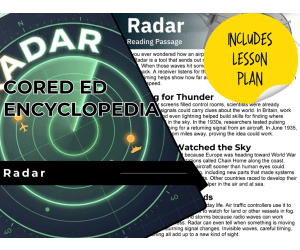
Radar Reading Comprehension Passage - Cored Ed Encyclopedia
ELA, Language Development, Reading Comprehension, Reading, Pre-Reading, Writing, History, Social Studies, Technology, Science, Grade 2, 3, 4, 5, Worksheets & Printables, Worksheets, Teacher Tools, Centers, Activities, Writing Prompts, Assessments, Quizzes and Tests, Quizzes, Lesson Plans
This radar reading comprehension includes: Visualization (on the front cover) Start your lesson by taking a minute to think and share something about the topic. Read the script aloud (slowly), perhaps prepare some music or sound effects. Student close their eyes and let their imaginations wander. Students open their eyes, read the question aloud and give them a few minutes to complete. Ask a few students to share or keep answers until the end to compare with what they learn in the passage. Quick pause—thousands of Cored Education products are included with your TeachSimple membership. Download links and encyclopedia index available here. Pre-Reading Trivia Students will write down one thing they already know about the subject and then read five more facts and discuss. These facts are fun, and the students will enjoy learning about the subject before reading more. Give 1 minute for students to write what they already know (no pressure—best guess is fine). Read the five facts together. After each fact, do ask a student for their opinion, was it surprising? Set a purpose by asking students to highlight/underline one fact they want to learn more about during the reading. Reading Passage The text is a high-interest reading passage with set paragraphs, roughly three to four paragraphs long. It contains a variety of themes about the topic, anywhere from history to technology. The passage is between 250 and 350 words in length. First, ask students to look at the headings and see what they’ll learn about today. What do they know about the topic/heading? First read options: Teacher read-aloud (best for support). Partner reading (paragraph by paragraph). While reading, students underline important details, and vocabulary words they think may come up in the questions section. Mixed Questions The first question page contains four multiple-choice questions, each with a choice of four answers, and three written response questions that require a sentence or two from the student. Students complete the mcqs first independently, then review quickly as a class. For the 3 written responses, try to get students giving the answer with some form of evidence: “I think ___ because the text says ___.” If students get stuck, send them back to check the passage. Vocabulary Questions Practice seven key words from the text in this section across two activities. First section is scrambled words where students will unscramble three words given a clue for each. The second section is a word to meaning matching activity. Before starting, have some students read out words they underlined in the passage. Ask students to say the word and read aloud the sentence(s) around each word. Ask students to do scrambled words and the matching exercise in pairs then go through answers as a class. For the scrambled spelling task, get four pairs to come up to the board and write the words for extra practice with the other student reading out the clue. For the matching task, prompt students to give full sentences: “I matched ___ with ___ because ___.” Creative Writing In this question, the student will be required to write a five to eight sentence paragraph on a question related to the topic. Before starting, ask students write down 3 key ideas they are going to include in their piece. Ask students for ideas to share around the class to help those struggling. Pro writing expectations: 5–8 sentences At least 2 facts or details from the passage At least 2 vocabulary words from the previous page Students read their paragraphs while classmates listen for facts and vocabulary words. Extension Activities This page is optional for fast finishers or to take home. There are several activities, each one requiring a different skill. Do some, do none, do all, completely optional - but you will feel reassured knowing every possibility is planned for. Includes summary writting question. Answer Key There are answers for the multiple-choice questions, written response questions have sample answers, vocabulary answers and if there is a summary question then a sample summary will be provided as well. Lesson Plan Included Customized lesson plan for this lesson is included. Lesson Snapshot Title: Radar Genre: Nonfiction (informational text with support pages) Subject: Science (Physical Science/Technology) Primary Topic: Using radio waves to find objects Estimated Guided Reading Level (A–Z): R What This Lesson Teaches Best Explains how radar works using radio waves, an “echo,” and a receiver that measures return time. Connects timing to distance (how long the trip takes helps show how far away something is). Builds background knowledge about radar’s development before World War II (tests in the 1930s; June 1935 detection; Chain Home stations). Shows real-world uses after the war (air traffic control, ships in fog, weather radar tracking rain and storms). Includes support pages that match the passage content (questions, vocabulary, writing, and extension activities focus on radio waves, echoes, Chain Home, and the 1935 test). Learning Goals Students can describe radar as a tool that sends out radio waves and listens for the waves that bounce back. Students can explain how a receiver uses the echo’s return time to show distance. Students can describe one early step in radar’s development mentioned in the passage (1930s tests or the June 1935 detection). Students can explain why early-warning stations mattered as World War II was getting closer. Students can identify at least two ways radar is used in everyday life after the war (planes, ships, or weather). Key Vocabulary From the Text receiver — device that listens for the returning signal echo — a returning signal that bounces back pulsing — sending waves in repeated bursts detected — found or noticed something was there vessels — boats or ships FULL CATALOG OF DOWNLOAD LINKS AND ENCYCLOPEDIA INDEX HERE
Author Cored Education
Rating
Tags Vocabulary, Reading Comprehension, Reading Passages, Reading, Creative Writing, Reading Strategies, Writing Prompts, Lesson Plans, History, Radar

I WONDER - What Animal Group Do Mollusks Belong To | Animated Video
STEM, Animals, Life Sciences, Science, Biology, Grade 1, 2, 3, 4, 5, 6, 7, 8, Lesson Plans, Teacher Tools
Video Introduction Animal kingdoms are full of fascinating wonders to learn. This video is designed for the students to learn more about animals in different countries. I WONDER - What Animal Group Do Mollusks Belong To | Animated Video Lesson Do you like animals? what is your favorite one? Do you own a pet? If yes, tell us more about it, like what its name? And what do you like most about it? What are the animal kingdoms? Can you write down the characteristics of each animal class like mammals, birds, reptiles, amphibian, fish and mollusks. Do you know that some animals can sing, can you name any of them? What is the largest and the smallest mammal in the world? What is the largest and the smallest bird in the world? What is the largest and the smallest fish in the world? I WONDER - What Animal Group Do Mollusks Belong To | Animated Video Lesson The video is perfect for encouraging the researching skills for the students, while learning more about these fantastic animals. I WONDER - What Animal Group Do Mollusks Belong To | Animated Video Lesson This friendly designed video is suitable for students at school, homeschooling, and as a group activity. Format Available in MP4 format.
Author Educational Voice
Tags What Animal Group Do Mollusks Belong To, What Animal Group Do Mollusks Belong To Video, Mollusks, Mollusk, Mollusks Facts, Mollusks Facts For Kids, Mollusks Video, Mollusks Video For Kids

Literary Devices: Characterization
ELA, Literature, Common Core, Grade 5, 6, 7, 8, Teacher Tools, Lesson Plans
Literary Devices: Characterization This resource is a focused module from the comprehensive lesson plan dedicated to the study of Literary Devices. Designed for educators, it emphasize on characterization in storytelling language teaching for 5th through 8th-grade students. This guide enhances understanding of Language Arts and Literature curriculum components. Fundamentals & Topics Covered The foundation of reading comprehension is strengthened with this tool as learners explore various aspects of storytelling including: Characterization Setting Plot Theme and more. All these aspects are crucial for a complete appreciation of literature. Ease-of-Use & Learning Objectives The teacher-friendly interface enables easy navigation between sections. A significant feature that distinguishes Literary Devices: Characterization is its adherence to Bloom’s Taxonomy while formulating objectives, creating discussions pedagogically relevant and inviting learner engagement at different cognitive levels - from remembering to creative problem-solving. Tangible Benefits This resource not only aids in comprehending literary devices but also assists in evaluating their role in deriving meaning from different literature genres. It marries instructive narrative with age-appropriate activities ensuring learner engagement while bolstering understanding about underlying elements that drive stories. Twinning Standards Last but not least, this resource pairs well with standards established by Common Core State Standards maintaining their prescribed frameworks beautifully . This makes it an ideal additive alongside existing curriculum material integrating seamlessly within various learning settings whether classroom-wide discussions or smaller focus groups extending its utility as viable homework assignments. Distribution Details: A straightforward product file embedded in PDF format makes distribution among students digitally or in print form simple. Individual teaching styles could utilize this flexibility in usage, further maximizing comprehension potential and reinforcing mastery over literary devices especially characterization.
Author Classroom Complete Press
Tags PDF

I WONDER - What Is An Eclipse | Animated Video Lesson
Space, Earth and Environmental Sciences, Science, Grade 4, 5, 6, 7, 8, 9, 10, Lesson Plans, Teacher Tools
Video Introduction An amazing video designed for the students to learn more about space facts. I WONDER - What Is An Eclipse | Animated Video Lesson Do you like reading about space? If yes, what is your favorite topic? What do you know about our solar system? What is the smallest planet in our solar system? What is the biggest planet in our solar system? What is the hottest planet in our solar system? And what is the coldest one? Do you think there are aliens? If yes, what do you think they look like? What do they eat and how they speak to each other? Where do they live? What is a galaxy? And what is a milky way? Have you recently saw a shooting star? If yes, tell us more about it, like when did it happen and where? What is a blackhole? Can a blackhole gets bigger by time? Do you like counting the stars? What do you think a star is made of? I WONDER - What Is An Eclipse | Animated Video Lesson The video is perfect for encouraging the researching skills for the students, while learning more about the fantastic space. I WONDER - What Is An Eclipse | Animated Video Lesson This friendly designed video is suitable for students at school, homeschooling, and as a group activity. Format Available in MP4 format.
Author Educational Voice
Tags What Is An Eclipse, What Is An Eclipse Video, Eclipse, Eclipse Facts, Eclipse Facts For Kids, Eclipse Video, Eclipse Video For Kids, Lunar Eclipse, Solar Eclipse, Lunar Eclipse Video
I WONDER - Are Electric Eels The Only Electric Animals
STEM, Biology, Life Sciences, Science, Animals, Grade 1, 2, 3, 4, 5, 6, 7, 8, Lesson Plans, Teacher Tools
Video Introduction Animal kingdoms are full of fascinating wonders to learn. This video is designed for the students to learn more about animals in different countries. I WONDER - Are Electric Eels The Only Electric Animals | Animated Video Lesson Do you like animals? what is your favorite one? Do you own a pet? If yes, tell us more about it, like what its name? And what do you like most about it? What are the animal kingdoms? Can you write down the characteristics of each animal class like mammals, birds, reptiles, amphibian, fish and mollusks. Do you know that some animals can sing, can you name any of them? What is the largest and the smallest mammal in the world? What is the largest and the smallest bird in the world? What is the largest and the smallest fish in the world? I WONDER - Are Electric Eels The Only Electric Animals | Animated Video Lesson The video is perfect for encouraging the researching skills for the students, while learning more about these fantastic animals. I WONDER - Are Electric Eels The Only Electric Animals | Animated Video Lesson This friendly designed video is suitable for students at school, homeschooling, and as a group activity. Format Available in MP4 format.
Author Educational Voice
Tags Are Electric Eels The Only Electric Animals, Are Electric Eels The Only Electric Animals Video, Electric Eels, Electric Eel, Electric Eels Facts, Electric Eels Facts For Kids, Electric Eels Video, Electric Eels Video For Kids
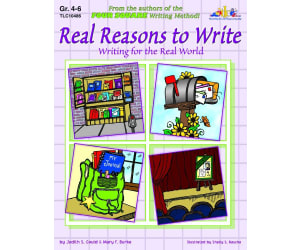
Real Reasons to Write
ELA, Writing, Grade 4, 5, 6, Teacher Tools, Lesson Plans
The Real Reasons to Write Resource: A Comprehensive Guide Ideal for Grade 4 through Grade 6 educators, this guide enhances Writing skills while fostering creative expression. This tool aligns seamlessly with Language Arts syllabus, providing a bridge between academic writing and personal interests. Connects pupils' writings to personal interests. Bolsters enthusiasm via real-world connections. Balances tradition with individuality in Literature responses. This healthy ground laying step offers students real-world reasoning for writing. Not just an ordinary book, it methodically builds the prowess of young writers over time. Adaptable Design & Application The interactive design of the resource is compatible for both whole-group or small-group instruction settings. Furthermore, it can reinforce independent work making it an effective homework assignment complement thereby boosting self-paced learning experiences. A Miniature Copy Editor & Beyond Picturing this resource as their miniature copy editor becomes easier when passion and skill have been tied together systematically and progressively rewarding them on multiple ends like academic triumphs coupled with development of personal interest spheres led by ignited curiosity depicted in every page via lesson plans contained within the product file presented in PDF format. "A Key Stepping Stone" With its focus on connecting art of writing with real world instances, It simplifies teaching the art of writing aligning true life happenings which makes learning fulfilling and engaging especially during crucial learning years thus establishing itself as a key stepping stone for educators.
Author Classroom Complete Press
Tags PDF