



2,390 products added recently
1st Grade Worksheets
Nurture your first graders' love for learning with worksheets designed specifically for their level. Covering reading, math, science, and more, these resources make learning interactive and enjoyable. Use them to reinforce lessons and support skill development in young students.

 Show filters


Ocean Animal Research Writing Project on the SHELLFISH for K-2nd Grade
Life Studies, ELA, Writing, Creative Writing, Reading, Science, Life Sciences, Animals, Research, Preschool, Grade 1, 2, Lesson Plans, Teacher Tools, Coloring Pages, Worksheets, Worksheets & Printables, Writing Prompts
Animal Research Writing Project on Shellfish for K-2nd Grade. Students will learn about shellfish through reading, writing, coloring, and drawing activities in this 19-page packet. After examining photos of real shellfish, students will read factual information presented in a color-coded key for easy comprehension. Next, they will color their own shellfish drawings and create habitat scenes. Two differentiated writing organizers help students take notes and sort information. The writing portion includes leveled writing pages so students of all abilities can succeed composing paragraphs on shellfish. A self-checking writing page assists developing writers. This engaging project promotes creativity, reading, writing, and science skills. Use it for whole-group, small-group, independent, or homework assignments. Click the author links above for other animal research units spanning land and sea creatures. Here are even more informational resources on report writing for OCEAN ANIMALS. Click on the links below: Animal Research Writing Project on WHALES for K-2nd Grade Animal Research Writing Project on the OCTOPUS for K-2nd Grade Animal Research Writing Project on SEA TURTLES for K-2nd Grade Animal Research Writing Project on ORCAS for K-2nd Grade Animal Research Writing Project on the SHELLFISH for K-2nd Grade Animal Research Writing Project on DOLPHINS for K-2nd Grade Animal Research Writing Project on SEALS for K-2nd Grade Want to teach your students all about Zoo Animals? Check out all these interesting facts about these favorite zoo animals. With the same great photos, facts, habitat drawings, and more. It is a great way to help students to get interested in writing. For Zoo Animal reports, click on the following links below: Animal Research Writing Project on TIGERS for K-2nd Grade Animal Research Writing Project on MONKEYS for K-2nd Grade Animal Research Writing Project on PANDAS for K-2nd Grade Animal Research Writing Project on HIPPOS for K-2nd Grade Animal Research Writing Project on ELEPHANTS for K-2nd Grade Animal Research Writing Project on GIRAFFES for K-2nd Grade
Author K-5 Treasures
Tags Informational Writing, Writing Report, 1st Grade Writing, 2nd Grade Writing, Ocean Animals, Ocean Animal Research, Shellfish, Report On Shellfish, Report On Lobsters, Report On Crabs
Prefixes and Suffixes Supplementary Materials - Grades 1-2 (PDF)
ELA, Language Development, ESL, Grammar, Common Core, Resources for Teachers, Grade 1, 2, Teacher Tools, Lesson Plans, Outlines, Quizzes, Quizzes and Tests, Tests, Assessments, Worksheets & Printables, Worksheets
Prefixes and Suffixes Supplementary Materials Note: This download DOES NOT include the tests themselves. You can still make use of these materials without them but they are recommended. Download in a format of your choice in the "Links" section below. In the Supplementary Pack Interactive Ice Breakers: Fun, hands-on activities that get students thinking about adjectives right from the start. Guided Practice: Teacher-led exercises that reinforce the day’s lesson, ensuring students can confidently identify and use adjectives. Group and Partner Tasks: Collaborative activities that allow students to work together to solve problems, categorize adjectives, and create descriptive sentences. Independent Worksheets: Structured worksheets that provide individual practice and help solidify understanding of key concepts. Exit Tasks: Quick, reflective activities at the end of each lesson that assess understanding and encourage students to apply what they’ve learned. Links: Includes: Intro to Prefixes Intro to Suffixes Forming Suffixes Determining Affix Word Meaning Google Docs Google Forms Google Slides PDF PPT Word FULL CATALOG OF DOWNLOAD LINKS HERE Grade 1/2 Links: Capitalization and Punctuation Google Docs Google Forms Google Slides PDF PPT Word Free Supplementary Materials Pack Adjectives Google Docs Google Forms Google Slides PDF PPT Word Free Supplementary Materials Pack Nouns Google Docs Google Forms Google Slides PDF PPT Word Free Supplementary Materials Pack Pronouns Google Docs Google Forms Google Slides PDF PPT Word Free Supplementary Materials Pack Verbs Google Docs Google Forms Google Slides PDF PPT Word Free Supplementary Materials Pack Prefixes & Suffixes Google Docs Google Forms Google Slides PDF PPT Word Free Supplementary Materials Pack Sentence Structure Google Docs Google Forms Google Slides PDF PPT Word Free Supplementary Materials Pack Subject-Verb Agreement Google Docs Google Forms Google Slides PDF PPT Word Free Supplementary Materials Pack ELA Review Questions Overview Questions have three answer choices. There are a handful of pictures on each test for aesthetic purposes, as well as a review sheet covering most of the topics covered in the product. Introduction or Example Sheet Each topic will include an introduction or example sheet to go through first with your students. Full Answer Keys Full answer keys and sample responses are provided so no matter how busy you are, you know you're covered! In the Supplementary Pack Interactive Ice Breakers: Fun, hands-on activities that get students thinking about adjectives right from the start. Guided Practice: Teacher-led exercises that reinforce the day’s lesson, ensuring students can confidently identify and use adjectives. Group and Partner Tasks: Collaborative activities that allow students to work together to solve problems, categorize adjectives, and create descriptive sentences. Independent Worksheets: Structured worksheets that provide individual practice and help solidify understanding of key concepts. Exit Tasks: Quick, reflective activities at the end of each lesson that assess understanding and encourage students to apply what they’ve learned. For similar downloads and other frees, do check out Cored Group on TeachSimple.
Author Cored Education
Tags Elementary, Reading, Comprehension, Vocabulary, Answers, Ccss, Common Core, Spelling, Writing, Passages

Our 5 Senses Lesson, Flashcards, & Conversation For Kindergarten & 1st
Language Development, ELA, Vocabulary, Montessori, Science, Life Sciences, Human Body, Kindergarten, Preschool, Grade 1, 2, Centers, Activities, Bulletin Boards, Classroom Decor, Posters, Anchor Charts, Teacher Tools, Worksheets & Printables, Flashcards, Worksheets
Exploring Our Five Senses Through Seasons Lesson Plans, Worksheets, Flashcards & Conversation Cards Kindergarten - Grade 2 Make learning about the five senses and the seasons fun, interactive, and meaningful with this complete early-years teaching resource. I designed it for kindergarten, 1st, and 2nd grade. This pack includes lesson plans, worksheets, flash cards, and conversation cards to support hands-on learning, discussion, and vocabulary development. I created it to help young learners explore how they experience the world through their senses while understanding the changes that happen throughout the seasons. It’s ideal for classroom use, homeschooling, and at-home reinforcement. What’s inside? Five Senses anchor charts Five Senses poem Five Senses lesson plan Related picture cards Seasons of the Year flash cards Seasons of the year lesson plan Conversation starter cards Conversation expanders Vocabulary revision and repetition activities Simon Says movement game Five Senses worksheets 2 simple at-home projects Resource features: Complete Coverage: This resource introduces all five senses and the four seasons in a clear yet age-appropriate way to young learners. Visual & Interactive: Anchor charts, flash cards, and images help make abstract ideas easy to understand. All these things make this resource engaging and interactive. Language-Rich Activities: Conversation cards and games encourage speaking, listening, and vocabulary growth. It is a good tool to support ESL/EFL/ELL students. Flexible Use: This resource is suitable for whole-group lessons, small groups, centers, homeschooling, and home practice. It is a versatile resource. How to use it? Introduce the Five Senses: Start with anchor charts and the poem, then follow the lesson plan and picture cards to explore each sense. Learn About the Seasons: Use the seasonal flash cards alongside the lesson plan to discuss weather, clothing, and changes in nature. Build Speaking Skills: Encourage students to share their experiences using the conversation starter cards, then deepen responses with conversation expanders. Get Moving: Reinforce sensory vocabulary with the Simon Says game. Hands-On Practice: Worksheets inside support learning and review. Moreover, at-home projects encourage real-world observation. This resource is perfect for Teachers: Easy to use lessons that support early science and language goals. All this makes this resource useful for teachers. For Homeschoolers it is a structured yet flexible way to teach senses and seasons at home. Parents: Fun and meaningful activities that support learning beyond the classroom will help parents a lot to engage with their kids in a game/activity format. This engaging resource introduces children to the five senses and the seasons through discussion, movement, visuals, and hands-on activities. It supports early language development and helps children build a strong foundation in understanding the natural world. Recommended for: Preschool, Montessori, Kindergarten, Grade 1, and Grade 2.
Author FlashKart
Rating
Tags Our 5 Senses, Sense Organs, Seasons, Fall, Winter, Summer, Spring, Rainy, Conversation Starters, Lesson Plan

CVC Words | Short Vowel Phonics | Word Families for K- 2nd Grade
ELA, Language Development, Pre-Reading, Grammar, Phonics, Reading, Spelling, Kindergarten, Grade 1, 2, Teacher Tools, Lesson Plans, Worksheets & Printables, Worksheets
This CVC Words | Short Vowel Phonics | Word Families Activity is for Kindergarten, First Grade, and Second Grade These worksheets are fun and engaging with a fun ocean / beach setting! Students will read, cut, sort, and paste each fish with the CVC words onto the ocean / beach background that is identified in each word family. The fish with the CVC word that is NOT included for that sound is placed on the hook. This helps students read all the words as they sort out which sound that belongs in that family. There are 23 pages included in all for many CVC words. Fun activity for each sound. Perfect for whole group, individual work, and homework. 23 Pages included. Students will read, sort, cut and paste onto an Ocean / Beach background for the Word Family: AN Students will read, sort, cut and paste onto an Ocean / Beach background for the Word Family: AD Students will read, sort, cut and paste onto an Ocean / Beach background for the Word Family: AP Students will read, sort, cut and paste onto an Ocean / Beach background for the Word Family: ET Students will read, sort, cut and paste onto an Ocean / Beach background for the Word Family: ED Students will read, sort, cut and paste onto an Ocean / Beach background for the Word Family: EN Students will read, sort, cut and paste onto an Ocean / Beach background for the Word Family: IN Students will read, sort, cut and paste onto an Ocean / Beach background for the Word Family: IP Students will read, sort, cut and paste onto an Ocean / Beach background for the Word Family: IT Students will read, sort, cut and paste onto an Ocean / Beach background for the Word Family: OG Students will read, sort, cut and paste onto an Ocean / Beach background for the Word Family: OT Students will read, sort, cut and paste onto an Ocean / Beach background for the Word Family: OP Students will read, sort, cut and paste onto an Ocean / Beach background for the Word Family: UN Students will read, sort, cut and paste onto an Ocean / Beach background for the Word Family: UM Students will read, sort, cut and paste onto an Ocean / Beach background for the Word Family: UG For a list of other phonics and grammar activities, click on the following links: CVC Word Families for Beginning Readers: Stamp it, Make it, Trace it, and Write it CVC Words | Short Vowel Phonics | Word Families for K- 2nd Grade Phonics for 1st and 2nd Grade: Help Students Learn Long A Words: AY, AI, A_E, EIGH, EY, and EA Phonics for 1st and 2nd Grade: Help Students Learn Long E Words: EE, EA, E_E, and Y Phonics for 1st and 2nd Grade: Help Students Learn Long I Words: I_E, IE, IGH, and Y Phonics for 1st and 2nd Grade: Help Students Learn Long O Words: O_E, OA, OW, OE, and OUGH Phonics for 1st and 2nd Grade: Help Students Learn Long U Words: U_E, EW, OO, UE, UI and OU Phonics / Digraphs for 1st and 2nd Grade: Beginning, Middle, and Ending Sounds Phonics / Digraphs for 1st -2nd: Ending Sounds: CK, NG, SH, TH, and NK Phonics / Digraphs for 1st and 2nd Grade: Beginning Sounds: SH, TH, WH and PH Phonics: R-Controlled Words for 1st and 2nd Grade and Early Readers
Author K-5 Treasures
Tags CVC Words, CVC, Phonics, Reading, Learning To Read, Short Vowels, Kindergarten Worksheets, 1st Grade Worksheets, Short Vowel Words, Word Families

Beginner AI Chatbot Safety & Prompt Practice Worksheets
Resources for Teachers, Classroom Management, Community Building, Technology, Science, Computer Science, Engineering, Research, Special Resources, Social Emotional Learning (SEL), Preschool, Grade 1, 2, 3, 4, 5, 6, Teacher Tools, Lesson Plans, Presentations, Assessments, Worksheets & Printables, Flashcards, Worksheets, Word Searches, Writing Prompts, Workbooks
This professionally designed 36-page AI Chatbot Safety and Prompt Practice Workbook provides educators and parents with the comprehensive guidance needed to help their 6–9 year-old students develop literacy skills while learning how to safely work with AI chatbots as powerful tools rather than friends, maintain safe digital boundaries, protect their personal identifiable information (PII), create clear and effective prompts using the “Three-Part Recipe”, practice digital kindness, verify the accuracy of AI-generated content, and develop strong literacy skills through the use of iterative questioning. This resource can be used in any learning environment including traditional classrooms, homeschooling, after-school programs, or family time on electronics. Key features include: - Aligned with the Piaget and Vygotsky constructivist theory and early literacy standards - Ten printable worksheets (e.g. fill-in-the-blank, matching, true/false, scenario) - Teacher/parent guide with theory, case studies, and strategies for implementation - Visual aids (e.g. mind maps, flowcharts), and the "Digital Safety Ecosystem" infographic - Complete answer key for easy assessment - No-prep, print-and-go format (PDF) - Ideal for introducing safe use of ChatGPT/AI tools, prompt engineering, and digital citizenship prior to students' access to full AI tools. Why Parents and Schools Are Interested To Use It : -Creates a lifetime of Real World safety habits around Digital use by teaching children to never share names, addresses, schools or emotions with AI preventing privacy issues before they happen. -Allows for Literacy development through AI use. Making writing Prompts fun iterative writing exercises will enhance vocabulary, specificity, sentence structure and critical thinking. -Cost effective for busy parents and teachers who can print everything out with a simple to follow directions, pictures and answer key - great for morning work, tech centers S.E.L. lessons or home school tech units. -Removes worries about AI in the classroom by providing a structured researched based blueprint for educators and families to use to introduce chat-bots without the fear of misuse or becoming overly reliant upon. -Fun and easy for children to learn about safety through stories, fun Prompts and activities, "Digital Detective" activity, so they will actually look forward to learning and following safe and responsible use of digital technology. Target Audience / Students Grades : Kindergarten & 4th/5th Grades are not targeted (English). The curriculum is developed with 1st through 3rd grade (ages 6-9) only - early elementary children who are in the concrete operational cognitive development stage; therefore, the curriculum utilizes concrete metaphors (e.g.; recipe, blueprint, vault, shield), large print for worksheets, and has scenarios appropriate for a given age, such as bats/frogs/knights/dinosaurs. This is not appropriate for kindergarten or 4th grade and beyond as the language and activity levels are too elementary for 4th and older students, and also too advanced for pre-k. Copyright/Terms and Use : The content of these pages is under copyright by Syed Hammad Rizvi, and it is for your personal use or classroom use only (meaning only one person will use it) You may not change or share any portion of these pages with anyone else or post them online for others to find and download. If you would like to share this resource with someone else or would like to share it with your colleagues, please purchase an additional license from Teachsimple. Your compliance with this Copyright/Terms of Use will greatly help us in continuing to provide content/resources. Syed Hammad Rizvi would like to express his thanks for purchasing these products.
Author Creative Book Store
Rating
Tags Ages6to9, Grades1to3, AISafetyForKids, ChatGPTForKids, AIForElementary, PromptEngineeringForKids, KidsAged6to9, AIForAges6to9, EarlyElementaryAI, DigitalLiteracyWorksheets

Zoo Animal Research Writing Project on HIPPOS for K-2nd Grade
Life Studies, ELA, Writing, Creative Writing, Reading, Science, Life Sciences, Animals, Research, Kindergarten, Grade 1, 2, Teacher Tools, Lesson Plans, Presentations, Worksheets & Printables, Worksheets, Coloring Pages, Writing Prompts
Animal Research Writing Project on Hippos for K-2. The Animal Research Writing Project on Hippos provides differentiated materials to guide K-2 students through reading informational text, collecting data, and writing about hippos. Students begin by examining real-life photos of hippos to color and give a creative title for the cover page of their report. They read age-appropriate information about habitat, diet, appearance, behavior, and other hippo facts. A color-coded key helps young learners organize the information into categories. After reading, students draw and color the hippo habitat based on what they learned. Two options for graphic organizers allow them to sort facts before writing. Differentiated writing pages scaffold the writing process for emerging writers. A self-checking writing page helps beginning writers reflect on their work. When complete, the project can be compiled into an engaging book that displays student creativity. It promotes reading comprehension, information sorting, and writing skills in an interactive way. The 19-page unit also encourage drawing, coloring, and imagination inspired by the unique traits of hippos. Teachers can implement this versatile resource whole-group, small-group, or as an independent writing activity. It bundles an entire animal research writing unit into one differentiated package. Teachers appreciate the ready-to-use animal units covering reading, note-taking, drafting, illustrating, and publishing. Engage your class in meaningful informational writing with this standards-based project on monkeys. Plus, there are many more zoo animals to research as well in my store: K-5 Treasures! For additional Zoo Animal reports, click on the following links below: Animal Research Writing Project on TIGERS for K-2nd Grade Animal Research Writing Project on MONKEYS for K-2nd Grade Animal Research Writing Project on PANDAS for K-2nd Grade Animal Research Writing Project on HIPPOS for K-2nd Grade Animal Research Writing Project on ELEPHANTS for K-2nd Grade Animal Research Writing Project on GIRAFFES for K-2nd Grade Here are even more informational resources on report writing for OCEAN ANIMALS. Click on the links below: Animal Research Writing Project on WHALES for K-2nd Grade Animal Research Writing Project on the OCTOPUS for K-2nd Grade Animal Research Writing Project on SEA TURTLES for K-2nd Grade Animal Research Writing Project on ORCAS for K-2nd Grade Animal Research Writing Project on the SHELLFISH for K-2nd Grade Animal Research Writing Project on DOLPHINS for K-2nd Grade Animal Research Writing Project on SEALS for K-2nd Grade
Author K-5 Treasures
Tags Animal Research, Informational Writing, Writing Report, Zoo Animals, Report On Animals, Report On Zoo Animals, 1st Grade Writing, 2nd Grade Writing, Hippos, Report On Hippos
UK/Aus Spelling Sentence Structure Practice Year 2-3 Grammar (PDF)
ELA, Language Development, ESL, Grammar, Common Core, Resources for Teachers, Grade 1, 2, Worksheets & Printables, Worksheets, Assessments, Teacher Tools, Tests, Quizzes and Tests, Centers, Activities
THIS IS THE UK/AUS ENGLISH SPELLING VERSION. CHECK THE CATALOG FOR THE ORIGINAL AMERICAN ENGLISH VERSION. Sentence Structure Grammar Practice MCQS: 10 lessons, 150 MCQS, 43 pages ELA MCQs Overview: This grammar resource gives students plenty of focused practice with two essential writing skills: capitalisation and punctuation. Across 10 lessons and 150 multiple-choice questions, students work through clear, manageable practice that helps them spot mistakes, improve accuracy, and build real confidence over time. The lessons are designed to feel structured without becoming dry or repetitive. Each one builds naturally on the previous lesson, giving students the chance to review, strengthen, and apply what they have learned. With a mix of direct teaching, group work, and independent practice, the resource works well for whole-class lessons, revision, homework, or extra support. This UK/Aus English version is especially useful for schools, teachers, and families working with British-based spelling and language conventions. It is a helpful option for classrooms using UK curriculum expectations, international programmes influenced by British English, or any setting where learners need to practise the correct capitalisation and punctuation forms for that version of English. Sentence Structure Overview: Includes: Complete Sentences Sentence Fragments Subject of a Sentence Types of Sentence End Punctuation PDF Version This is the PDF uneditable version. This download is available in GOOGLE Docs, GOOGLE Forms, GOOGLE Slides. PDF, PPT, WORD, check the links below for more details. FULL CATALOG OF DOWNLOAD LINKS HERE ELA Review Questions Overview Each review test includes three answer choices for every question. The format is clear and easy for students to follow. A small number of pictures are included on each test to make the pages feel more welcoming and less plain. A review sheet is also included to help students go back over many of the main skills covered in the product. Introduction or Example Sheet Each topic includes an introduction or example sheet to use before students begin. This gives students a clear starting point. It also helps refresh key ideas before they move into the practice. Full Answer Keys Full answer keys are included for easy checking. Sample responses are also provided where needed. This helps save time and makes the resource easier to use, even on busy days. In the Supplementary Pack Interactive Ice Breakers: Simple hands-on activities to help students start thinking about the topic. Guided Practice: Teacher-led work that helps students build understanding before working alone. Group and Partner Tasks: Activities that encourage discussion, shared ideas, and teamwork. Independent Worksheets: Extra practice pages for students to complete by themselves. Exit Tasks: Short end-of-lesson activities to check understanding and review learning. For similar downloads and other frees, do check out Cored Group on TeachSimple.
Author Cored Education
Rating
Tags Elementary, Vocabulary, Answers, Ccss, Common Core, Spelling, Writing, Sentence Structure, Grammar, Grammar Worksheets

Letter N Activities Alphabet Worksheets & Boom Cards Kindergarten
Language Development, ELA, Phonics, Pre-Reading, Kindergarten, Preschool, Grade 1, Activities, Centers, Crafts, Coloring Pages, Worksheets, Worksheets & Printables, Crosswords Puzzles, Mazes, Dot To Dots, Word Searches
Make learning the Letter N a breeze with this fun and interactive activity pack! Whether you’re introducing the letter N as part of your Letter of the Week program or reinforcing it during phonics instruction, this resource has you covered with 92 printable worksheets and 31 digital Boom Cards —all designed to keep your preschool and kindergarten students engaged and learning. From tracing and sorting to mazes, puzzles, dabbing, and hands-on crafts, this pack combines literacy, fine motor, and phonemic awareness skills into one no-prep bundle. What’s Inside: Printable Activities Letter N Poster + 6 Visual Vocabulary Cards Tracing and Writing Uppercase and Lowercase N Letter N Sorting, Spinning (with review of S & T), and Finding Activities Letter N Mazes, Puzzles, Dot-to-Dot, Dab the Dots Color by Code, Geoboard Task, Glitter Letter Craft Visual Cutouts for Letter N Fairytale Connection: Hey Diddle Diddle Reading Practice: a, an, and -an Words Summary Sheet + “About Me” and Booklet Cover Pages 🧠 Extra Literacy Crafts & Resources “I’m a Letter N Champ” Crown & Bracelet Mini Flipbook with Letter N Words & Visuals Word Wheel with 6 Letter N Vocabulary Words Newt-Themed Finger Puppets (6 per page) Stick Puppet Templates (4 per page) Sight Word Mini Flipbook (with touch phonics font) One-Page Mini Booklet with Letter N Words & Images 💻 Boom Cards – 31 Interactive Digital Activities Uppercase and Lowercase Letter N Formation Letter N Sound Recognition Puzzle Piece Matching (Uppercase/Lowercase N) Drag-and-Drop Uppercase/Lowercase Sorting Identify Letter N Pictures to Reveal an Image Usage of Uppercase N (Sentence Start) vs Lowercase (Mid-Sentence) 🎯 Perfect For: Literacy Centers Phonics Lessons Morning Tubs Small Groups or Intervention Homework or Take-Home Practice ⭐ Bonus: Separate files with US and British English spellings included for flexible classroom use. Give your students the letter N foundation they need through structured, playful learning that’s easy to prep and fun to use!
Author Teach2Tell
Rating
Tags Letter N Activities, Alphabet Worksheets Letter N, Preschool Letter N Printables, Kindergarten Letter N Activities, Letter Of The Week Letter N, Uppercase Letter N, Lowercase Letter N, Phonics Letter N Practice, Letter N Crafts For Kids, No Prep Letter N Worksheets
Math Skills for Elementary Students
Addition and Subtraction, Math, Multiplication and Division, Addition, Subtraction, Division, Multiplication, Grade 1, 2, 3, 4, 5, Outlines, Teacher Tools, Worksheets, Worksheets & Printables
Elementary school pupils can learn the four fundamental operations of addition, subtraction, multiplication, and division with the help of the entertaining and interesting Math Skills Book. Packed with concise explanations, detailed examples, and vibrant images, this book uses interactive learning to provide a solid foundation in basic math. To help kids comprehend the value of math in daily life, each part presents a mathematical idea with simple theory and real-world applications. Students will learn how to divide when sharing, multiply when grouping, remove when comparing, and add when counting. The book includes a wide variety of activities to cater to different learning styles: matching games, puzzles, coloring tasks, number mazes, roll-and-solve challenges, and fun word problems. A separate worksheet section allows students to practice independently, while the full answer key supports self-checking or guided instruction. Whether used in class, for homework, or during homeschool sessions, this all-in-one workbook ensures that learning math becomes a joyful journey. Ideal for Grades 2 to 5, the Math Skills Book boosts confidence and builds skills that students will use for years to come. Perfect for teachers, parents, and tutors looking for an effective and kid-friendly math guide.
Author Bright Classroom Ideas Marketplace
Rating
Tags Math, Skill, Addition, Subtraction, Multiplication, Division, Lesson, Worksheet, Activities, Elementary
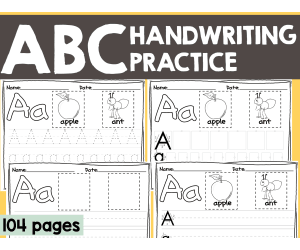
ABC Handwiting Practice
ELA, Writing, Handwriting, Preschool, Kindergarten, Grade 1, Worksheets & Printables, Worksheets
Practice handwriting with several pages of each letter in the alphabet. There are 4 pages of each letter with both upper and lowercase examples which begin with the student tracing the letter to freehand writing.
Author Cherry Workshop
Tags ABC, Handwriting, Vocabulary, Alphabet

Letter of the Week Letter H Printables Phonics Activities Pack
Phonics, Language Development, ELA, Pre-Reading, Kindergarten, Preschool, Homeschool Curriculum, Homeschool Templates, Grade 1, Centers, Activities, Crafts, Coloring Pages, Worksheets, Worksheets & Printables, Crosswords Puzzles, Dot To Dots, Mazes, Word Searches
Make learning the Letter H a hands-on adventure with this fun, no-prep phonics resource! Designed for preschool and kindergarten students, this Letter of the Week Letter H Pack features a mix of print-and-go worksheets and interactive Boom Cards that build early literacy and fine motor skills. With 78 printable pages and 31 digital Boom Cards , students will practice identifying, tracing, and using uppercase and lowercase H through movement, play, and visual learning. ✏️ What’s Included: 📄 Printable Worksheets Letter H Poster + 6 Visual Vocabulary Cards Booklet Cover + ‘About Me’ Page Tracing & Writing Uppercase and Lowercase H Letter H Sorting, Spinning (with review: I, C, K), and Finding Activities Drawing & Coloring the Letter H Sound Recognition for /a/, /s/, /t/, /n/, /p/, /i/, /c/ Mazes, Dot-to-Dot, Dab the Dots, Geoboard & Color by Code Visual Cutouts for Letter H Nursery Rhyme Link: Hickory Dickory Dock Word Family Practice Sheets: -an, -at, -ap, -in, -it, -ip Summary Sheet for Review 🎨 Crafts & Literacy Extras “I’m a Letter H Champ” Crown & Bracelet Mini Flipbook with Letter H Words & Visuals One-Page Visual Word Booklet Sight Word Flipbook Horse-Themed Finger Puppets (6 per page) Matching Stick Puppet Templates (4 per page) Letter H Word Wheel (6 Visual Vocabulary Sections) 💻 Boom Cards – 31 Digital Activities Uppercase and Lowercase H Formation & Recognition Letter H Name and Sound Practice Puzzle Matching: Uppercase and Lowercase H Drag-and-Drop Sorting Activities Visual Reveal Game (Letter H Pictures) Sentence Usage Practice: Capital H vs Lowercase h 🎯 Perfect For: Letter of the Week Curriculum Phonics & Fine Motor Practice Literacy Centers & Morning Work Small Group & Individual Support Homework or Home Learning ⭐ Bonus: Includes both US and British English spelling versions to support diverse classrooms. Give your students a strong start with this Letter H phonics and handwriting pack —designed to make early literacy fun, effective, and engaging!
Author Teach2Tell
Rating
Tags Letter H Activities, Lowercase Letters, Uppercase Letters, Letter Of The Week Letter H, Alphabet Worksheets Letter H, Preschool Letter H Printables, Kindergarten Letter H Activities, Phonics Practice Letter H, Uppercase And Lowercase Letter H, Horse Letter H Craft

Sentence Structure Supplementary Materials - Grammar Grades 1-2 (PDF)
ELA, Language Development, ESL, Grammar, Common Core, Resources for Teachers, Grade 1, 2, Teacher Tools, Lesson Plans, Outlines, Quizzes, Quizzes and Tests, Tests, Assessments, Worksheets & Printables, Worksheets
Sentence Structure Supplementary Materials Note: This download DOES NOT include the tests themselves. You can still make use of these materials without them but they are recommended. Download in a format of your choice in the "Links" section below. In the Supplementary Pack Interactive Ice Breakers: Fun, hands-on activities that get students thinking about adjectives right from the start. Guided Practice: Teacher-led exercises that reinforce the day’s lesson, ensuring students can confidently identify and use adjectives. Group and Partner Tasks: Collaborative activities that allow students to work together to solve problems, categorize adjectives, and create descriptive sentences. Independent Worksheets: Structured worksheets that provide individual practice and help solidify understanding of key concepts. Exit Tasks: Quick, reflective activities at the end of each lesson that assess understanding and encourage students to apply what they’ve learned. Links: Complete Sentences Sentence Fragments Subject of a Sentence Types of Sentence End Punctuation Google Docs Google Forms Google Slides PDF PPT Word Free Supplementary Materials Pack FULL CATALOG OF DOWNLOAD LINKS HERE Grade 1/2 Links: Capitalization and Punctuation Google Docs Google Forms Google Slides PDF PPT Word Free Supplementary Materials Pack Adjectives Google Docs Google Forms Google Slides PDF PPT Word Free Supplementary Materials Pack Nouns Google Docs Google Forms Google Slides PDF PPT Word Free Supplementary Materials Pack Pronouns Google Docs Google Forms Google Slides PDF PPT Word Free Supplementary Materials Pack Verbs Google Docs Google Forms Google Slides PDF PPT Word Free Supplementary Materials Pack Prefixes & Suffixes Google Docs Google Forms Google Slides PDF PPT Word Free Supplementary Materials Pack Sentence Structure Google Docs Google Forms Google Slides PDF PPT Word Free Supplementary Materials Pack Subject-Verb Agreement Google Docs Google Forms Google Slides PDF PPT Word Free Supplementary Materials Pack ELA Review Questions Overview Questions have three answer choices. There are a handful of pictures on each test for aesthetic purposes, as well as a review sheet covering most of the topics covered in the product. Introduction or Example Sheet Each topic will include an introduction or example sheet to go through first with your students. Full Answer Keys Full answer keys and sample responses are provided so no matter how busy you are, you know you're covered! In the Supplementary Pack Interactive Ice Breakers: Fun, hands-on activities that get students thinking about adjectives right from the start. Guided Practice: Teacher-led exercises that reinforce the day’s lesson, ensuring students can confidently identify and use adjectives. Group and Partner Tasks: Collaborative activities that allow students to work together to solve problems, categorize adjectives, and create descriptive sentences. Independent Worksheets: Structured worksheets that provide individual practice and help solidify understanding of key concepts. Exit Tasks: Quick, reflective activities at the end of each lesson that assess understanding and encourage students to apply what they’ve learned. For similar downloads and other frees, do check out Cored Group on TeachSimple.
Author Cored Education
Tags Elementary, Reading, Comprehension, Vocabulary, Answers, Ccss, Common Core, Spelling, Writing, Passages

The Executive Mastery Framework A Developmentally Scaffolding
STEM, Special Resources, Life Skills, Social Emotional Learning (SEL), Social Skills, Special Education Needs (SEN), Science, Technology, Computer Science, Engineering, Grade 1, 2, 3, 4, 5, 9, 10, 11, Worksheets & Printables, Flashcards, Workbooks, Worksheets, Word Problems, Teacher Tools, Lesson Plans, Quizzes and Tests, Quizzes, Tests
The Executive Mastery Framework: A Developmentally Scaffolding Curriculum for Neurodiverse Learners "In The Executive Mastery Framework: A Developmentally Scaffolding Curriculum for Neurodiverse Learners," you will find a digital workbook, guide for educators, and other resources that support executive function development in neurodiverse individuals. The 30-page workbook and teacher resource guide provide a new perspective by shifting away from deficit-based models to a neuro-affirming outlook; it equips teachers, parents, and professionals with usable tools and strategies to build external cognitive supports that develop into the internalized capability of neurodiverse individuals. You will discover in this curriculum: Phase 1: Core concepts of neurobiology, executive function challenges, and developmental scaffolding; Phase 2: Ten worksheets (age progression/ability) that assist neurodiverse individuals in developing somatic awareness, impulse control, task initiation, working memory, cognitive flexibility, organizational skills, metacognitive awareness, persistence, vocational skills, and self-advocacy; and Phase 3: Visual frameworks, flowcharts, answer keys with evaluator rubrics. The curriculum contains case studies, reflections and practitioner insights, as well as action-based methodologies such as backward chaining, cognitive offloading, and environmental prosthetics to help neurodivergent children succeed in all aspects of education, work, and life from Pre-K through adulthood. This resource is perfect for special education resources, homeschool ADHD curriculum, autism teaching tools, executive function activities, neurodiversity-affirming education, and for IEP/504 plan support. Why Schools/Parents Appreciate It: Neuroscience-Informed and Research-Based: Uses positive, scaffolded support (shifting from a traditional punitive, deficit-based model) that relies on neuroscience principles to support neurodivergent learners in developing authentic skills in an environment free of shame and frustration. Complete and Versatile: Includes comprehensive [theory and research], interactive [worksheets/visuals/case studies], and teacher resources for easy adaptation for specific learner needs such as ADHD task initiation or autism transition plans. Demonstrated Effectiveness through Case Studies: Real-life examples proving quick and/or dramatic change in many areas and reduced challenging behaviors (i.e. decreasing aggressiveness, reducing instances of "lazy," creating self-advocacy skills) — resulting in higher levels of self-esteem and improved academic performance. Progression through Developmentally Appropriate Stages for Future Success: Provides information supporting learners in developing co-regulation to full independence (from an early age) and preparing them for success post-school (e.g. self-advocacy portfolio). Support for Educators and Parents/Guardians through Time-Saving Ready-to-Use Resources: Provide educators with reflective/reflection-based/rubric-based resources that enable educators to create student autonomy, while minimizing planning time, hence creating fewer behavioural concerns and more engagement. Target Audience of This Curriculum: This Curriculum was designed for use with students who present Neurodiverse profiles. The key characteristics of these profiles include ADHD, autism, dyslexia, executive dysfunction, or NVLD. The curricula analyzed within this PDF have been organized according to developmental progression from Pre-K to 2nd Grade, 3rd to 5th Grade, Middle School/6th to 8th grade, and High School/9th to 12th grade and beyond. Pre-K to 2nd Grade: The focus on early childhood developmentally appropriate foundational learning skills which includes the topics of use of environmental prosthetics, somatic awareness (awareness of the body), impulse inhibition, and developing an ability to co-regulate (worksheets 1 - 2). This would be appropriate for a 4 to 8-year-old child who is either autistic or has ADHD and experiences difficulty with sensory predictability or emotional regulation. 3rd to 5th Grade: Students at this grade level should be practicing the skills of upper elementary school co-regulated navigation, working memory expansion, and task initiation (worksheets 3 - 4). This would be appropriate for any student who displays signs of experiencing transitional anxiety or experiencing a working memory bottleneck. Middle School/ 6th to 8th Grades: The students in this age group should be able to internalize their tooling, develop cognitive flexibility, and work on their organizational systems (worksheets 5 - 6). This would apply to an adolescent who would display signs of experiencing difficulties with social hierarchies or temporal discounting due to their ADHD or AuDHD profile. High School/ 9th to 12th and Transition to Adulthood: Students should be developing their metacognitive self-advocacy skills, time management skills, goal persistence, vocational navigation skills, and independence (worksheets 7 - 10). This would apply to any teen or young adult who is preparing to enter college, work, or request the need for accommodations under the Americans with Disabilities Act due to severe executive dysfunction. This curriculum can be used in a variety of settings including: special education classes, home schooling, therapy sessions, implementation of an IEP, or within an inclusive classroom setting, ages 4-20+. Copyright/Terms of Use : This resource is the property of Syed Hammad Rizvi and is only to be purchased and used for personal or one single classroom activity. You cannot change/distribute/sell (however you choose) any part of this resource and cannot publish this resource to the Internet so other may have the opportunity to download or view it. If you would like to provide a colleague with a copy of this resource, you may do so by purchasing another license through Teachsimple. Thank You for following the terms provided above This product is happy to be provided by Syed Hammad Rizvi
Author Creative Book Store
Rating
Tags ADHD, Autism, Neurodivergent, SpecialEducation, IEP, 504Plan, TeacherResources, SpecialEdTeacher, HomeschoolCurriculum, Dyslexia

2D Shapes Dot Painting Worksheets
Math, Geometry, Kindergarten, Preschool, Grade 1, Worksheets, Worksheets & Printables
With these shape dot painting pages, students can practice forming 2D shapes by using cotton swabs. These dot painting pages provide a new, fun and unique way for preschoolers and kindergartners to practice recognizing different 2D shapes. The hands on nature of these dotting pages allow students to stay engaged as they learn about each 2D shape. What is Included: Each shape worksheet features the shape's name at the bottom for students to read or trace. The are 13 different shapes in this packet: rectangle, square, circle, oval, trapezoid, triangle, pentagon, hexagon, octagon, rhombus, diamond, heart and star. There are two different sets of shape dot painting pages. One dot painting page lets students trace the shape's name and the other simply names the shape. How to Use: Students will use cotton swabs to dot the perimeter of each 2D shape. If cotton swabs are not available, or the teacher wishes to use a different method, students can use their fingers to dot each circle or small stickers to cover each dot. Where to Use: Math or Art Center - Simply place these pages with cotton swabs and paint in the desired center for students to complete. Morning Work - These worksheets are perfect for students to work on while they wait for the rest of their classmates arrive to class. Quiet Time Activity - This is a great activity for non-nappers in a pre-k room to work on while their classmates sleep. Sub plans - These are great worksheets to leave for a sub, as they are easy to assign and students will love completing this activity ! Skills Assessed: These dot painting pages allow students to identify each 2D shape as well as practice fine motor skills while placing dots to outline each shape. These pages also assess the student's ability to to trace letters to spell each shape's name. More Shape Activities 2D and 3D Shape Sorting Activity Apple Shapes Sorting Mats
Author The Connett Connection
Tags 2D Shapes, Math Center, Shapes Dot Painting, Dot Painting, Geometry

Adaptive Executive Functioning Mastery: A K-Adult Scaffolding Frame
ELA, Resources for Teachers, Classroom Management, Community Building, Social Emotional Learning (SEL), Special Resources, Life Skills, Social Skills, Special Education Needs (SEN), Speech Therapy, Grade 1, 2, 3, 4, 5, 10, 11, Worksheets & Printables, Worksheets, Workbooks, Teacher Tools, Assessments, Diagrams, Lesson Plans, Presentations, Outlines, Literacy Readers
The Adaptive Executive Functioning Mastery: A K-Adult Scaffolding Framework contains everything needed for educators to implement effective executive functioning (working memory, inhibitory control, cognitive flexibility, task initiation, time blindness, metacognition, etc.) in all levels of education from kindergarten through adult. The workbook comprises: • In-depth theory chapters on cognitive load, dynamic scaffolding, and the function of the prefrontal cortex. • 10 fillable student worksheets with real life case studies. • Teacher/facilitator implementation guide with teacher supports such as fading protocols. • Printable visuals (Neuro-Developmental Continuum; Adaptive Scaffolding Matrix; Emotional Regulation Loop). • Answer Key for assessments. An essential part of this workbook is that it will help to reduce environmental friction and support the autonomous development of exobrains that fade into an internal mastery. It is suitable for use in special education, general education, homeschooling, college support programs, and/or in the coaching of adults. This digital download is immediately available via PDF format as well as in a format that may be accessed using Notion. No preparation required. Why Parents and Schools Are Fans : Evidence-based but usable immediately: Break down the latest neuroscience (prefrontal cortex, cognitive load theory, Vygotsky ZPD) into zero-prep, easy-to-use worksheets and visuals for teachers to use on Monday. Neuro-affirmative and compassionate: Replace "laziness" and "try harder" with practical scaffolding that respects how the brain is wired so that the number of meltdowns, anxiety, and learned helplessness decreases. Built-in fading and autonomy: The Bridge-and-Fade Protocol has 4 phases with clearly defined transitional points will reduce dependence on the scaffolding of adults for each student to develop independence and report the skill as internalized. Saves time in planning: Diagnostic answer keys, visual resources, and Notion/PDF hybrid options will save teachers hours of planning for busy IEPs, 504s, and RTI meetings. Versatile across the lifespan: One purchase will allow the entire school to utilize the tools (PreK-12 and adult transitions) or a family will be able to use the tools with their child from kindergarten through college and into their career. Target Audiences and Student Classifications : This Framework has been purposely created for life cycle growth from beginning of time with K-Adult. This Framework identifies all target audiences as follows: Early Childhood/Primary (ages 4-9): Pre-K-3 Special ed., and needs-based learning support. Elementary to Middle Schools (Ages 6-13): 4-8 Special Needs, RtI 2nd/3rd Tier (Academic Interventions) Classrooms, ADHD/Autism support classrooms. High Schools (Ages 14-18): 9-12 Intervention Support Classrooms, Study Skills classrooms, Transition to College programs. Adults & College Students (ages 19+) - Univesity Disability Services, Adult ADHD Coaches, Workplace Executive Skill Training, Homeschool High School/College Preparation. Cross-setting Users: Special Needs and General Education Teachers working with Neurodivergent Students, School Guidance Counselors, Occupational/Physical Therapists, Parents of Neurodivergent Students, Corporate Neurodiversity Trainers/Service Providers. Copyright / Terms of Use: Syed Hammad Rizvi holds copyrights to this book. This resource is for personal use only and may only be used in one classroom at a time. You may not modify, redistribute or sell any part of this resource. In other words, you cannot upload this resource to the Internet for others to find and download publicly. If you would like to share this resource with other educators, you must purchase additional licenses through Teachsimple. Thank you for being respectful of these terms of use. Syed Hammad Rizvi is excited to offer this product.
Author Creative Book Store
Rating
Tags ExecutiveFunctioning, ADHDResources, Neurodivergent, SpecialEducation, ExecutiveFunction, ADHDWorksheets, TeacherResources, IEPTools, 504Plan, Neurodiversity

Silly Dragon Crafts - Coloring - Bookmarks - Geometric Designs
Creative Arts, Geometry, Math, Shapes, Early Math, Patterns, Kindergarten, Preschool, Grade 1, 2, 3, Crafts, Activities, Centers, Projects, Coloring Pages, Worksheets, Worksheets & Printables
These dragons are so silly and so much fun for kids to color. As is this entire dragon crafts activity pack. Kids absolutely love these dragons as well with their simple, thick outlines, they are a great way to give your students a break from their work and also be used as a reward for good behavior and an assignment done well. Since so many kids nowadays love dinosaurs and dragons, I thought it would be fun to create a dragon crafts activity pack. The simple drawings are perfect for preschoolers and prereaders. The bookmark designs, which are smaller and more complex, can be enjoyed by older students as well. There are five different dragons on 8.5 x 11 for a total of 10 posters - 5 of the dragons contain a colored example that children can follow to help with color recognition. These do not have a color border. The other 5 dinosaurs are black and white by themselves and contain a colored border. Once colored, the posters can be used to decorate bulletin boards, classrooms, and home refrigerators. They could even be framed and given as gifts! They can be printed and used again and again! In addition, there are 6 double-sided bookmarks with different geometric designs, patterns, and dragon pictures for coloring and printing. Geometry is math, so without realizing it, when your students color in the geometric designs, they are in essence practicing math skills. You can ask your students to identify the shapes and patterns on the bookmarks while they are coloring. You can also teach about shapes and patterns while they are keeping their hands busy coloring them. This can be super helpful in reducing distractibility. The geometric designs are great for developing familiarity with shapes and patterns. Plus, bookmarks make great gifts and encourage reading. The format is pdf downloadable and there are 15 pages, including the cover page. There is no need for an answer key as this dragon craft activity pack is pure fun with a little arts and crafts and math snuck in.
Author Homeschooling Dietitian Mom
Tags Dragon, Dragon Craft, Geometry, Dragon Coloring Sheet, Color Poster, Math, Crafts, Craft Activities, Cute Bulletin Board, Groovy Bulletin Board
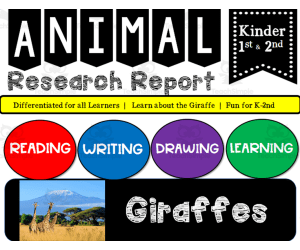
Zoo Animal Research Writing Project on GIRAFFES for K-2nd Grade
Life Studies, ELA, Reading, Writing, Science, Life Sciences, Animals, Research, Kindergarten, Grade 1, 2, Lesson Plans, Teacher Tools, Worksheets & Printables, Worksheets
Animal Research Writing Project on Giraffes for Kindergarten - 2nd Grade This engaging informational writing project teaches students key facts about giraffes while building research, reading, and writing skills. With 19 pages of activities, this unit will guide learners to read age-appropriate information on giraffe traits and habitats, collect important details, organize notes, practice writing sentences, and create a mini-book report. The materials incorporate several colorful photographs, drawing prompts, differentiated graphic organizers and writing pages to accommodate various ability levels. Students will strengthen literacy abilities as they read for understanding, summarize main points, compose organized paragraphs, and share their knowledge. Appendix includes bonus units on additional animals. The giraffe unit can be implemented in small groups or whole class to bolster research skills. Writing templates scaffold the process for emerging writers by providing sentence starters, self-checking features and festive design. Teachers appreciate the ready-to-use package covering reading, note-taking, drafting, illustrating, and publishing. Engage your class in meaningful informational writing with this standards-based project. For additional Zoo Animal reports, click on the following links below: Animal Research Writing Project on TIGERS for K-2nd Grade Animal Research Writing Project on MONKEYS for K-2nd Grade Animal Research Writing Project on PANDAS for K-2nd Grade Animal Research Writing Project on HIPPOS for K-2nd Grade Animal Research Writing Project on ELEPHANTS for K-2nd Grade Animal Research Writing Project on GIRAFFES for K-2nd Grade Here are even more informational resources on report writing for OCEAN ANIMALS. Click on the links below: Animal Research Writing Project on WHALES for K-2nd Grade Animal Research Writing Project on the OCTOPUS for K-2nd Grade Animal Research Writing Project on SEA TURTLES for K-2nd Grade Animal Research Writing Project on ORCAS for K-2nd Grade Animal Research Writing Project on the SHELLFISH for K-2nd Grade Animal Research Writing Project on DOLPHINS for K-2nd Grade Animal Research Writing Project on SEALS for K-2nd Grade
Author K-5 Treasures
Tags Animal Research, Informational Writing, Writing Report, Giraffes, Report On Giraffes, Zoo Animals, Report On Animals, Report On Zoo Animals, 1st Grade Writing, 2nd Grade Writing

Guided Reading Level H - The Story of the Wheel
ELA, Resources for Teachers, Reading Comprehension, Reading, Language Development, Vocabulary, Engineering, Technology, Science, Physics, Kindergarten, Grade 1, 2, Worksheets & Printables, Worksheets, Teacher Tools, Centers, Activities, Literacy Readers, Quizzes, Quizzes and Tests, Assessments
This Guided Reading Book - The Story of the Wheel (Level H) includes: Guided Reading Color Label (front cover x1) This is a quick way to match the book’s demands to what students can generally handle.. The overall goal is to use the level/color to pick books for several smaller groups. To qualify for a certain level, a student is expected to read a book from that level with about 90–94% accuracy. If a student is consistently accurate and understands, move up a level. If the student is struggling at that level, drop down and add more support. Each student will improve at completely different rates, but it is generally one of the best ways to check progress across the class. DOWNLOAD THE CATALOG TO VIEW ALL GUIDED READING BOOKS AVAILABLE (SORTED LEVELS A-Z) Pre-Reading Question (x1) Teacher asks the prompt aloud, can be while showing the cover or first page. Students share what they already know, or make educated guesses from the cover. Prompt them to use the target vocabulary. Write some of their responses on the board to look back at during the reading. Vocabulary Words (x5) Introduce the five words, best doing it one at a time. Start by saying it, while students repeat and then see if anyone knows what it means before reading further. Read through the meaning and try to briefly connect each word to a picture or gesture so it’s meaningful. Ask students to flip through the book pages and point to where they see each of the vocabulary words. While reading the book pause upon coming across one of the vocab words or read the sentence twice to make sure students understand the word has appeared. Optional: Ask students to raise hands whenever they see/hear one of the new words. Guided Reading Pages (x10) Check the book snapshot (below) for: primary topic - do you need to prep extra reading or intro materials on this? what is taught best - decide on 1-2 bullets to focus on, use the prompt or words provided here for best results. learning goals - what you are checking for students to be able to do after the session, elicit answers using prompts or words provided. key vocabulary (see section above). questions overview - so you know what is coming up and if you need to prep extra materials to assist understanding. Run the lesson You may have already looked at a few of the pages together, but you can show them some of the pictures again first to set meaning. Depending on how much time you have and how familiar your students are with guided reading class, you may want to read the book aloud first with the group first. Students whisper or partner read, while you listen in. If time, do it as a group, one student reading a page each. Use the guided page’s prompts to coach: “Check the picture / does it make sense?” “Point under the words / try the first sound” “Reread the sentence smoothly”. Try to focus more on one student per session (rotating every time), so you can work out if they are ready to move up or need to move down a level. Comprehension Questions (back cover x3) This is your way to check that students didn’t just say the words, but actually understood the text. First, let students answer by pointing to the page/picture and saying a short sentence. After any answer, follow with: “Show me where you found that in the text.” In bigger groups, have partners answer first (10–20 seconds), then call on 2–3 students to share. Differentiation tips: Emerging speakers/struggling readers: oral + pointing On-level: oral in a full sentence Higher: one written sentence or draw + label Book Snapshot Title: The Story of the Wheel Genre: Nonfiction (informational) Subject: Science (Engineering / Simple Machines) Primary Topic: How wheels changed over time and how they work Estimated Guided Reading Level (A–Z): H What This Book Teaches Best What wheels are and what they help people do: move heavy things with less effort. How wheels changed over time (from heavy stone/wood wheels to spoked wheels to modern rubber tires). Why different wheels are designed differently for different jobs (tractor treads for mud; thin bicycle wheels for speed; small wheels for gliding). That not all wheels are for travel—gears are wheels with teeth that help machines move. Learning Goals Students will explain what wheels are used for using a detail from the text. Students will describe how the first wheels were made long ago, according to the book. Students will explain why spoked wheels helped carts move faster using the book’s comparison. Students will describe how treads help tractor wheels move through thick, wet mud. Students will identify one way gears are different from travel wheels and tell what gears do in machines. Key Vocabulary From the Text spokes — thin parts connecting the center to the outside. oxen — strong animals that pull heavy loads. rubber — stretchy material used to make tires. treads — deep grooves that help a tire grip ground. gears — wheels with teeth that help machines move. Discussion Prompts Pre-reading question: How do you think wheels help people move things more easily? Comprehension questions: What does the book say wheels are used for? What were the very first wheels made from long ago? What are gears, and what do they help machines do? Printing Tips 1. Best Printing Method (Recommended) “Booklet” Printing (Best if Available) If your printer or PDF viewer supports Booklet Printing , use this. Settings to use: Print mode: Booklet Paper size: Letter or A4 (either works) Orientation: Landscape Print on both sides: Yes Flip on: Short edge Scaling: Fit to printable area Booklet subset: First test: Front sides only Then: Back sides only This will automatically: Pair pages correctly Put the cover on the outside Align everything for folding After printing, fold in half and staple along the spine . 2. If “Booklet” Printing Is NOT Available You can still print this correctly with manual duplex printing . Step-by-step: Open the PDF. Choose Print . Set: Orientation: Landscape Pages per sheet: 1 Print on both sides: Yes Flip on: Short edge Print all pages . Because each PDF page already contains two facing book pages, the result will still fold cleanly into a book. Thousands of Cored Education products are included with your TeachSimple membership. Download links and encyclopedia index available here.
Author Cored Education
Rating
Tags Vocabulary, Reading Comprehension, Reading Passages, Leveled Reading, Nonfiction, Reading, Guided Reading, Physics, Engineering, Technology

Missing Addend Worksheets Domino|Missing AddendNumbers Part Part Whole
Math, Addition, Addition and Subtraction, Calculus, Basic Operations, Early Math, Counting, Numbers, Kindergarten, Preschool, Grade 1, 2, 3, Worksheets & Printables, Worksheets, Activities, Centers
This interactive and attractive set Missing Addend Worksheets Domino 20 Pages learners develop their original Missing Addend Worksheets Domino this set contains 20 pages in this set, each in each a different Digraphs Missing Addend Worksheets Domino of dedicated Missing Addend Worksheets Domino Pagesto ensure a fun and structured approach to using a fun and type of work that useful; Each card is fun this edited set of Missing Addend Worksheets Domino is built in an elegant style that attracts attention this interactive and attractive set of Missing Addend Worksheets Domino designed to help young learners develop their original Missing Addend Worksheets Domino skills throughMissing Addend Worksheets Domino sexercises This set contains 20 pages. these printable Worksheets offer useful courses, this provides a useful course-rich practice, it is designed to help using resource grade 2 easily to learn about activities Missing Addend Worksheets Domino worksheets a fun and interactive manner. A collaborative learning activity added students. PDF format
Author LAMO
Rating
Tags Math, Basic Operations, Activities, Worksheets, Centers
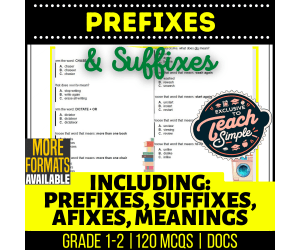
Prefixes and Suffixes Practice Questions - Grades 1-2 Grammar (Docs)
ELA, Language Development, ESL, Grammar, Common Core, Resources for Teachers, Grade 1, 2, Worksheets & Printables, Worksheets, Assessments, Teacher Tools, Tests, Quizzes and Tests, Centers, Activities
Prefixes and Suffixes Grammar Practice MCQS: 8 lessons, 120 MCQS, 35 pages ELA MCQS Overview: In this series of lessons, students will embark on an engaging exploration of the grammar skills that bring our language to life. These lessons are designed to help students identify, understand, and effectively use language arts skills in their writing and speech. Used with the free supplementary materials available for all topics, each lesson builds on the last, offering a mix of direct instruction, interactive group activities, and independent practice. Through fun and creative tasks, students will learn how to recognize grammar in sentences, understand their role in sentences and use them to enhance their own writing and speech. Prefixes and Suffixes Overview: Includes: Intro to Prefixes Intro to Suffixes Forming Suffixes Determining Affix Word Meaning Docs Version This is the Docs editable and fillable version. This download is available in GOOGLE Docs, GOOGLE Forms, GOOGLE Slides. PDF, PPT, WORD, check the links below for more details. FULL CATALOG OF DOWNLOAD LINKS HERE Grade 1/2 Links: Capitalization and Punctuation Google Docs Google Forms Google Slides PDF PPT Word Free Supplementary Materials Pack Adjectives Google Docs Google Forms Google Slides PDF PPT Word Free Supplementary Materials Pack Nouns Google Docs Google Forms Google Slides PDF PPT Word Free Supplementary Materials Pack Pronouns Google Docs Google Forms Google Slides PDF PPT Word Free Supplementary Materials Pack Verbs Google Docs Google Forms Google Slides PDF PPT Word Free Supplementary Materials Pack Prefixes & Suffixes Google Docs Google Forms Google Slides PDF PPT Word Free Supplementary Materials Pack Sentence Structure Google Docs Google Forms Google Slides PDF PPT Word Free Supplementary Materials Pack Subject-Verb Agreement Google Docs Google Forms Google Slides PDF PPT Word Free Supplementary Materials Pack ELA Review Questions Overview Questions have three answer choices. There are a handful of pictures on each test for aesthetic purposes, as well as a review sheet covering most of the topics covered in the product. Introduction or Example Sheet Each topic will include an introduction or example sheet to go through first with your students. Full Answer Keys Full answer keys and sample responses are provided so no matter how busy you are, you know you're covered! In the Supplementary Pack Interactive Ice Breakers: Fun, hands-on activities that get students thinking about adjectives right from the start. Guided Practice: Teacher-led exercises that reinforce the day’s lesson, ensuring students can confidently identify and use adjectives. Group and Partner Tasks: Collaborative activities that allow students to work together to solve problems, categorize adjectives, and create descriptive sentences. Independent Worksheets: Structured worksheets that provide individual practice and help solidify understanding of key concepts. Exit Tasks: Quick, reflective activities at the end of each lesson that assess understanding and encourage students to apply what they’ve learned. For similar downloads and other frees, do check out Cored Group on TeachSimple.
Author Cored Education
Tags Elementary, Reading, Comprehension, Vocabulary, Answers, Ccss, Common Core, Spelling, Writing, Digital Centers
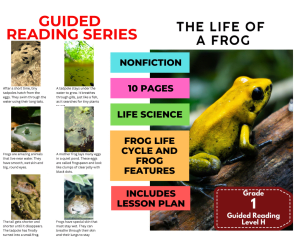
Guided Reading Level H - The Life of a Frog (with Lesson Plan)
ELA, Resources for Teachers, Reading Comprehension, Reading, Science, Animals, Life Sciences, Pre-Reading, Language Development, Vocabulary, Grade 1, 2, 3, Worksheets & Printables, Worksheets, Teacher Tools, Centers, Activities, Literacy Readers, Quizzes, Quizzes and Tests, Assessments, Lesson Plans
This Guided Reading Book - The Life of a Frog (Level H) with lesson plan includes: Guided Reading Color Label (front cover x1) This is a quick way to match the book’s demands to what students can generally handle.. The overall goal is to use the level/color to pick books for several smaller groups. To qualify for a certain level, a student is expected to read a book from that level with about 90–94% accuracy. If a student is consistently accurate and understands, move up a level. If the student is struggling at that level, drop down and add more support. Each student will improve at completely different rates, but it is generally one of the best ways to check progress across the class. DOWNLOAD THE CATALOG TO VIEW ALL GUIDED READING BOOKS AVAILABLE (SORTED LEVELS A-Z) Pre-Reading Question (x1) Teacher asks the prompt aloud, can be while showing the cover or first page. Students share what they already know, or make educated guesses from the cover. Prompt them to use the target vocabulary. Write some of their responses on the board to look back at during the reading. Vocabulary Words (x5) Introduce the five words, best doing it one at a time. Start by saying it, while students repeat and then see if anyone knows what it means before reading further. Read through the meaning and try to briefly connect each word to a picture or gesture so it’s meaningful. Ask students to flip through the book pages and point to where they see each of the vocabulary words. While reading the book pause upon coming across one of the vocab words or read the sentence twice to make sure students understand the word has appeared. Optional: Ask students to raise hands whenever they see/hear one of the new words. Guided Reading Pages (x10) Check the book snapshot (below) for: primary topic - do you need to prep extra reading or intro materials on this? what is taught best - decide on 1-2 bullets to focus on, use the prompt or words provided here for best results. learning goals - what you are checking for students to be able to do after the session, elicit answers using prompts or words provided. key vocabulary (see section above). questions overview - so you know what is coming up and if you need to prep extra materials to assist understanding. Run the lesson You may have already looked at a few of the pages together, but you can show them some of the pictures again first to set meaning. Depending on how much time you have and how familiar your students are with guided reading class, you may want to read the book aloud first with the group first. Students whisper or partner read, while you listen in. If time, do it as a group, one student reading a page each. Use the guided page’s prompts to coach: “Check the picture / does it make sense?” “Point under the words / try the first sound” “Reread the sentence smoothly”. Try to focus more on one student per session (rotating every time), so you can work out if they are ready to move up or need to move down a level. Comprehension Questions (back cover x3) This is your way to check that students didn’t just say the words, but actually understood the text. First, let students answer by pointing to the page/picture and saying a short sentence. After any answer, follow with: “Show me where you found that in the text.” In bigger groups, have partners answer first (10–20 seconds), then call on 2–3 students to share. Differentiation tips: Emerging speakers/struggling readers: oral + pointing On-level: oral in a full sentence Higher: one written sentence or draw + label Book Snapshot Title: The Life of a Frog Genre: Nonfiction (informational life cycle) Subject: Life Science + Reading (Informational Text) Primary Topic: Frog life cycle and frog features Estimated Guided Reading Level (A–Z): H What This Book Teaches Best Explains where frogs live and describes basic frog traits (smooth, wet skin; big, round eyes; living near water). Teaches the frog life cycle in clear steps: eggs (frogspawn) → tadpoles → legs grow → tail disappears → small frog. Shows how a tadpole lives and grows in water, including breathing through gills and eating tiny plants. Describes how frogs breathe (through skin and lungs) and how they get food (long, sticky tongue catching insects). Connects body parts to movement (strong back legs help frogs hop and jump high). Learning Goals Students will describe where frogs live and name physical traits the text mentions. Students will explain what frog eggs are called and describe what they look like. Students will retell the main stages of a frog’s life from eggs to a small frog. Students will describe how tadpoles move, breathe, and find food in the water. Students will explain how the frog’s body changes as legs grow and the tail disappears. Students will use text details to describe how a frog hunts and how it jumps. Key Vocabulary From the Text frogspawn — frog eggs that look like jelly. tadpoles — baby frogs that live in water and have tails. gills — body parts that help an animal breathe underwater. lungs — body parts used for breathing air. insects — small animals a frog can catch and eat. Discussion Prompts Pre-reading question: What changes do you think happen as a tadpole grows into a frog? Comprehension questions: Where does a mother frog lay many eggs, according to the text? Comprehension questions: What do tiny tadpoles use to swim through the water? Comprehension questions: What happens to the tadpole’s tail as it turns into a small frog? Printing Tips 1. Best Printing Method (Recommended) “Booklet” Printing (Best if Available) If your printer or PDF viewer supports Booklet Printing , use this. Settings to use: Print mode: Booklet Paper size: Letter or A4 (either works) Orientation: Landscape Print on both sides: Yes Flip on: Short edge Scaling: Fit to printable area Booklet subset: First test: Front sides only Then: Back sides only This will automatically: Pair pages correctly Put the cover on the outside Align everything for folding After printing, fold in half and staple along the spine . 2. If “Booklet” Printing Is NOT Available You can still print this correctly with manual duplex printing . Step-by-step: Open the PDF. Choose Print . Set: Orientation: Landscape Pages per sheet: 1 Print on both sides: Yes Flip on: Short edge Print all pages . Because each PDF page already contains two facing book pages, the result will still fold cleanly into a book. Thousands of Cored Education products are included with your TeachSimple membership. Download links and encyclopedia index available here.
Author Cored Education
Rating
Tags Reading Comprehension, Reading Passages, Reading, Guided Reading, Guided Reading Lesson Plan, Guided Reading Activity, Pre-reading, Science Lesson Plans, Animals, Frog Life Cycle
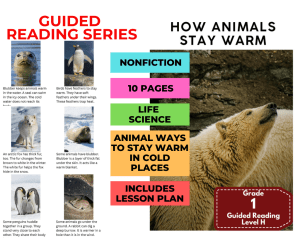
Guided Reading Level H - How Animals Stay Warm (with Lesson Plan)
ELA, Resources for Teachers, Reading Comprehension, Reading, Animals, Life Sciences, Science, Pre-Reading, Language Development, Vocabulary, Kindergarten, Grade 1, 2, Worksheets & Printables, Worksheets, Teacher Tools, Centers, Activities, Literacy Readers, Quizzes, Quizzes and Tests, Assessments
This Guided Reading Book - How Animals Stay Warm (Level H) with lesson plan includes: Guided Reading Color Label (front cover x1) This is a quick way to match the book’s demands to what students can generally handle.. The overall goal is to use the level/color to pick books for several smaller groups. To qualify for a certain level, a student is expected to read a book from that level with about 90–94% accuracy. If a student is consistently accurate and understands, move up a level. If the student is struggling at that level, drop down and add more support. Each student will improve at completely different rates, but it is generally one of the best ways to check progress across the class. DOWNLOAD THE CATALOG TO VIEW ALL GUIDED READING BOOKS AVAILABLE (SORTED LEVELS A-Z) Pre-Reading Question (x1) Teacher asks the prompt aloud, can be while showing the cover or first page. Students share what they already know, or make educated guesses from the cover. Prompt them to use the target vocabulary. Write some of their responses on the board to look back at during the reading. Vocabulary Words (x5) Introduce the five words, best doing it one at a time. Start by saying it, while students repeat and then see if anyone knows what it means before reading further. Read through the meaning and try to briefly connect each word to a picture or gesture so it’s meaningful. Ask students to flip through the book pages and point to where they see each of the vocabulary words. While reading the book pause upon coming across one of the vocab words or read the sentence twice to make sure students understand the word has appeared. Optional: Ask students to raise hands whenever they see/hear one of the new words. Guided Reading Pages (x10) Check the book snapshot (below) for: primary topic - do you need to prep extra reading or intro materials on this? what is taught best - decide on 1-2 bullets to focus on, use the prompt or words provided here for best results. learning goals - what you are checking for students to be able to do after the session, elicit answers using prompts or words provided. key vocabulary (see section above). questions overview - so you know what is coming up and if you need to prep extra materials to assist understanding. Run the lesson You may have already looked at a few of the pages together, but you can show them some of the pictures again first to set meaning. Depending on how much time you have and how familiar your students are with guided reading class, you may want to read the book aloud first with the group first. Students whisper or partner read, while you listen in. If time, do it as a group, one student reading a page each. Use the guided page’s prompts to coach: “Check the picture / does it make sense?” “Point under the words / try the first sound” “Reread the sentence smoothly”. Try to focus more on one student per session (rotating every time), so you can work out if they are ready to move up or need to move down a level. Comprehension Questions (back cover x3) This is your way to check that students didn’t just say the words, but actually understood the text. First, let students answer by pointing to the page/picture and saying a short sentence. After any answer, follow with: “Show me where you found that in the text.” In bigger groups, have partners answer first (10–20 seconds), then call on 2–3 students to share. Differentiation tips: Emerging speakers/struggling readers: oral + pointing On-level: oral in a full sentence Higher: one written sentence or draw + label Book Snapshot Title: How Animals Stay Warm Genre: Nonfiction (informational) Subject: Life Science Primary Topic: Animal ways to stay warm in cold places Estimated Guided Reading Level (A–Z): H What This Book Teaches Best Animals must stay warm to live in places with snow and ice. Body coverings can help animals stay warm (thick fur and feathers that trap heat). Some animals use body fat for warmth (blubber acts like a “warm blanket” and keeps cold water from reaching the body). Animals can use behaviors to stay warm (penguins huddle close and share body heat; some animals go underground; some sit in the sun). Learning Goals Explain why animals must stay warm to live in snow and ice. Describe how thick fur helps keep warm air near an animal’s skin. Describe how blubber helps animals stay warm, including in icy water. Describe how feathers help birds stay warm by trapping heat. Identify actions animals take to stay warm (huddling, going into a burrow, sitting in the sun). Key Vocabulary From the Text arctic — very cold, snowy place. blubber — thick fat under skin that helps keep warm. feathers — soft bird covering that helps trap heat. huddle — stand very close together in a group. burrow — a deep hole an animal digs to go underground. Discussion Prompts Pre-reading question: What are some ways animals might stay warm when it is very cold? Comprehension questions: Why must animals stay warm to live in snow and ice? Comprehension questions: How does blubber help a seal swim in the icy ocean? Comprehension questions: What do penguins do in a group to stay warm? Printing Tips 1. Best Printing Method (Recommended) “Booklet” Printing (Best if Available) If your printer or PDF viewer supports Booklet Printing , use this. Settings to use: Print mode: Booklet Paper size: Letter or A4 (either works) Orientation: Landscape Print on both sides: Yes Flip on: Short edge Scaling: Fit to printable area Booklet subset: First test: Front sides only Then: Back sides only This will automatically: Pair pages correctly Put the cover on the outside Align everything for folding After printing, fold in half and staple along the spine . 2. If “Booklet” Printing Is NOT Available You can still print this correctly with manual duplex printing . Step-by-step: Open the PDF. Choose Print . Set: Orientation: Landscape Pages per sheet: 1 Print on both sides: Yes Flip on: Short edge Print all pages . Because each PDF page already contains two facing book pages, the result will still fold cleanly into a book. Thousands of Cored Education products are included with your TeachSimple membership. Download links and encyclopedia index available here.
Author Cored Education
Rating
Tags Reading Comprehension, Reading Passages, Reading, Guided Reading, Guided Reading Lesson Plan, Guided Reading Activity, Pre-reading, Vocabulary, Animals, Life Science

Subject-Verb Agreement Supplementary Materials - Grades 1-2 (PDF)
ELA, Language Development, ESL, Grammar, Common Core, Grade 1, 2, Teacher Tools, Lesson Plans, Outlines, Quizzes, Quizzes and Tests, Tests, Assessments, Worksheets, Worksheets & Printables
Subject-Verb Agreement Supplementary Materials Note: This download DOES NOT include the tests themselves. You can still make use of these materials without them but they are recommended. Download in a format of your choice in the "Links" section below. In the Supplementary Pack Interactive Ice Breakers: Fun, hands-on activities that get students thinking about adjectives right from the start. Guided Practice: Teacher-led exercises that reinforce the day’s lesson, ensuring students can confidently identify and use adjectives. Group and Partner Tasks: Collaborative activities that allow students to work together to solve problems, categorize adjectives, and create descriptive sentences. Independent Worksheets: Structured worksheets that provide individual practice and help solidify understanding of key concepts. Exit Tasks: Quick, reflective activities at the end of each lesson that assess understanding and encourage students to apply what they’ve learned. Subject-Verb Agreement Overview: Includes: Intro to Subject-Verb Agreement Match Subject to Verb Match Verb to Subject Additional Practice Google Docs Google Forms Google Slides PDF PPT Word Free Supplementary Materials Pack FULL CATALOG OF DOWNLOAD LINKS HERE Grade 1/2 Links: Capitalization and Punctuation Google Docs Google Forms Google Slides PDF PPT Word Free Supplementary Materials Pack Adjectives Google Docs Google Forms Google Slides PDF PPT Word Free Supplementary Materials Pack Nouns Google Docs Google Forms Google Slides PDF PPT Word Free Supplementary Materials Pack Pronouns Google Docs Google Forms Google Slides PDF PPT Word Free Supplementary Materials Pack Verbs Google Docs Google Forms Google Slides PDF PPT Word Free Supplementary Materials Pack Prefixes & Suffixes Google Docs Google Forms Google Slides PDF PPT Word Free Supplementary Materials Pack Sentence Structure Google Docs Google Forms Google Slides PDF PPT Word Free Supplementary Materials Pack Subject-Verb Agreement Google Docs Google Forms Google Slides PDF PPT Word Free Supplementary Materials Pack ELA Review Questions Overview Questions have three answer choices. There are a handful of pictures on each test for aesthetic purposes, as well as a review sheet covering most of the topics covered in the product. Introduction or Example Sheet Each topic will include an introduction or example sheet to go through first with your students. Full Answer Keys Full answer keys and sample responses are provided so no matter how busy you are, you know you're covered! For similar downloads and other frees, do check out Cored Group on TeachSimple.
Author Cored Education
Tags Elementary, Reading, Comprehension, Vocabulary, Answers, Ccss, Common Core, Spelling, Writing, Passages
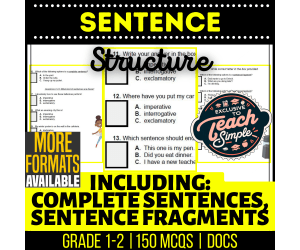
Sentence Structure Practice Questions - Grades 1-2 Grammar (Docs)
ELA, Language Development, ESL, Grammar, Common Core, Resources for Teachers, Grade 1, 2, Worksheets & Printables, Worksheets, Assessments, Teacher Tools, Tests, Quizzes and Tests, Centers, Activities
Sentence Structure Grammar Practice MCQS: 10 lessons, 150 MCQS, 43 pages ELA MCQS Overview: In this series of lessons, students will embark on an engaging exploration of the grammar skills that bring our language to life. These lessons are designed to help students identify, understand, and effectively use language arts skills in their writing and speech. Used with the free supplementary materials available for all topics, each lesson builds on the last, offering a mix of direct instruction, interactive group activities, and independent practice. Through fun and creative tasks, students will learn how to recognize grammar in sentences, understand their role in sentences and use them to enhance their own writing and speech. Sentence Structure Overview: Includes: Complete Sentences Sentence Fragments Subject of a Sentence Types of Sentence End Punctuation Docs Version This is the Docs editable and fillable version. This download is available in GOOGLE Docs, GOOGLE Forms, GOOGLE Slides. PDF, PPT, WORD, check the links below for more details. FULL CATALOG OF DOWNLOAD LINKS HERE Grade 1/2 Links: Capitalization and Punctuation Google Docs Google Forms Google Slides PDF PPT Word Free Supplementary Materials Pack Adjectives Google Docs Google Forms Google Slides PDF PPT Word Free Supplementary Materials Pack Nouns Google Docs Google Forms Google Slides PDF PPT Word Free Supplementary Materials Pack Pronouns Google Docs Google Forms Google Slides PDF PPT Word Free Supplementary Materials Pack Verbs Google Docs Google Forms Google Slides PDF PPT Word Free Supplementary Materials Pack Prefixes & Suffixes Google Docs Google Forms Google Slides PDF PPT Word Free Supplementary Materials Pack Sentence Structure Google Docs Google Forms Google Slides PDF PPT Word Free Supplementary Materials Pack Subject-Verb Agreement Google Docs Google Forms Google Slides PDF PPT Word Free Supplementary Materials Pack ELA Review Questions Overview Questions have three answer choices. There are a handful of pictures on each test for aesthetic purposes, as well as a review sheet covering most of the topics covered in the product. Introduction or Example Sheet Each topic will include an introduction or example sheet to go through first with your students. Full Answer Keys Full answer keys and sample responses are provided so no matter how busy you are, you know you're covered! In the Supplementary Pack Interactive Ice Breakers: Fun, hands-on activities that get students thinking about adjectives right from the start. Guided Practice: Teacher-led exercises that reinforce the day’s lesson, ensuring students can confidently identify and use adjectives. Group and Partner Tasks: Collaborative activities that allow students to work together to solve problems, categorize adjectives, and create descriptive sentences. Independent Worksheets: Structured worksheets that provide individual practice and help solidify understanding of key concepts. Exit Tasks: Quick, reflective activities at the end of each lesson that assess understanding and encourage students to apply what they’ve learned. For similar downloads and other frees, do check out Cored Group on TeachSimple.
Author Cored Education
Tags Elementary, Reading, Comprehension, Vocabulary, Answers, Ccss, Common Core, Spelling, Writing, Digital Centers