search
user.png
vertical menu

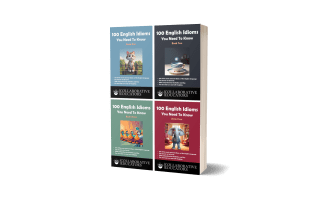
100 English Idioms You Need to Know - Book One

100 English Idioms You Need to Know - Book One preview
100 English Idioms You Need to Know - Book One preview 2
100 English Idioms You Need to Know - Book One preview 3

Look Inside · 10 pages · answer key included

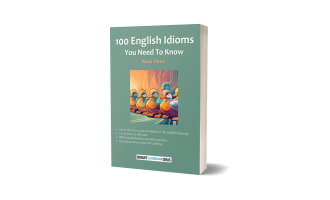
Cover of 100 English Idioms You Need to Know, Book One, noting comprehension activities and an answer key
Book One cover for the idiom reference and practice book
Contents for the idiom book: introduction on page 3, idioms on page 5, activities on 18, and answers on 23
Contents listing the book’s four sections
Idiom introduction, points 1–4: cultural insight, communication skills, listening comprehension, and vocabulary
First page of the introduction to learning idioms
Idiom introduction, points 5–7: everyday speech, reading context, and personal and professional advantages
Second page of the introduction to learning idioms
Idiom entries 1–8 with definitions and examples, from “A blessing in disguise” through “All ears”
First eight entries in the alphabetical idiom reference
Idiom entries 9–17, from “All in the same boat” to “Bite the hand that feeds you,” ending with its definition
Entries 9–17, moving from A to B idioms
Idiom 17’s example continues before entries 18–25, from “Bite off more than you can chew” to “Call it a day”
Continuation of entry 17 and idiom entries 18–25
Idiom entries 26–34 with meanings and examples, from “Caught between a rock and a hard place” to “Cut to the chase”
Entries 26–34 in the C section of the idiom reference
Idiom entries 35–42 with definitions and examples, from “Devil’s advocate” to “Elvis has left the building”
Entries 35–42 in the D and E sections

Answer key included

Answer key included
Attributes
Add To Collection
Add to collection Add to collection

About This Product

  • 100 of the most common idioms of the English language

  • For learners of all levels

  • With Comprehension Activities and Key

  • For classroom use aa well as self-studying

When learning a foreign language, idioms are crucial. They are what separates a native speaker from a non-native speaker. Idioms have subtle language nuances that all learners should be aware of. They also carry cultural connotations and meanings; you can tell a lot about a country and its language from its idioms. As a teacher, don't be afraid to expose your students to idioms. They are the backbone of the language (of any language, especially the English language).

Idioms are also very memorable. They create mental pictures which are often quite unusual, hence easy to remember: just imagine raining cats and dogs, an elephant in a room, or throwing out the baby with the bath water. Even the youngest of students can remember them.

0 Reviews

Explore related searches
you may also like...

Check out these other great products