A Night Divided Novel Study Theme and Symbolism Extension Activities
- Grades
- Grades 4–8, Middle School, Elementary
- File type
- Preparation
- Print ready


- Subject
- ELA, Reading, Reading Comprehension, Strategies, Literature
- Topic
- theme study, symbolism analysis
- Resource types
- Worksheets & Printables, Novel Studies, Activities, Worksheets
- Preparation
- Print ready
About this resource
What's inside this resource
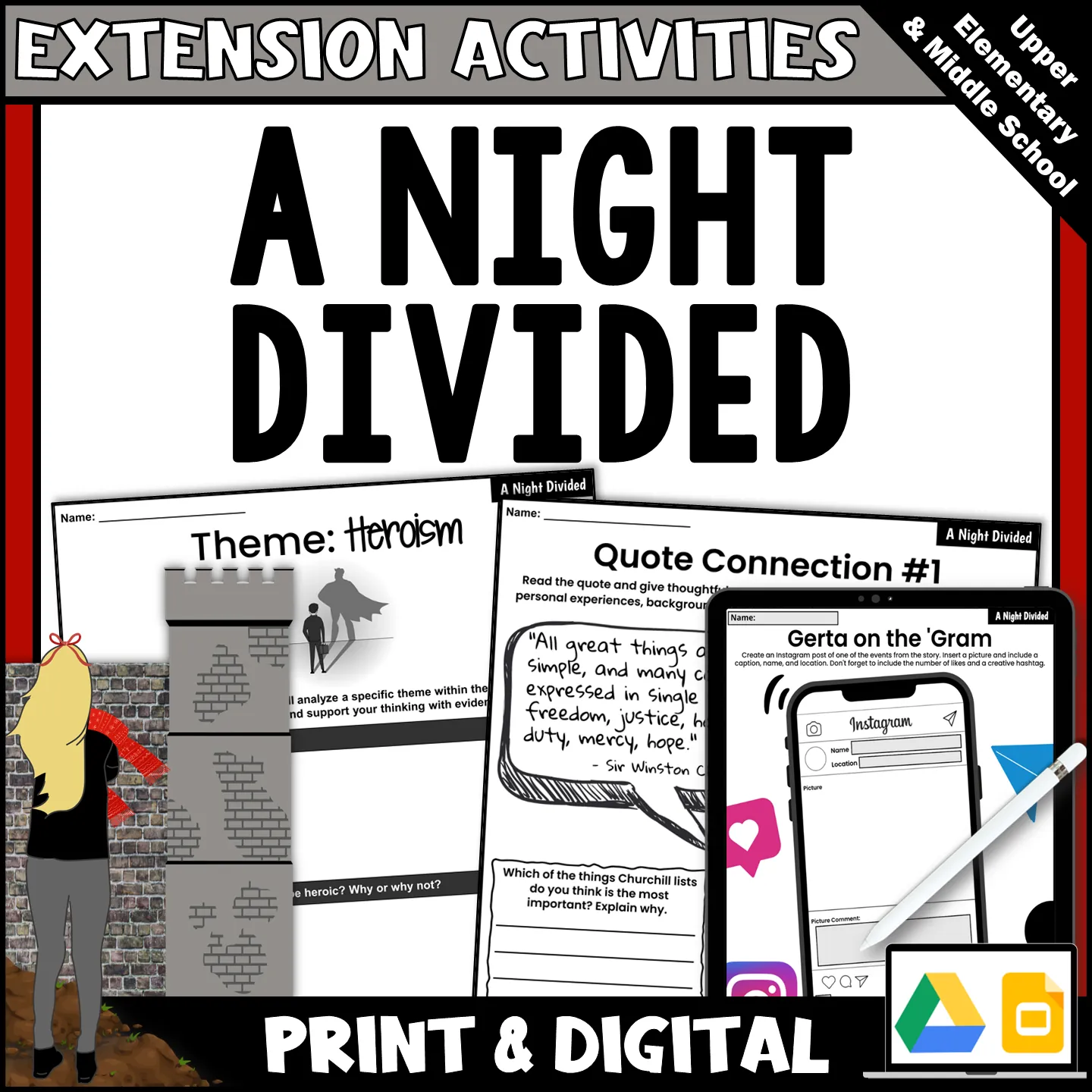
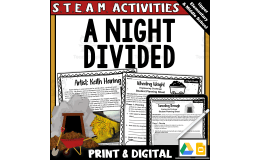
A Night Divided Novel Study Theme and Symbolism Extension Activities is a comprehensive resource designed to enhance students' exploration of the novel 'A Night Divided'. This resource emphasizes advanced reading concepts such as theme, symbolism, perspective, and figurative language. It offers versatile tools in both printable PDF and Google Slides & Forms (digital) versions.
The provided exercises provoke extended class discussions and peer exchanges. The complex questions require responses supported by textual evidence, speculative short answers, creation of imagery among others. It's explicitly aimed at challenging learners' critical thinking skills.
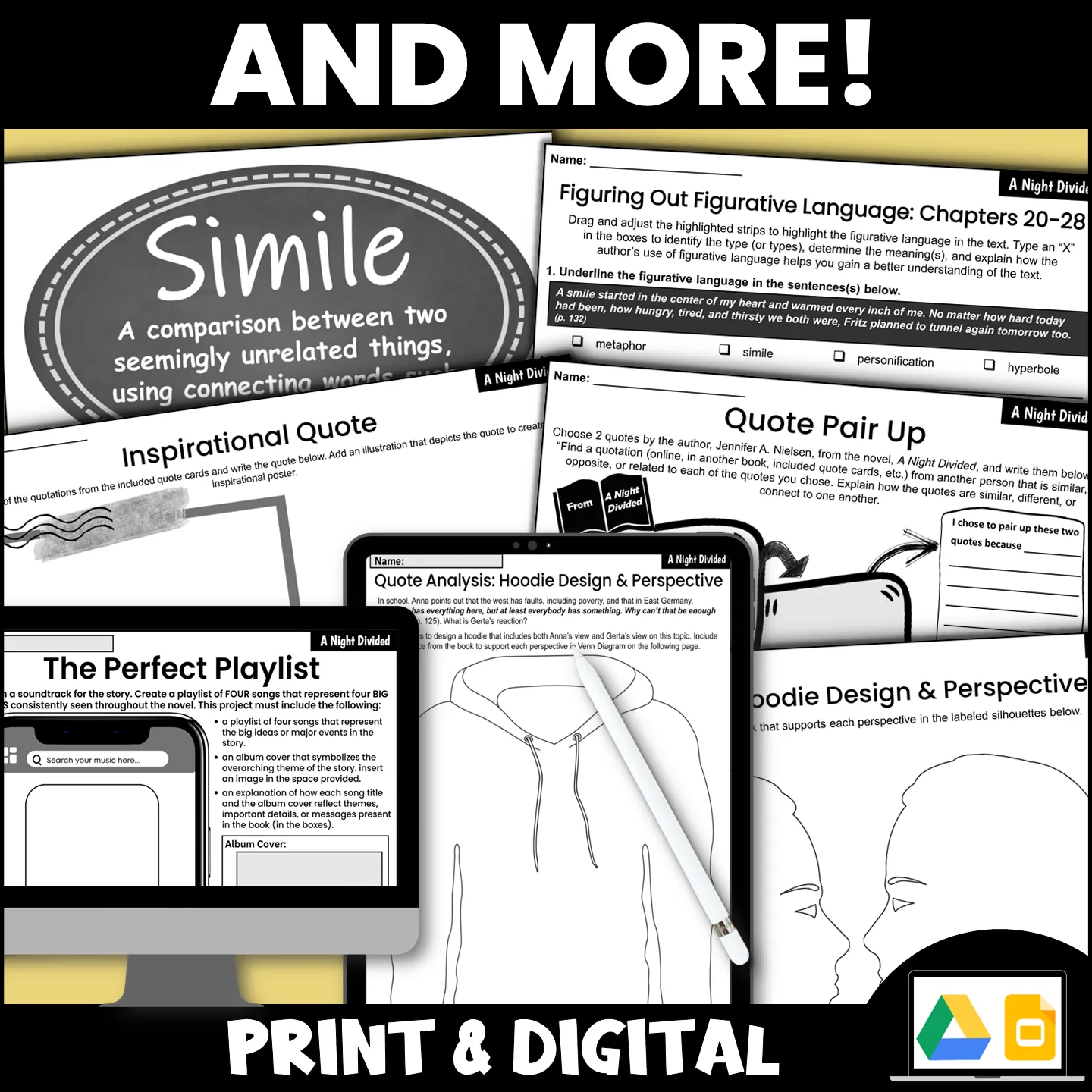
Figuatrative Language Identification Worksheets
The package includes worksheets related to recognizing figurative language used in 'A Night Divided'. These exercises can be done either as a whole group activity or small teams working on various chapters enabling learners to decode the type of figurative language used together with its meaning and rationale for usage.
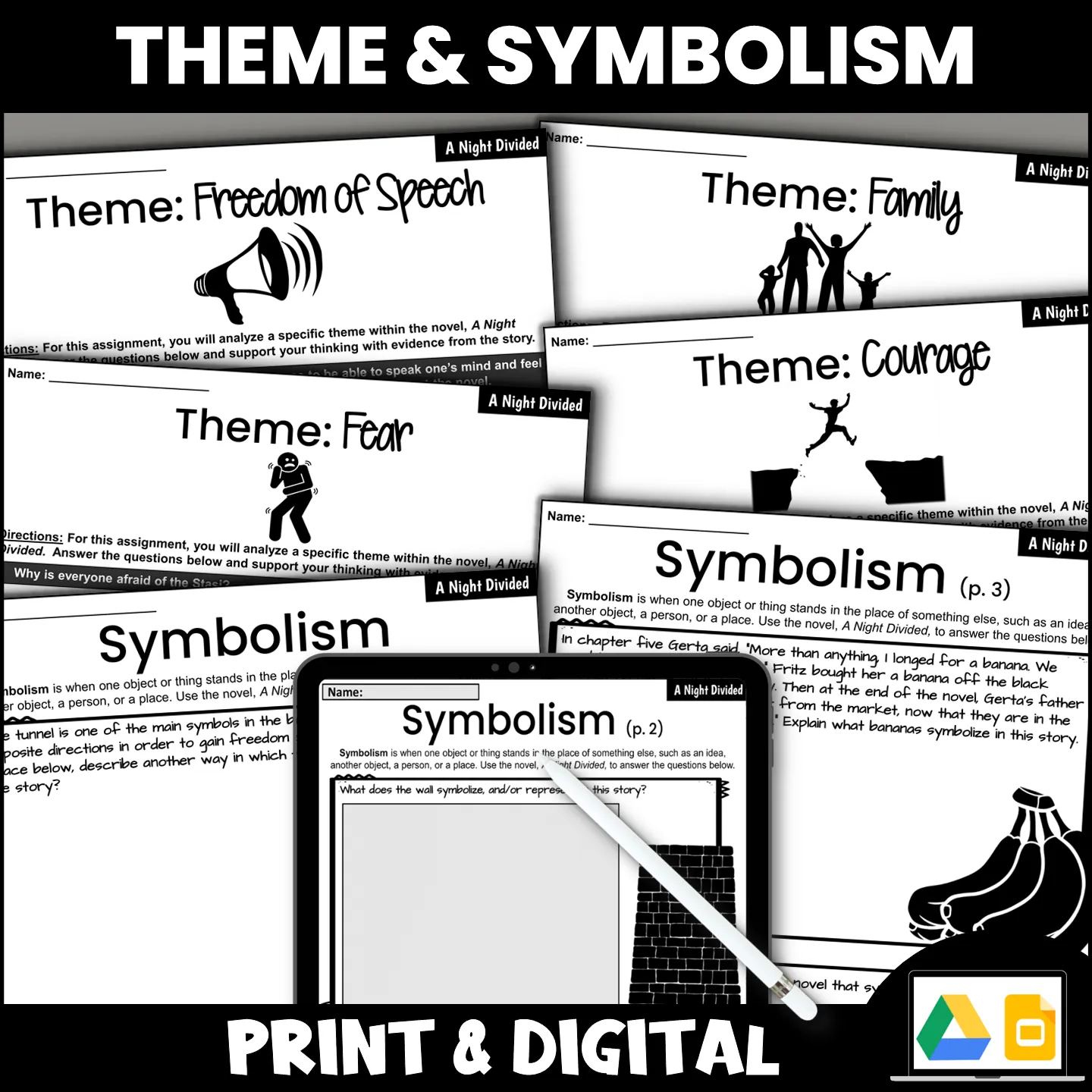
Theme Study Activity
The 'Theme Study' section engages students into stimulating debates about the themes present in the novel; it prompts them forming smaller discussion circles each dissecting a different theme - providing opportunities for differentiated learning.
Symbolsim Analysis Worksheets
This also extends to Symbolism Analysis worksheets that theoretically challenge students as they investigate differing symbols used across this narrative.
Perspective Establishing Exercises
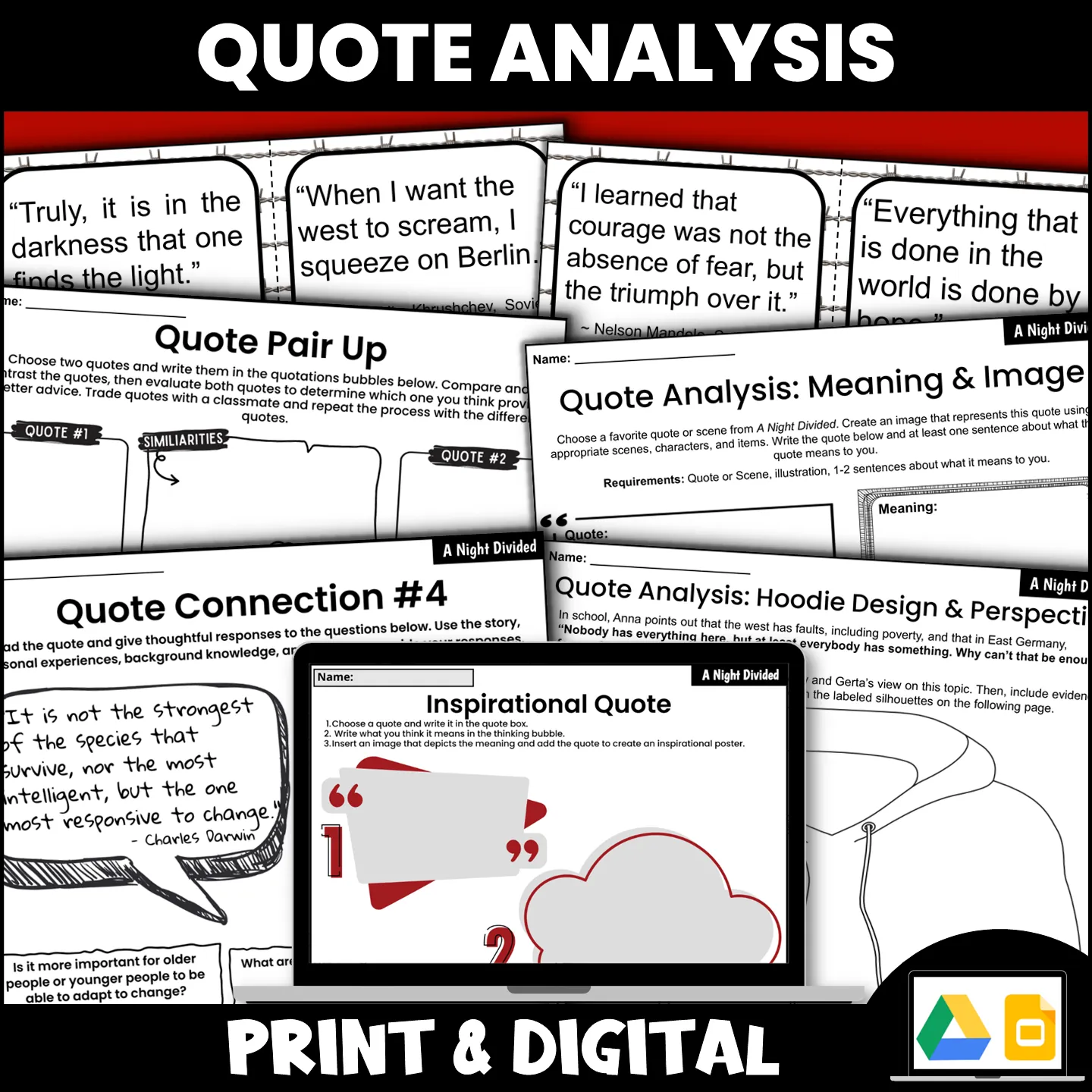
- Learners are offered certain quotations from 'A Night Divided'.
- Learners are then required provide reasoned responses drawing anecdotes based on their personal perception or events directly drawn from the book.
- Learners finally fuse their thought-processes with their creative capabilities responding through designing hoodies that symbolize themes/ideas derived backed up by supportive text excerpts drawn from "Night Divided".
In totality, A Night Divided Novel Study Theme and Symbolism Extension Activities offer numerous ways for learners to connect with and delve deeper into the thematic sphere of this engaging novel. This resource is tailored for middle school aged students (Grades 4-8) aligning perfectly with Language Arts curricula focusing on comprehension, strategies, literature reading.
Related resources
More resources teachers may find useful
24 related resources were found using this product's title, contributor, categories and tags.

In the classroom
Teaching tips & learning objectives

Learning objectives
Identify similes, metaphors, personification, hyperbole, and idioms in passages from the novel and explain the author's purpose for using them.
Determine a theme — such as family, heroism, courage, freedom of speech, fear, or division — using details from across the novel.
Analyze how a specific object (the tunnel, the garden, the Berlin Wall, the family car and key, bananas) functions as a symbol in the story.

Teaching tips
Split the class into groups and assign each group a different theme or symbol pair — the file's own directions recommend this because some themes and symbols are more difficult than others.
Print the figurative-language notes handouts 2 or 4 to a page and have students glue them into a reading journal for ongoing reference during the unit.
Laminate the 60 quote cards on cardstock for repeated use across multiple quote activities and future class sections.

Skills covered
Figurative language analysis — students identify similes, metaphors, personification, hyperbole, and idioms in novel passages and explain the author's purpose for each.
Theme development — students trace one of six themes using evidence gathered across the whole novel.
Symbolism interpretation — students explain how objects like the tunnel, the garden, and the Berlin Wall function as symbols in the story.
Good to know
Questions teachers ask about this resource
How are the theme and symbolism activities designed for group work?
The file suggests splitting the class into groups, with each group taking on a different theme or symbol pair, since it notes that some are more challenging than others and should be previewed for differentiation.

No reviews yet
Downloaded this resource? Tell other teachers how it went.
Resource details
Concepts & topics
Core concepts
 Core concepts
Theme
Symbolism
Figurative language
Textual evidence
Character perspective
 Topics
Explore more
Categories this resource belongs to
Explore related searches
More to explore
You may also like