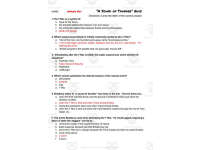
A Sound of Thunder by Ray Bradbury 10 question multiple choice quiz with…



- Grades
- Grades 7–10
- Pages
- 10
- File type
- Multiple File Types
- Answer key
- Included


- Subject
- ELA, Literature
- Topic
- A Sound of Thunder, Ray Bradbury
- Resource types
- Quizzes and Tests
- Answer key
- Included
- Standards
- RL.8.1
Product description
From the author
Related resources
More resources teachers may find useful
24 related resources were found using this product's title, contributor, categories and tags.


In the classroom
Teaching tips & learning objectives

Learning objectives
Identify literary devices (symbolism, simile, suspense elements, foreshadowing) used in 'A Sound of Thunder.'
Analyze how Bradbury's word choice and sentence structure affect tone and pacing.

Teaching tips
Review the suspense-element vocabulary (dramatic irony, false sense of security, cliffhanger) before assigning the quiz, since several questions rely on students knowing these terms.
Use question 7 as a mini-lesson on syntax, since it asks students to explain the effect of Bradbury's specific comma and hyphen choices.

Skills covered
Literary device identification — students recognize symbolism, simile, and suspense techniques in a short story excerpt.
Textual analysis — students select supporting quotes and explain their effect on tone, suspense, or foreshadowing.
Syntax analysis — students explain how punctuation and repetition choices shape the reader's experience of time passing.
Good to know
Questions teachers ask about this resource
Does the quiz ask students to identify specific quotations from the story, or only general comprehension questions?
It asks students to identify specific quotations — several questions present an exact quote from the story and ask what it reveals or how it functions (e.g., question 2's excitement quote, question 6's simile, question 7's syntax example, question 10's foreshadowing options).

No reviews yet
Downloaded this resource? Tell other teachers how it went.
Curriculum
Standards, concepts & topics
Standards
 Standards
- RL.8.1
Core concepts
 Core concepts
Symbolism
Suspense techniques
Figurative language
Syntax analysis
Foreshadowing
 Topics
Explore more
Categories this resource belongs to
Explore related searches
More to explore
You may also like