Alliance System Game – WWI Alliances Activity
- Grades
- Grades 9–10
- Pages
- 5
- File type
- Microsoft Word
- Editable
- Yes


- Subject
- Social Studies, History: World
- Topic
- Alliance System Game, World War I
- Resource types
- Games
- Editable
- Yes
Product description
From the author
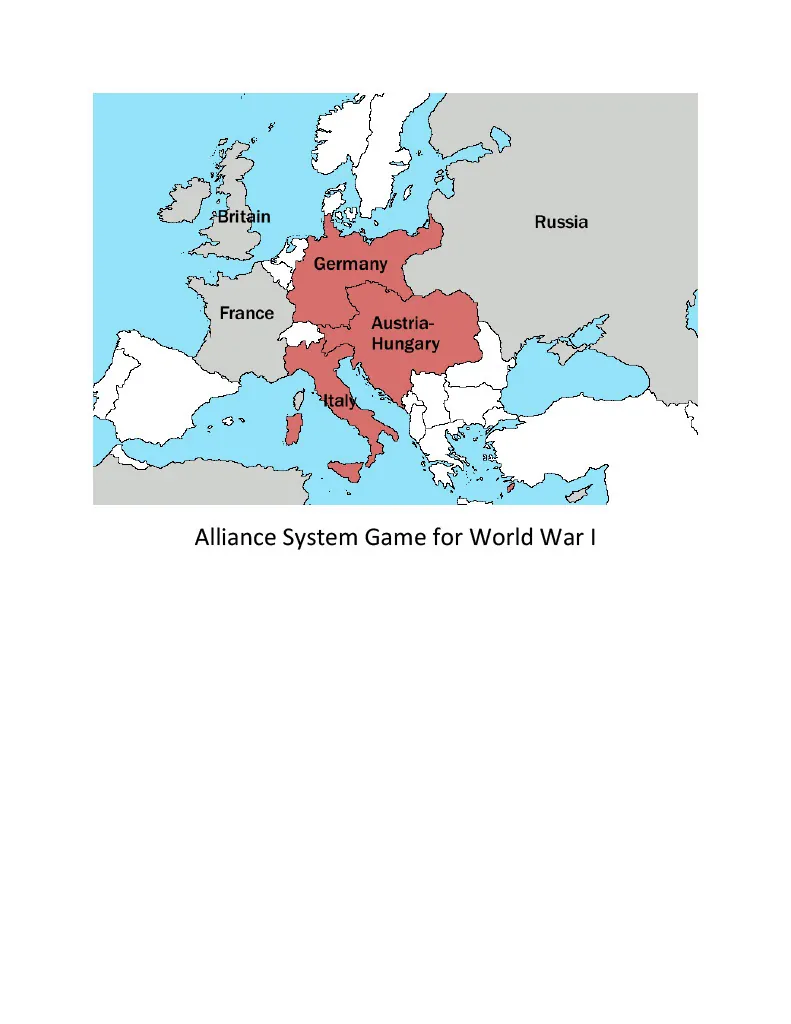
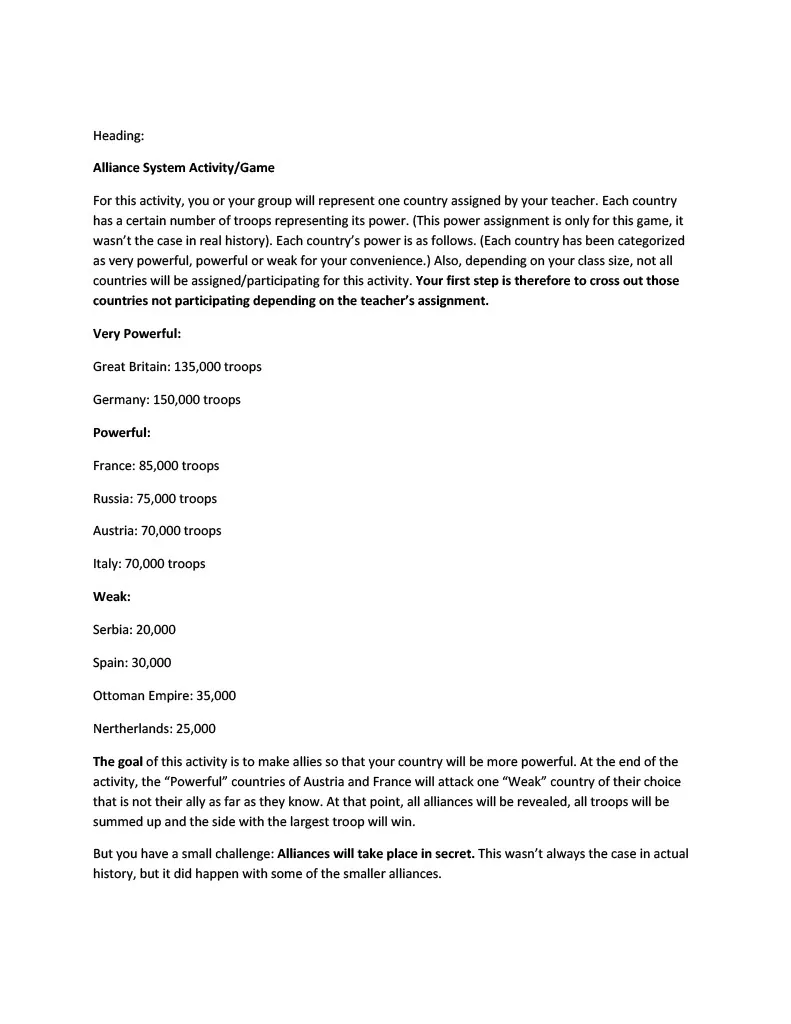
This is an Alliance System Game for World War I.
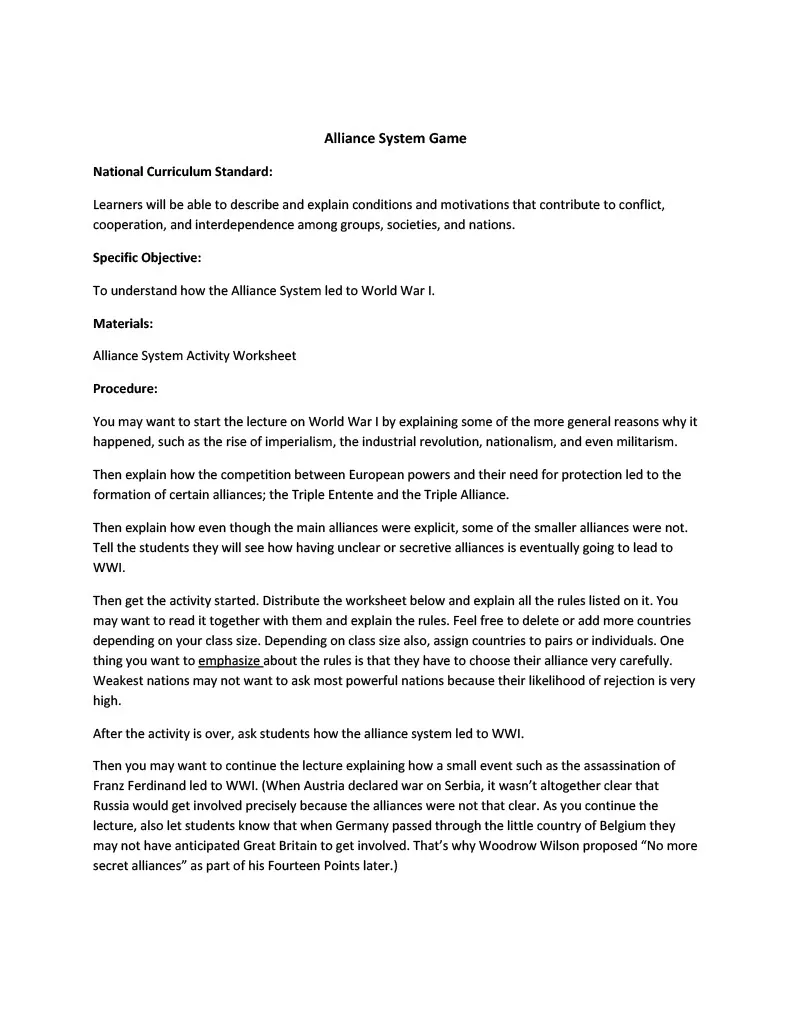
National Curriculum Standard:
Learners will be able to describe and explain conditions and motivations that contribute to conflict, cooperation, and interdependence among groups, societies, and nations.
Specific Objective:
To understand how the Alliance System led to World War I.
Materials:
Alliance System Activity Worksheet
Procedure:
You may want to start the lecture on World War I by explaining some of the more general reasons why it happened, such as the rise of imperialism, the industrial revolution, nationalism, and even militarism.
Then explain how the competition between European powers and their need for protection led to the formation of certain alliances, the Triple Entente and the Triple Alliance.
Then explain how even though the main alliances were explicit, some of the smaller alliances were not. Tell the students they will see how having unclear or secretive alliances is eventually going to lead to WWI.
Then get the activity started. Distribute the worksheet below and explain all the rules listed on it. You may want to read it together with them and explain the rules. Feel free to delete or add more countries depending on your class size. Depending on class size also, assign countries to pairs or individuals. One thing you want to emphasize about the rules is that they have to choose their alliance very carefully. Weakest nations may not want to ask most powerful nations because their likelihood of rejection is very high.
After the activity is over, ask students how the alliance system led to WWI.
Then you may want to continue the lecture explaining how a small event such as the assassination of Franz Ferdinand led to WWI. (When Austria declared war on Serbia, it wasn’t altogether clear that Russia would get involved precisely because the alliances were not that clear. As you continue the lecture, also let students know that when Germany passed through the little country of Belgium they may not have anticipated Great Britain to get involved. That’s why Woodrow Wilson proposed “No more secret alliances” as part of his Fourteen Points later.)
Related resources
More resources teachers may find useful
24 related resources were found using this product's title, contributor, categories and tags.



In the classroom
Teaching tips & learning objectives

Learning objectives
Explain how alliance commitments can expand a localized conflict
Negotiate a group decision under strategic constraints
Distinguish a classroom model from the full complexity of historical power relationships

Teaching tips
Emphasize before play that troop values are a simulation device, not a factual ranking.
Map the revealed alliances after the game and discuss which rules caused escalation.

Skills covered
Historical causation — alliances are examined as one contributing condition.
Strategic decision-making — groups weigh requests and constraints.
Model evaluation — learners identify limits of a simplified simulation.

No reviews yet
Downloaded this resource? Tell other teachers how it went.
Resource details
Concepts & topics
Core concepts
 Core concepts
World War I alliances
Conflict escalation
Historical simulation
 Topics
Explore more
Categories this resource belongs to
Explore related searches
More to explore
You may also like