24 related resources

America Story of Us Episode 3 – Westward Guide

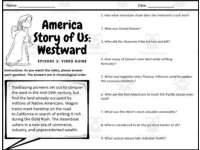
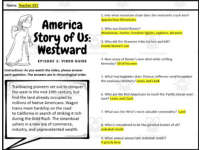
Twenty-three chronological fill-in-the-blank questions guide students through "America: The Story of Us" Episode 3 on westward expansion, paired with a complete teacher answer key.
Grades
Grades 7–12, Middle School, High School
File type
PDF
Preparation
Print ready

Updated Jun 22, 2023

Subject
Social Studies, History, History: USA
Topic
US History, Westward Expansion
Resource types
Worksheets & Printables, Worksheets
Preparation
Print ready
Standards
CCSS.SL.7.2

About this resource

What's inside this resource

In the television series "America: The Story of Us," the westward expansion of the United States is a significant theme covered in the depiction of American history. Here are some key aspects of westward expansion as portrayed in the series:

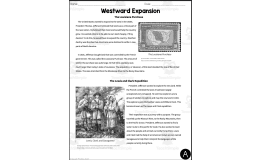
  1. Louisiana Purchase: The series highlights the acquisition of the Louisiana Territory from France in 1803, doubling the size of the United States. It explores President Thomas Jefferson's vision of expanding American territory and the Lewis and Clark expedition that explored and documented the newly acquired lands.

  2. Manifest Destiny: The concept of Manifest Destiny, the belief that it was America's destiny to expand westward, is addressed in the series. It depicts the idea of spreading American culture, democracy, and civilization across the continent.

  3. Oregon Trail: The series covers the arduous journey of pioneers along the Oregon Trail in the 19th century. It portrays the challenges, dangers, and hardships faced by those seeking a better life in the western territories.

  4. California Gold Rush: The series explores the impact of the discovery of gold in California in 1848. It depicts the influx of people from all over the world seeking fortune and the transformative effects the gold rush had on the region.

  5. Transcontinental Railroad: The construction of the transcontinental railroad is depicted as a major engineering feat and a significant catalyst for westward expansion. The series showcases the labor-intensive and often dangerous work involved in connecting the eastern and western printables/parts-of-and-anatomy-of">parts of the United States.

  6. Native American Conflicts: The series addresses the conflicts between Native American tribes and the advancing settlers as the United States expanded westward. It portrays the displacement and mistreatment of Native Americans and the impacts of these conflicts on both sides.

  7. Homesteading and Settlement: The series showcases the Homestead Act of 1862, which offered free land to settlers willing to develop and cultivate it. It explores the challenges and opportunities faced by homesteaders as they established farms and communities in the West.

  8. Industrialization and Resource Extraction: The series examines the exploitation of natural resources, such as timber, minerals, and oil, as the United States expanded westward. It explores the growth of industries and the impact on the environment and indigenous populations.

While "America: The Story of Us" provides an overview of westward expansion, it is important to note that the series is a docudrama and may simplify or omit certain aspects of the historical narrative. For a more comprehensive understanding of westward expansion, it is recommended to consult additional sources and perspectives.

These twenty-two movie questions are aimed at helping your students focus during the video. They are are in chronological order and easy to answer. Enjoy!

Thumbnail Clipart Credit: By Prince Padania

In the classroom

Teaching tips & learning objectives

Learning objectives

  • Recall specific facts and events from the episode's account of westward expansion, such as the Louisiana Purchase and the California Gold Rush

  • Distinguish true and false statements about westward-expansion history, such as the Donner Party's route or attitudes toward American settlers in Texas

  • Sequence major westward-expansion events as they are presented chronologically in the episode

Teaching tips

  • Pause the video briefly after each question's topic appears so students have time to write their answers

  • Use the teacher answer key to check responses quickly or to guide a post-viewing class discussion

  • Preview a few unfamiliar names, such as Daniel Boone and Jedediah Smith, before playing the video so students recognize them when questions come up

Skills covered

  • Video note-taking — students listen for and record specific facts as the episode's narrative unfolds.

  • Chronological sequencing — questions are ordered to match the episode's timeline from Boone's Kentucky settlement to the rise of the steamboat.

  • Fact and true/false discrimination — students distinguish accurate historical statements from false ones, such as the Donner Party's route decision.

Good to know

Questions teachers ask about this resource

What kind of answers does the video guide expect?

A mix of short factual answers (e.g., 'Lewis and Clark'), true/false judgments, and a few named events or slogans (e.g., 'Remember the Alamo').

Does the guide cover the whole episode or just part of it?

The 23 questions run chronologically from Daniel Boone's Kentucky settlement through the Gold Rush, the Trail of Tears, and the invention of the steamboat, tracking the episode from start to finish.

No reviews yet

Downloaded this resource? Tell other teachers how it went.

Curriculum

Standards, concepts & topics

Standards

  • CCSS.SL.7.2 — Analyze the main ideas and supporting details presented in diverse media and formats (e.g., visually, quantitatively, orally) and explain how the ideas clarify a topic, text, or issue under study.

Core concepts

  • Westward expansion

  • Manifest Destiny

  • Gold Rush

  • Trail of Tears

Explore more

Categories this resource belongs to

Explore related searches

More to explore

You may also like