America: The Story of Us – Cities Video Guide



- Grades
- Grades 7–11, Middle School, High School
- Pages
- 4
- File type
- Answer key
- Included


- Subject
- Social Studies, History, History: USA
- Topic
- US History, Urbanization
- Resource types
- Worksheets & Printables, Worksheets
- Answer key
- Included
Product description
From the author
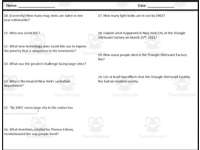
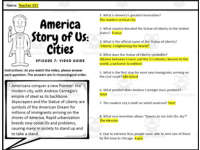
This video guide accompanies the “Cities” episode of America: The Story of Us. Twenty chronological questions address immigration, steel construction, urban living conditions and reform, with a two-page teacher answer key.
Provide episode access separately. Students answer on two pages while watching, then discuss the developments described in the film.
Thumbnail clipart credit: Prince Padania.
Related resources
More resources teachers may find useful
24 related resources were found using this product's title, contributor, categories and tags.


In the classroom
Teaching tips & learning objectives

Learning objectives
Students can identify the technological and social developments (steel-frame construction, the elevator, electric lighting) that enabled the rise of the American city.
Students can explain the role Jacob Riis's photography played in exposing tenement poverty and prompting sanitation reform.
Students can describe the causes of the 1911 Triangle Shirtwaist Factory fire and name at least two workplace-safety reforms that followed.

Teaching tips
Assign the questions for students to complete while watching, since the worksheet's own instructions state the answers appear in chronological order with the video.
Use the two-page teacher key to check understanding right after the video rather than collecting the worksheet for later grading.
Pair the Triangle Shirtwaist Factory questions with a short discussion of present-day workplace-safety rules, since the worksheet already asks students to link the fire to modern reforms.

Skills covered
Historical note-taking — recording specific facts, names, and statistics while following a video's chronological narrative.
Cause-and-effect reasoning — connecting the Triangle Shirtwaist Factory fire to the safety reforms (sprinklers, outward doors, alarms) it produced.
Source-based reasoning — explaining how Jacob Riis's photography technique exposed conditions that were otherwise hidden from view.
Good to know
Questions teachers ask about this resource
Is the episode included?
No. Supply access to the “Cities” episode separately. The four-page PDF contains two student question pages and two teacher-key pages.

No reviews yet
Downloaded this resource? Tell other teachers how it went.
Resource details
Concepts & topics
Core concepts
 Core concepts
Urbanization
Industrialization
Immigration
Labor and safety reform
 Topics
Explore more
Categories this resource belongs to
Explore related searches
More to explore
You may also like