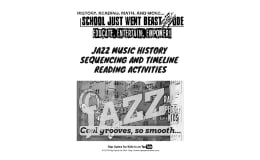
Harlem Renaissance and History of Jazz Lesson

- Grades
- Grades 8–10, Middle School, High School
- File type
- Microsoft Word
- Editable
- Yes


- Subject
- Creative Arts, Art, Music
- Topic
- jazz music, music history
- Resource types
- Teacher Tools, Lesson Plans
- Editable
- Yes
About this resource
What's inside this resource
This is a lesson plan for Harlem Renaissance and History of Jazz.
Specific Objectives:
Students will be able to describe the evolution of jazz as it went through the Harlem Renaissance.
Materials:
Worksheet provided
Computer connected to youtube and some speakers
Lesson:
In this lesson, students will learn a brief history of jazz and the role the Harlem Renaissance played in it by actually immersing themselves in the music. A worksheet is provided in which students have to describe some of the music that is played on the computer. After each song is over, you ask them how they would describe it. Then you give your own “more educated” opinion on it. Basically, you walk the students through the evolution of jazz.
Here is a rough “answer key”:
The first song, for which you could choose any other, simply shows a contrast to jazz. It is classical music, which follows a score and is therefore a lot more structured.
Old Blues has kind of a melancholic tone. It clearly arose amidst the hardships that African Americans went through.
When the blues reached New Orleans, it became blended with opera, marching bands, African drumming, church music… and so the blues became more upbeat.
Then music traveled to Harlem, NYC. One of the main characteristics of jazz is its improvisation. It is a symbol of freedom and liberation, in a way, a longing of the blues fulfilled.
To the study the influence of Harlem, then play Duke Ellington, who kind of fueled the swing era.
Modern jazz, which you could play anything you want, is a lot softer. It has become more “tamed” for everyone’s taste.
By the end, it should be clear how much of the music that is enjoyed all over the world is attributable to African Americans and the Harlem Renaissance.
Clickable YouTube links are included.
Related resources
More resources teachers may find useful
24 related resources were found using this product's title, contributor, categories and tags.


In the classroom
Teaching tips & learning objectives

Learning objectives
- Describe the tone, rhythm, improvisation and instruments of a music clip
- Explain how jazz developed from the blues through New Orleans to Harlem swing
- Reflect on how jazz has changed up to the present day

Teaching tips
- The clips play from YouTube, so the lesson needs a computer with internet access and speakers.

Skills covered
- Active listening — writing descriptions of theme, tone and rhythm after each clip
- Comparing styles — contrasting a scored classical piece with improvised jazz

No reviews yet
Downloaded this resource? Tell other teachers how it went.
Resource details
Concepts & topics
Core concepts
 Core concepts
- Harlem Renaissance
- Blues
- Improvisation
- Swing era
Topics
 Topics
Explore more
Categories this resource belongs to
Explore related searches
More to explore
You may also like