Argumentative Essay Introduction – Middle School Lesson
- Grades
- Grades 6–8
- Pages
- 17
- File type
- Answer key
- Included


- Subject
- ELA, Writing
- Topic
- Argumentative essay, Introduction paragraph
- Resource types
- Worksheets, Graphic Organizers
- Answer key
- Included
- Standards
- CCSS.W.7.1
Product description
From the author
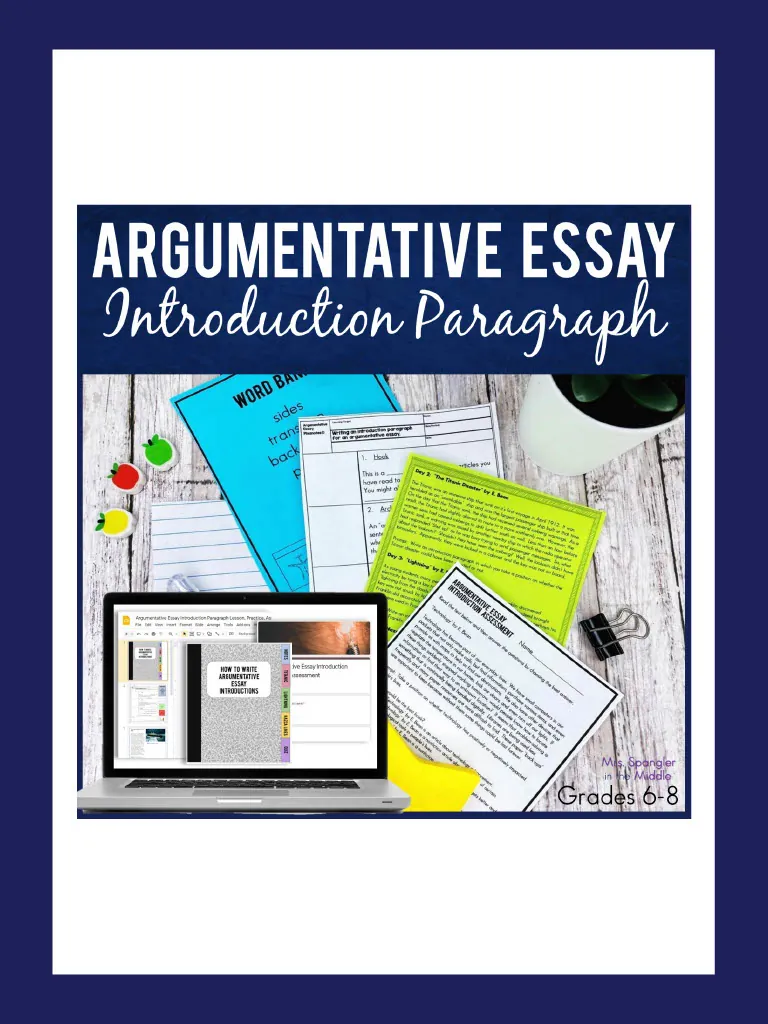
Teaching middle school students how to write an argumentative essay introduction paragraph has never been easier! Use this printable and digital lesson with interactive notes, 3 days of practice, and an assessment to get the job done!
Objective: Students will learn the kinds of sentences that are in an argumentative essay introduction paragraph. Then they will practice and be assessed on that skill.
Your students will love the short practice (as opposed to writing an entire essay) and you will love that it gets the job done and is easy to grade!
Teachers like you said:
⭐⭐⭐⭐⭐ Megan said, "All planned and ready to start the year! What a great, thorough resource!"
⭐⭐⭐⭐⭐ Hedgehog Reader said, "Very helpful! :o) Thank you!"
⭐⭐⭐⭐⭐ Carole S. said "My students enjoyed the hands-on work. It was great not having to use assignments only on the computer."
Supports common core standard:
Ccssccra.w.1
Write arguments to support claims in an analysis of substantive topics or texts, using valid reasoning and relevant and sufficient evidence.
Related resources
More resources teachers may find useful
24 related resources were found using this product's title, contributor, categories and tags.

In the classroom
Teaching tips & learning objectives

Learning objectives
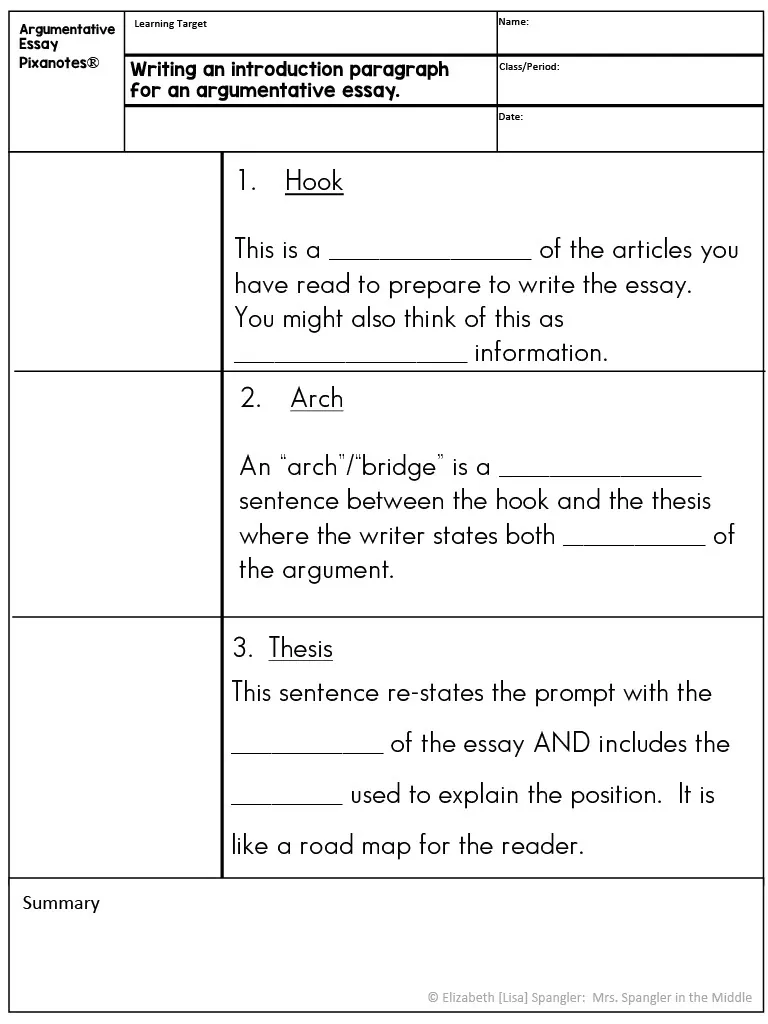
Students write a hook sentence that summarizes background information for an argumentative essay.
Students write an arch/bridge sentence that states both sides of an argument.
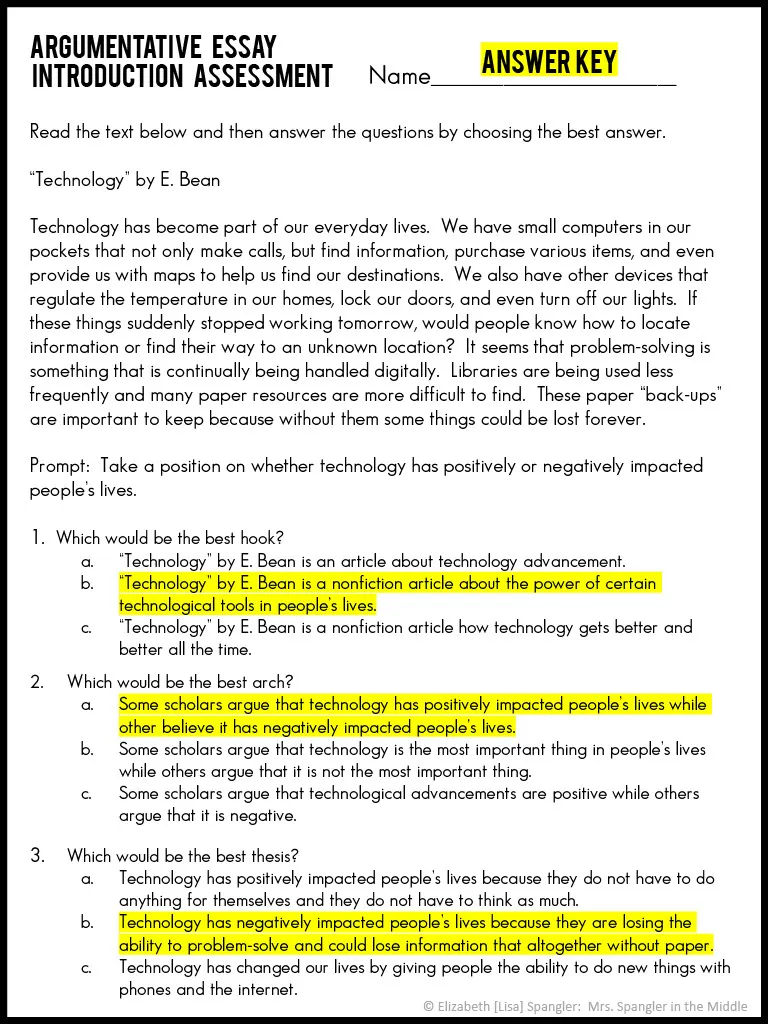
Students evaluate multiple-choice options to select the strongest hook, arch, and thesis for a given passage.

Teaching tips
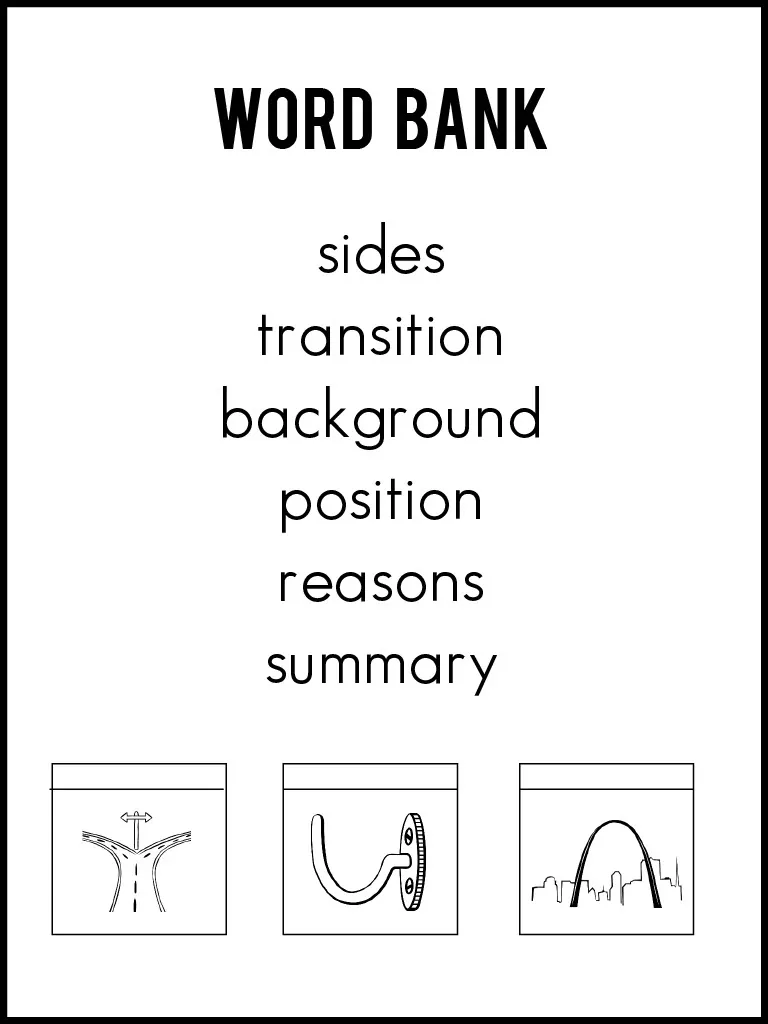
Work through the printable notes page as a class before assigning any of the three practice days, since each day's prompt assumes students already know the hook/arch/thesis terms.
Use the model answers in the answer key as mentor examples, since they show a full three-sentence introduction for each of the three practice passages.
If using the digital version, make one extra copy of each file to keep as an untouched original before sharing an editable copy with students, per the resource's own setup instructions.

Skills covered
Argumentative introduction writing — students draft a hook, arch, and thesis sentence for a debatable nonfiction topic.
Nonfiction reading for argument — students read short passages on historical and scientific topics and identify a defensible position.
Multiple-choice text analysis — students evaluate several introduction options against a passage to identify the strongest one.
Good to know
Questions teachers ask about this resource
What's the difference between the term 'arch' and 'bridge' used in this resource?
The notes page introduces them as interchangeable names for the same middle sentence of the introduction, though the practice pages and assessment consistently use 'arch' going forward.
How does the digital version differ from the printable pages?
The five-slide lesson supplies notes and three writing prompts; the assessment is a separate Google Form. Prepare student slide copies and insert your classroom quiz link on the final slide before assigning it.

No reviews yet
Downloaded this resource? Tell other teachers how it went.
Curriculum
Standards, concepts & topics
Standards
 Standards
- CCSS.W.7.1 — Write arguments to support claims with clear reasons and relevant evidence. a. Introduce claim(s), acknowledge alternate or opposing claims, and organize the reasons and evidence logically. b. Support claim(s) with logical reasoning and relevant evidence, using accurate, credible sources and demonstrating an understanding of the topic or text. c. Use words, phrases, and clauses to create cohesion and clarify the relationships among claim(s), reasons, and evidence. d. Establish and maintain a formal style. e. Provide a concluding statement or section that follows from and supports the argument presented.
Core concepts
 Core concepts
Argumentative writing
Thesis statement
Introduction paragraph structure
 Topics
Explore more
Categories this resource belongs to
Explore related searches
More to explore
You may also like