Informative Essay Introduction Paragraph
- Grades
- Grades 6–8
- Pages
- 17
- File type
- Answer key
- Included


- Subject
- ELA, Language Development, Formal Writing
- Topic
- Informative essay, Essay writing
- Resource types
- Lesson Plans
- Answer key
- Included
- Standards
- W.6.2
Product description
From the author
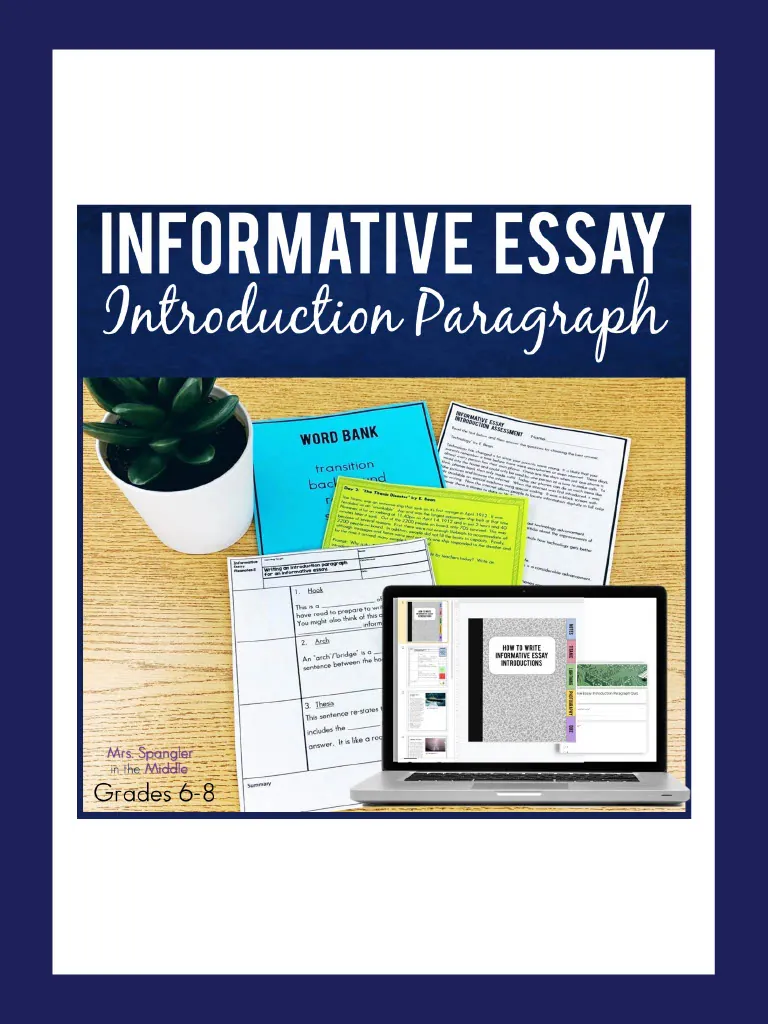
This Informative Essay Introduction Paragraph is a week-long set of activities to help students develop a deeper understanding of the introduction paragraph.
Included:
- Notes and word bank
- Bell work and student pages
- Assessment
- Answer keys
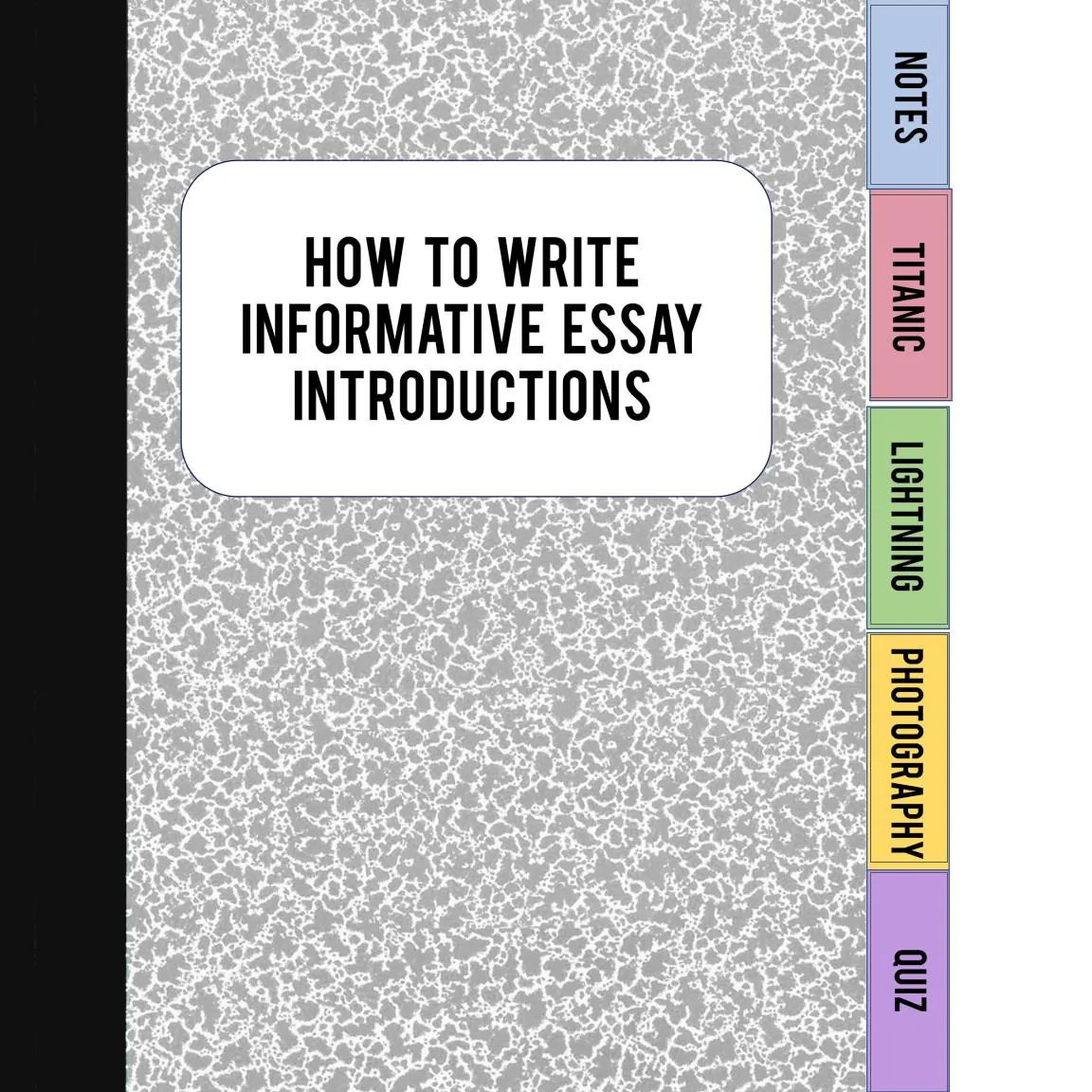
- Digital instructions and quiz link; the Google Slides notes/practice link is currently unavailable
Related resources
More resources teachers may find useful
24 related resources were found using this product's title, contributor, categories and tags.


In the classroom
Teaching tips & learning objectives

Learning objectives
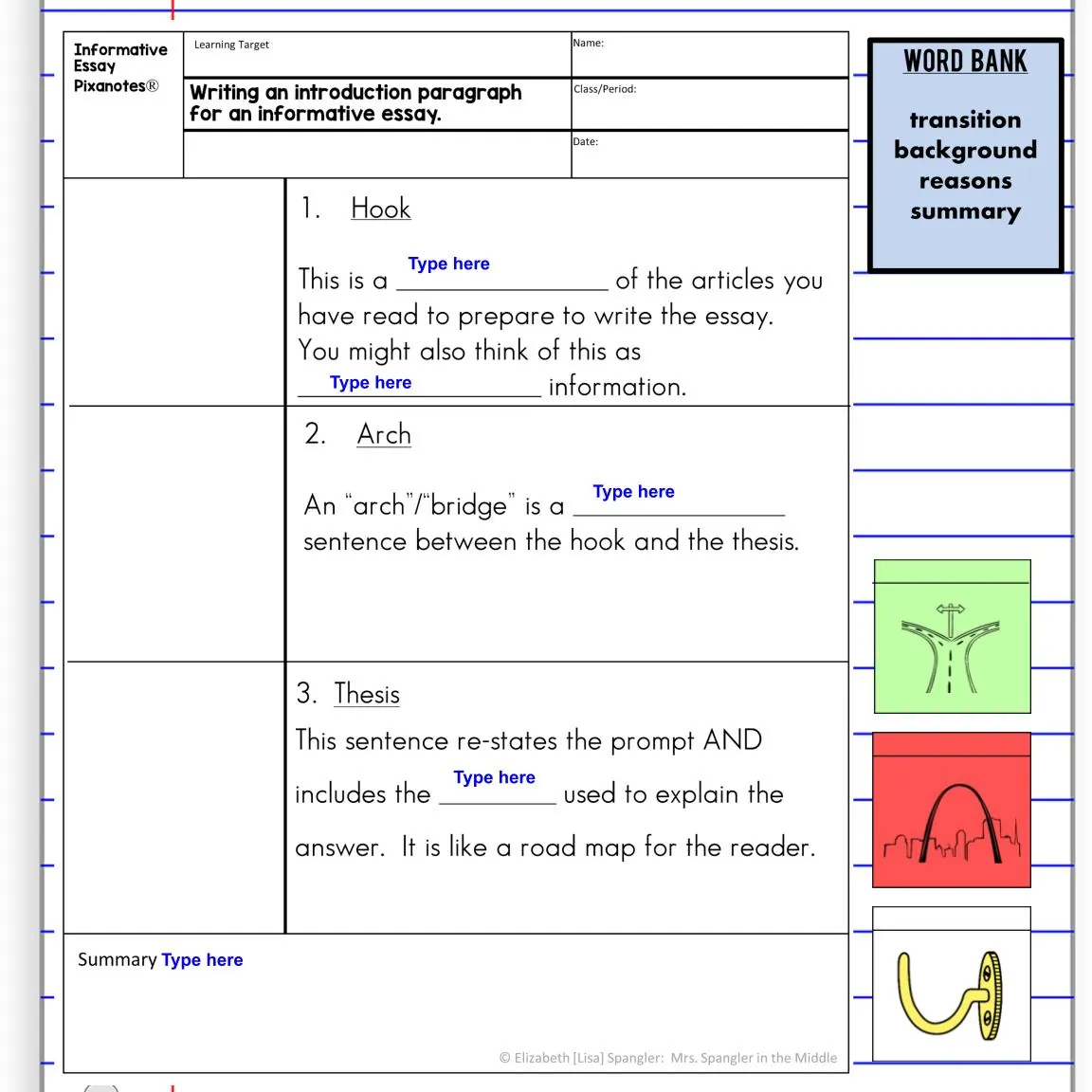
Students identify and construct the three parts of an informative essay introduction: hook, arch/transition, and thesis.
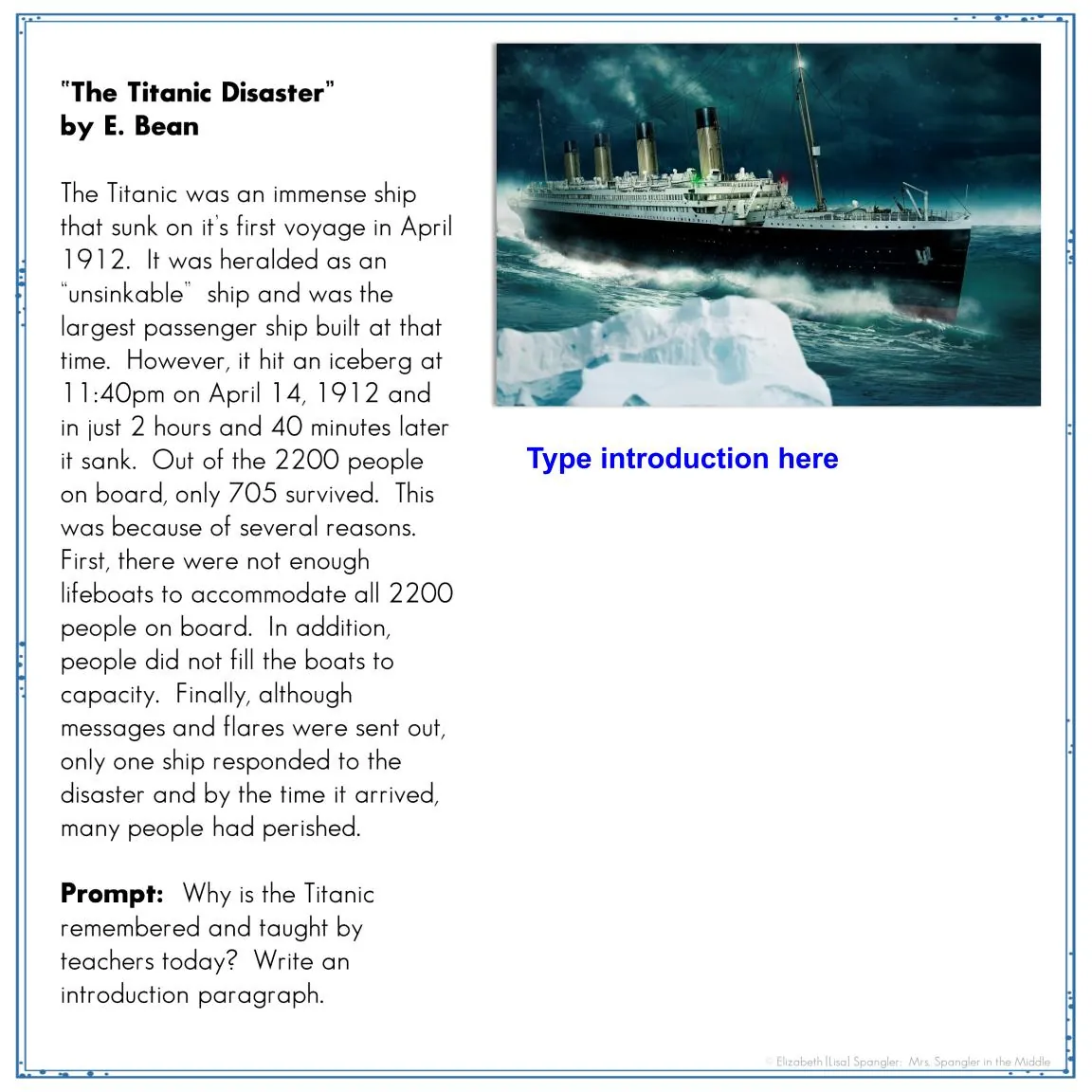
Students write an original introduction paragraph responding to a nonfiction prompt, applying the hook-arch-thesis structure.
Students evaluate multiple-choice answer options to select the strongest hook, arch, and thesis for a given passage.

Teaching tips
Follow the built-in five-day pacing: notes on day 1, one guided practice paragraph per day on days 2-4, and the assessment on day 5.
Use the three practice passages (Titanic, lightning, photography) in the given order, since each reuses the same hook-arch-thesis routine to build independence gradually.
Use the printable notes and practice while the Slides link is unavailable. The linked Google Forms quiz is accessible; check your classroom account settings before assigning it.

Skills covered
Introduction paragraph structure — students construct a hook, transition ('arch'), and thesis for an informative essay using the Pixanotes framework.
Nonfiction reading response — students read short passages on the Titanic, lightning, and photography and write an introduction paragraph reacting to each prompt.
Multiple-choice evaluation of writing — students compare sample hooks, arches, and theses on a technology passage and select the strongest option.
Good to know
Questions teachers ask about this resource
What does the resource mean by an essay's 'arch,' and where does it fit in the introduction?
The arch (also called a bridge) is the transition sentence that connects the hook to the thesis, sitting between the two in the introduction paragraph.

No reviews yet
Downloaded this resource? Tell other teachers how it went.
Curriculum
Standards, concepts & topics
Standards
 Standards
- W.6.2
Core concepts
 Core concepts
Hook
Thesis
Informative essay
Introduction paragraph
 Topics
Explore related searches
More to explore
You may also like