Australia Colonisation Posters 1800–1900
- Grades
- Grades 4–8
- Pages
- 4
- File type
- Preparation
- Print ready


- Subject
- Social Studies, History
- Topic
- Australian colonisation, 1800s Australia
- Resource types
- Posters
- Preparation
- Print ready
Product description
From the author
Related resources
More resources teachers may find useful
24 related resources were found using this product's title, contributor, categories and tags.
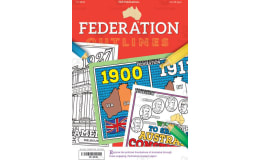

In the classroom
Teaching tips & learning objectives

Learning objectives
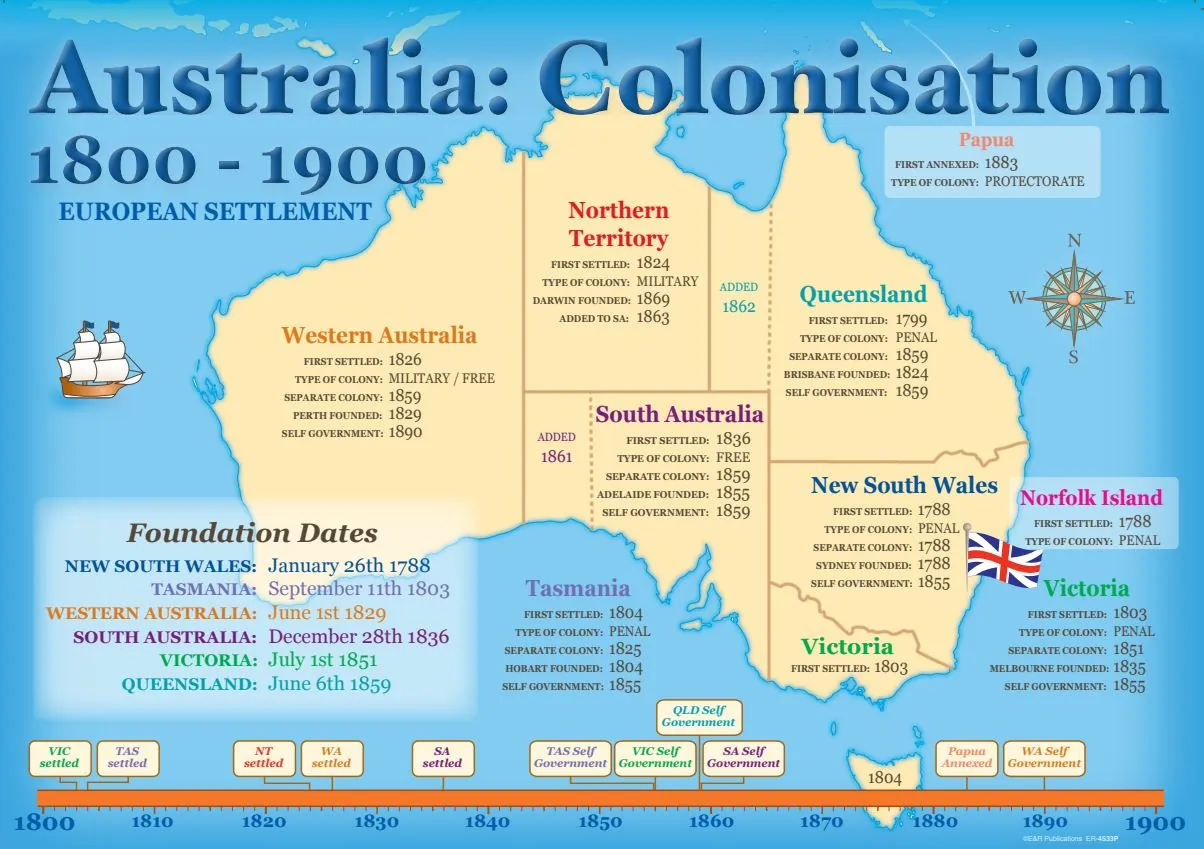
Sequence key events in Australia's colonisation (settlement, self-government, city founding) across an 1800-1900 timeline.
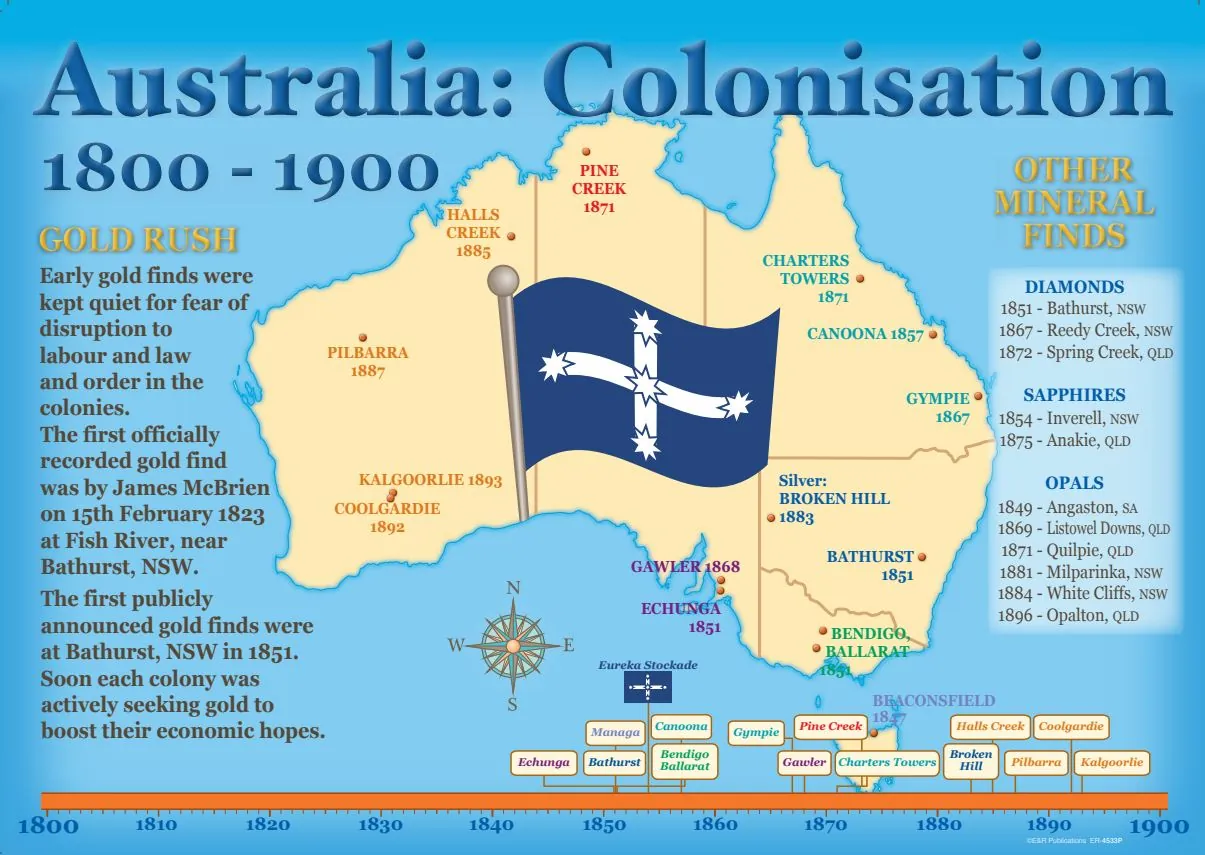
Identify where and when major gold and gemstone discoveries occurred across the Australian colonies.
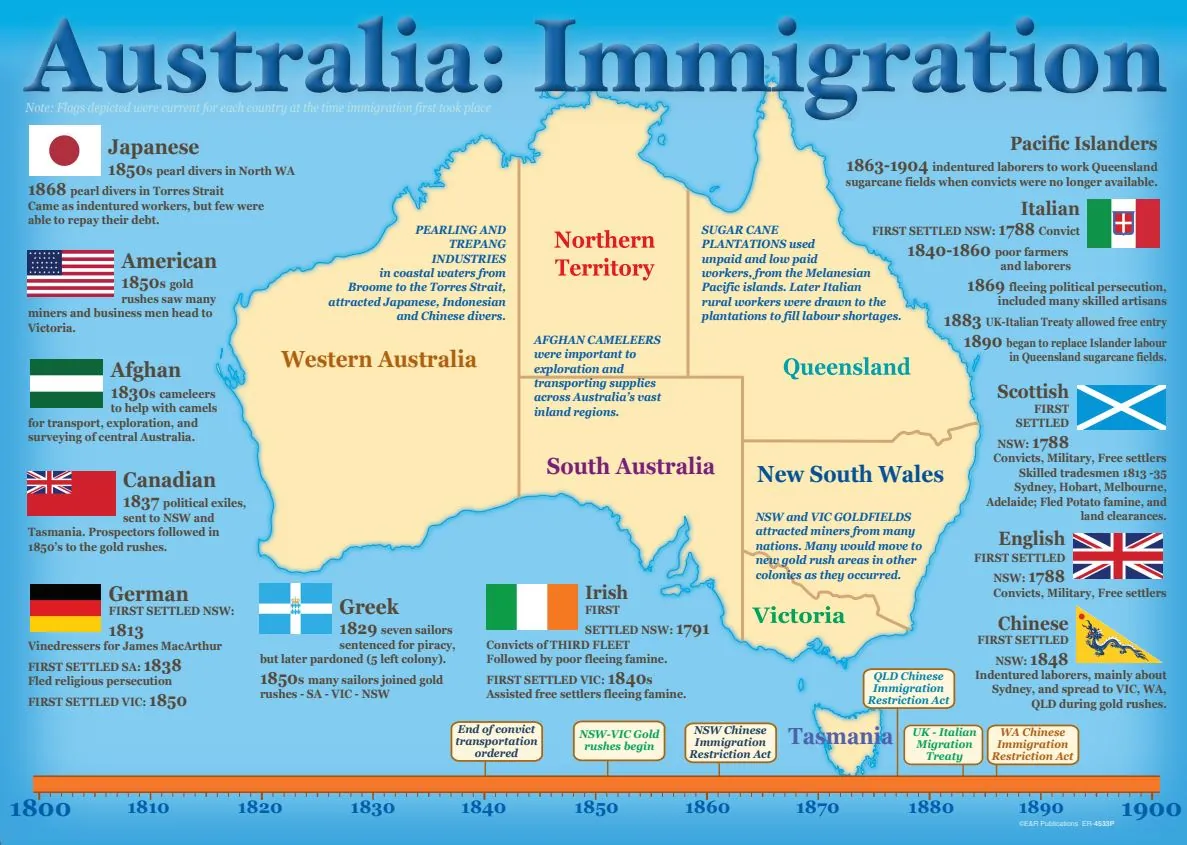
Identify the countries immigrants to Australia came from and their reasons for settling, across the 1800s.

Teaching tips
Display the four posters together as a single wall timeline, since each one repeats the same 1800-1900 date axis along its bottom edge.
Pair the immigration poster with the gold-rush poster, since several immigrant groups (Chinese, Italian) are explicitly tied to specific gold rushes across the two posters.
Because the posters are dense with specific dates, names and events, project or enlarge one section at a time for younger classes rather than displaying all four at full size.

Skills covered
Timeline interpretation -- students read colony founding, self-government and city-founding dates positioned along a shared 1800-1900 axis.
Historical cause-and-effect reasoning -- the gold-rush poster connects specific discoveries to colonial economic growth.
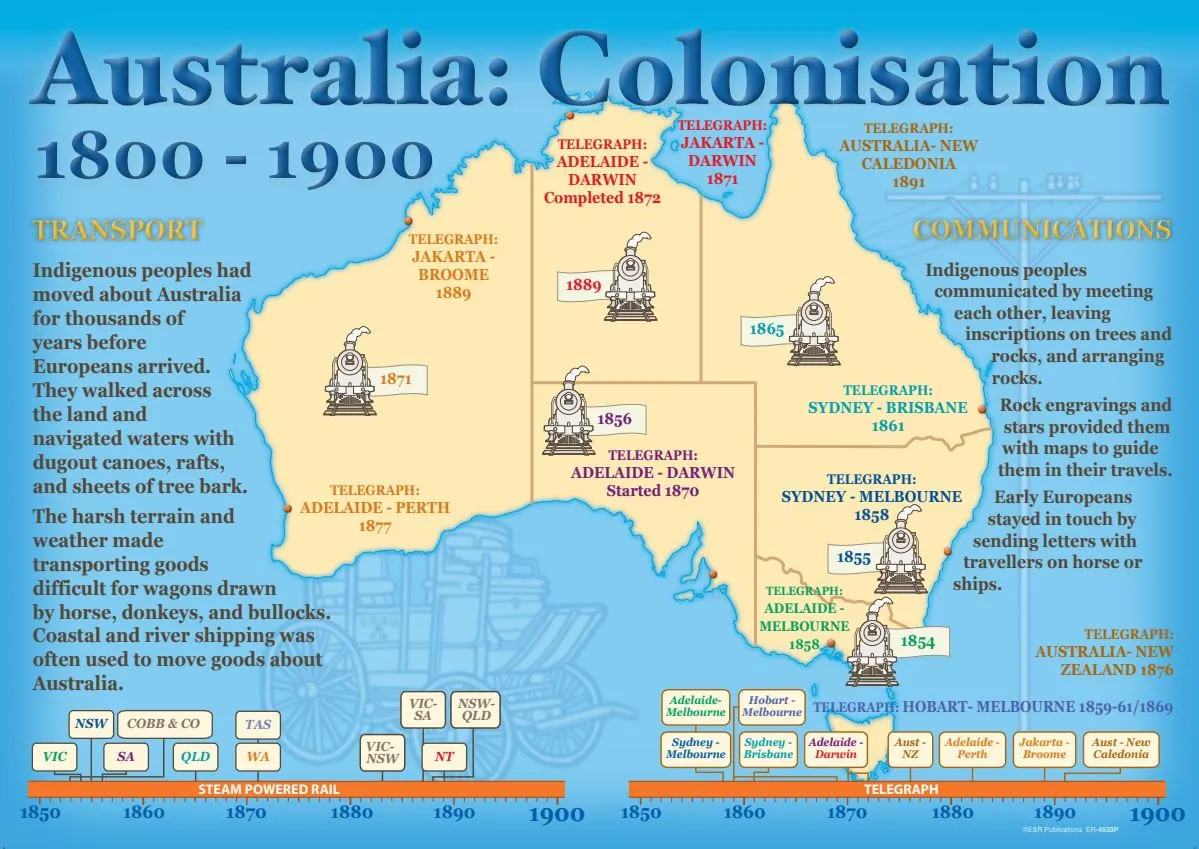
Comparative analysis -- the transport/communications poster sets Indigenous methods directly against colonial telegraph and shipping infrastructure.
Good to know
Questions teachers ask about this resource
How does the transport poster address Indigenous Australians?
It devotes a dedicated section to Indigenous travel and communication methods -- walking routes, dugout canoes, tree-bark rafts, and rock and tree inscriptions used for navigation -- placed directly alongside the colonial telegraph and transport network.

No reviews yet
Downloaded this resource? Tell other teachers how it went.
Resource details
Concepts & topics
Core concepts
 Core concepts
Australian colonisation
Timeline/chronology
Gold rush
Immigration history
Transport and communications infrastructure
 Topics
Explore more
Categories this resource belongs to
Explore related searches
More to explore
You may also like