Big or Small Problems Cut-And-Paste Worksheets For Size of the Problem
- Grades
- Grades 1–3, Elementary
- Pages
- 3
- File type
- Preparation
- Print ready


- Subject
- Special Resources, Life Skills, Social Emotional Learning (SEL)
- Topic
- Problem Size, Social Emotional Learning
- Resource types
- Activities, Worksheets & Printables, Worksheets
- Preparation
- Print ready
Product description
From the author
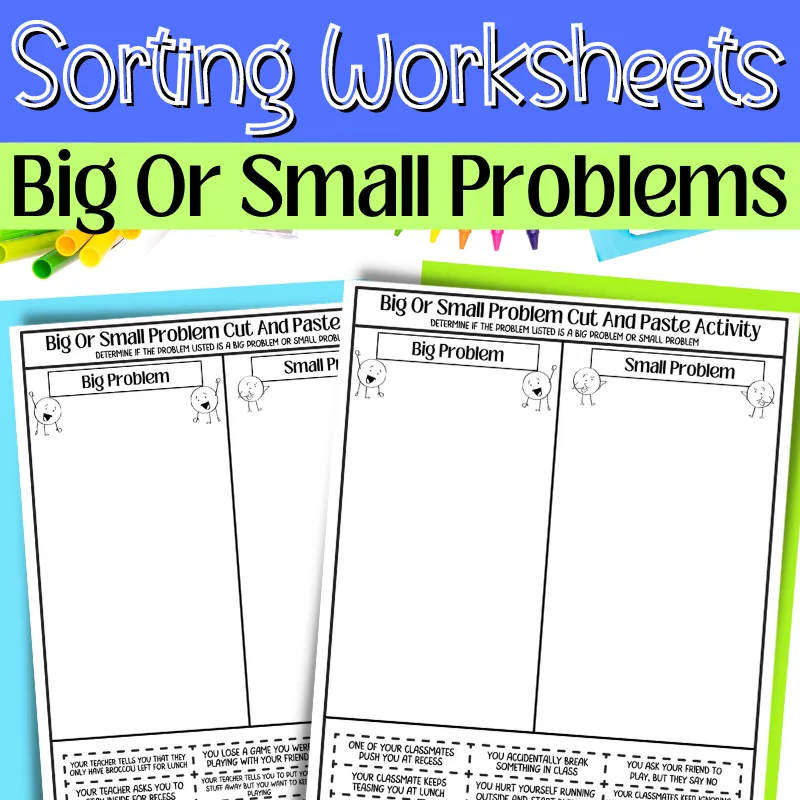
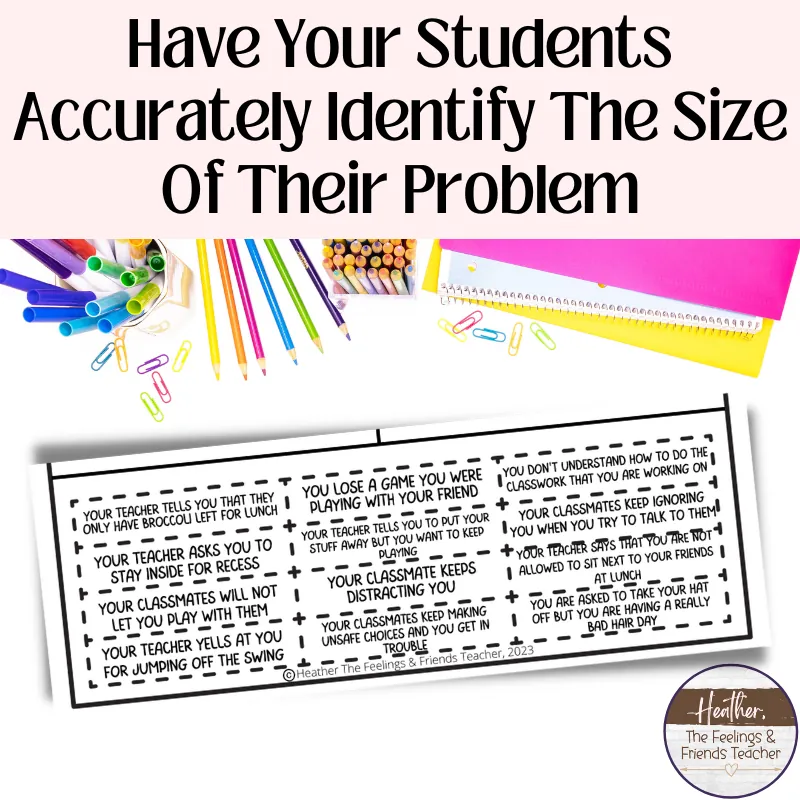
Are you looking for no prep social emotional learning activities that help to reinforce SEL topics in the classroom? These size of the problem cut and paste sorting worksheets are the perfect activity to keep students engaged while promoting social emotional learning! Students will learn about different problems and how context affects the help a situation needs. Students will also get to talk about and reflect on situations and different ways to respond without dismissing anyone’s feelings.
These activities are a great, quick addition to your emotions and coping skills lessons or an awesome tool to use in your school counseling sessions, both individual and small group!
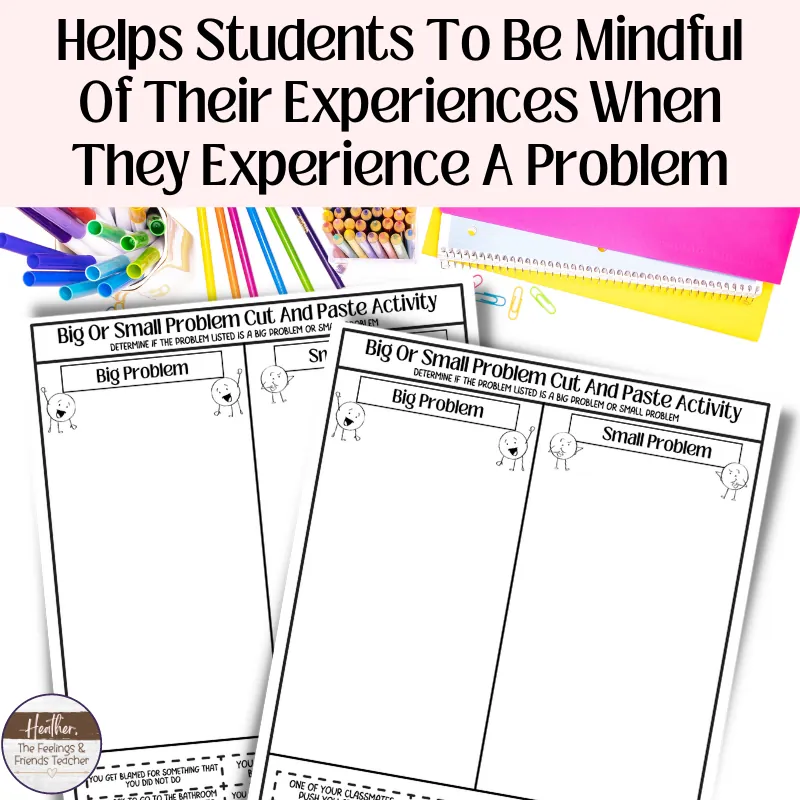
Simply print and give the worksheets to the students. The students will then cut the problem slips and paste them into the category they believe it belongs in. This makes for a great activity to any emotional regulation counseling lesson and can be used in small group counseling, individual counseling, and whole group lessons!
Some Ideas for Use Are:
⭐Individual Lessons
⭐Emotion Regulation Small Groups
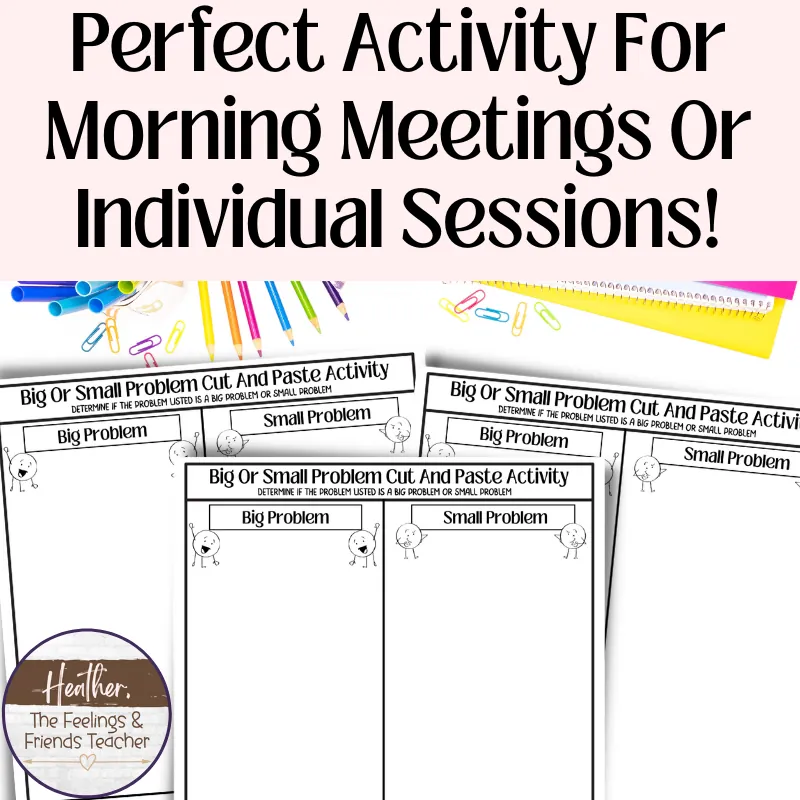
⭐ Morning Meetings
⭐ As an extension activity for your Emotion Regulation Lessons
When you have students who struggle with thinking that everything is a big problem, this activity helps!
Related resources
More resources teachers may find useful
24 related resources were found using this product's title, contributor, categories and tags.


In the classroom
Teaching tips & learning objectives

Learning objectives
Sort everyday conflict scenarios into "big problem" and "small problem" categories.
Justify a sorting choice by comparing the relative seriousness of different situations.
Reflect on situations that felt like a big problem in the moment but could be seen as a small one.

Teaching tips
Assign one page at a time and discuss the reasoning behind choices.
Ask what additional context would help students understand a situation.
Discuss possible responses and adults who could help, without dismissing how someone feels.

Skills covered
Problem-size categorization — students sort 12 scenarios per page into "big" and "small" problem categories.
Perspective-taking — scenarios describe situations from a second-person "you" viewpoint, prompting students to imagine their own reaction.
Cutting and sorting fine-motor practice — students cut apart 12 individual scenario strips per page and paste them under the correct heading.
Good to know
Questions teachers ask about this resource
Are the three pages different scenarios, or the same page repeated?
The three pages have different mixes of twelve entries, with some repeated wording, such as classmates ignoring you. There are thirty-six printed scenario entries, not thirty-six unique situations.
Do the scenarios focus on one type of problem, like just friendship issues?
They mix peer conflicts, classroom mishaps, family changes and physical problems, including moving schools, parents separating and a teacher becoming ill.

No reviews yet
Downloaded this resource? Tell other teachers how it went.
Resource details
Concepts & topics
Core concepts
 Core concepts
Size of the problem
Social-emotional learning
Sorting
Self-regulation
 Topics
Explore more
Categories this resource belongs to
Explore related searches
More to explore
You may also like