Mission Report




- Grades
- Grades 3–5
- Pages
- 33
- File type
- Preparation
- Print ready


- Subject
- Social Studies, History: USA
- Topic
- California missions, Research report
- Resource types
- Projects
- Preparation
- Print ready
- Standards
- W.4.7
Product description
From the author
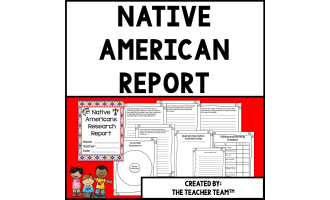
Engage your students with this fun and comprehensive California Missions Research Report resource. It helps make report writing easy! It contains vocabulary, worksheets, questions, organizers, tools and forms to use for your students to create, develop, write, edit, illustrate, present, and assess your students’ California Missions Research Report.
This template can be for their formal report or utilized as a study guide to develop their report for them to type or write on their own. This packet is designed for you to pick and choose the parts of the report that you’d like to use, or just use it all!
The first part of this report is question about missions and mission life in general, and another part is for students to choose one mission and research it. We encourage you to have your students use a wide variety of resources to gather the necessary information to complete this report. This packet contains the following:
• Template includes: Questions about the establishment of missions,
missionaries, and mission life
• Vocabulary words to be defined and illustrations created to accompany them (a
blank template is also provided for you to add any additional vocabulary words
that you would like to add to provided scaffolding for students who need it)
• PDF page 15 starts the individual mission that each student can choose to research.
We have included a new title page for each person to use to write in their
individual mission.
• Specific Questions about the individual mission that each student chooses to
research
• A page to have your students create an illustration as well as an artistic collage
of their mission
• A page to help your students find information for their report
• Resource page and Bibliography Template- I use the Resource Page template
because my students are not ready to learn the rules of a true bibliography, but
if you teach bibliography skills I have included a template for you
• Note Taking page for students to take notes and a note taking page in bullet
format. Copy as needed
• Written Report performance-task rubric
• Editing and Revising Checklist
• Common Core Standards page that can be hung near the student reports on a
bulletin board to cite the Common Core Writing Standard being taught
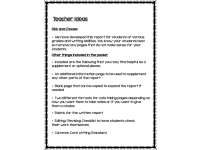
• Teacher Ideas.
Related resources
More resources teachers may find useful
24 related resources were found using this product's title, contributor, categories and tags.


In the classroom
Teaching tips & learning objectives

Learning objectives
Students will research and record the founding history, purpose, and daily life of a self-selected California mission.
Students will define and illustrate mission-related vocabulary, including mission, missionaries, territory, and adobe.
Students will compare the mission's early history to its present-day condition.

Teaching tips
The teacher-ideas pages note the report was built for a range of grades and writing abilities, with guidance to remove any pages that don't fit a given class.
Two note-taking formats are included so students can choose how they record research before writing full answers.
Treat the Resources examples as citation-format models, not recommended factual sources; the page explicitly says some are fictional. Replace the teacher-note reference to water with the mission topic.

Skills covered
Historical research writing — students answer a sequence of prompts to build an organized report on a specific California mission.
Content vocabulary acquisition — students define and illustrate terms such as missionaries, territory, and adobe tied directly to mission life.
Compare-and-contrast writing — students describe how their chosen mission has changed between its founding and today.
Good to know
Questions teachers ask about this resource
How can I include Indigenous experiences in the research?
The packet asks about Native Americans’ experiences when missionaries arrived and how their lives changed. Use sources from the relevant Indigenous communities to support that question rather than asking students to infer feelings from the prompt alone.

No reviews yet
Downloaded this resource? Tell other teachers how it went.
Curriculum
Standards, concepts & topics
Standards
 Standards
- W.4.7
Core concepts
 Core concepts
California missions
Informative writing
Historical research
Citing sources
 Topics
Explore related searches
More to explore
You may also like