City Research Report

- Grades
- Grades 3–5
- Pages
- 35
- File type
- Preparation
- Print ready


- Subject
- ELA, Research
- Topic
- City research, Informational report
- Resource types
- Projects
- Preparation
- Print ready
- Standards
- W.3.7
Product description
From the author
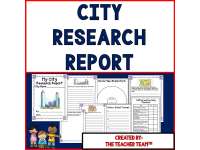
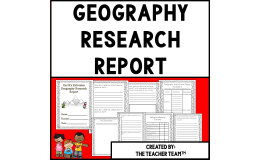
Engage your students with this fun, 35-page resource to help your students produce a research report on a city or cities. It makes report writing fun and easy! This report resource contains worksheets, organizers, tools and forms to use for your students to create, develop, write, edit, illustrate, present, and assess your students’ research report.
This report (or performance task) is also designed to not only to learn and explain the new information, but answer some higher level thinking questions (Common Core Essential Questions) to apply the knowledge they have learned.
This report package is designed to have your students choose one city, or perhaps the city in which they live, and research it allowing them to complete this report.
A simple rubric and student checklist is included. You can also add to this report by asking your students to do a model or large poster of their city as well.
You can use this report template in its entirety, or “pick and choose” the questions that you wish to use and tailor it to your students’ needs. This package contains the following city report elements:
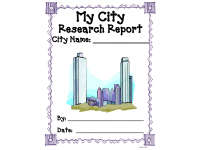
• Title Page- Templates Provided- City Name, Student name and date.
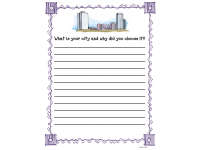
• Which city did you choose and why did you choose it?
• What is the location of your city, and describe its proximity to other major cities nearby.
• Illustrate the city’s location.
• What is your city’s population as of today?
• What year was your city established, what is its history, and what are some interesting facts about this city.
• Describe your city’s landforms. If there were not any buildings or homes, what would the terrain (land) look like?
• Describe your city’s landmarks.
• Illustrate the landmarks.
• What is the weather like throughout the year in your city?
• Describe your city’s government. Who are the mayor, and who are the leaders who help run the city?
• What are the major types of transportation (cars, bikes, trains, subways, buses, etc.) in your city?
• City helpers are very important to cities. What are your police people and fire people like in your city? Have you ever visited where these helpers work?
• What are some fun activities that people like to do in your city?
• What are the schools like in your city? Describe your school.
• Are there any wild animals in your city? If so, how has their habitat changed?
• Why do you think people choose to live in your city?
• Compare and contrast your city with another city that interests you. What are their similarities and differences?
• If you could interview one person in your city, who would it be and why would you like to interview this person?
• Fast forward into the future and predict what your city will be like. What improvements or changes would you make and why would you make them?
• An Additional Information page has been included for students who wish to provide additional information about other interesting facts not included in other areas of this research report.
• Blank paper to add to any of the questions if more room is needed.
• A “Circle Map” has been included for your students to write down some basic, preliminary information about the city they chose.
• Ideas on how to research your report
• Note taking bullet form template
• Note taking lined form template
• Resource pages and Bibliography Template
• Student Checklist for editing and revising
• Rubric for Performance Task Assessment
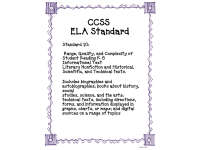
• Common Core ELA Standard
• Teacher Notes
Related resources
More resources teachers may find useful
24 related resources were found using this product's title, contributor, categories and tags.


In the classroom
Teaching tips & learning objectives

Learning objectives
Students will research and record factual information about a self-selected city across multiple categories, including location, history, government, and landmarks.
Students will cite at least one book, encyclopedia, magazine, or internet source used in their research.
Students will illustrate their chosen city's location and a famous landmark to accompany their written report.

Teaching tips
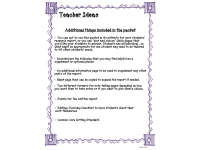
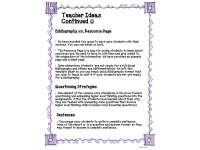
The teacher-ideas pages note the packet can be used in full or with pages picked individually for different students, since research ability varies.
Two note-taking page formats are provided so students can choose how they prefer to record research before drafting answers.
The bibliography template is left blank so teachers can decide which citation format their students are ready to use, or skip it for younger writers.

Skills covered
Informational research writing — students answer eighteen structured prompts to build an organized report about a real city.
Self-editing — students apply a spelling, punctuation, and capitalization checklist to revise their own report.
Map and landmark illustration — students draw their city's location and a landmark to accompany the written sections.
Good to know
Questions teachers ask about this resource
Can the report be assigned a section at a time instead of all at once?
Yes. The teacher-ideas pages describe picking and choosing individual prompt pages to fit different students' abilities rather than assigning the full eighteen-prompt set.

No reviews yet
Downloaded this resource? Tell other teachers how it went.
Curriculum
Standards, concepts & topics
Standards
 Standards
- W.3.7
Core concepts
 Core concepts
City research
Informative writing
Citing sources
Self-editing checklist
 Topics
Explore related searches
More to explore
You may also like