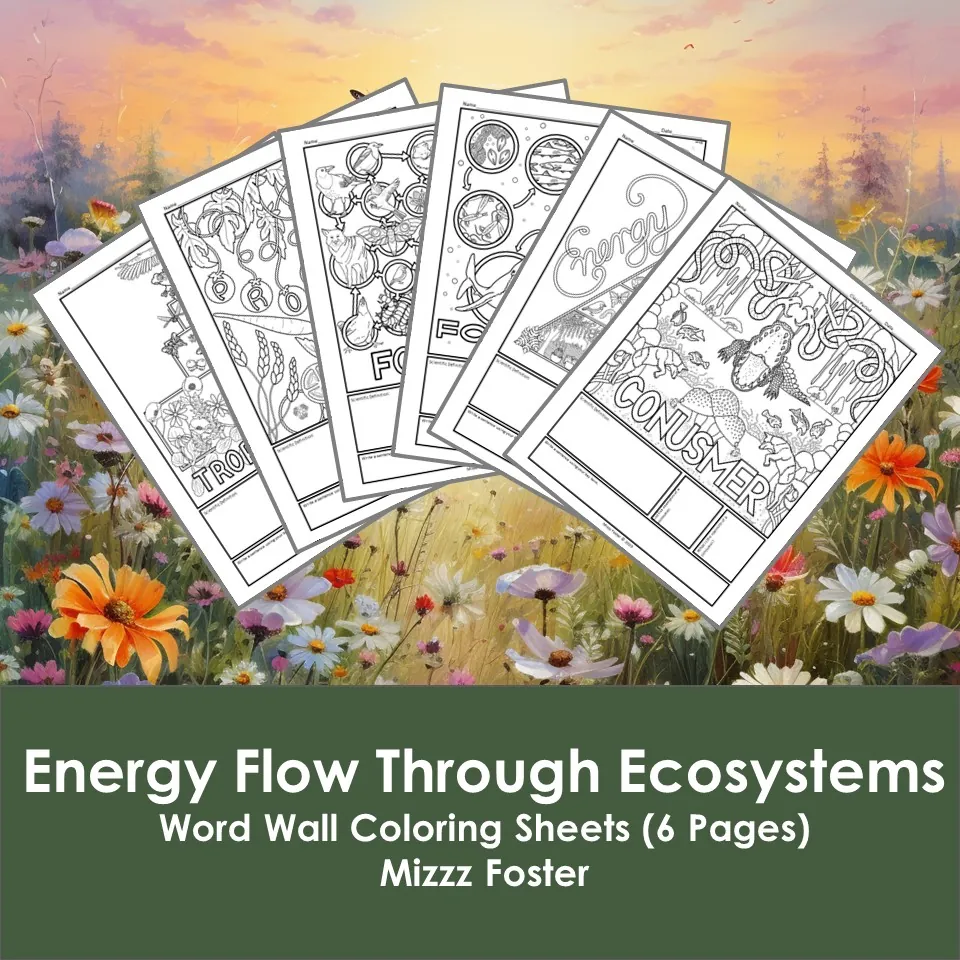
Energy Flow Through Ecosystems Word Wall Coloring Sheets (6 pgs.)
- Grades
- Grades 5–7
- Pages
- 6
- File type
- Preparation
- Print ready


- Subject
- Science, Vocabulary
- Topic
- Ecosystem energy flow, Food chains
- Resource types
- Coloring Pages
- Preparation
- Print ready
- Standards
- L.6.6
Product description
From the author
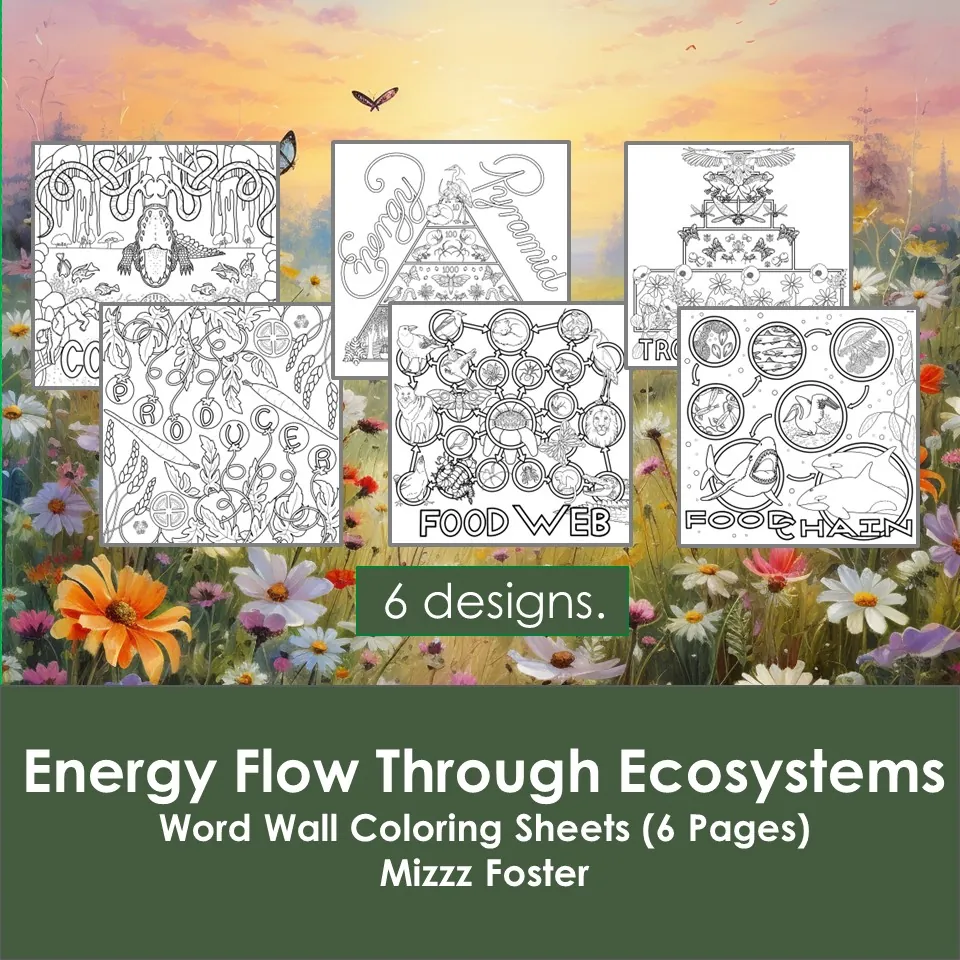
The Ecosystem Energy Flow Set comprises key terms: Consumer, Producer, Food Chain, Food Web, Energy Pyramid, and Trophic Levels.
Coloring pages have gained immense popularity worldwide. Explore my latest series of word wall coloring pages to infuse color and engagement into your middle and high school science classes.
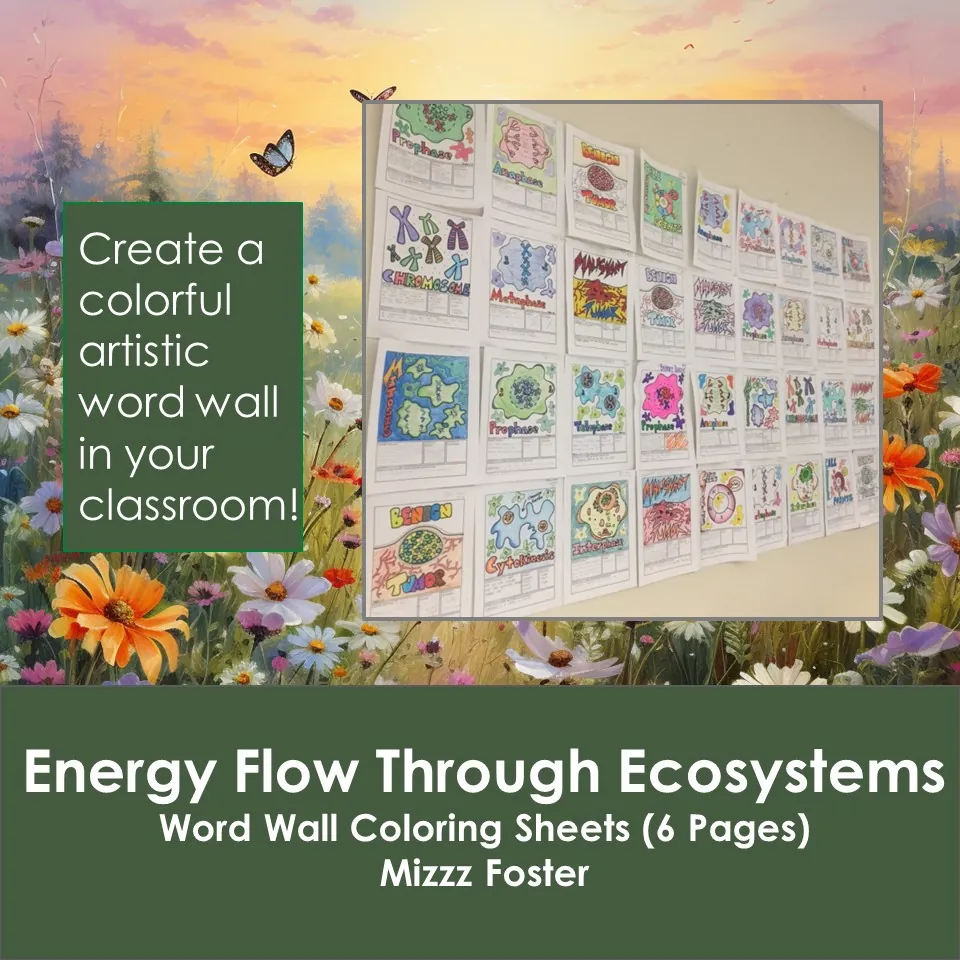
Word Walls, initially an elementary teaching tool, has proven successful when incorporated into secondary education. In Texas, my administrators encouraged its use in our classrooms, leading to remarkable outcomes. Students embraced the task of designing word wall displays, fostering pride in their contributions. This dynamic display sparked interaction as students admired each other's creations. Over time, I observed students frequently glancing at the word wall, particularly during spontaneous quizzes or warm-up exercises. The word wall bolstered their retention of vocabulary, providing a constant reference point.
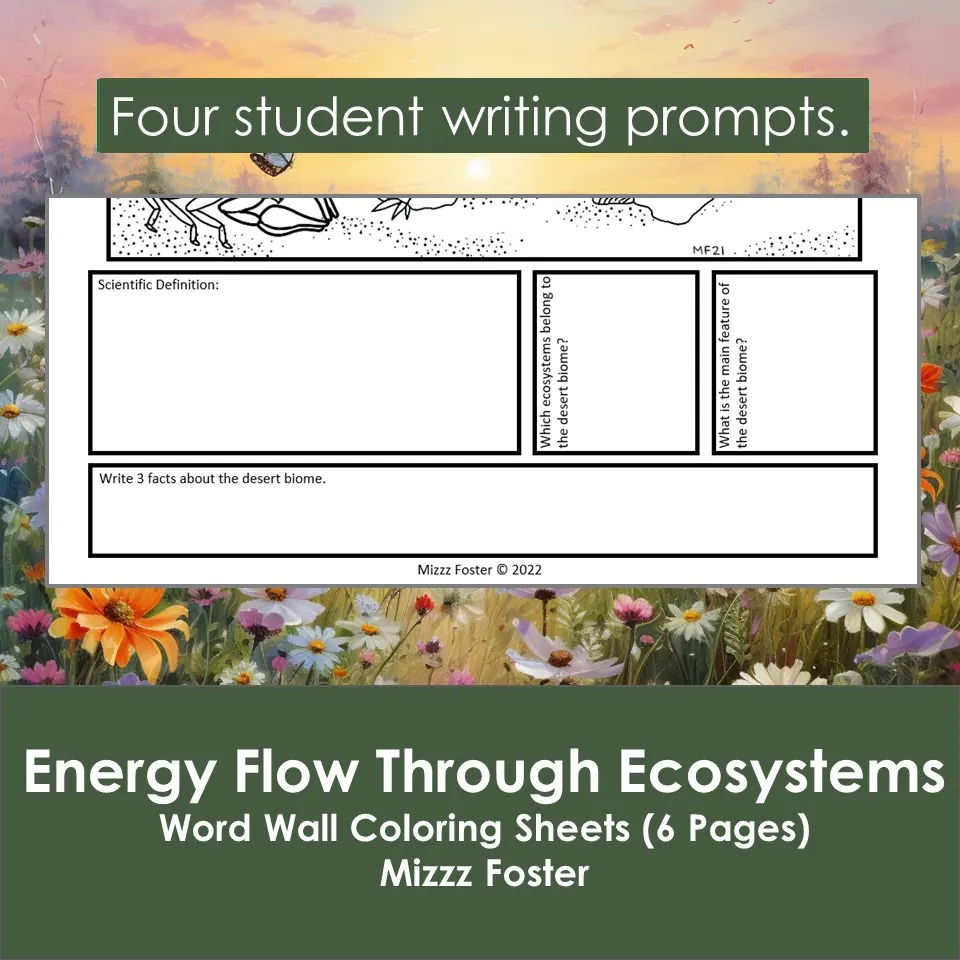
Each sheet combines a coloring section, scientific definition and sentence-writing line with term-specific prompts about examples, food webs or energy transfer.
To assist students struggling with word wall activities, I developed coloring pages. While self-motivated artists can opt for a blank template, these coloring pages offer a creative outlet for those seeking guidance.
I've found word walls particularly effective post-tests, for introducing new vocabulary in a relaxed manner, as substitute assignments, and for extra credit. They also serve as an enjoyable means to revisit challenging words.
Related resources
More resources teachers may find useful
24 related resources were found using this product's title, contributor, categories and tags.
In the classroom
Teaching tips & learning objectives

Learning objectives
Define producer, consumer, food chain, food web, energy pyramid, and trophic level in a scientific-definition box
Generate examples and opposites, including five examples of a consumer, favorite producers to eat, and the opposite of consumer and producer
Use each key term correctly in an original written sentence

Teaching tips
Assign one sheet per term as vocabulary is introduced — each sheet is its own PDF, so the set splits naturally across an ecosystems unit
Pair the energy pyramid and trophic level sheets: one asks where the pyramid's energy originates and how much is retained, the other how much is lost and which level gets the least
Collect finished sheets for a classroom vocabulary display — every page carries name, class period, and date lines for attribution

Skills covered
Science vocabulary building — students write a scientific definition and an original sentence for each of the six energy-flow terms.
Food web interpretation — the food web sheet asks which organism is the producer and how many secondary consumers appear in its web.
Energy-transfer reasoning — energy pyramid and trophic level prompts cover where energy originates, how much is retained, how much is lost, and which level receives the least.

No reviews yet
Downloaded this resource? Tell other teachers how it went.
Curriculum
Standards, concepts & topics
Standards
 Standards
- L.6.6
Core concepts
 Core concepts
Energy flow
Ecosystems
Food chains and webs
Trophic levels
 Topics
Explore more
Categories this resource belongs to
Explore related searches
More to explore
You may also like