French: Logic Puzzle- A recent trip to Paris
- Grades
- Grades 7–10, Middle School, High School
- Pages
- 4
- File type
- Answer key
- Included


- Subject
- Foreign Languages, French
- Topic
- French logic puzzle, Paris travel
- Resource types
- Games, Activities, Worksheets, Worksheets & Printables
- Answer key
- Included
Product description
From the author
In this resource file, you will find a worksheet of a Logic Puzzle for learners of French.
This puzzle is for: Une visite récente à Paris.
The resource is aimed at students of grades 7- 10. Students must be familiar with the Perfect Tense in French (Le passé composé) to complete this puzzle.
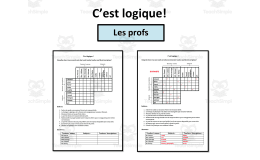
The worksheet includes:
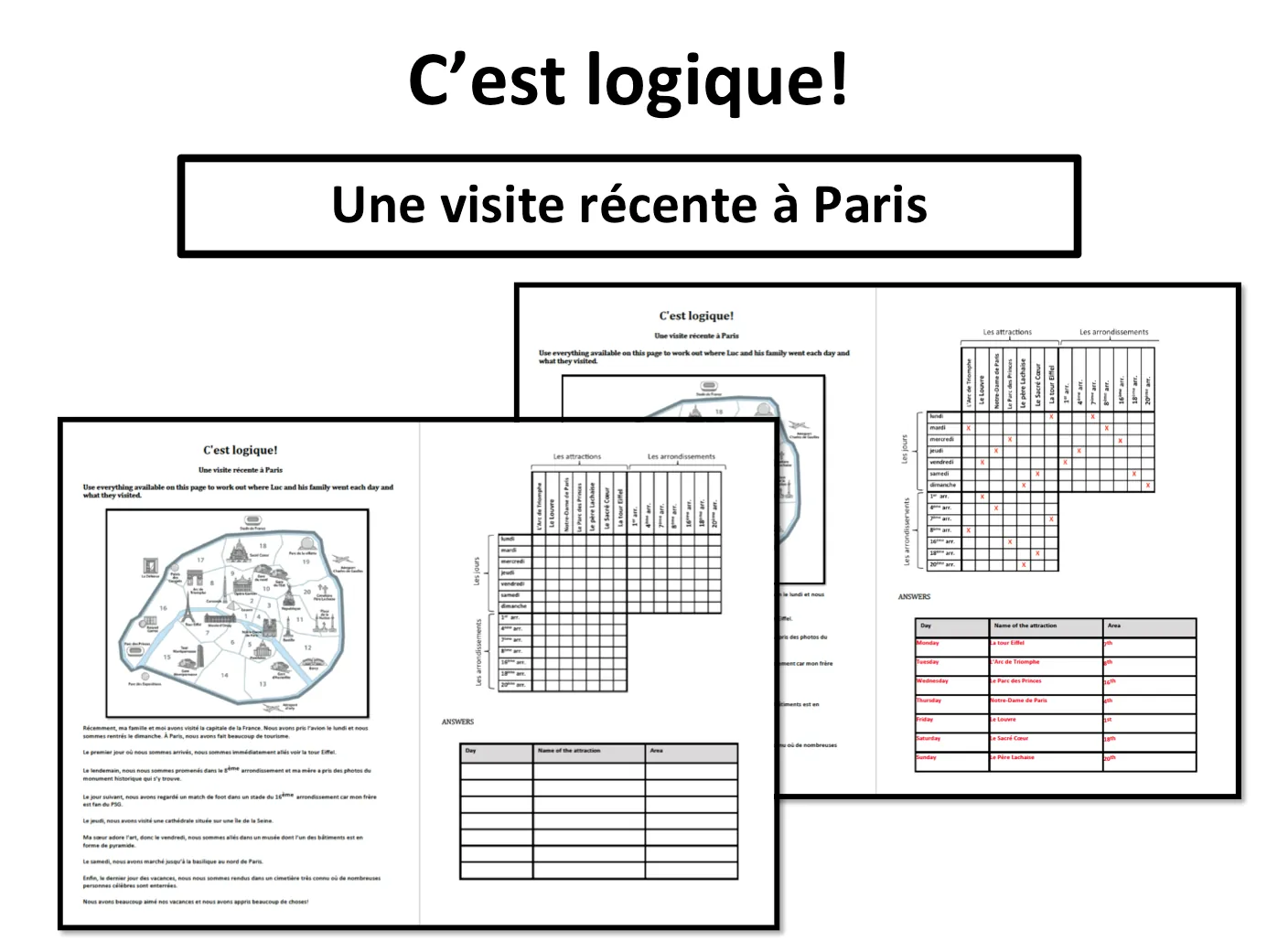
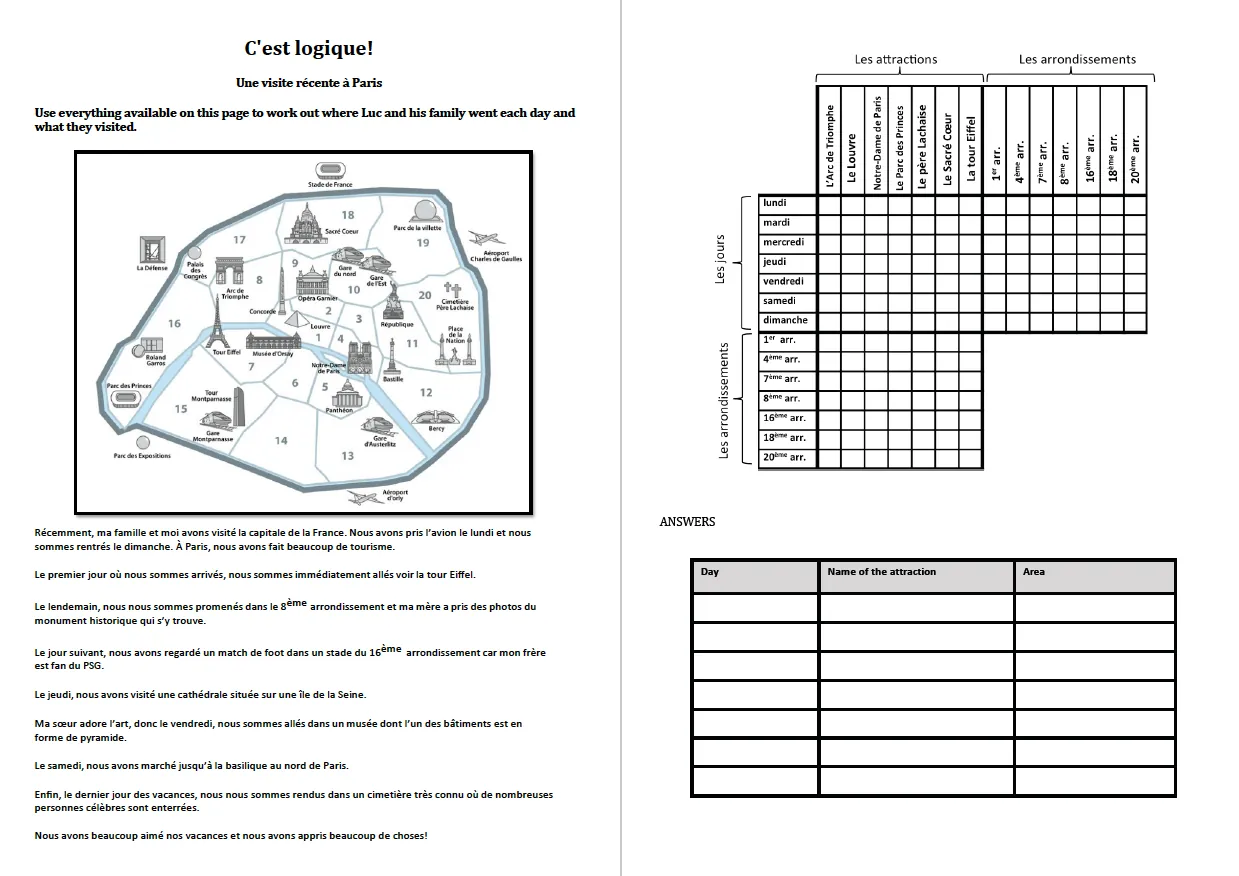
- a small map of Paris with some of the most famous landmarks
- a summary of Luc's activities during his trip to Paris with his family
- a logic grid
- a table for the solution
The French passage uses the perfect tense for completed trip events and present-tense landmark descriptions.
Instructions:
To complete the activity, students must use both the map of Paris and the clues from the written passage (both on page one of the .pdf document) and fill out the matrix with the clues in an attempt to deduce the solution (on page two of the .pdf document)
The solution table is then used for students to show the solution to the question: Where did Luc and his family go each day and what did they visit?
Answers:
A second .pdf document is provided with answers to the logic grid and the solution table.
Please note that the .pdf files are not editable
Related resources
More resources teachers may find useful
24 related resources were found using this product's title, contributor, categories and tags.


In the classroom
Teaching tips & learning objectives

Learning objectives
Read a continuous French narrative in the passé composé, including reflexive constructions such as nous nous sommes promenés and nous nous sommes rendus
Identify Paris landmarks from description alone - a cathedral on an island in the Seine, a museum with a pyramid-shaped building, a basilica in the north of the city
Combine two sources of information, the written clues and the map, to complete a logic grid where neither source is enough on its own

Teaching tips
Only one landmark is named outright in the passage; the other six are described, so a class new to Paris geography will need the map introduced before they start
Ask students to highlight completed trip activities in the passé composé and distinguish them from present-tense landmark descriptions
The solution table can be completed in French or in English depending on the class, since the attraction names stay in French either way

Skills covered
Reading French in the perfect tense - trip events use passé composé forms with both auxiliaries, from nous avons pris l'avion to nous sommes rentrés.
Deductive reasoning - seven days, seven attractions and seven arrondissements are matched on a logic grid where each clue eliminates possibilities.
Reading a city map - the arrondissement column can only be completed by locating each landmark on the Paris map printed with the puzzle.
Good to know
Questions teachers ask about this resource
What French should students know?
The passage uses passé composé with avoir and être for trip events, alongside present-tense descriptions. Days of the week, time markers, and landmark vocabulary help students follow the clues.
Are the landmarks named in the passage?
Only one is. The Eiffel Tower is named on the Monday; the other six are described rather than named - a historic monument in the 8th, a stadium in the 16th where PSG play, a cathedral on an island in the Seine, an art museum with a pyramid-shaped building, a basilica north of the city, and a famous cemetery where many well-known people are buried.
What goes into the solution table?
Three columns across seven rows. Each row takes a day from Monday to Sunday, the name of the attraction visited, and the area - the arrondissement number. The completed version runs from the Eiffel Tower in the 7th on Monday to Père Lachaise in the 20th on Sunday.

No reviews yet
Downloaded this resource? Tell other teachers how it went.
Resource details
Concepts & topics
Core concepts
 Core concepts
French
Passé composé
Logic puzzle
Reading comprehension
Paris
 Topics
Explore more
Categories this resource belongs to
Explore related searches
More to explore
You may also like