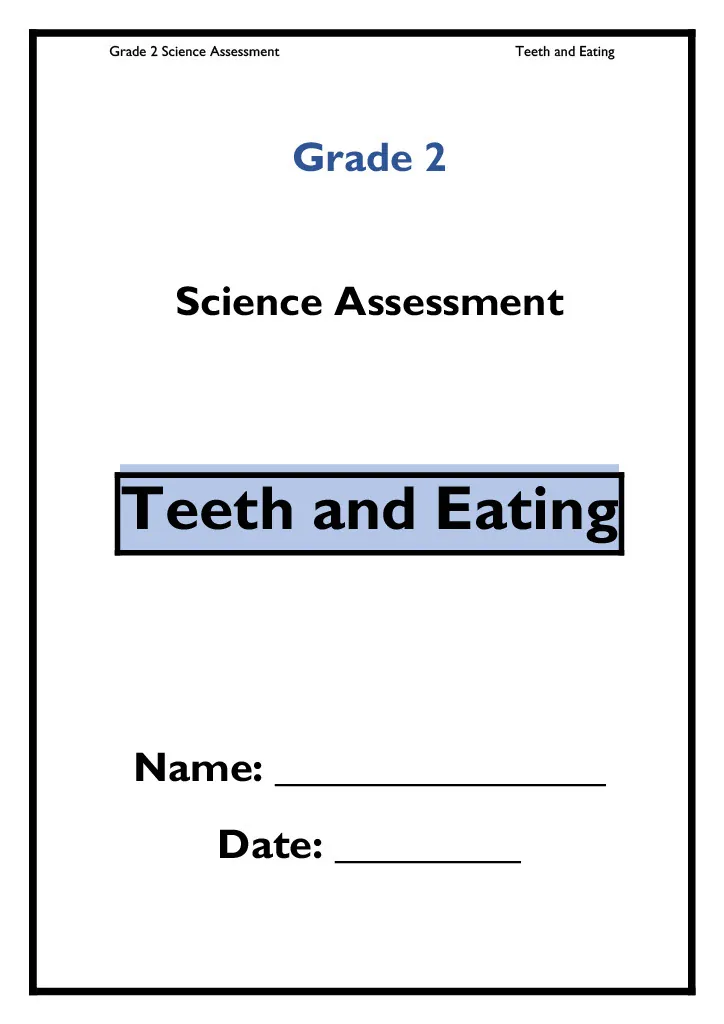
Grade 2 Teeth and Eating Science Assessment
- Grades
- Grade 2
- Pages
- 5
- File type
- Answer key
- Included


- Subject
- Science, Human Body
- Topic
- Teeth, Animal diets
- Resource types
- Assessments
- Answer key
- Included
Product description
From the author
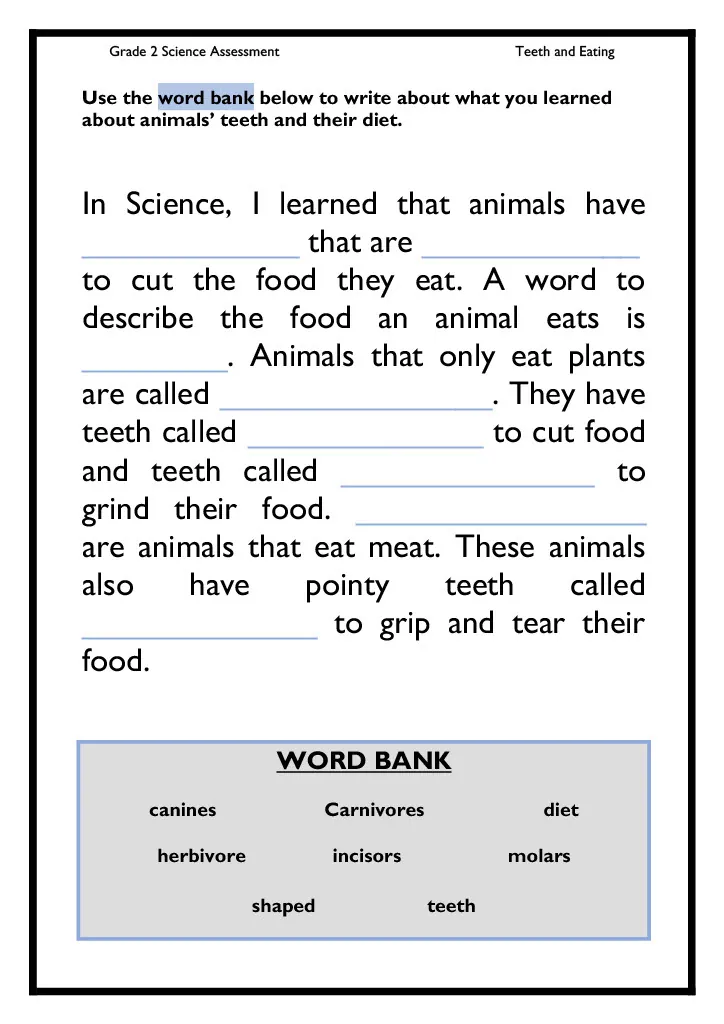
This is a Grade 2 Teeth and Eating Science Assessment that was designed for your 2nd grade students who have learned about animal eating habits.
What You Get:
You will receive 2 different PDFs in this zip file.
1. Teeth and Eating Science Assessment
2. Teeth and Eating Science Assessment Answer Key
How To Implement the Grade 2 Teeth and Eating Science Assessment:
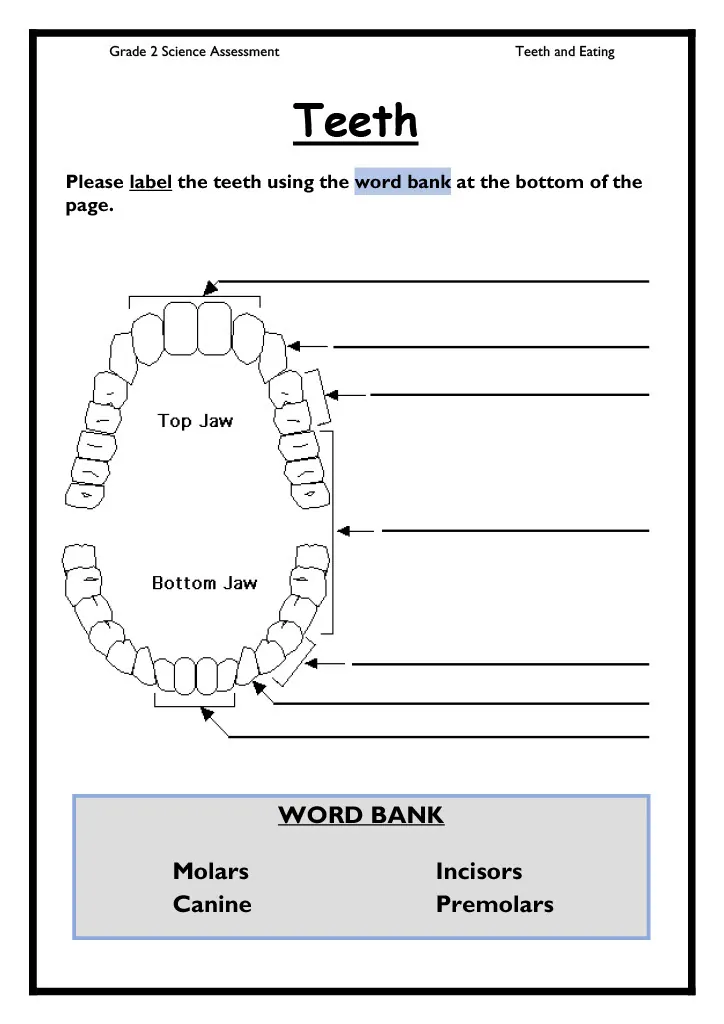
This assessment works best after a science unit or lesson that focused on the different animal diets. Students will learn about herbivores and carnivores. Learning the various animal diets will pair with learning about what type of teeth they have to support their particular diet. At the end of your lesson or unit, you can utilize this assessment with your 2nd grade students to determine their mastery. Print a copy for each student. Allow students time to complete the 2-page assessment. The first page is the labeling of the teeth. The second page is a fill-in-the-blank that is accompanied by a word bank.
I hope you enjoy!
Related resources
More resources teachers may find useful
24 related resources were found using this product's title, contributor, categories and tags.


In the classroom
Teaching tips & learning objectives

Learning objectives
Label the four types of teeth (incisors, canines, premolars, molars) on a diagram
Use vocabulary terms (herbivore, carnivore, diet, incisors, molars, canines) to complete a passage about tooth shape and diet
Explain that plant-eating animals rely on incisors and molars while meat-eating animals also use pointed canine teeth

Teaching tips
Use after instruction on tooth types and animal diets.
Review both parts with the supplied answer file.
Use “herbivores” in the word bank and completed sentence. Explain that the passage describes examples of animals with teeth; its tooth patterns are a simplified model, not a rule for every animal.

Skills covered
Anatomical labeling — students identify incisors, canines, premolars, and molars on a tooth diagram.
Vocabulary application — students complete a cloze passage using terms such as herbivore, carnivore, diet, and molars.
Structure-function reasoning — students connect tooth shape (cutting, grinding, tearing) to what an animal eats.
Good to know
Questions teachers ask about this resource
Which animal diet types does the assessment cover?
Herbivores and carnivores — the passage and word bank focus on how each group's teeth (incisors and molars for herbivores, plus pointed canines for carnivores) relate to their diet.

No reviews yet
Downloaded this resource? Tell other teachers how it went.
Resource details
Concepts & topics
Core concepts
 Core concepts
Tooth types
Herbivore and carnivore diets
Structure and function
Topics
 Topics
Explore more
Categories this resource belongs to
Explore related searches
More to explore
You may also like