Guided Reading Activity Snow Monsters Do Drink Hot Chocolate Trifold


- Grades
- Grades 2–4, Elementary
- Pages
- 5
- File type
- Answer key
- Included


- Subject
- ELA, Reading
- Topic
- making inferences, reading strategies
- Resource types
- Projects, Activities, Teacher Tools, Graphic Organizers, Worksheets & Printables, Novel Studies
- Answer key
- Included
- Standards
- CCSS.RL.3.1 CCSS.RL.3.3 +4
About this resource
What's inside this resource
Snow Monsters Do Drink Hot Chocolate by Marcia Thornton Jones and Debbie Dadey is part of the Bailey School Kids series, where the kids investigate strange happenings around their school. When a blizzard traps the kids at school and mysterious, snow-monster-like figures are spotted, they begin to suspect their substitute teacher might not be entirely human. The Bailey School Kids unravel the mystery, blending snowy fun with spooky surprises.
This trifold activity is created to help students practice reading comprehension skills while providing differentiated instruction for various reading levels. This tool can be used during guided reading, as independent seat work, or within literature circles. The included writing wrap-up allows for assessing multiple skills in one cohesive project, making it an ideal, standards-aligned resource for busy teachers. Grading opportunities for reading comprehension, reading skill work, and writing are available.
What’s Included in This Resource:
Each trifold is broken into chapters to allow for teacher skill guidance and manageable chunking for student comprehension.
Skill Development Activities:
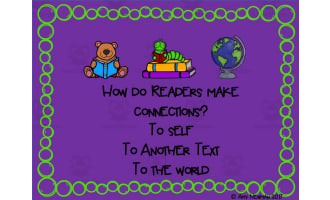
Making Connections: Encourage students to relate the story to their own lives, other texts, and the wider world.
Making Inferences: Help students combine text evidence with prior knowledge to draw logical conclusions.
Using Context Clues: Teach students to deduce the meaning of unfamiliar words using hints from the text.
Visualization: Support students in creating mental images of characters, events, and settings.
Evaluation: Develop critical thinking by analyzing characters, themes, and the author’s message.
Writing Wrap-Up: A creative assessment tool for reflection and deeper understanding.
How This Resource Benefits Teachers:
✔ Provides differentiated instruction for diverse learners.
✔ Fosters deeper text engagement and critical thinking.
✔ Offers flexibility for grades, seat work, or group discussions.
What Teachers Are Saying:
⭐ "This resource made my guided reading groups more organized and productive!" - Rebecca T.
⭐ "Perfect for differentiation and keeping all students engaged at their level." - Larraine C.
⭐ "My students loved the activities, and it worked seamlessly in our literature circles!" - Celia N.
Related resources
More resources teachers may find useful
24 related resources were found using this product's title, contributor, categories and tags.


In the classroom
Teaching tips & learning objectives

Learning objectives
- Make connections between the story and their own experience
- Use context clues to work out unfamiliar words
- Evaluate characters and events in the novel

Teaching tips
- Students need their own copy of the novel and sticky notes to mark passages for each section's strategy.
- The teacher notes suggest grading out of 25 points, five per section, so the finished trifold can serve as a reading grade.

Skills covered
- Making inferences — combining story details with what they already know in written responses
- Visualization — describing the images they form of characters and scenes
- Strategy marking — flagging passages in the book with sticky notes

No reviews yet
Downloaded this resource? Tell other teachers how it went.
Curriculum
Standards, concepts & topics
Standards
 Standards
- CCSS.RL.3.1 — Ask and answer questions to demonstrate understanding of a text, referring explicitly to the text as the basis for the answers.
- CCSS.RL.3.3 — Describe characters in a story (e.g., their traits, motivations, or feelings) and explain how their actions contribute to the sequence of events.
- CCSS.RL.4.1 — Refer to details and examples in a text when explaining what the text says explicitly and when drawing inferences from the text.
- CCSS.RL.4.3 — Describe in depth a character, setting, or event in a story or drama, drawing on specific details in the text (e.g., a character’s thoughts, words, or actions).
- CCSS.RL.2.1 — Ask and answer such questions as who, what, where, when, why, and how to demonstrate understanding of key details in a text.
- CCSS.RL.2.3 — Describe how characters in a story respond to major events and challenges.
Core concepts
 Core concepts
- Making connections
- Context clues
- Making inferences
- Visualization
- Evaluation
 Topics
Explore more
Categories this resource belongs to
Explore related searches
More to explore
You may also like