2,516 products added recently
Graphic Organizers
Incorporate graphic organizers into your teaching to help students organize information visually. This collection includes mind maps, Venn diagrams, flowcharts, and more, suitable for various subjects and grade levels. By using graphic organizers, you can aid comprehension, facilitate critical thinking, and improve retention.
The Nightingale Lapbook Project Reading & Writing Grades 3 4 5 ELA
ESL, Language Development, ELA, Literary Devices, Literature, Reading Comprehension, Reading, Strategies, Grade 3, 4, 5, Centers, Activities, Crafts, Projects, Assessments, Teacher Tools, Graphic Organizers, Templates
Discover the amazing tale of The Nightingalethrough this dynamic The Nightingale Lapbook Project made especially for Grades 3, 4, and 5 learners, homeschoolers and EFL/ESL students. This interactive resource is packed with activities for your reading class, reading centers, ELA projects, fairy tale units, and reading comprehension assessment tool and so much more! What’s Inside: •3 The Nightingale Lapbook Leveled Reading Passages (Easy, Average, Hard) •6 The Nightingale Lapbook Unique Cover Options •2 The Nightingale Lapbook Name Page Versions (for individual and group projects) •1 The Nightingale Lapbook Center Page •3 The Nightingale Lapbook Story Summary Templates •2 The Nightingale Lapbook Theme and Message Pages •2 The Nightingale Lapbook Sequencing Pockets •6 The Nightingale Lapbook Picture Event Cards •3 The Nightingale Lapbook Event Sequencing Sets – Easy, Average, Hard (6 cards each) •6 The Nightingale Lapbook The Nightingale Lapbook Retell Cue Cards •1 The Nightingale Lapbook Character Foldable •1 The Nightingale Lapbook Setting Accordion Fold •1 The Nightingale Lapbook Story Elements Foldout •1 The Nightingale Lapbook Book Rating Page •1 The Nightingale Lapbook Personal Connection Page
Author It's Teacher L
Rating
Tags The Nightingale, Reading Comprehension, ELA Project, Reading Centers
Weekly Math Syllabus Doodle Notes
Creative Arts, Graphic Arts, ELA, Writing, Resources for Teachers, High School, Homeschool Resources, Middle School, Teacher Tools, Graphic Organizers, Outlines, Templates, Worksheets & Printables, Writing Prompts
Transform your mathematics teaching with these dynamic Weekly Math Syllabus Doodle Notes . As a homeschool mom to a creative teenager, I thoughtfully crafted these to make math planning more organized, effective, and visually engaging. These innovative planning templates bridge the gap between logical mathematical thinking and creative visual organization, providing a comprehensive system for documenting and planning your students'/homeschoolers' weekly math curriculum. The unique doodle note format combines structured planning spaces with visual elements that enhance information retention and make the planning process enjoyable for educators while creating clear expectations for students/homeschoolers. INCLUDED IN THIS RESOURCE: Comprehensive weekly math planning template with visually engaging design Designated spaces for learning objectives, content focus, and instructor information Daily sections for documenting classwork, quizzes, tests, and attendance Specialized "Topics to Cover" sections specifically designed for math curriculum Homework planning areas with assignment tracking and website research spaces Visual note-taking spaces that encourage creative organization of mathematical concepts Writing prompt sections to encourage mathematical reasoning and explanation. Give a boost to your mathematics instruction with these Weekly Math Syllabus Doodle Notes , combining logical organization with visual creativity for a more effective teaching experience. These thoughtfully designed templates transform the potentially overwhelming task of mathematics curriculum planning into an organized, engaging process that benefits both educators and students/homeschoolers. Doodle notes are proven to enhance engage and creativity for any subject! If you and your students/homeschoolers enjoyed this resource, please leave a review. Tina - Big Easy Homeschooling Mom
Author Homeschool with Big Easy Homeschooling Mom
Rating
Tags Visual Aids, Visual Learning Tools, Math Planning, Visual Math Teaching , Math Syllabus, Math Doodle Notes, Math Curriculum Organizer, Weekly Planning Templates, Math Resources, Creative Math Resources
The Steadfast Tin Soldier Lapbook Project Reading Writing Grades 3 4 5
Language Development, ELA, ESL, Literature, Literary Devices, Children’s Literature, Reading Comprehension, Reading, Strategies, Grade 3, 4, 5, Activities, Crafts, Centers, Projects, Graphic Organizers, Teacher Tools, Templates
Encourage strength of spirit through the classic tale of The Steadfast Tin Soldierwith this The Steadfast Tin SoldierLapbook Project . This purposeful resource is created for Grades 3, 4, and 5 students, homeschoolers and EFL/ESL learners and designed to be used for reading classes, reading centers, fairy tale units, reading comprehension assessment tool, sub plan and more! Contents: •3 The Steadfast Tin SoldierLapbook Leveled Reading Passages (Easy, Average, and Hard) •6 The Steadfast Tin SoldierLapbook Cover Options •2 The Steadfast Tin SoldierLapbook Name Page Designs (for individual or group use) •1 The Steadfast Tin SoldierLapbook Inner Overlap Panel •3 The Steadfast Tin SoldierLapbook Story Summary Page Formats •2 The Steadfast Tin SoldierLapbook Thematic Message Pages •2 The Steadfast Tin SoldierLapbook Pockets for Story Sequence Cards •6 The Steadfast Tin SoldierLapbook Illustrated Sequence •3 The Steadfast Tin SoldierLapbook Sets of Sequencing Cards – Easy, Average, and Hard (6 cards each) •6 The Steadfast Tin SoldierLapbook Story Retell Cards •1 The Steadfast Tin SoldierLapbook Character Traits Fold •1 The Steadfast Tin SoldierLapbook Story Setting Fold •1 The Steadfast Tin SoldierLapbook Additional Information Foldable •1 The Steadfast Tin SoldierLapbook Story Rating Page •1 The Steadfast Tin SoldierLapbook Reflection Fold
Author It's Teacher L
Rating
Tags The Steadfast Tin Soldier, Fairy Tales, Reading Comprehensio, Reading Centers, ELA Project
Adam and Eve Lapbook Grades 4 5 6 Bible Story ELA
ELA, ESL, Language Development, Children’s Literature, Literature, Reading Comprehension, Reading, Strategies, Homeschool Templates, Grade 4, 5, 6, Centers, Activities, Projects, Graphic Organizers, Teacher Tools, Templates
Encourage the love for reading and continue spreading the faith with this Adam and Eve Lapbook ! This lapbook project is made for Grades 4, 5, 6, homeschool settings, and EFL/ESL learners, and perfect for Sunday Bible study/ school, ELA classes, and assessment tool for reading comprehension. What’s Included: 6 Adam and Eve Lapbook Cover Options 2 Adam and Eve Lapbook Name Pages 1 Adam and Eve Lapbook Inner Overlap Panel 2 Adam and Eve Lapbook Story Summary Templates 1 Adam and Eve Lapbook Main Message Page – 1 Adam and Eve Lapbook Sequencing Pocket 6 Adam and Eve Lapbook Visual Story Sequence Cards 3 Adam and Eve Lapbook Levels of Sequencing Sets 6 Adam and Eve Lapbook Retelling Cards 1 Adam and Eve Lapbook Character Reflection Fold 1 Adam and Eve Lapbook Story Setting 1 Adam and Eve Lapbook Story Rating Page 1 Adam and Eve Lapbook This Adam and Eve Lapbook is perfect for reading comprehension, reading strategies, writing exercise, sequencing, retelling, self-reflection, and creative exercise.
Author It's Teacher L
Rating
Tags Adam And Eve, Bible Studies, Bible Story, Bible Lesson, Reading Comprehension, ELA Lapbook
Weekly Science Syllabus Doodle Notes
ELA, Writing, Graphic Arts, Creative Arts, Science, High School, Homeschool Resources, Middle School, Worksheets & Printables, Writing Prompts, Teacher Tools, Graphic Organizers, Templates, Outlines
Are you ready to breathe new life into your science lessons? T hese Weekly Science Syllabus Doodle Notes were born out of my own frustration as a homeschool mom trying to juggle curriculum planning while keeping my kids actually interested in science. Trust me, I have spent countless late nights staring at bland planning sheets thinking, "There has to be a better way!" After one too many uninspiring science lessons, I created these templates that have completely transformed how we approach science in our homeschool. These are not just another pretty printable—they are the answer to that moment when you realize your kiddo has retained exactly zero information from last week's lesson on photosynthesis! I have designed them to be your visual playground, where mapping out experiments and research activities becomes something you and your students/homeschoolers actually look forward to. My own teenage daughter went from groaning about science to pointing at their doodle notes saying, "Remember when we did that cool experiment?" The secret sauce? These notes engage both the logical and creative sides of your brain, which means those scientific concepts finally stick—no more blank stares when you ask, "Remember what we learned last Tuesday?" These have been a game-changer in our homeschool, and I can't wait for them to transform yours too! INCLUDED IN THIS RESOURCE: ✔Comprehensive weekly science planning template with visually engaging design ✔Designated spaces for scientific learning objectives, content focus, and instructor information ✔Daily sections for documenting science classwork, lab activities, quizzes, and attendance ✔Specialized reading assignment sections for scientific texts and research articles ✔Homework planning areas with website research recommendations and writing prompts ✔Visual note-taking spaces that connect scientific concepts with creative representation ✔Structured organization that accommodates the unique needs of science instruction Sunday nights used to be my nightmare—frantically scrambling to plan science lessons while dreading the glazed-over looks I would get from my teenager the next day. Sound familiar? Those days are OVER! With these Weekly Science Syllabus Doodle Notes , I have actually caught myself looking forward to planning time (weird, right?). Let me tell you, juggling high school science with a creative teen who'd rather be doing anything else pushed me to my breaking point. My kitchen table was buried under boring worksheets that neither of us was excited about. That is when I decided to create these templates—not because I am some super-organized homeschool mom (ha!), but because I desperately needed something that would work for both my planning sanity AND my visually-oriented teenager. The magic happens when organization meets creativity! Now my daughter can actually see what is coming each week, and those complex scientific concepts finally stick because the visual elements speak her language. I still cannot believe how much easier our science days flow now! Seriously, grab these today—your future bleary-eyed, lesson-planning self will high-five you when you realize science class has transformed from a battle to the highlight of your homeschool week! If you and your students/homeschoolers enjoyed this resource, please leave a review. Thank you for your support! Tina - Big Easy Homeschooling Mom Website: tidewindacademyhomeschool.com
Author Homeschool with Big Easy Homeschooling Mom
Rating
Tags Visual Aids, Visual Learning Tools, Weekly Planning Template, Science Planning, Science Syllabus, Creative Syllabus Templates For Science Students/homeschoolers, Science Curriculum Organizer, Creative Teaching Tools, Homeschool Science Organization, Homeschool Planning
3D Shape Nets Identification Worksheet
Geometry, Math, Grade 5, 6, 7, 8, Worksheets & Printables, Diagrams, Teacher Tools, Graphic Organizers
3D Shape Nets Identification Worksheet Learning about 3D shapes doesn’t have to be complicated. This activity makes it easy for students to understand how 2D nets fold to form familiar 3D solids such as prisms, pyramids, cones, and cylinders. The worksheet is neatly organized, showing each net alongside three possible shape names for students to choose from. It’s a simple and visual way to help learners make connections between flat shapes and the solids they create. This resource is ideal for lessons on 3D geometry, shape nets, and solid figures. It’s especially helpful for visual learners who benefit from seeing geometric relationships illustrated clearly, and it makes a great addition to math centers, small-group work, or independent review activities. Using this worksheet helps students build confidence in recognizing and naming 3D shapes while developing stronger spatial reasoning and geometry vocabulary. Teachers will appreciate that it’s ready to print and use right away. The file comes as a two-page PDF, one page for student practice and one page with the answer key for quick checking. It works best for grades 5 through 8, but it can also be used as a review tool for older students who need extra support. Whether you project it for class discussion or print copies for individual use, this geometry worksheet is a practical and engaging way to explore 3D nets and shapes in any math classroom.
Author EduStudio
Rating
Tags 3D Shapes, Geometry Worksheet, Shape Nets, Solid Figures, Spatial Reasoning, Graphic Organizer, Math Activity, Middle School Geometry, Surface Area, Visual Learning
Noah’s Ark Lapbook Grades 4 5 6 Bible Story ELA PROJECT
ELA, ESL, Language Development, Children’s Literature, Literature, Reading Comprehension, Reading, Strategies, Grade 4, 5, 6, Activities, Projects, Graphic Organizers, Teacher Tools, Templates
Let your learners explore the classic Bible story of Noah’s Ark and bring the lessons of loyalty and faith through this Noah’s Ark Lapbook Project. Created for Grades 4, 5, 6, homeschoolers, and EFL/ESL learners, this resource is excellent for Sunday schools and Bible lessons, reading classes, supplemental assessment tool, subplan activities, and more! What’s Included: 6 Noah’s Ark Lapbook Covers to choose from (colorful and black & white versions for student creativity) 2 Noah’s Ark Lapbook Name Pages (for both solo and group use) 1 Noah’s Ark Lapbook Inner Overlap Panel for lapbook structure and layout 2 Noah’s Ark Lapbook Story Summary Pages to help students summarize the story in their own words 1 Noah’s Ark Lapbook Story Message Page to reflect on God’s promise and Noah’s faith 1 Noah’s Ark Lapbook Story Sequence Pocket to hold event cards neatly 6 Noah’s Ark Lapbook Illustrated Story Sequence Photocards for visual storytelling support 3 Noah’s Ark Lapbook Story Sequence Sets (Easy, Average, Hard – 6 cards per set) to meet various learner levels 6 Noah’s Ark Lapbook Story Retell Cards to encourage student voice and comprehension 1 Noah’s Ark Lapbook Character Traits Fold to explore characters' behavior and personalities 1 Noah’s Ark Lapbook Story Setting Fold to describe the world before and after the flood 1 Noah’s Ark Lapbook Book Ratings Page for students to give feedback and express thoughts 1 Noah’s Ark Lapbook Prayer Response Fold to inspire heartfelt, reflective writing
Author It's Teacher L
Rating
Tags Bible Studies, Bible Story, Noah's Ark, Reading Comprehension, ELA Project, Reading Strategies
Guided Reading Activity Ghosts Do Splash in Puddles Trifold Book Repor
ELA, Reading, Grade 2, 3, 4, Activities, Projects, Teacher Tools, Graphic Organizers, Novel Studies, Worksheets & Printables
Ghosts Do Splash in Puddles by Marcia Thornton Jones and Debbie Dadey dives into the adventures of the Bailey School Kids as they investigate a mysterious, translucent figure spotted splashing in puddles on a rainy day. With humor and determination, the kids uncover clues and navigate friendships, making this story a delightful choice for young readers. This trifold resource is created to help students practice reading comprehension skills while providing differentiation for various reading levels. This tool can easily be utilized during guided reading, independent seat work, or literature circles. The included writing wrap-up allows for assessing multiple skills in one project, making it perfect for teachers looking for projects that can cover multiple subjects - reading comprehension, reading skills, and writing. What’s Included in This Resource: Each trifold is broken down by chapters or pages and allows chunking of information for easy teacher planning and appropriate student use. In each trifold, the following skills are assessed: Making Connections: Encourage students to relate the story to their own lives, other texts, and the wider world. Making Inferences: Help students combine text evidence with prior knowledge to draw logical conclusions. Using Context Clues: Teach students to deduce the meaning of unfamiliar words using hints from the text. Visualization: Support students in creating mental images of characters, events, and settings. Evaluation: Develop critical thinking by analyzing characters, themes, and the author’s message. Writing Wrap-Up: A writing assessment tool for reflection and deeper understanding. How This Resource Benefits Teachers: ✔ Provides differentiated instruction for diverse learners. ✔ Fosters text engagement and critical thinking with content. ✔ Offers flexibility for grades, seat work, or group discussions. What Teachers Are Saying: ⭐ "This resource made my guided reading groups more organized and productive!" - Rebecca T. ⭐ "Perfect for differentiation and keeping all students engaged at their level." - Larraine C. ⭐ "My students loved the activities, and it worked seamlessly in our literature circles!" - Celia N.
Author Kel's Klass
Tags Reading Strategies, Trifold Project, Guided Reading, Ghosts Do Splash In Puddles, Bailey Kids, Making Connections, Making Inferences, Context Clues, Evaluating, Visualization
Weekly Core Subject Syllabi Doodle Notes Bundle
Creative Arts, ELA, Writing, Math, Science, Social Studies, Resources for Teachers, High School, Homeschool Resources, Middle School, Worksheets & Printables, Writing Prompts, Teacher Tools, Graphic Organizers, Outlines, Templates
Let's be honest, juggling ELA, Math, History, and Science in our homeschool week can feel overwhelming, right? I have created something that has been a game-changer: this Weekly Core Subject Syllabi Doodle Notes Bundle ! It is like a breath of fresh air – instead of dreading lesson planning, it's actually become kind of fun! These templates use a mix of visual learning and practical organization, which means I'm not scrambling to remember anything, and my teen is way more engaged. Seriously, say goodbye to those boring, dry lesson plans and hello to a colorful and effective way to map out our learning week! INCLUDED IN THIS RESOURCE: ✔Weekly ELA Syllabus Doodle Notes ✔Weekly Math Syllabus Doodle Notes ✔Weekly History Syllabus Doodle Notes ✔Weekly Science Syllabus Doodle Notes ✔Structured templates for daily planning ✔Visually engaging doodle elements This Weekly Core Subject Syllabi Doodle Notes Bundle has truly transformed how I approach our core subjects. By pairing practical organization with those awesome visual learning principles, it's empowered me to create weekly plans that are actually clear, effective, and – believe it or not – enjoyable! It's been amazing to watch my teenager be more engaged and get more involved, organized, and even excited about learning. It is all thanks to a planning system that speaks to both the logical and creative sides of how they learn. If you are looking for a way to streamline your homeschool and make it more inspiring, definitely give this bundle a try! If you and your students/homeschoolers enjoyed this bundle, please leave a review. Thank you for your support! Tina - Big Easy Homeschooling Mom
Author Homeschool with Big Easy Homeschooling Mom
Rating
Tags Weekly Core Subject Syllabi Doodle Notes, Weekly Planners For Students/homeschoolers, Student Engagement, Student Organization, Engaging Syllabi Templates, Subject-specific Planners, Weekly Doodle Notes, Homeschool Curriculum Planner, Syllabus Templates
Black History Month Juneteenth Biography Reading Graphic Organizer 4-5
Common Core, ELA, Social Studies, Reading, Reading Comprehension, Biographies, Grade 4, 5, 6, Activities, Crafts, Graphic Organizers, Teacher Tools
Introduce learners to the amazing lives of Black History Month and Juneteenth pioneers and personalities through this Black History Month | Juneteenth Pioneers Study Pack. Meticulously made for Graders 4, 5, 6, EFL/ESL students and homeschoolers, this jam-packed resource set includes: 2 SETS of 12 Pioneer Biographies Reading Comprehension (COLORED AND BLACK&WHITE SETS) Featuring: 1. Langston Hughes 2. Thurgood Marshall 3. Sojourner Truth 4. Martin Luther King Jr. 5. Sarah E. Goode 6. Wilma Rudolph 7. Billie Holiday 8. Bessie Coleman 9. George W. Carver 10. Phyllis Wheatley 11. Booker T. Washington 12. Ruby Bridges Foldable Biography Graphic Organizers for each pioneers Pioneers Cryptogram Quotes The biography reading comprehension set presents our special pioneers’ story that the students can explore and study. Through the reading texts, they can then complete the foldable graphic organizers that are perfect assessment project and even a perfect showpiece for open house programs! Finally, the cryptogram quote exercises are fun, yet purposeful, activities that the students can do as part of their reading exercise and a perfect addition to morning works. This Black History Month / Juneteenth Study Pack is perfect for ELA, social studies, reading comprehension, and reading project– a valuable resource in your teacher toolbox!
Author It's Teacher L
Tags Black History Month, Juneteenth, Black History Month Biographies, Reading Comprehension, Graphic Organizers, Biography Graphic Organizers, Cryptograms
COMBINED: The FIVE Elements of a Story Graphic Organizers
ELA, Reading, Reading Comprehension, Language Development, Pre-Reading, Writing, Not Grade Specific, Teacher Tools, Graphic Organizers
This BUNDLED resource includes ALL Graphic Organizers from our The Five Elements of a Story series. This set includes custom graphic organizers for Character, Setting, Plot, Theme and Conflict. An additional 5 BONUS graphic organizers are included. These graphic organizers can be used in any classroom, for any grade, and with any student. Use these graphic organizers to help students gain an understanding of the five elements of a story. Each graphic organizer comes with instructions on how to use them. Character Graphic Organizers: Character Map - Write the name of the character in the middle circle. Then, describe the character’s actions in the top left square; what the character says and how they speak in the top right square; the character’s feelings in the bottom left square; and what the character looks like in the bottom right square. Character Trait Chart - Choose a character from the story. In the first column, write down any traits that your character has. Include physical features, personality, feelings, and anything else that describes your character. In the second column, provide evidence from the story to support your chosen trait. Character Feelings - In the top box, describe the character’s feelings at the beginning of the story. In the next series of boxes, describe an event that has an effect on the character, then how this character feels as a result of this event. In the last box, describe the character’s feelings at the end of the story. Relationship Web - Write the name of the main character in the story in the middle circle. In the circles branching out from the middle one, write down the relationships the character has. Include whether you think this is a good relationship or a bad one. Do the same for any other character in the story. Character Comparison - Use the Venn Diagram to compare two characters from the story. Write the names of each character in the overlapping circles. Write any differences the characters have with one another in the outside circles. Write any similarities the characters have in the middle of both circles. Character Scrapbook - Create a scrapbook for one of the characters in the story. Choose a character from the story. Choose some important events that happen in the story that shapes the character. Draw pictures of these events and explain what happened and how it affected the character. Character Analysis - Keep track of every character in the story and their traits. Write the name of each character in the story in the first column. Write a trait that the character has in the second column. In the third column, write down the page and paragraph number of a quote that proves this trait. Character Development - Choose a character from the story. Write down their initial thought on a topic or situation in the first column. In the second column, write down the event that has an effect on that character’s thoughts. Then, write down the character’s new thoughts on the topic or situation in the third column. Character Cluster - ‑is Cluster Map can be completed in many different ways. Start with a character in the middle triangle. Then, branch out from the character with related topics in the circles. Expand on those topics in the rectangles. Suggestions include: relationship web, traits web, feelings web. Character Sketch - Complete this Character Sketch of any character in the story by writing what the character says, thinks, hates, loves, owns, does or uses. Also include the characters strengths and weaknesses, and where the character has come from in the story, and where the character is going. Setting Graphic Organizers: Setting Elements - Place + Time + Environment = Setting in this Graphic Organizer. Describe the Place that the story takes place in the house graphic. Then, describe the Time in the clock graphic. Finally, describe the Environment in the landscape graphic. Setting Stage - Draw the setting that the story takes place in on the stage in this graphic organizer. Be sure to illustrate the time and place that the story takes place in. Also include the environment of the story, and try to show the tone or mood that the setting creates for the story. Changes in Setting - Identify how the Setting changes throughout the story. In the first column, write down when and where the story takes place at the beginning. In the second column, write down when and where the story takes place at the end. Compare the two to show how the setting changed. Setting Comparison - Compare your Setting with the Setting of the story. In the first column, describe your own Place, Time, Environment, and Mood. Then, do the same for the story’s setting in the second column. Finally, compare each element of the setting. What is the same? What is different? Tone and Mood - Where + When = Tone/Mood in this Graphic Organizer. Describe Where the story takes place in the house graphic. Then, describe When the story takes place in the clock graphic. Finally, describe how both of these elements affect the Tone and Mood of the story. Setting Map - Draw a map to show where the story takes place. Include all the important places from the story as the setting changes. As an extra activity, include routes to each place as it happens in the story. Additionally, include the time for each place on your map. Be creative with your drawing. Past, Present, Future - Describe the Setting as it changes throughout the story. In the Past section, write the setting that took place before the story (flashback). In the Present section, write the current setting of the story. In the Future section, write the setting that will take place after the story (flashback). Elements of Setting - Place + Time + Environment + Mood = Setting in this Graphic Organizer. Describe the Place that the story takes place in the top left box. Then, describe the Time in the top right box. Then, describe the Environment in the bottom left box. Finally, describe the Mood in the bottom right box. Character and Setting Comparison - Compare the Characters in the story with the Setting. Write traits that the character and setting share where the circles overlap. Write traits that the character and setting don’t share in the outside circles. Do this for each character and setting in the story. Setting Analysis - Describe each element of the Setting in detail. Describe the setting, how it relates to the characters, and how the characters are in conflict with the setting. Then, identify the tone and mood of the story, how the setting affects it, and how the story would change if the setting was different. Plot Graphic Organizers: Plot Pyramid – Complete this classic Plot Pyramid graphic organizer by writing the Introduction of the story in the bottom left box. Then, describe the Rising Action, followed by the Climax of the story. Finish up with the Falling Action and the Resolution or Conclusion of the story. Sequence – Describe events from the story in sequence. Start off by writing the Initiating Event, or the event that starts off a chain reaction, in the top box. Follow this with the Steps that directly result from this event in order that they occur. Finish up by writing the Final Outcome of this event. Prediction Chart – In the first column, write down what you predicted, or thought would happen in the story. In the second column, write down what actually happened in the story. Continue this format for each event you predict will happen in the story. Storyboard – Illustrate the plot or an event from the story. Draw or describe in detail each stage in the plot or in an event that takes place in the story. Remember, the order of plot development is: Introduction, Rising Action, Climax, Falling Action, and Resolution/Conclusion. Story Structure – Complete the Story Structure by identifying the Introduction, events of the Rising Action, Climax, events of the Falling Action, and the Conflict and Resolution of the story. Then, identify the theme of the story, as well as the setting of the story (where and when the story takes place). Sequence Chain – Describe up to 9 events from the story in the order that they occur. Write the first event in the first box, followed by the second event in the following box, and so on following the chain. It is not necessary to fill in every box with an event. For an extra activity, draw each event in detail. Prediction Tree – In this Prediction Tree graphic organizer, write your question at the base of your tree. On the trunk, write down your prediction to the answer of the question posed. On the branches, write down evidence from the story to support your prediction. Story Cycle – Describe the Introduction of the story in the top right box. Following the cycle, describe the Rising Action next. Then, include the Climax of the story. Follow this with the Falling Action, and finally with the Resolution of the story. Then, describe how the Resolution relates back to the Introduction. Changes in Plot – Identify how the Plot changes throughout the story. In the first column, write down what happened in the beginning of the story. In the second column, write down what happened at the end of the story. Compare the two to show how the plot changed. Do this for every event in the story. Plot Analysis – Describe the Introduction and identify the Point of View. Describe the Rising Action and what’s being Forshadowed if relevant. Identify the Inciting Force and the Climax. Describe the Falling Action and any Suspense that is experienced. Describe the Conclusion and any Symbolism that is present. Theme Graphic Organizers: Inference Clues – Infer the theme and its meaning from the story by using clues the author gives you. Write down clues to the theme in the circles. Then, find the theme based on these clues and write it in the Inference box. Discuss how you were able to come to that conclusion based on the clues from the story. Theme Prediction – Predict what you think the theme of the story will be based only on the cover art, title, and back cover description. Then, support your prediction. Follow this by writing down evidence from the story as you read along. Finally, write down the actual theme and compare this to your prediction. Theme Chart – First identify the main characters, main conflict, and theme of the story. Then, breakdown the theme of the story by first writing down the beginning of the theme. Follow this by writing the development of the theme, then the climax of the theme. Finish off with the resolution of the theme. Theme Comparison – First, write down a list of themes from the story in the first box. Then, compare these themes by writing their differences in the outside circles, and their similarities in the area where the circles overlap. Finally, write down your conclusions based on this information. Theme Tree – Complete the Theme Tree by first writing the theme on the trunk of the tree. Then, include evidence from the story to support the theme on the branches of the tree. Evidence can be in the form of quotes, paraphrasing, descriptions, and drawings. Theme Contrast – This graphic organizer helps with identifying the Theme and not getting it confused with the Plot or Main Idea of the story. Contrast the theme with the plot or main idea by comparing them and listing ONLY their differences in the two columns. Theme Connection – Connect the Theme of the story with Real Life. First, identify the theme of the story and write it in the center triangle. Then, write down examples of the theme from the story in the circles. Finally, write down examples of the theme as they appear in real life in the rectangles. Changes in Theme – Identify how the Theme changes throughout the story. In the first column, write down the theme in the beginning of the story. In the second column, write down the theme at the end of the story. Compare the two to show how the theme changes. Do this for every theme in the story. Theme Identifier – Get help identifying the Theme of a story by answering the questions. Start off by describing what happens in the story. Then, identify the most important event in the story. Explore the characters by identifying how they change and what they learn. Finally, determine what the author is trying to tell you. Theme Analysis – Identify the Theme, analyze its development, and summarize key supporting details. First, write down what you think the author wants you to understand in the triangle. Then, include supporting evidence in the circles. Finally, tell how the author communicates the theme in the rectangles. Conflict Graphic Organizers: Conflict Dissection – Complete this graphic organizer by filling in each quadrant. In the first box, identify the characters of the story. In the next box, identify the time and place of the story. In the third box, identify the problem that takes place in the story. In the last box, identify the solution to the problem. Problems and Solutions Chart – Identify the Problems and possible Solutions with this graphic organizer. First, identify the problem in the first box. Then, identify possible causes of the problem, followed by possible effects of the problem. Finally, identify any possible solutions to the problem based on this information. Conflict Commentary – Summarize the Conflict by first identifying how the conflict starts. Then, identify possible causes of the conflict. At the top, identify the climax of the conflict, or how it comes to a head. Then, identify possible effects of the conflict. Finally, identify the outcome of the conflict. Internal or External Conflict – Determine whether the conflict in the story is internal or external. Internal conflict: a character experiences two opposite emotions or desires. External conflict: a character struggles with an outside force. Find examples of the conflict in the story and add them to the column that most fits. Conflict Type Chart – In the first column, find examples from the story that shows Character against Character. In the second column, find examples of Character against Nature. In the third column, find examples of Character against Self. And finally, in the fourth column, find examples of Character against Society. Conflict Timeline – Complete the Conflict Timeline graphic organizer by breaking down the events for the conflict. Write down the stages of events for the conflict in the boxes on the timeline. Each stage should follow the order in which it took place in the story. Opposing Forces Comparison – Compare two opposing forces in the story with this graphic organizer. First, identify the two forces you will be comparing. Then, identify the struggle between these two forces. List the differences between the two forces in the outside circles. List the similarities where the circles overlap. Conflict Map – Outline the Conflict in the story with this Conflict Map graphic organizer. First identify the conflict of the story in the top box. Then, identify the two forces that are in conflict with each other, and what happens when these two forces collide. Finally, identify the resolution of the conflict. Cause-Effect-Consequences – Identify the cause, effect, and consequences of the Conflict as it appears in the story. First, identify the conflict in the story in the top box. Then, in the chart, identify the causes of the conflict, the effects of the conflict, and the consequences of the conflict. Conflict Analysis – Determine what type of conflict the author created: Character vs. Character, vs. Nature, vs. Self, vs. Society, vs. Supernatural, or vs. Technology. Answer the questions to lead to the Conflict Statement. Here, identify the type of conflict, what the character wants, and why they can’t have it. Bonus Graphic Organizers: Story Map – Map out the story with this graphic organizer. First list the Characters and describe the Setting of the story in the top boxes. Then, identify the Problem that takes place. Move on to outlining the Major Events of the story. Finally, explain the Resolution and Theme in the bottom boxes. Story Elements – Identify the Story Elements in this graphic organizer. Identify the Theme, Setting, and the Relevance of the Setting. Then, identify the Characters in the story with their names, traits, and function in the story. Move on to identify the Conflict that takes place, the Plot, Climax, and Resolution. Plot and Conflict Analysis – Analyze the Plot and Conflict that takes place in the story. First, identify the Protagonist (hero) of the story, and the Antogonist (villain). Then, identify the Conflict, and what type it is. Complete the Plot Pyramid next. Finally, explain how the Conflict is resolved in the end. Event Map – Breakdown an Event from the story with this graphic organizer. Write down an event from the story in the middle circle. Then, record What happened, When it happened, Where it happened, Who was involved, How it happened, and Why it happened or Why it is important in the circles. Figurative Language – Complete this graphic organizer by finding examples of the selected Figurative Language from the story. Write down examples of Metaphor, Simile, Hyperbole, Imagery, Personification, and Symbolism used in the story. Then, write the page number where you found each example.
Author Ibby Resources
Rating
Tags Study, Skills, Character, Setting, Plot, Theme, Conflict, Literary, Device
How to Write a Paragraph: Using Graphic Organizers for Prewriting
ELA, Writing, Common Core, Grade 5, 6, 7, 8, Graphic Organizers, Teacher Tools
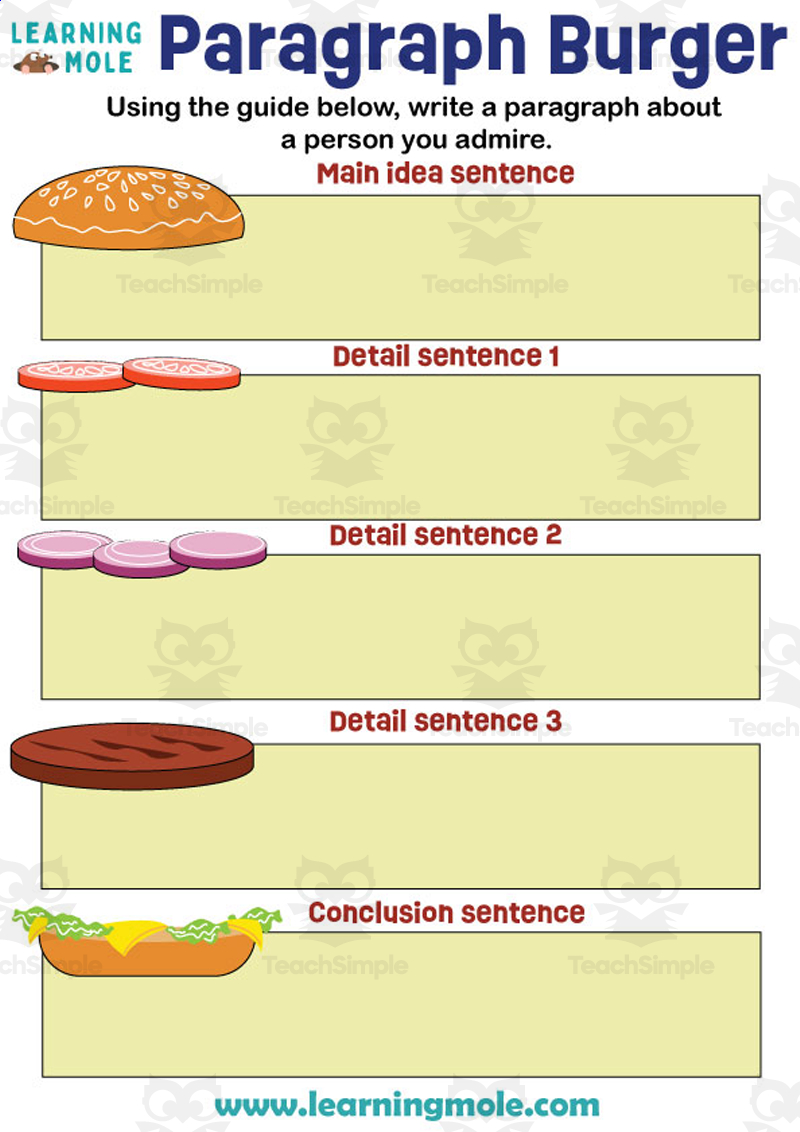
How to Write a Paragraph: Using Graphic Organizers for Prewriting This is an essential educational resource to enhance students' writing proficiency. In this chapter, the focus is on the use of graphic organizers for prewriting, with a step-by-step guide aimed at simplifying the writing process and enhancing language arts skills. Homeschool educators and public school teachers alike will find great value in using this tool. It serves as an excellent supplement to existing reading programs and even stands well as independent student work - making it beneficial whether used with a whole class, small groups or given as homework assignments. This resource encourages thought articulation through well-crafted sentences and paragraphs – something crucially significant for students in Grades 5 through 8. The four main types of paragraph forms introduced through this lesson plan are based on Bloom’s Taxonomy learning objectives. Makes writing logical yet easy-to-understand Offers multiple opportunities for maximized efficiency during the prewriting phase using various graphic organizers Six color graphic organizers are included that not only define skill focus but assist learners navigate their way meticulously through words Detailed Implementation Guide & Additional Extras: A comprehensive implementation guide, in PDF form, is provided within this product file offering tips on incorporating it effectively into your teaching cycle – so you can invest more time in instructing rather than planning! Plus word puzzles elevate the fun element in education alongside a comprehension quiz meant at subtly but accurately assessing understanding level. Assessment Rubric: An assessment rubric tailored considering student performances assists objective grading while remarkably meeting Common Core State Standards as well aligning perfectly with Bloom's Taxonomy. Cements learning outcomes making this product How to Write a Paragraph: Using Graphic Organizers for Prewriting a sought-after asset in pedagogy.
Author Classroom Complete Press
Tags PDF
Three Little Pigs Adventure Lapbook Project Reading GRADE 3 4 5 ELA
ELA, Reading, Reading Comprehension, Literature, Children’s Literature, Grade 3, 4, 5, Centers, Activities, Crafts, Projects, Teacher Tools, Graphic Organizers, Assessments, Templates
Create an especially fun activity for your learners with this Three Little Pigs Adventure Lapbook Project! Made for Grades 3, 4, and 5 students, homeschoolers and EFL/ESL learners, this dynamic resource is a sure hit for your reading classroom, fairy tale unit, reading centers, sub plan and supplemental tool for reading comprehension project. Contents: •3 Three Little Pigs Adventure Lapbook Levelled Reading Passages (Easy, Average, Challenging) •4 Three Little Pigs Adventure Lapbook Creative Lapbook Covers •2 Three Little Pigs Adventure Lapbook Name Page Options •1 Three Little Pigs Adventure Lapbook Inner Overlap •3 Three Little Pigs Adventure Lapbook Story Summary Templates •2 Three Little Pigs Adventure Lapbook Story Message Pages •2 Three Little Pigs Adventure Lapbook Sequence Pockets •6 Three Little Pigs Adventure Lapbook Visual Story Sequence Cards •3 Three Little Pigs Adventure Lapbook Sequence Card Sets •6 Three Little Pigs Adventure Lapbook Story Retell Cards •1 Three Little Pigs Adventure Lapbook Character Traits Fold •1 Three Little Pigs Adventure Lapbook Setting Fold •1 Three Little Pigs Adventure Lapbook Additional Info Fold •1 Three Little Pigs Adventure Lapbook Story Ratings Page •1 Three Little Pigs Adventure Lapbook Personal Reflection Fold
Author It's Teacher L
Rating
Tags Three Little Pigs, Fairy Tale, Differentiated Reading, Reading Comprehension, ELA Project
The Princess and the Pea Fairy Tale Foldable Mini Book Grade 1 2 3 ELA
ESL, Language Development, ELA, Children’s Literature, Literature, Reading Comprehension, Reading, Handwriting, Writing, Grade 1, 2, 3, Centers, Activities, Crafts, Projects, Assessments, Teacher Tools, Graphic Organizers
Develop the necessary literacy skills of your young learners through this purposefully made The Princess and the PeaMini Book Pack. Created for Grades 1, 2 and 3 students, homeschoolers, and EFL/ESL learners, this resource is designed for reading classes, reading centers, reading comprehension exercises, writing practice, fine motor skills exercises, fairy tale units, supplemental assessment tool, morning work, early finisher additional activities, and so much more! What’s Included: •The Princess and the PeaStory Mini Book– for story retelling, reading and reading comprehension practice •The Princess and the PeaStory Mini BookTrace & Read Pages– handwriting practice and motor skills exercise •The Princess and the PeaMini BookSequencing Booklet– sequencing and sorting exercise, story retelling and reading practice •The Princess and the PeaMini BookRetell & Reflect Pages– retell practice, creativity and imagination development •The Princess and the PeaMini BookBlank Create-a-Story Templates– story telling, supporting creative and imaginative thinking skills •The Princess and the PeaMini BookTeacher Guide + Sample Lesson Plan
Author It's Teacher L
Rating
Tags The Princess And The Pea, Reading Comprehension, ELA Project, Reading Centers
READING-COMPREHENSION PACK | THE FIRST AIRPLANES | 20 PAGES
Reading, ELA, Writing, Technology, Science, Adult Education, Elementary, High School, Homeschool Resources, Middle School, Not Grade Specific, Anchor Charts, Teacher Tools, Assessments, Charts, Graphic Organizers, Quizzes and Tests
READING-COMPREHENSION PACK | THE FIRST AIRPLANES | 20 PAGES SUMMARY OF THIS PRODUCT: The name of the document: READING-COMPREHENSION PACK | THE FIRST AIRPLANES The total number of pages: 20 The format (PDF, Word, PPT): PDF Whether it is in color or black and White: COLOR ABOUT THE AUTHOR: At EDITORIAL ARENAS EDUCATIVAS, we specialize in designing high-quality educational materials. We want every child to discover that learning can be both entertaining and creative. I invite you to explore my educational store and discover the wide collection of resources available for your classroom or home. MAIN DESCRIPTION: What is the name of your product and what makes it special? This beautiful product is called “READING-COMPREHENSION PACK | THE FIRST AIRPLANES", and it is very special because it was carefully designed or compiled. With this educational resource, we want students to learn with enthusiasm and fun, because we believe learning is fun. How many pages are included in this resource? This fabulous document contains the following number of pages: 20 What size is it designed in (A4, letter, etc.)? This resource is designed in A4 format and compiled as a PDF. This makes downloading and printing simple and convenient, and PDFs are also easy to store and carry anywhere. PDF A4 Is the material in color or black and white? This pedagogical document comes in both black and white and color. This makes it more attractive for your learning sessions, but you have the freedom to choose how to print it. COLOR SECONDARY AND COMPLEMENTARY INFORMATION: What type of material is it (book, workbook, activity pack, posters, flashcards)? EDITORIAL ARENAS EDUCATIVAS creates a variety of materials such as packs, worksheets, games, and assessments. This resource belongs to one of those categories. For what ages, levels, or grades is it designed? My specialty is creating educational resources for children, especially for preschool (ages 3–5) and primary (ages 6–12). Sometimes, I also create Spanish resources for learners of all ages. What subject, skill, or topic does it cover? This resource is designed to cover essential learning areas for children, generally literacy and math. What learning objectives does it achieve? This document fulfills a playful objective—it’s meant to be attractive and engaging for children. At the same time, it ensures that students learn or reinforce their knowledge.
Author EDITORIAL LAURA EDUCA
Rating
Tags FREE, FREE RESOURCES, READING, COMPREHENSION, AIRPLANES, HISTORY, ANCHOR CHART
Rumpelstiltskin Lapbook Project Reading & Writing Grades 3 4 5 ELA
Language Development, ELA, ESL, Literary Devices, Literature, Children’s Literature, Reading Comprehension, Reading, Strategies, Grade 3, 4, 5, Centers, Activities, Crafts, Projects, Graphic Organizers, Teacher Tools, Assessments, Templates
Discover the wonderful tale of Rumpelstiltskin through this Rumpelstiltskin Lapbook Project created for Grades 3, 4, and 5 students, homeschoolers, and EFL/ESL learners. This fun-packed resources is especially designed for reading classes, reading centers, ELA projects, fairy tale units, reading comprehension assessment tool, and so much more! Contents: •3 Rumpelstiltskin Lapbook Leveled Reading Passages (Easy, Average, Hard) •4 Rumpelstiltskin Lapbook Creative Cover Choices •2 Rumpelstiltskin Lapbook Name Page Formats (for individual and group project options) •1 Rumpelstiltskin Lapbook Overlap Page (central folding piece) •3 Rumpelstiltskin Lapbook Retelling Summary Page Options •2 Rumpelstiltskin Lapbook Moral or Message Pages •2 Rumpelstiltskin Lapbook Story Sequence Pockets •6 Rumpelstiltskin Lapbook Story Sequence Photo Cards (each set: Easy, Average, Hard) •3 Rumpelstiltskin Lapbook Levels of Sequence Activities •6 Rumpelstiltskin Lapbook Retell Event Cards •1 Rumpelstiltskin Lapbook Character Traits Foldable •1 Rumpelstiltskin Lapbook Setting Foldable •1 Rumpelstiltskin Lapbook Extra Story Elements Fold 1 Rumpelstiltskin Lapbook Story Ratings Page •1 Rumpelstiltskin Lapbook Personal Reflection Foldable
Author It's Teacher L
Rating
Tags Rumpelstiltskin, Fairy Tale, Reading Center, Reading Comprehension, ELA Project
Guided Reading Activity The Lemonade War Trifold Book Report
ELA, Reading, Grade 3, 4, 5, Activities, Projects, Teacher Tools, Graphic Organizers, Novel Studies, Worksheets & Printables
The Lemonade War by Jacqueline Davies follows a brother and sister pair, Evan and Jessie, as they compete to see who can earn the most money selling lemonade. While the contest starts as a fun challenge, it brings underlying feelings between the two to the surface, highlighting themes of sibling rivalry and miscommunication. The story emphasizes the importance of family, forgiveness, and understanding one another's strengths and feelings. This trifold resource is created to help students practice reading comprehension skills while providing differentiation for various reading levels. This tool can easily be utilized during guided reading, independent seat work, or literature circles. The included writing wrap-up allows for assessing multiple skills in one project, making it perfect for teachers looking for projects that can cover multiple subjects - reading comprehension, reading skills, and writing. What’s Included in This Resource: Each trifold is broken down by chapters or pages and allows chunking of information for easy teacher planning and appropriate student use. In each trifold, the following skills are assessed: Making Connections: Encourage students to relate the story to their own lives, other texts, and the wider world. Making Inferences: Help students combine text evidence with prior knowledge to draw logical conclusions. Using Context Clues: Teach students to deduce the meaning of unfamiliar words using hints from the text. Visualization: Support students in creating mental images of characters, events, and settings. Evaluation: Develop critical thinking by analyzing characters, themes, and the author’s message. Writing Wrap-Up: A writing assessment tool for reflection and deeper understanding. How This Resource Benefits Teachers: ✔ Provides differentiated instruction for diverse learners. ✔ Fosters text engagement and critical thinking with content. ✔ Offers flexibility for grades, seat work, or group discussions. What Teachers Are Saying: ⭐ "This resource made my guided reading groups more organized and productive!" - Rebecca T. ⭐ "Perfect for differentiation and keeping all students engaged at their level." - Larraine C. ⭐ "My students loved the activities, and it worked seamlessly in our literature circles!" - Celia N.
Author Kel's Klass
Tags Reading Strategies, Trifold Project, Guided Reading, Making Connections, Making Inferences, Context Clues, Evaluating, Visualization, The Lemonade War, Guided Reading Activity
Bridge to Terabithia STEM Experiment + STEM Project for Grades 4, 5, 6
Science, Technology, Engineering, STEM, Grade 4, 5, 6, Experiments, Activities, Projects, Diagrams, Teacher Tools, Graphic Organizers, Rubrics
Bring literature to life with this exciting STEM activity inspired by Bridge to Terabithia! This challenge sparks creativity and problem-solving as students plan and construct a bridge for King Jesse as he plans to make entrance to Terabithia safer. Perfect for blending literature with science, it allows students to explore engineering concepts using simple supplies while promoting teamwork and critical thinking. What’s Inside This Resource: Student Letter: A letter from Jesse introduces the challenge, linking the story to a real-world engineering task. Design Loop Graphic: A visual students can attach to their science journals, serving as a step-by-step guide throughout the activity. Detailed Instructions: Choose to print the guide as a packet or have students record each stage in their journals for an interactive experience. Teacher Tips: Practical guidance for crafting a clear problem statement with time constraints, materials, and success criteria tailored to your classroom. Skills Your Students Will Build: ✔ Problem-Solving: Identify obstacles and create inventive solutions. ✔ Engineering Design: Navigate the design loop—plan, construct, test, and refine. This page can easily be enlarged for a classroom poster. ✔ Critical Thinking: Assess their prototype’s performance and pinpoint ways to enhance it. ✔ Teamwork: Collaborate effectively to accomplish shared goals. Versatile Classroom Application: Whether as guided instruction or part of an integrated literature and science unit, this STEM activity encourages students to think creatively, document their process, and meet science and engineering standards. The rubric included is based on engineering concepts, but can also be used as a nonfiction writing rubric for cross-curricular options. Why Educators Love This Resource: ⭐ “My students were fully engaged, combining their passion for reading with STEM!” ⭐ “Simple to set up and encourages creativity and teamwork.” ⭐ “A seamless connection between literature and science for cross-curricular learning!” Empower your students to solve Jesse’s challenge and experience the excitement of engineering with this standards-aligned STEM adventure!
Author Kel's Klass
Tags 4th Grade Science Project, 4th Grade Science Experiment, 5th Grade Science Project, 5th Grade Science Experiment, 6th Grade Science Project, 6th Grade Science Experiment, Engineering Diagram, Science Graphic Organizer, Science Rubric, Bridge To Terabithia
How to Write a Book Report: Using Graphic Organizers for Prewriting
ELA, Writing, Common Core, Grade 5, 6, 7, 8, Graphic Organizers, Teacher Tools
How to Write a Book Report: Using Graphic Organizers for Prewriting This resource is designed to aid in the education of students, focusing on the organization of thoughts and ideas before they begin writing book reports. Ideal for students between grade 5 and 8, this resource falls squarely within the Language Arts category with an emphasis on enhancing writing skills. The primary function of this tool is to revolutionize the often daunting task of book report assignments by using easily accessible graphic organizers during prewriting. These handy devices guide students through organizing their thoughts concerning key elements such as plot structure, character characteristics, and themes which are essential in creating engaging book reports. A well-organized outline aligns with Bloom's Taxonomy learning objectives; this resource encourages a progressive learning method gliding students gradually from understanding facts through synthesis and evaluation stages - guiding each step along the way to completing polished reports that strictly adhere to proper forms and mechanics. Besides being just a teaching tool, educators can use this resource creatively - whether as supplementary material complementing an ongoing writing program or self-sufficient activities assigned at home. The inclusive package doesn't only include exciting word puzzles enhancing language skills but also comprehension quizzes significantly instrumental in determining student's grasp level over learned concepts. To ensure flawless execution of preset activities included in lesson plans, there’s added reassurance with inclusion of detailed guides breaking down how tasks should be approached. An additional feature includes easy-to-use student assessment rubrics simplifying grading process while ensuring fair basis during marking exercise - offering overall a systemically designed educational experience bundling together both learning and assessment processes neatly organized within one place. Kept flexible via maintaining it available on PDF; it enables usage electronically during virtual classes or printed paper copies accommodating varied class systems from whole group teaching to small group combined studies. This promising writing developmental course for intermediate level students, adheres strictly to the Common Core State Standards and is thoughtfully curated implementing Bloom's Taxonomy techniques forming its fundamental foundation.
Author Classroom Complete Press
Tags PDF
The Mouse and the Motorcycle STEM Experiment + STEM Project
Science, Technology, Engineering, STEM, Grade 3, 4, 5, Experiments, Activities, Projects, Diagrams, Teacher Tools, Graphic Organizers, Rubrics
Help design and build a four-wheeled car for Ralph, the adventurous mouse, from The Mouse and the Motorcycle. Perfect for integrating literature and science, this challenge guides students to apply engineering principles using simple materials while fostering teamwork and critical thinking. What’s Inside This Resource: Student Letter: A fun letter from Ralph introduces the challenge, linking the story to a real-world engineering task. Design Loop Graphic: A visual students can attach to their science journals, serving as a step-by-step guide throughout the activity. Detailed Instructions: Choose to print the guide as a packet or have students record each stage in their journals for an interactive experience. Teacher Tips: Practical guidance for crafting a clear problem statement with time constraints, materials, and success criteria tailored to your classroom. Skills Your Students Will Build: ✔ Problem-Solving: Identify obstacles and create inventive solutions. ✔ Engineering Design: Navigate the design loop—plan, construct, test, and refine. This page can easily be enlarged for a classroom poster. ✔ Critical Thinking: Assess their prototype’s performance and pinpoint ways to enhance it. ✔ Teamwork: Collaborate effectively to accomplish shared goals. Versatile Classroom Application: Whether as guided instruction or part of an integrated literature and science unit, this STEM activity encourages students to think creatively, document their process, and meet science and engineering standards. The rubric included is based on engineering concepts, but can also be used as a nonfiction writing rubric for cross-curricular options. Why Educators Love This Resource: ⭐ “My students were fully engaged, combining their passion for reading with STEM!” ⭐ “Simple to set up and encourages creativity and teamwork.” ⭐ “A seamless connection between literature and science for cross-curricular learning!” Inspire your students to solve Ralph’s problem and discover the joy of engineering with this fun, standards-aligned STEM challenge!
Author Kel's Klass
Tags 4th Grade Science Project, 4th Grade Science Experiment, 5th Grade Science Project, 5th Grade Science Experiment, Engineering Diagram, Science Graphic Organizer, Science Rubric, 3rd Grade Science Project, 3rd Grade Science Experiment, The Mouse And The Motorcycle
Jack and the Beanstalk Lapbook Project Reading & Writing Grade 3 4 5
Language Development, ELA, Children’s Literature, Literature, Literary Devices, Reading Comprehension, Reading, Grade 3, 4, 5, Activities, Centers, Crafts, Projects, Teacher Tools, Graphic Organizers, Assessments
Trek the trail of Jack in this fantastic Jack and the Beanstalk Lapbook Project designed for Grades 3, 4, 5, homeschool classrooms, and EFL/ESL learners. This perfect resource set is made for reading classes, reading centers, fairy tale units, sub plans, as well as a supplemental assessment tool for your reading comprehension activities. Contents: •3 Jack and the Beanstalk Lapbook Differentiated Reading Passages (Easy, Average, Hard) •6 Jack and the Beanstalk Lapbook Themed Lapbook Covers •2 Jack and the Beanstalk Lapbook Name Pages •1 Jack and the Beanstalk Lapbook Inner Overlap Page •3 Jack and the Beanstalk Lapbook Story Summary Page Options •2 Jack and the Beanstalk Lapbook Story Message Pages •2 Jack and the Beanstalk Lapbook Story Sequence Pockets •6 Jack and the Beanstalk Lapbook Story Sequence Photocards •3 Jack and the Beanstalk Lapbook Story Sequence Sets (6 cards each: Easy, Average, Hard) •6 Jack and the Beanstalk Lapbook Story Retell Cards •1 Jack and the Beanstalk Lapbook Character Traits Fold •1 Jack and the Beanstalk Lapbook Story Setting Fold •1 Jack and the Beanstalk Lapbook Additional Elements Fold •1 Jack and the Beanstalk Lapbook Story Ratings Page •1 Jack and the Beanstalk Lapbook Personal Reflection Fold
Author It's Teacher L
Rating
Tags Jack And The Beanstalk, Fairy Tale, Reading Comprehension, ELA Project
Stone Fox STEM Experiment + STEM Project for Grades 3, 4, 5
Science, Technology, Engineering, STEM, Grade 3, 4, 5, Experiments, Activities, Projects, Diagrams, Teacher Tools, Graphic Organizers, Rubrics
Little Willy is looking for a way to build a sled that will honor Searchlight, in this STEM project inspired by Stone Fox. This science project encourages problem-solving as students plan and construct a sled that will be able to carry Willy safely across a block of ice. Perfect for blending literature with science, it allows students to explore engineering concepts using simple supplies while promoting teamwork and critical thinking. What’s Inside This Resource: Student Letter: A heartfelt letter from Little Willy introduces the challenge, linking the story to a real-world engineering task. Design Loop Graphic: A visual students can attach to their science journals, serving as a step-by-step guide throughout the activity. Detailed Instructions: Choose to print the guide as a packet or have students record each stage in their journals for an interactive experience. Teacher Tips: Practical guidance for crafting a clear problem statement with time constraints, materials, and success criteria tailored to your classroom. Skills Your Students Will Build: ✔ Problem-Solving: Identify obstacles and create inventive solutions. ✔ Engineering Design: Navigate the design loop—plan, construct, test, and refine. This page can easily be enlarged for a classroom poster. ✔ Critical Thinking: Assess their prototype’s performance and pinpoint ways to enhance it. ✔ Teamwork: Collaborate effectively to accomplish shared goals. Versatile Classroom Application: Whether as guided instruction or part of an integrated literature and science unit, this STEM science project encourages students to think creatively, document their process, and meet science and engineering standards. The rubric included is based on engineering concepts, but can also be used as a nonfiction writing rubric for cross-curricular options. Why Educators Love This Resource: ⭐ “My students were fully engaged, combining their passion for reading with STEM!” ⭐ “Simple to set up and encourages creativity and teamwork.” ⭐ “A seamless connection between literature and science for cross-curricular learning!” Encourage your students to help Little Willy achieve his goals and experience the excitement of engineering with this standards-aligned STEM adventure!
Author Kel's Klass
Tags 4th Grade Science Project, 4th Grade Science Experiment, 5th Grade Science Project, 5th Grade Science Experiment, Engineering Diagram, Science Graphic Organizer, Science Rubric, 3rd Grade Science Project, 3rd Grade Science Experiment, Stone Fox
READING-COMPREHENSION | HUMAN BODY | 20 FREE PAGES
Reading, ELA, Writing, Adult Education, Elementary, High School, Homeschool Resources, Middle School, Not Grade Specific, Anchor Charts, Teacher Tools, Assessments, Quizzes and Tests, Graphic Organizers
READING-COMPREHENSION | HUMAN BODY | 20 FREE PAGES SUMMARY OF THIS PRODUCT: · Document Title: READING-COMPREHENSION | HUMAN BODY · Number of Pages: 20 · File Format (PDF, Word, PPT): PDF · Color or Black & White: COLOR ABOUT THE AUTHOR: At EDITORIAL ARENAS EDUCATIVAS, we believe that learning should be as fun as playing. That’s why we create educational materials that spark children’s curiosity and creativity. I invite you to check out my educational store and discover the wide range of resources that can transform your classes. MAIN INFORMATION OF THIS PRODUCT: What is the name of the product? Hello! Thank you so much for being interested in this beautiful and fabulous product that you can use with your children, both at school and at home. The name of this fabulous product is:READING-COMPREHENSION | HUMAN BODY How many pages does it include? This educational document, carefully created and in some cases compiled, has the following number of pages: 20 What format is it in (A4, letter, digital, printable)? This educational resource is designed in A4 format and PDF, so you will have no difficulties printing it and it will also stay well-protected. A4 PDF Is it in black and white or in color? This document is available in black and white as well as in color. Actually, it combines both, making it more attractive for your students. COLOR SECONDARY AND COMPLEMENTARY INFORMATION: What type of resource is it (activities, guide, set, bundle, workbook)? This resource, like many others, can be an activity or a guide. I also invite you to visit my educational store, where you will find a variety of resources such as games, worksheets, and assessments. For what age, grade, or school level is it ideal? I usually create resources for early grades (children ages 3–5), but I also design for primary students (ages 7–12). My priority is to make children’s learning creative. What learning area does it focus on? This and all my resources focus on children’s essential learning, such as math and literacy. Occasionally, I also create resources for Spanish. What will students learn or practice with it? With this educational resource, children will be able to practice basic skills in math and literacy. Teachers can also adapt it to other learning areas, since learning is multidisciplinary.
Author EDITORIAL LAURA EDUCA
Rating
Tags FREE, FREE RESOURCES, ANCHOR CHART, READING, READING AND COMPREHENSION, COMPREHENSION, HUMAN BODY
READING-COMPREHENSION PACK | RENEWABLE ENERGY | 20 FREE PAGES
Reading Comprehension, Reading, ELA, Strategies, Creative Writing, Writing, Earth and Environmental Sciences, Science, Elementary, High School, Adult Education, Homeschool Resources, Middle School, Not Grade Specific, Anchor Charts, Teacher Tools, Assessments, Graphic Organizers, Quizzes and Tests
READING-COMPREHENSION PACK | RENEWABLE ENERGY | 20 FREE PAGES ABOUT THE AUTHOR: At EDITORIAL ARENAS EDUCATIVAS, we believe that learning should be as fun as playing. That’s why we create educational materials that spark children’s curiosity and creativity. I invite you to check out my educational store and discover the wide range of resources that can transform your classes. MAIN DESCRIPTION OF THIS RESOURCE: What is the name of the product? Hello! Thank you so much for being interested in this beautiful and fabulous product that you can use with your children, both at school and at home. The name of this fabulous product is: READING-COMPREHENSION PACK | RENEWABLE ENERGY How many pages does it include? This educational document, carefully created and in some cases compiled, has the following number of pages: 20 What format is it in (A4, letter, digital, printable)? This educational resource is designed in A4 format and PDF, so you will have no difficulties printing it and it will also stay well-protected. SUMAMRY OF THIS PRODUCT: What is the name of the document?:READING-COMPREHENSION PACK | RENEWABLE ENERGY How many pages does it include?: 20 In what format is it available (PDF, Word, PPT)?: PDF Is it in color or black and white?: COLOR SECONDARY AND COMPLEMENTARY INFORMATION: For what age, grade, or school level is it ideal? I usually create resources for early grades (children ages 3–5), but I also design for primary students (ages 7–12). My priority is to make children’s learning creative. What learning area does it focus on? This and all my resources focus on children’s essential learning, such as math and literacy. Occasionally, I also create resources for Spanish. What will students learn or practice with it? With this educational resource, children will be able to practice basic skills in math and literacy. Teachers can also adapt it to other learning areas, since learning is multidisciplinary. Who will benefit the most from this resource (teachers, families, students, therapists)? I strongly believe education involves many people—teachers, parents, and even therapists. That’s why this resource is open to anyone involved in the learning process.
Author EDITORIAL LAURA EDUCA
Rating
Tags FREE, FREE RESOURCES, ANCHOR CHART, READING, READING AND COMPREHENSION, COMPREHENSION, RENEWABLE ENERGY