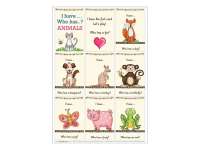
I have...Who Has...? Animals Edition




- Grades
- K–2
- File type
- Preparation
- Print ready


- Subject
- ELA, Vocabulary
- Topic
- Animals, I Have Who Has
- Resource types
- Games
- Preparation
- Print ready
- Standards
- SL.1.1
Product description
From the author
The "I have...Who Has...? Animals Edition" is an engaging whole class reading game featuring animal terms that first grade through third grade readers will enjoy. To play, the educator shuffles the cards and distributes them to students. A player begins by asking "I have a ____. Who has ____?" If a classmate has the card with the requested animal, they respond "I have a ____." and ask for another animal. Students listen carefully to follow the sequence as each animal card is uncovered. This interactive game is an excellent way to build reading skills, reinforce animal vocabulary, and encourage active listening and participation among early elementary students. With multiple editions available, "I have...Who Has" is a classroom favorite across many grades and subjects.
Related resources
More resources teachers may find useful
24 related resources were found using this product's title, contributor, categories and tags.

In the classroom
Teaching tips & learning objectives

Learning objectives
Read a printed animal name aloud from a card and hold the whole class's attention while doing so
Match a spoken animal name to the picture on your own card and respond at the right moment
Listen through a long sequence without a visible cue, tracking whether your card has been called yet

Teaching tips
Deal out every single card before starting - the teacher letter is explicit that the chain breaks if any card is left over, and it is fine for a child to hold two or three
Give a quieter reader the start card marked "I have the first card. Let's play!", since that turn has no listening demand attached to it
Play a second round after shuffling; the order of animals is fixed by the cards themselves, so the sequence stays the same while students may receive different cards

Skills covered
Reading single words aloud - each turn requires a child to read a printed animal name clearly enough for the whole class to hear it.
Sustained listening - with thirty-three links in the chain, a child has to follow every turn to know when theirs arrives.
Animal vocabulary - the deck stretches past the common animals into hedgehog, goose, donkey, beetle, mosquito, crab and panda.
Good to know
Questions teachers ask about this resource
What happens if there are more cards than students?
Deal them out anyway. The teacher letter closes with the point that all cards must be distributed or the chain will not complete, and that it does not matter if some students end up holding more than one.
Which animals are in the deck?
Thirty-three, mixing familiar and less familiar: fox, dog, kangaroo, monkey, butterfly, pig, frog, owl, bird, snake, bat, hedgehog, duck, goose, hippo, cow, lion, horse, zebra, spider, elephant, sheep, crocodile, crab, cat, donkey, beetle, turtle, penguin, fish, mosquito, panda and bee.
How does a child know their card is the one being asked for?
By the picture. Most playing cards name the next animal on the "Who has a ___?" line and show their animal as an illustration near the "I have …" line, so the listener matches the spoken name to the drawing in their hand rather than reading a second word.

No reviews yet
Downloaded this resource? Tell other teachers how it went.
Curriculum
Standards, concepts & topics
Standards
 Standards
- SL.1.1
Core concepts
 Core concepts
Animal vocabulary
Word recognition
Listening skills
Whole-class game
 Topics
Explore more
Categories this resource belongs to
Explore related searches
More to explore
You may also like