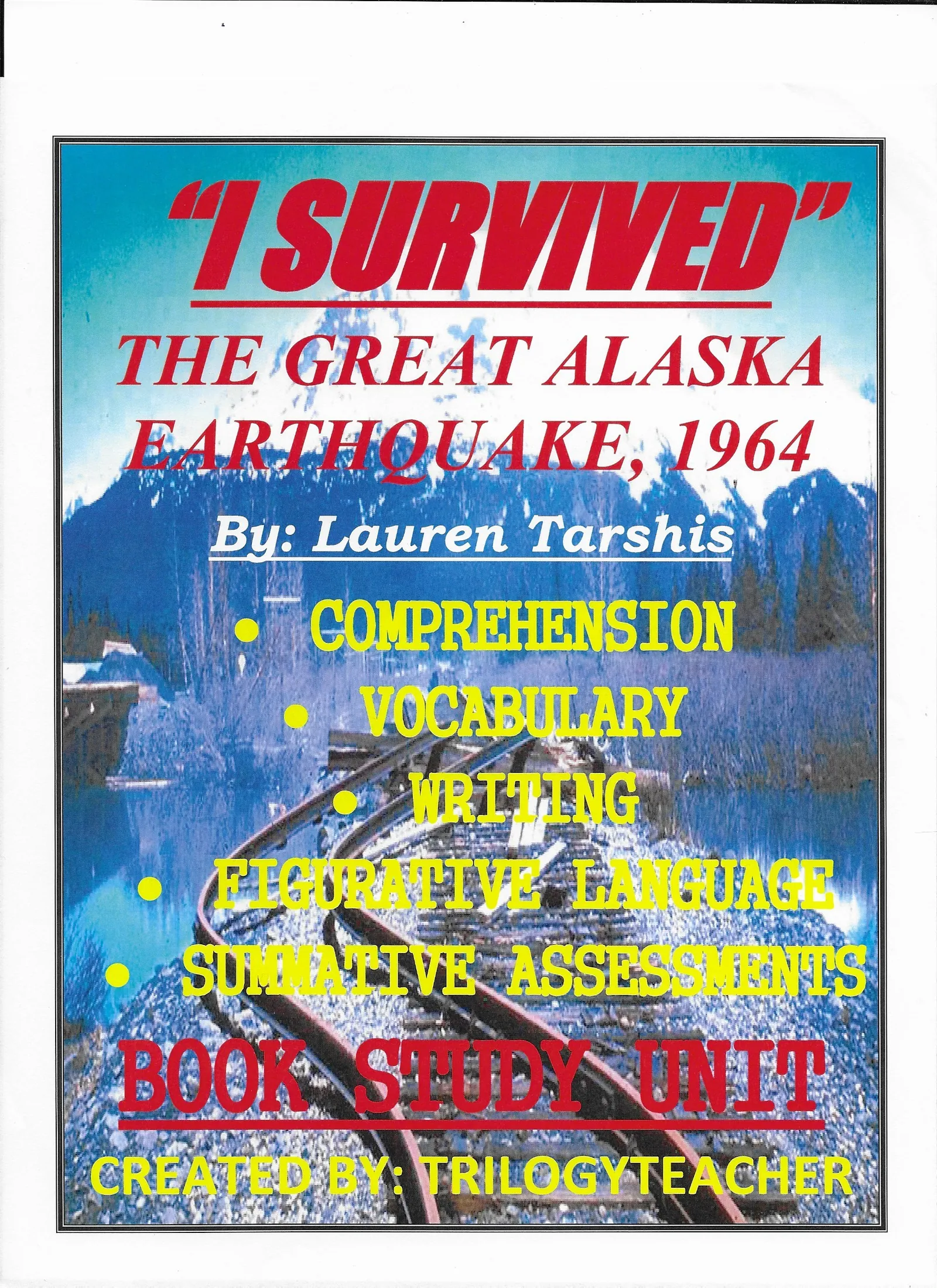
I SURVIVED The Great Alaska Earthquake, 1964 Book Study Unit
- Grades
- Grades 3–6
- Pages
- 127
- File type
- Answer key
- Included


- Subject
- ELA, Literature
- Topic
- I Survived, Alaska earthquake
- Resource types
- Worksheets
- Answer key
- Included
- Standards
- RL.5.1
Product description
From the author
Use this 127-page book study alongside Lauren Tarshis’s I Survived The Great Alaska Earthquake, 1964. Students need the novel separately, with pagination matching the worksheet references.
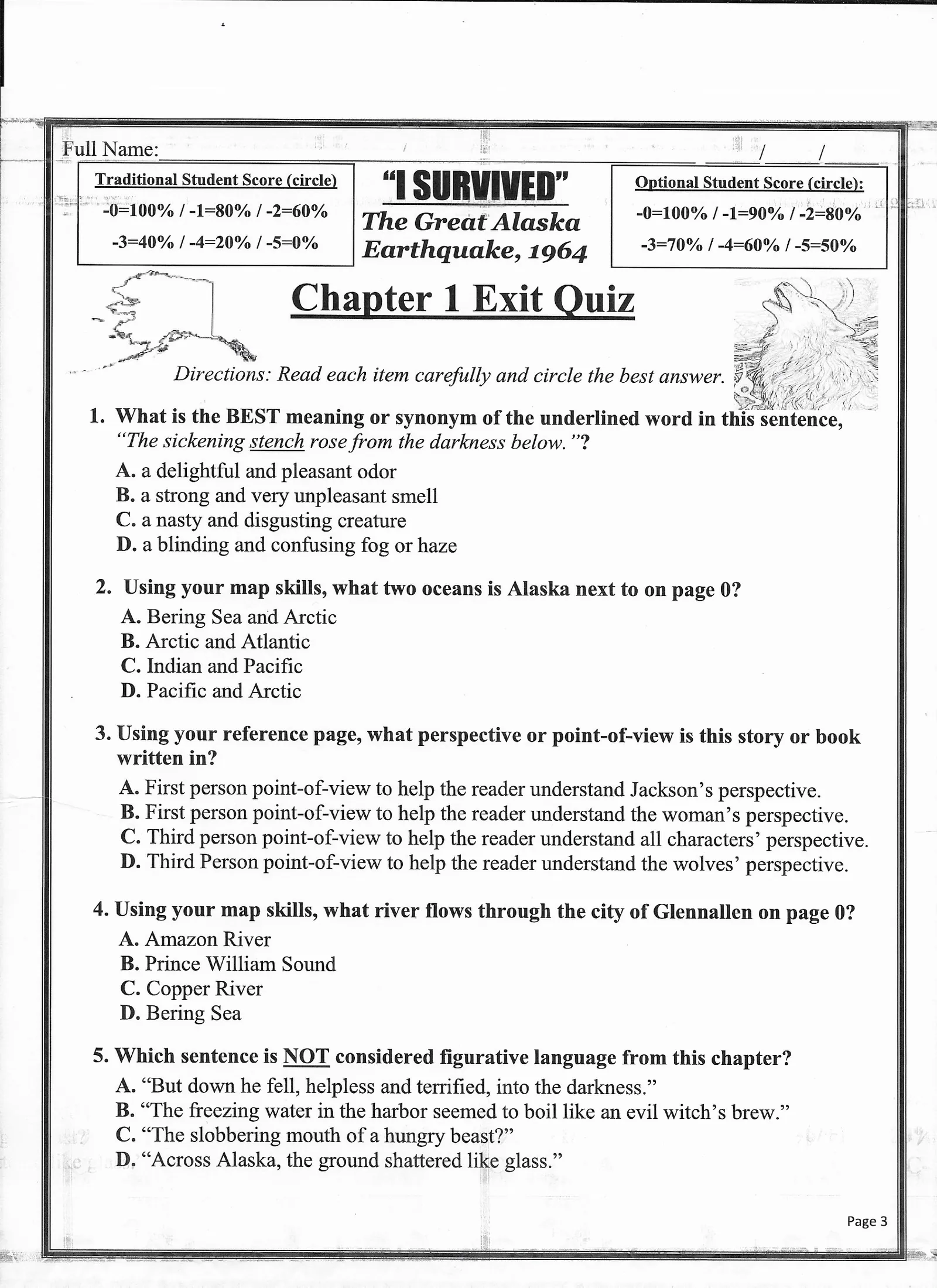
The unit includes two-page comprehension and vocabulary work for all fifteen chapters, fourteen five-question exit quizzes (none for chapter 14), four vocabulary checkpoints with 12, 12, 12 and 10 test items, and a 25-question final test.
Summary templates and examples, a reading reference page, vocabulary word art, two research prompts and a fifteen-question back-matter scavenger hunt extend the reading. Answer material is supplied for the chapter work, quizzes, vocabulary tests, final test and scavenger hunt.
Related resources
More resources teachers may find useful
24 related resources were found using this product's title, contributor, categories and tags.


In the classroom
Teaching tips & learning objectives

Learning objectives
Answer text-dependent questions by locating evidence on a named page of the novel rather than from memory
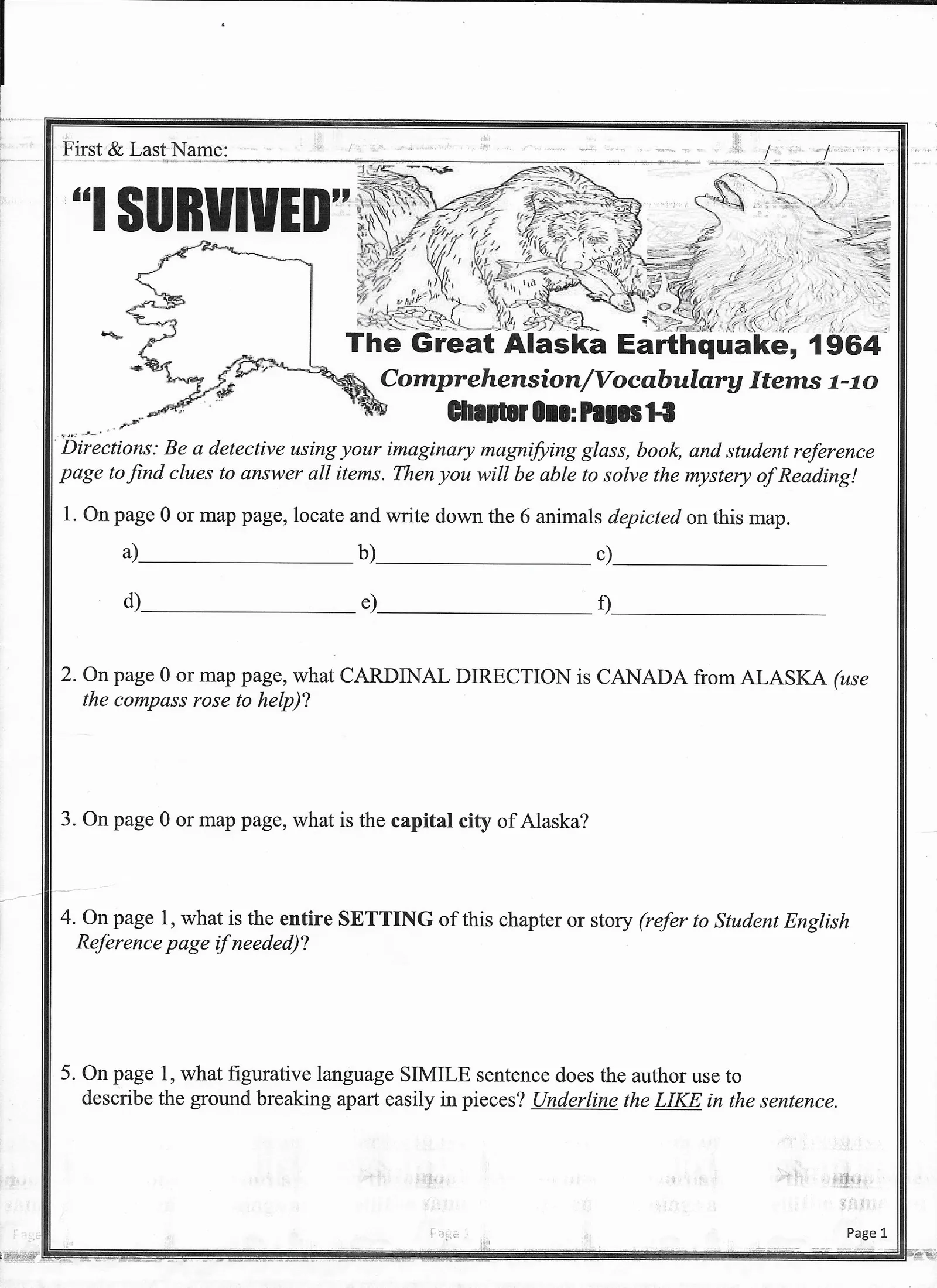
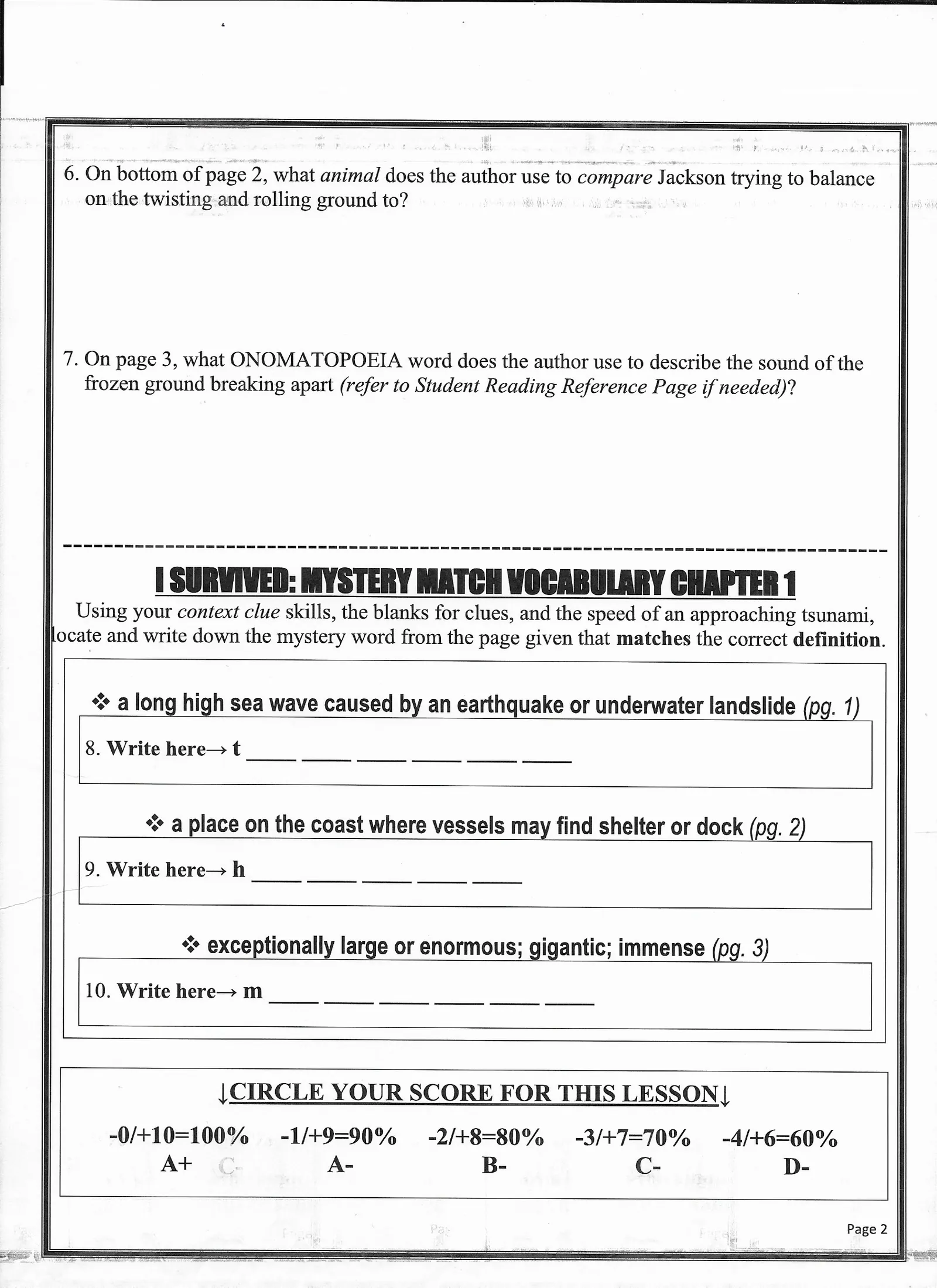
Identify figurative language in the text, including the simile "Across Alaska, the ground shattered like glass", the onomatopoeia "crack!" and an animal comparison used for Jackson's balance
Find factual answers in the book's non-fiction back matter by following its subheadings rather than reading in page order

Teaching tips
Run the warm-up set before chapter 1; it uses a supplied excerpt from another story, so students meet the homophone, comprehension and mystery-word question types without spending novel content on practice
Give each student a folder from day one, as the unit instructions ask; the vocabulary checkpoints send students back to the four comprehension packets they have already completed to revise the Mystery Match words
The context-clue sentence cards are designed as a group routine before each vocabulary test, so plan a lesson slot for them rather than treating them as an extra worksheet

Skills covered
Text-evidence comprehension — items name the page in the novel and ask for a specific detail from it, such as the two things the family's four-wall log cabin lacked on page 8.
Context-clue vocabulary — students use definitions and initial letters in Mystery Match tasks, then revisit the vocabulary in checkpoint-test sentences.
Non-fiction research and navigation — the scavenger hunt sends students through the book's back matter by subheading for facts such as the 9.2 magnitude, the Ring of Fire and the Space Needle, and two prompts extend into a researched paper and poster.
Good to know
Questions teachers ask about this resource
What does one chapter's cycle of work look like?
Two pages of comprehension and vocabulary, followed by a short quiz except for chapter 14. Items 1-7 send students to named pages of the chapter, items 8-10 are Mystery Match words given as a definition plus a first letter, and then a five-item multiple-choice exit quiz asks different questions again. The teacher instructions state that the worksheet items are held back for the final test and never appear on the exit quizzes.
How closely is the work tied to the novel's own page numbers?
Very closely. Almost every item opens by naming a page — "On page 37, what scary tiger lived during the Ice Age that does not exist today?", "On bottom of page 30, what made Jackson so upset?" — and the scavenger hunt routes students through the factual back matter between two named section headings, so each student needs a copy of the Tarshis novel open beside the sheet.
Which chapters do the four vocabulary checkpoints cover, and are the word lists drawn from this book?
Chapters 1-4, 5-8, 9-12 and 13-15, and yes — every list comes from the Mystery Match words of the chapters it follows, for example tsunami, harbor, massive and hibernating for chapters 1-4 and matted, whirlpool, stench and wreckage for chapters 13-15. Note that the second, third and fourth checkpoint tests carry a page heading naming a different title in the I Survived series, while their contents belong to this book.

No reviews yet
Downloaded this resource? Tell other teachers how it went.
Curriculum
Standards, concepts & topics
Standards
 Standards
- RL.5.1
Core concepts
 Core concepts
Reading comprehension
Vocabulary in context
Figurative language
Summarizing
Novel study
 Topics
Explore more
Categories this resource belongs to
Explore related searches
More to explore
You may also like