"Immigration No. 2", Regents US History Short Essays


- Grades
- Grades 10–12, High School
- File type
- Preparation
- Print ready


- Subject
- ELA, Social Studies, Writing, History, History: USA
- Topic
- new york state, regents exam
- Resource types
- Teacher Tools, Assessments
- Preparation
- Print ready
About this resource
What's inside this resource
Related resources
More resources teachers may find useful
24 related resources were found using this product's title, contributor, categories and tags.




In the classroom
Teaching tips & learning objectives

Learning objectives
Describe the historical context surrounding a pair of documents
Identify the relationship between two documents as cause and effect, similarity and difference, or a turning point, and explain it
Analyse how audience, purpose, bias or point of view affects a document's reliability as evidence

Teaching tips
Both task pages print the command-word definitions - describe, identify, explain, analyse, and the three relationship types - so students are not left guessing what the question is asking for.
The two sets are independent, each with its own pair of documents and its own task, so they can be set weeks apart rather than together.
Hand out the rubric with the task rather than after it: its top band is the only place the difference between describing and analysing is spelled out, which is where most short essays lose marks.

Skills covered
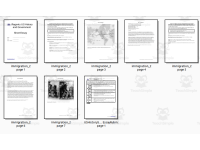
Document analysis - each set puts two primary sources side by side, from an 1870 to 1900 immigration map to a Triangle Factory photograph, and asks what the pair shows when read together.
Establishing historical context - both tasks open with the same requirement, and the sheet defines historical context as the relevant circumstances surrounding or connecting the events in the documents.
Naming a relationship precisely - Set 1 will not accept a general link; the relationship has to be identified as cause and effect, similarity and difference, or a turning point, each defined on the page.
Good to know
Questions teachers ask about this resource
How do the two sets differ?
In the second half of the task. Both open by asking for the historical context surrounding the documents. Set 1 then asks students to identify and explain the relationship between them - cause and effect, similarity and difference, or turning point. Set 2 instead asks them to analyse the second document and explain how audience, purpose, bias or point of view affects its use as a reliable source of evidence.
Which primary sources are used?
Four, two per set. Set 1 uses a map of immigration between 1870 and 1900, credited through a Curriki blog post to the National Geographic Society, and an oral history of Morris Schneider recalling the steamship Rotterdam, from the National Park Service's Ellis Island education pages. Set 2 uses an excerpt from Jane Addams, Philanthropy and Social Progress (1893), and a photograph from Cornell University's ILR School Triangle Factory archive.
What does the rubric reward?
Depth and analysis over description. The top band asks for both aspects of the task developed thoroughly and in depth, work that is mostly analytical, and a theme richly supported with relevant facts and examples from the documents. The band below allows one aspect developed in depth and the other in some depth, and the descriptive bands sit lower still, down to 55.

No reviews yet
Downloaded this resource? Tell other teachers how it went.
Resource details
Concepts & topics
Core concepts
 Core concepts
Document-based analysis
Historical context
Source reliability
Immigration
Short essay writing
 Topics
Explore more
Categories this resource belongs to
Explore related searches
More to explore
You may also like