Let’s Fly a Kite - Reading Comprehension + Answers
- Grades
- Pre-K–2, Elementary
- Pages
- 3
- File type
- Answer key
- Included


- Subject
- ELA, Reading Comprehension, Reading
- Topic
- Kite story, Reading comprehension
- Resource types
- Worksheets, Worksheets & Printables, Literacy Readers, Teacher Tools
- Answer key
- Included
- Standards
- RL.1.1
Product description
From the author
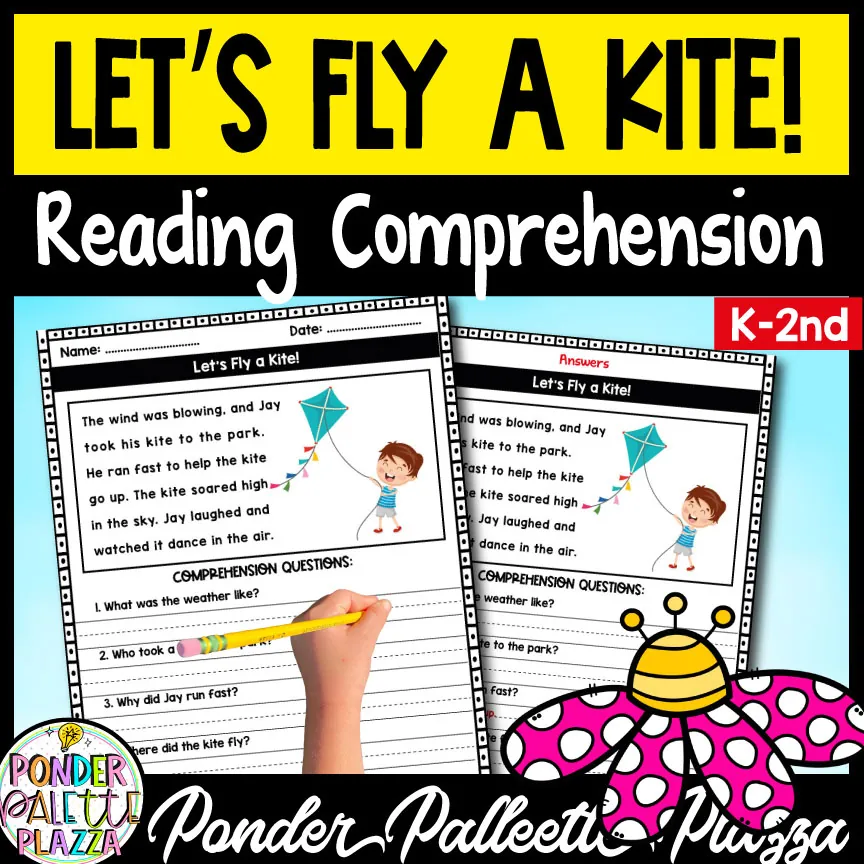
When the wind is blowing and your students are bouncing off the walls like loose balloons, it’s time for Let’s Fly a Kite! This cheerful spring reading comprehension activity is designed for K–2 learners and follows a fun, easy-to-read story about flying a kite on a breezy spring day. It’s perfect for building those early reading skills while tapping into the seasonal excitement, without anyone actually running into trees.
Ways to Use:
Spring Literacy Centers: A fun, focused addition to your reading rotation.
Guided Reading or Read-Aloud: Read together and model how to find answers in the text.
Independent Practice: Great for quiet work that actually holds their attention.
Sub Plans: A print-and-go activity that requires zero last-minute panic.
Advantages:
Kid-Friendly Language: Short, simple sentences made for growing readers.
Boosts Comprehension: Questions help students practice key reading skills in a fun way.
Answer Key Included: Because you have 26 other things on your to-do list.
Low-Prep: Just print and let the learning lift off!
Seasonally Themed: Spring fun without mud, allergies, or actual wind.
PDF includes a terms page, a story-and-questions page and its answer page: three pages total.
Related resources
More resources teachers may find useful
24 related resources were found using this product's title, contributor, categories and tags.


In the classroom
Teaching tips & learning objectives

Learning objectives
Students will identify a story detail describing the weather.
Students will name the main character and recall a simple cause-and-effect detail (why he ran).
Students will infer a character's feeling from an action described in the story (laughing).

Teaching tips
Read the story aloud once before students answer independently, since the large-print single-page story is designed for early readers.
Use the completed answer page as a self-check tool for independent or small-group reading centers.
The "How did Jay feel?" question requires an inference from an action (laughing) rather than a stated feeling word, so model that reasoning step for early readers before assigning it.

Skills covered
Early reading comprehension — students answer five questions about weather, character, cause, setting, and feeling in a short story.
Inference from character action — students infer that Jay felt happy because the text says he laughed, rather than reading the word "happy" directly.
Good to know
Questions teachers ask about this resource
Does every answer appear as an explicit statement?
The feeling question asks students to infer that Jay is happy from his laughter. The answer page explains that connection.

No reviews yet
Downloaded this resource? Tell other teachers how it went.
Curriculum
Standards, concepts & topics
Standards
 Standards
- RL.1.1
Core concepts
 Core concepts
Reading comprehension
Story details
Inference
 Topics
Explore more
Categories this resource belongs to
Explore related searches
More to explore
You may also like