Let's Talk About Summer Board Game
- Grades
- Grades 1–2
- File type
- Preparation
- Print ready


- Subject
- ELA, ESL, Summer
- Topic
- Summer Conversation, ESL Speaking
- Resource types
- Games
- Preparation
- Print ready
- Standards
- SL.1.1
Product description
From the author
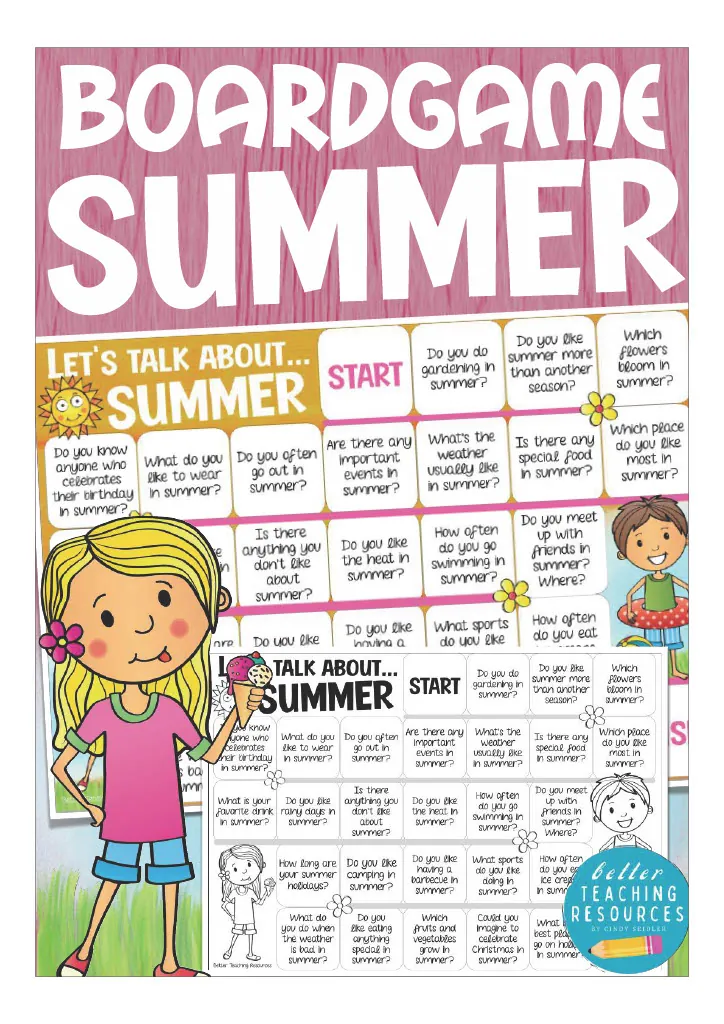
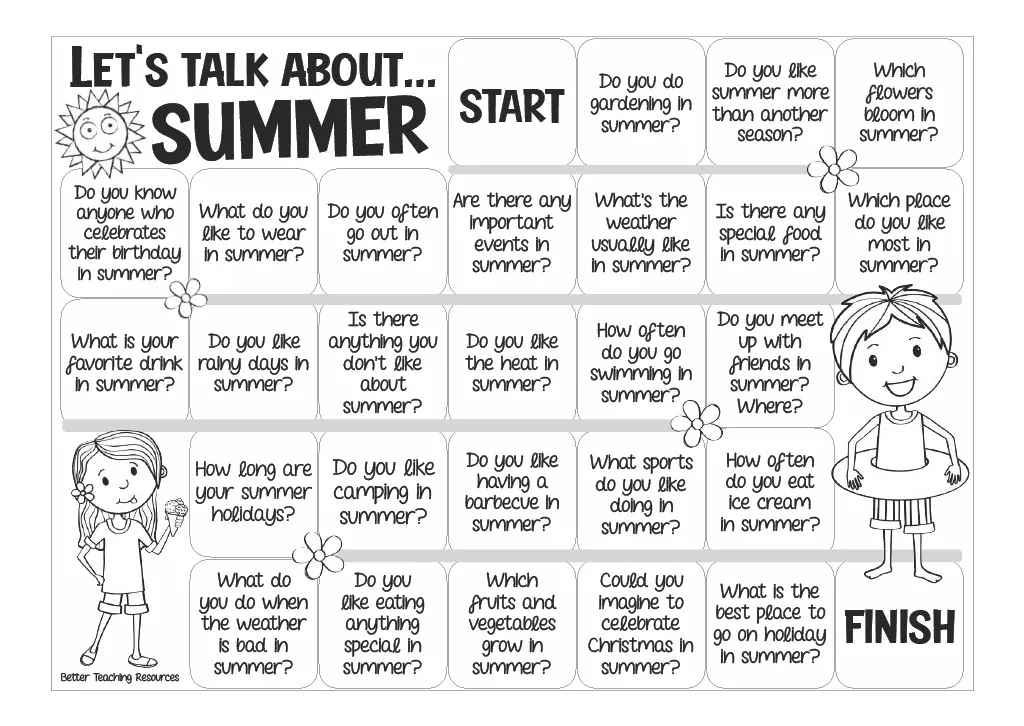
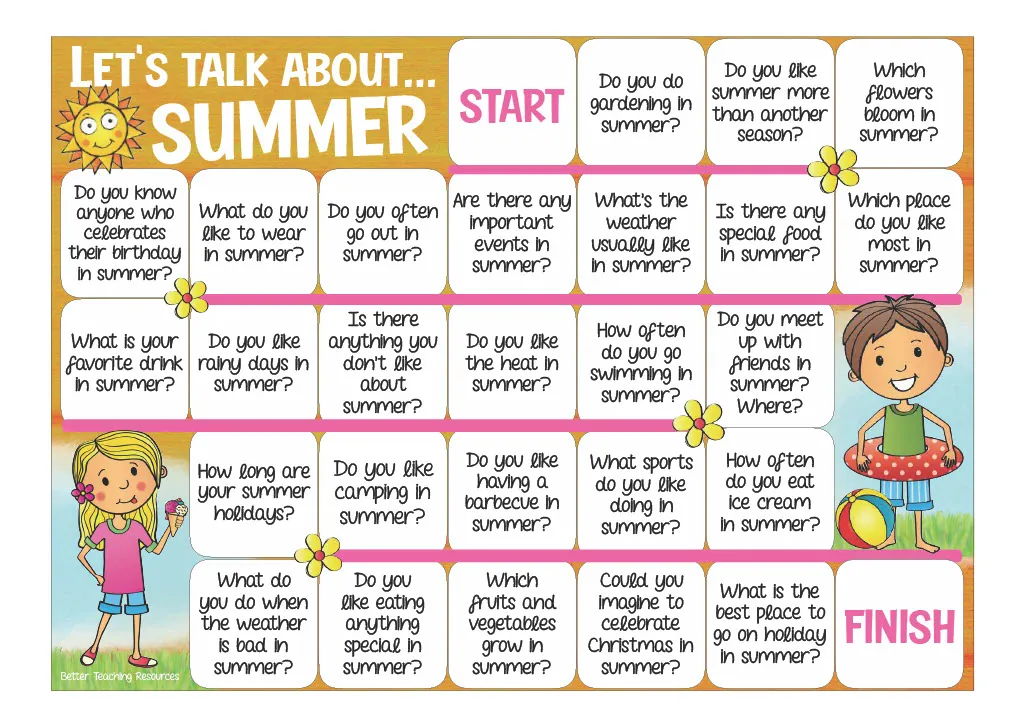
The Let's Talk About Summer Board Game is a printable game focused on building language skills. Students take turns rolling the dice and moving spaces along the board, then read and respond to the summer-themed question they land on. Questions address topics like beach activities, summer foods, and ways to beat the heat. Partners can take turns answering questions aloud or write responses down individually. This resource is useful for assessing student progress in small groups or partners. With a variety of question types that promote discussion, this board game strengthens English language learners' vocabulary and speaking confidence. Implement it as an independent center activity, partner game, or whole class discussion starter about everyone's summer plans and favorite things to do during the sunny season. This versatile resource is easy to print and engaging for elementary students learning about summer.
Related resources
More resources teachers may find useful
24 related resources were found using this product's title, contributor, categories and tags.


In the classroom
Teaching tips & learning objectives

Learning objectives
Answer a spoken question about personal experience in a full sentence
Use summer vocabulary — flowers, barbecue, camping, ice cream, holidays — in conversation
Take turns asking and answering as play moves around the board

Teaching tips
Provide dice and a counter for each player.
Choose individual board questions for pair discussion when a full game is not needed.
Model the corrected wording Could you imagine celebrating Christmas in summer? The printed prompt uses imagine to celebrate. Adapt seasonal examples to students’ location and experience.

Skills covered
Speaking about personal experience — spaces ask about personal experiences and general summer topics, from favourite drinks to how often they swim.
Summer topic vocabulary — the board puts gardening, flowers, barbecue, camping, holidays, ice cream and sport into circulation across twenty-six spaces.
Turn-taking in conversation — play moves space by space between START and FINISH, so each player answers in turn while the others listen.
Good to know
Questions teachers ask about this resource
What needs adding before the game can be played?
Dice and a counter for each player. The board itself supplies START, FINISH and the twenty-six question spaces between them, with the questions printed straight onto the spaces rather than drawn from cards.

No reviews yet
Downloaded this resource? Tell other teachers how it went.
Curriculum
Standards, concepts & topics
Standards
 Standards
- SL.1.1
Core concepts
 Core concepts
Conversation practice
Summer vocabulary
Speaking and listening
 Topics
Explore more
Categories this resource belongs to
Explore related searches
More to explore
You may also like